
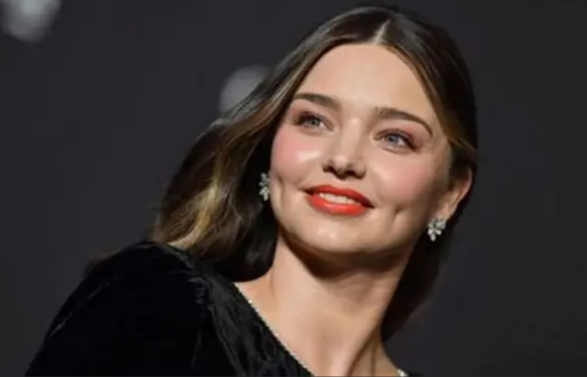
In 2009, while earning millions as a Victoria’s Secret Angel, Miranda Kerr invested her own capital into developing an organic skincare line. Her agents thought she was distracted. Her peers thought she was hedging. Kerr thought she was building equity. Kora Organics launched that year with a face oil formulated from rosehip, noni extract, and the specific vision that organic certification would become a luxury differentiator. Fifteen years later, the brand sells in over 30 countries through Sephora, generates estimated annual revenues exceeding $20 million, and represents exactly the kind of exit-ready asset that transforms model income into generational wealth.
Miranda Kerr’s net worth reaches approximately $45 million today. That figure excludes any share of her husband Evan Spiegel’s $2.6 billion Snapchat fortune. The Australian supermodel structured her finances to generate independent wealth, treating her marriage to a tech billionaire as a partnership rather than a pension plan. That independence wasn’t defensive. It was strategic.
The Before: Gunnedah’s Unlikely Export
Miranda May Kerr grew up in Gunnedah, New South Wales, a rural Australian town of 9,000 people whose primary industries are cotton farming and coal mining. Her parents ran a small business. Her childhood involved horseback riding, church attendance, and the kind of provincial anonymity that made Sydney seem impossibly glamorous. She was thirteen when she won a 1997 Dolly magazine modeling competition, an Australian teen publication roughly equivalent to Seventeen. The prize included representation with a Sydney agency and a path out of Gunnedah that nobody in her family had ever walked.
The Dolly Competition and Early Industry Access
That early competition win introduced Kerr to modeling’s economics before she had any leverage. Australian rates paid far less than New York or Paris. Moreover, the distance from fashion capitals meant Australian models either relocated permanently or accepted limited career ceilings. Kerr chose relocation, moving to New York at nineteen and immediately booking campaigns that her Australian contemporaries would never access.
The transition taught her an essential lesson about market positioning. Australian models competed against each other for scraps. International models competed for millions. She would never again accept a local ceiling when a global opportunity existed.
The Gatekeepers: Maybelline and the Angel Contract
Kerr’s breakthrough came in 2007 when she became a Victoria’s Secret Angel, the first Australian to hold the title. The contract paid an estimated $1 million annually at its base, with additional compensation for campaigns, runway appearances, and promotional work. More valuable than the money was the visibility. The Victoria’s Secret platform introduced her to American audiences who had never heard of Dolly magazine or Gunnedah, New South Wales.

The Maybelline Global Deal
Simultaneously, Maybelline signed Kerr as a global spokesperson, a contract reportedly worth $1.2 million annually. The combination of lingerie credibility and beauty legitimacy positioned her for exactly the entrepreneurial move she was planning. Beauty brands don’t typically launch successfully without beauty industry credentials. Kerr was accumulating them strategically.
She left Victoria’s Secret in 2013 after six years. The departure surprised industry observers who expected Angels to extend contracts as long as possible. Kerr had different mathematics. Six years provided enough credential to launch whatever came next. Additional years provided diminishing returns against her real objective: Kora Organics.
The Transformation: Building Kora During the Angel Years
Kora Organics didn’t launch after Kerr’s modeling career wound down. It launched during her peak earning years, in 2009, when she was 26 and booking the highest-profile campaigns of her career. The timing was intentional. She had capital to invest, visibility to leverage, and enough professional demands to make organic beauty products personally relevant.
Why Organic Certification Mattered
Kerr pursued certified organic status for Kora products at a time when “natural” beauty marketing was largely unregulated. Brands claimed botanical ingredients while loading formulas with synthetic preservatives and petroleum derivatives. By pursuing actual certification through organizations like COSMOS, Kerr positioned Kora for a market shift that wouldn’t arrive for years. When consumers eventually started reading ingredient labels, Kora already had the credentials.
The certification process increased production costs significantly. According to Business of Fashion, organic formulation requires different supply chains, manufacturing protocols, and quality controls than conventional beauty production. Kerr absorbed those costs as investment in differentiation. The strategy proved correct when Sephora eventually selected Kora for distribution, valuing the certification that competitors couldn’t quickly replicate.
The Sephora Partnership
Kora Organics entered Sephora stores in 2019, a decade after launch. That timeline reflects Kerr’s long-game approach. Rather than seeking rapid retail expansion that would have required external capital and surrendered equity, she grew the brand methodically through direct-to-consumer sales and selective international distribution. By the time Sephora came calling, Kora had proven market demand without Sephora’s validation. The negotiating position was entirely different.
The Empire Pivot: The Spiegel Marriage and Financial Independence
Miranda Kerr married Evan Spiegel, the co-founder and CEO of Snap Inc., in May 2017. Spiegel’s net worth at the time exceeded $4 billion following Snapchat’s IPO earlier that year. The marriage provided access to Silicon Valley’s wealth ecosystem and the security that comes with billionaire adjacency.
Maintaining Separate Professional Identity
Critically, Kerr continued operating Kora Organics as an independent entity. She didn’t fold it into Spiegel’s investment portfolio or seek Snapchat integration. The business remains hers, generating revenue and building equity separate from her marital assets. In Los Angeles social circles where wealth often arrives through partnership rather than entrepreneurship, Kerr’s independent business credibility matters.
The couple has welcomed three children since their marriage. Kerr stepped back from active modeling during pregnancies and early motherhood, a luxury her Kora Organics income enabled. The brand continued growing without requiring her physical presence on set. That’s the difference between licensing your face and owning the formula.
The Product Expansion Strategy
Kora Organics has expanded beyond its original face oil to include a full skincare line featuring serums, cleansers, moisturizers, and body products. Each product maintains the certified organic standards that differentiate the brand. The expansion reflects Kerr’s understanding that skincare brands require range to capture customer lifetime value. A single hero product generates trial. A complete routine generates loyalty.
Recent launches have included makeup-skincare hybrid products that follow industry trends toward “skinification” of cosmetics. Kerr’s beauty credentials from Maybelline years inform product development that balances aesthetic performance with clean formulation. The brand competes not just on organic certification but on actual results.
Real Estate and Asset Diversification
Kerr and Spiegel purchased a Brentwood estate for approximately $12 million and have invested in additional Los Angeles real estate. Her personal real estate holdings, combined with Kora Organics equity and ongoing brand partnership income from companies like Swarovski, create diversified wealth streams that would survive any single relationship’s dissolution. The architecture is deliberately resilient.
The Hamptons Connection: California Wealth, East Coast Aspiration
Kerr’s primary social circuit runs through Los Angeles, where Spiegel’s Snap Inc. is headquartered and their family is based. However, the Australian-turned-Californian maintains connections to New York fashion and media through ongoing brand work and editorial relationships. Her transition from model to founder positions her within networks that span both coasts.
West Coast Model, East Coast Money
For Social Life readers, Kerr represents a familiar archetype: the entrepreneur who built California success with eventual East Coast implications. The Hamptons draw tech wealth increasingly, with Snap Inc. executives and investors participating in East End social seasons. Kerr’s combination of fashion credibility and tech-adjacent marriage positions her for exactly the Southampton benefit circuit should she choose to participate.
Moreover, Kora Organics targets the same demographic that populates Hamptons boutiques: affluent women with disposable income and interest in wellness-adjacent luxury. The brand’s placement in Sephora stores from Southampton to Montauk connects Kerr’s business to Social Life’s core readership, even if she herself rarely appears at East End events.
Closing Reflection
Miranda Kerr’s $45 million net worth tells only part of her financial story. The Kora Organics equity, if sold to a strategic acquirer at typical beauty industry multiples, could generate nine-figure returns. The brand she built during Angel contracts, expanded during motherhood, and positioned for global distribution represents exactly the kind of exit-ready asset that transforms celebrity wealth into dynasty wealth.
The woman from Gunnedah who won a teen magazine competition at thirteen understood something essential about modeling economics: the face depreciates while the formula appreciates. She built the formula. She owns the formula. Whatever comes next, that ownership generates returns independent of any husband, any contract, any relationship except the one she structured between herself and an asset she created from nothing. The beauty brand exit playbook now has her name on it. Others are just following the template.
Related Articles
- Karlie Kloss Net Worth 2025: The Model Who Married Into Tech—And Built Her Own Company Anyway
- Rosie Huntington-Whiteley Net Worth 2025: Editorial Restraint, Exponential Returns
- Cindy Crawford Net Worth 2025: The Brand Machine Who Understood Licensing Before Anyone
For advertising inquiries and brand partnership opportunities with Social Life Magazine, contact our team. Interested in sponsoring Hamptons events? Visit Polo Hamptons for tickets and sponsorship packages.
Join our email list for weekly updates on wealth, style, and the people shaping Hamptons culture. Subscribe to our print edition or support our journalism with a $5 contribution.
Author

Written by
Recent Posts

How to Choose Useful Tech Gifts for Employees and Clients in 2026
The Garage Question: Which Car Goes South for the Season?
VandS Clinic Review Treatment: How Seoul Injectable and Laser Options Compare for US Patients
Before Buying a View Home: What a Sloped Lot Means for the Purchase

Powerful Strategies to Stay Ahead in a Fast-Moving Real Estate Market
Categories
- Art
- Articles
- Business of Luxury
- Celebrities
- Culture
- Entertainment
- Events
- Faces of Summer 2026
- Fashion
- Fashion & Style
- Featured
- Finance
- Food, Spirits, Wine
- Hamptons
- Hamptons Celebrities
- Health
- Health & Beauty
- Lifestyle
- Luxury Lifestyle
- Press
- Profiles
- Real Estate
- Technology
- The Chronicles
- Travel
- Uncategorized
- Weddings