
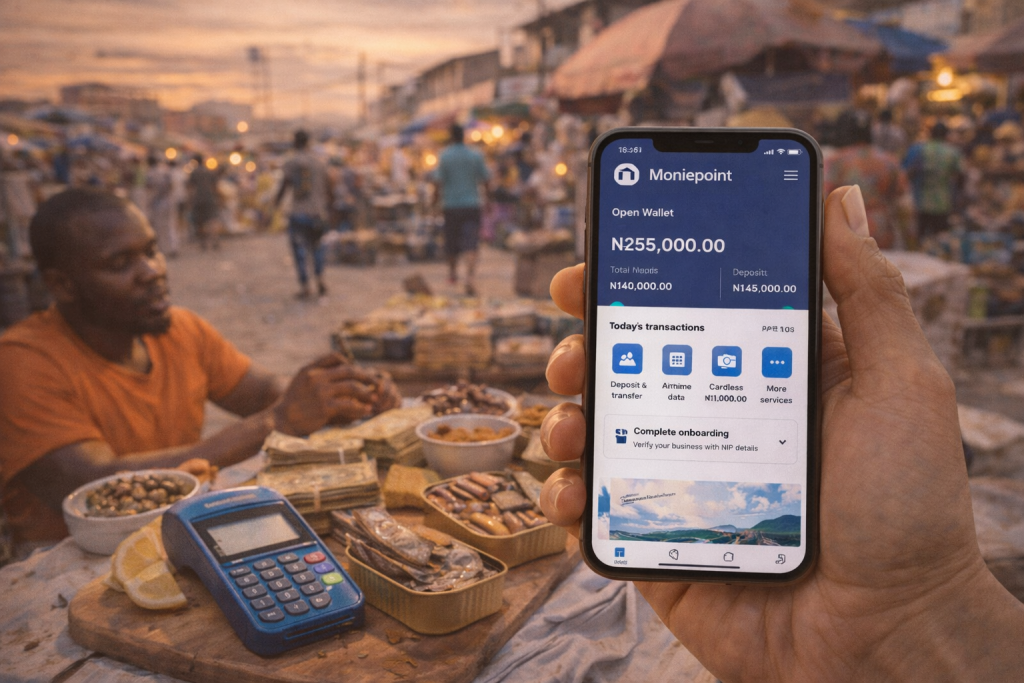
While American fintech companies fight over incremental improvements to already-banked consumers, a Lagos-based company has quietly built something far more transformative. Moniepoint reached unicorn status in October 2024 after closing $200 million in Series C funding. The company processes over $250 billion in annual transaction value, serves more than 10 million active business and personal banking customers, and operates profitably at scale. It’s also doing something unusual: achieving genuine financial inclusion rather than just marketing it.
Founded in 2015 by Tosin Eniolorunda and Felix Ike, Moniepoint began as infrastructure for banks and has evolved into Nigeria’s leading digital banking platform for micro, small, and medium enterprises. The company ranked among Africa’s fastest-growing companies for three consecutive years by the Financial Times and featured on CNBC’s list of world’s top fintech companies in 2025.
The Opportunity Most Western Fintechs Miss
Around half of Nigeria’s adult population has limited access to financial services. Bank branch concentration sits at 4.45 per 100,000 people, roughly 15% of the global average. According to Moniepoint’s research, only about 12% of Nigerian SMEs access financial services from conventional banks, with the majority relying on support from friends and family to finance operations.
This isn’t a developing market waiting for technology. It’s a massive economy where traditional banking infrastructure never reached most participants. Nigeria hosts 28% of Africa’s fintech companies and processed 108 billion mobile money transactions worth $1.68 trillion in 2024. The market is mature and hungry for solutions.
Moniepoint’s agent network brought financial services to communities that banks deemed unprofitable. Point-of-sale devices allow merchants to accept card payments and access banking services without branch visits. The company’s rapid rise began during Nigeria’s Central Bank cashless drive in early 2023 and has continued through relentless execution.
The Funding That Changed Everything
The Series C round brought together Development Partners International, Google’s Africa Investment Fund, Verod Capital, Lightrock, LeapFrog Investments, IFC, and most recently, Visa. The diversity of investor types, from impact-focused firms to global payments giants, validates Moniepoint’s combination of commercial success and social impact.
Visa’s strategic investment in January 2025 signaled confidence in the company’s role in Africa’s card ecosystem. Moniepoint leads Nigeria’s merchant acquiring market and ranks as a significant card issuer. The partnership will introduce contactless payments to Nigeria, where Central Bank draft guidelines already signal intent to drive tap-to-pay adoption.
The company has also led a $3 million investment in African fintech startup Payday, focusing on borderless payment solutions. This investment philosophy, building ecosystem rather than just company, distinguishes Moniepoint’s approach from purely competitive strategies.
Products That Solve Real Problems
Moniepoint’s platform spans digital payments, business and personal banking, credit, cross-border payments, and business management tools. The POS solution launched in 2019 allows businesses to process in-person credit and debit card payments securely. Personal banking added in 2023 has seen rapid adoption, with customer growth exceeding 2,000% in personal finance segments.
MonieWorld launched as a remittance solution targeting the UK market and African diaspora, addressing the expensive and cumbersome process of sending money home. Cross-border payments represent massive opportunity as African economies integrate and diaspora populations grow.
The integrated payment and bookkeeping solution simplifies business operations for MSMEs, combining financial transactions with the record-keeping that enables access to credit. By understanding merchant cash flow in real time, Moniepoint can offer loans that traditional banks, lacking visibility into informal business operations, cannot underwrite.
Why Profitability at Scale Matters
Moniepoint achieved something rare in fintech: profitability at unicorn scale while driving financial inclusion. The company has grown revenue at over 150% CAGR in recent years with industry-leading gross profit and EBITDA margins. This wasn’t venture-subsidized growth requiring eventual business model changes. It was sustainable unit economics from early stages.
For investors evaluating African fintech opportunities, Moniepoint demonstrates that social impact and commercial returns can align. The company serves populations that traditional finance ignores, building both business and development case simultaneously.
The 2024 funding environment, which saw African startup funding drop 25% as global interest rates rose, made Moniepoint’s ability to attract $200 million even more notable. When capital became selective, it concentrated in companies with proven models rather than speculative growth stories.
The Road Ahead
Moniepoint plans to deepen Nigerian presence while expanding into other African markets. Kenya has been identified as a potential key target given mobile money adoption and entrepreneurial density. The company’s 2025 acquisition of UK’s Bancom Europe secured key financial institution licensing for international expansion despite reporting early-stage losses in that market.
The AfriGO card partnership, committing to distribute 5 million cards through Nigeria’s National Domestic Card Scheme, will enhance digital payment adoption through tap-to-pay solutions. This collaboration leverages Moniepoint’s extensive network and technological expertise to drive national financial infrastructure development.
For family offices and institutional investors seeking emerging market exposure, Moniepoint represents the type of structural opportunity that produces outsized returns. The company addresses fundamental infrastructure gaps in economies growing faster than developed markets, with execution proving its ability to deliver.
What Western Observers Should Understand
Africa’s fintech landscape differs fundamentally from American or European contexts. These aren’t companies improving existing services. They’re building financial infrastructure from scratch for populations excluded from formal systems. The opportunity set is enormous, but so are the operational challenges.
Moniepoint’s success comes from understanding local context deeply. The biometric identification systems now covering over 115 million Nigerians enable identity verification that unlocks credit access. The agent network model recognizes that trust in communities often exceeds trust in institutions. The pricing strategy acknowledges that margins must be thin to serve populations with limited resources.
For Hamptons residents with capital allocation responsibilities, African fintech represents one of the highest-growth investment themes available. Moniepoint specifically demonstrates that commercial success and development impact can compound together rather than trading off.
Explore emerging market opportunities through Social Life Magazine. Connect with global investors at Polo Hamptons. Subscribe to our print edition for wealth management content, join our email list for weekly financial updates, or support independent journalism with a $5 contribution.
Related: Embedded Finance: The Invisible Banking Revolution | Paymenow: Earned Wage Access Reshaping African Payroll
Author

Written by
Recent Posts
The Most Stylish Winter Date Ideas For Couples Who Want Something Different

Spotted: How IT Girls Are Styling Their Phones for the World Cup Season
Curating the Evening Estate: The Aesthetic Power of Outdoor Wall Lighting

Inside Sushi by Bou’s Custom VIP Sushi Experience at Palm Tree Music Festival Hamptons

Face of Summer 2026: The Institutional Trader Who Reads Markets at Dawn and Drinks Rosé at Sunset
Categories
- Art
- Articles
- Business of Luxury
- Celebrities
- Entertainment
- Events
- Faces of Summer 2026
- Fashion
- Fashion & Style
- Featured
- Finance
- Food, Spirits, Wine
- Hamptons
- Hamptons Celebrities
- Health
- Health & Beauty
- Lifestyle
- Luxury Lifestyle
- Press
- Profiles
- Real Estate
- Technology
- The Chronicles
- Travel
- Uncategorized
- Weddings