
Three artists built approximately $103 million in combined net worth before turning thirty. That figure, however, is not the point. For Billie Eilish, Olivia Rodrigo, and Doja Cat, the new gen pop net worth story is not about accumulation. It is about ownership. Specifically, will peak-leverage decisions today compound the way Elton John’s did over fifty years? Notably, all three are currently at the career stage where those decisions are being made. The numbers will follow.
However, each artist reached financial scale through a different mechanism. Billie Eilish negotiated master ownership on later catalog — a structural decision most artists of her generation did not achieve. Olivia Rodrigo entered with catalog terms that earlier artists would not recognize. Doja Cat built a brand-licensing infrastructure before the music industry fully processed that she had done it. Consequently, this is not a story about three versions of early success. It is three different bets on which form of ownership compounds fastest.
Three Ownership Bets Under Thirty
Masters, Fragrance, and the Long Game: Billie Eilish

Billie Eilish’s ~$53M net worth sits on a structural foundation her peers largely lack. Two Album of the Year Grammys before age twenty-two established commercial credibility. The master ownership she negotiated on later catalog is, however, the more significant achievement. Masters compound. Grammy plaques, ultimately, do not.
Furthermore, her Blohsh brand, fragrance partnerships, and Apple Music deal generate income outside the touring cycle. Furthermore, she has demonstrated catalog durability rare for her age. When the Party’s Over and Ocean Eyes still stream heavily years after release. Indeed, that passive income pattern is the early signal of what Elton John’s catalog looks like at scale. The full Billie Eilish net worth profile covers the Interscope deal structure, the master ownership terms, and the compounding trajectory.
Catalog Ownership at Entry: Olivia Rodrigo
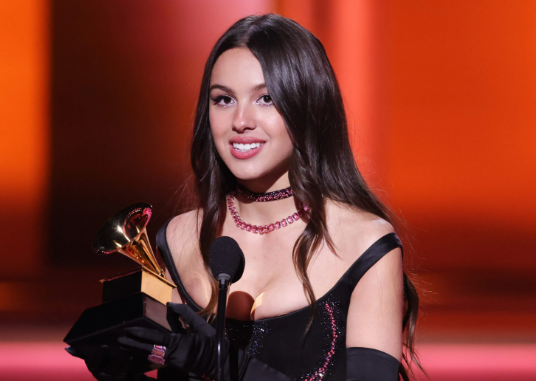
Olivia Rodrigo’s ~$30M net worth is built on two albums and unusually favorable entry terms. SOUR debuted at number one in thirty countries. Guts repeated that result. Additionally, master ownership on both albums means her royalties compound differently. Earlier-generation artists did not achieve these terms at the equivalent career stage.
She is, in fact, twenty-two. The net worth figure reflects roughly three years of major commercial activity. Notably, it does not reflect back-catalog income accumulating over the next three decades. Her ownership terms make that income structurally possible. Most first-album deals do not. The comparison point is not her contemporaries. It is what Elton John’s first-decade ownership terms produced fifty years later. The full Olivia Rodrigo net worth profile covers the deal terms, the streaming economics, and the long-arc trajectory.
Brand Before the Industry Noticed: Doja Cat

Doja Cat’s ~$20M net worth understates her brand position. Planet Her went platinum across six countries. Meanwhile, that architecture — Pepsi, BET, Taco Bell, fragrance — was assembled before most peers recognized it as a model. She built a licensing operation while the industry was still calculating her streaming numbers.
That sequencing matters considerably. Artists who build brand infrastructure during peak attention capture higher deal values. Those who wait capture less. Doja Cat moved first. Subsequently, the instinct that produced Say So and Kiss Me More has translated into a brand portfolio. It operates, moreover, independently of any single album cycle. The full Doja Cat net worth profile covers the Planet Her economics, the brand deal timeline, and the licensing architecture.
What New Gen Pop Net Worth Actually Measures
The $103M combined figure measures a starting point, not an outcome. All three are at the stage where ownership decisions made now will define their position in 2046. Masters, publishing, brand equity — these choices compound over decades. Accordingly, the meaningful comparison is not with their peers. It is with the upper tier: Elton John at $550M, Katy Perry at $340M, Shakira at $300M.
Each of those positions was built on catalog ownership established during a commercial prime. Eilish, Rodrigo, and Doja Cat are in that prime now. Indeed, the structural difference is timing. They entered after streaming established new leverage dynamics at the negotiating table. Their predecessors did not have that. As a result, their starting ownership positions are better than those of the artists whose endpoints they are tracking toward.
This new gen pop net worth story connects directly to the broader wealth architecture documented in Social Life Magazine’s Celebrity Net Worth Rankings 2026. Specifically, that list shows one pattern across nineteen names. Peak-period audience building followed by ownership accumulation produces the largest long-term wealth positions. All three of these artists are executing that pattern earlier than almost anyone in the catalog above them.
The Hamptons and the Next Generation
The Hamptons social circuit is where this generation’s wealth will eventually land geographically. Indeed, it already draws the management, label, and brand money that surrounds these careers. Polo Hamptons draws entertainment capital, brand budgets, and the finance relationships behind these deals. That convergence happens on the East End each summer.
Social Life Magazine has covered that room for twenty-three summers. Catalog-era wealth at the top. Streaming-era wealth being built now. Contact us to discuss features, brand partnerships, and placement alongside this audience.
Feature your brand alongside this audience: Contact Social Life Magazine — magazine features, digital placement, and event activations.
Where entertainment and brand money meets: Polo Hamptons — sponsorships, VIP access, and East End brand activations.
Get the Hamptons insider list: Subscribe to Social Life Magazine — 23 years of the East End, delivered.
Support independent Hamptons journalism: Donate $5
Author

Written by
Recent Posts
7 Mindful Meal Prep Tips for Stop Food Waste Day

Rebecca Ferguson Net Worth: The Advantage of Not Being the Lead
What Makes a Dinner Party Truly Unforgettable (Hint: It’s Not the Food)
Tips for Managing Grease and Oil in Everyday Dishwashing
Austin Butler Net Worth: The Method Actor in a Post-Method World
Categories
- Art
- Articles
- Beauty & Skincare
- Celebrities
- Celebrities|Entertainment
- Celebrities|Television
- Celebrities|The Chronicles
- celebrities|the-archive
- Chronicles
- Entertainment|Culture
- Event Photos
- Events
- Fashion
- Fashion & Style
- Featured
- Food & Beverage
- Food, Spirits, Wine
- Hamptons
- Hamptons Celebrities
- Hamptons Celebrities|Celebrities|The Chronicles
- Health
- Health & Beauty
- Lifestyle
- Luxury Lifestyle
- Movies
- Press
- Profiles
- Real Estate
- Technology
- The Chronicles
- Travel
- Uncategorized
- Weddings