
Old money outfits men wear follow rules developed across centuries of prep school traditions, Ivy League culture, and country club standards. These aren’t fashion choices. They’re identification signals. The right pieces open doors. The wrong ones raise questions before you’ve said a word.
This guide catalogs every essential piece in an authentic old money wardrobe, explains why certain items work while others fail, and provides the brands and styling rules that separate genuine old money presentation from costume wearing. For the complete philosophy behind these choices, see our Old Money Playbook: How Generational Wealth Actually Works.
The Foundation Principles
Quality Over Quantity
Old money wardrobes contain fewer pieces than you’d expect. Each item serves multiple purposes across years of use. A navy blazer attends board meetings, club dinners, polo matches, and casual Fridays. The same penny loafers work with suits, chinos, and shorts. Versatility matters because the philosophy rejects constant acquisition.
Investment calculation differs from conventional shopping. A $2,500 Brooks Brothers Golden Fleece blazer worn 200 times over a decade costs $12.50 per wear. A $400 fast-fashion alternative worn 20 times before replacement costs $20 per wear with inferior presentation. Old money math favors quality consistently.
Fit Before Fashion
Nothing matters more than fit. Old money clothing skims the body without clinging or bagging. Shoulders align with actual shoulders. Sleeves break at the wrist bone. Trouser hems kiss the shoe without pooling. These details require relationship with a tailor, which itself signals old money values.
The fit philosophy: neither too slim nor too relaxed. Extremely fitted clothing suggests trying to appear younger or following trends. Overly loose clothing suggests not caring or not knowing. The sweet spot communicates effortless appropriateness.
Condition Signals Authenticity
Pristine everything suggests recent acquisition. Old money wardrobes include pieces showing appropriate wear. A Barbour jacket with genuine patina. Penny loafers that have been resoled twice. An oxford shirt collar with slight fraying. These signs of use prove both quality and longevity.
The distinction between worn and worn-out matters. Clothes should show life without showing neglect. Proper care extends piece lifespan indefinitely while developing character that cannot be purchased new.
The Essential Pieces
The Navy Blazer
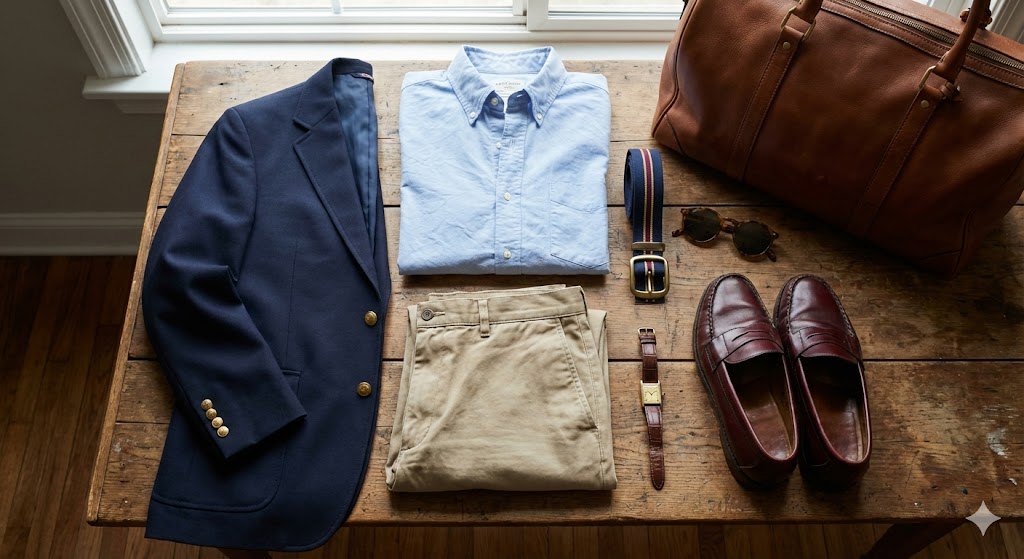
The single most important piece in old money outfits men build around. A properly selected navy blazer works with everything else in your wardrobe and serves every occasion from casual to semi-formal.
Construction details: Single-breasted, two-button front. Slightly relaxed fit through the chest. Patch pockets for casual, flap pockets for versatility. Brass buttons with appropriate patina. Half-canvas or full-canvas construction for proper drape.
Fabric choices: Worsted wool for year-round. Hopsack for breathability in warmer months. Flannel for winter weight. Avoid anything shiny, synthetic, or obviously fashion-forward.
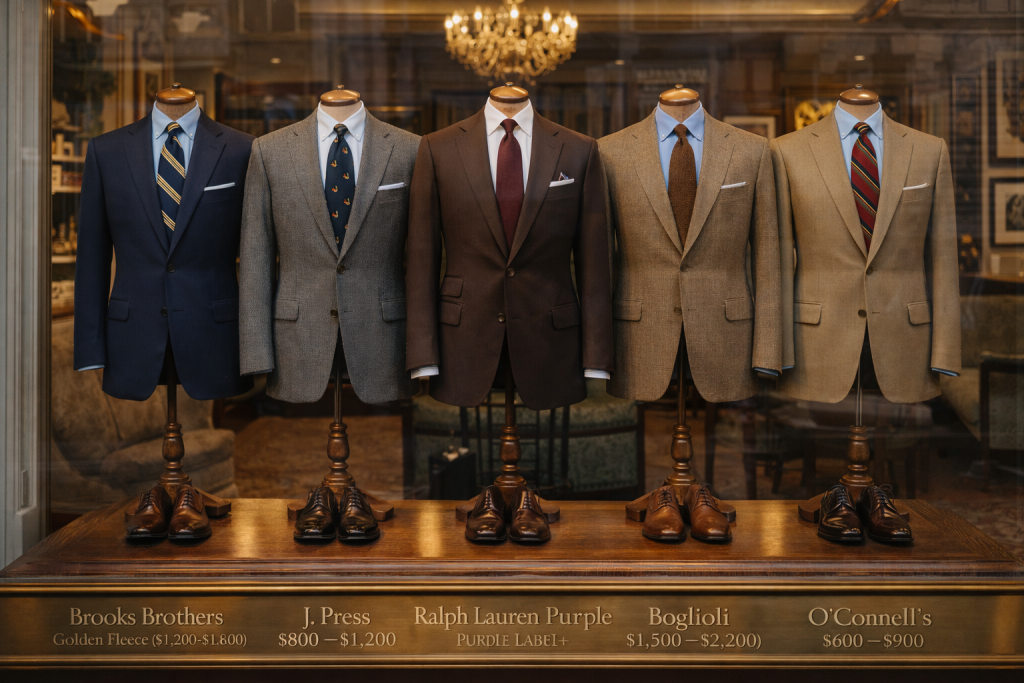
Recommended brands: Brooks Brothers Golden Fleece ($1,200-$1,800), J. Press ($800-$1,200), Ralph Lauren Purple Label ($2,500+), Boglioli ($1,500-$2,200), O’Connell’s ($600-$900).
Oxford Cloth Button-Down Shirts
The OCBD represents American prep school heritage crystallized in cotton. Brooks Brothers invented the style in the 1890s after observing polo players in England. The soft collar roll distinguishes quality from imitation.
Essential colors: White, light blue, pink, university stripe (blue and white). These four shirts handle 90% of occasions.
Fit details: Collar should roll softly, never spread stiffly. Shirt body should follow torso without billowing. Sleeves should reach wrist bone. Avoid anything labeled “slim fit” or “athletic fit” unless your tailor adjusts it.
Styling note: Wear slightly rumpled rather than pressed to perfection. The aesthetic values lived-in quality over pristine presentation. Pressing suggests trying too hard.
Recommended brands: Brooks Brothers ($100-$165), Mercer & Sons ($185), Kamakura ($90-$120), J. Press ($135), Drake’s ($200+).
Khakis and Chinos
The correct shade of khaki is specific: neither too bright nor too dark. It’s the color of worn cotton canvas, impossible to replicate in synthetic fabrics. Flat front or single pleat, never double-pleated, never cargo, never skinny.
Fit specifications: Waist sits at natural waist (above hips). Leg follows thigh without clinging. Break should be minimal, showing sock when sitting. Consider no-break for summer with loafers worn sockless.
Fabric requirements: 100% cotton in medium weight. Avoid stretch blends that appear shiny or synthetic. The fabric should wrinkle slightly because quality cotton does.
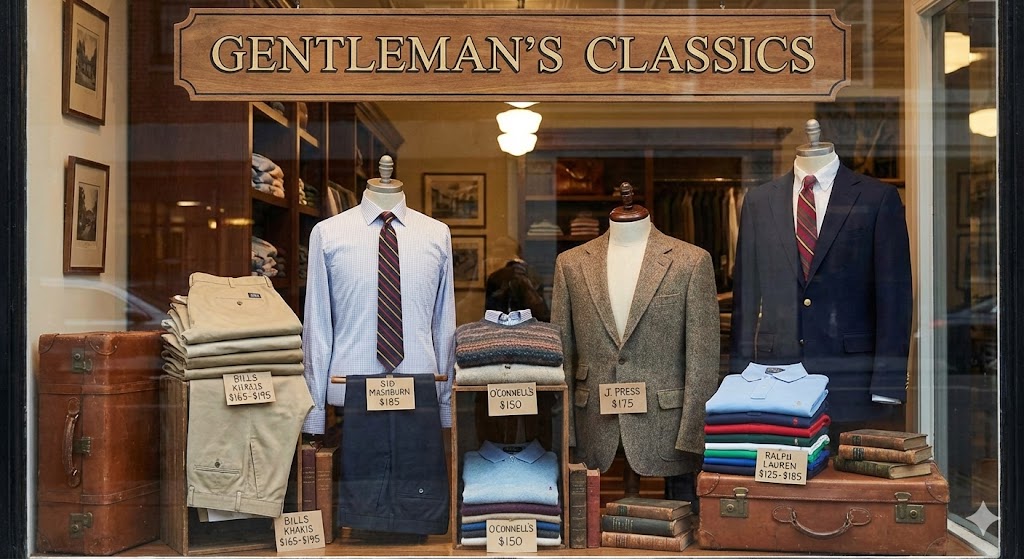
Recommended brands: Bills Khakis ($165-$195), Sid Mashburn ($185), O’Connell’s ($150), J. Press ($175), Ralph Lauren ($125-$185).
Penny Loafers
The quintessential old money shoe. Penny loafers originated at G.H. Bass in the 1930s, adopted by prep school students who stored coins in the strap for emergency phone calls. The style became permanent identification.
Leather choices: Burgundy (cordovan) for versatility across casual and dressed occasions. Brown for purely casual. Black exists but appears funereal for most old-money contexts.
Condition expectations: Should show patina from use. Polish regularly but don’t over-shine. Resole before soles wear through. Quality pairs improve with age; cheap pairs deteriorate. The investment justifies itself.
Sockless convention: Worn without visible socks in summer, typically with no-show socks for hygiene. With visible socks in cooler months, always solid colors (navy, burgundy, grey).
Recommended brands: Alden ($600-$750), Crockett & Jones ($550-$700), G.H. Bass Weejuns ($150-$200), Church’s ($500-$650), Rancourt ($350-$450).
The Watch
Old money watches tell time rather than announce wealth. Slim dress watches with simple three-hand displays dominate. Sports watches exist but should appear vintage rather than obviously new.
The inheritance principle: Ideally, the watch was grandfather’s. This isn’t possible for everyone, but the aesthetic preference for inherited pieces shapes appropriate selection. Choose watches that could have been inherited.
Appropriate choices: Cartier Tank (the definitive old money dress watch), Patek Philippe Calatrava, Jaeger-LeCoultre Reverso, vintage Rolex (Submariner or Explorer from the 1960s-70s, before the brand became new money signifier).
What to avoid: Anything too large (over 40mm for dress watches). Anything too new and obvious. Anything with complications that serve display rather than function.
Seasonal Wardrobes
Spring and Summer
Warm weather requires lighter fabrics while maintaining the same principles. Linen wrinkles, which is acceptable and expected. Seersucker signals summer in specific regions (South, Hamptons, Nantucket) but reads as costume elsewhere.
Essential pieces:
Linen trousers in stone, cream, or navy. Linen shirts in white or pale blue. Nantucket Red pants (from Murray’s Toggery only, as discussed in our Old Money Brands guide). Polo shirts from Lacoste or J. Press, never with oversized logos. White bucks for summer formality. Boat shoes (Sperry, Quoddy) for genuinely nautical contexts.
The navy blazer continues: Even in summer, the blazer remains essential for evening events, club dinners, and any occasion requiring jacket. Summer weight hopsack or cotton substitutes for wool.
Fall and Winter
Cooler months allow textural layering that defines old money style. Tweed, corduroy, flannel, and cashmere enter rotation. Colors deepen but remain muted.
Essential additions:
Tweed sport coats in herringbone or windowpane (brown, olive, grey). Cashmere or merino sweaters in crewneck or V-neck (navy, burgundy, oatmeal, forest green). Corduroy trousers in brown, olive, or burgundy. Flannel trousers in medium or charcoal grey. Barbour waxed jacket for anything outdoors. Camel hair overcoat for formal winter occasions.
Layering principles: Sweater over oxford under blazer represents the classic formula. Colors should coordinate without matching exactly. The palette stays within the same family (blues, earth tones, or greys) for any single outfit.
Occasion Dressing
The Office
Business environments vary, but old money defaults to overdressing slightly rather than matching current casual trends. The philosophy: dress for the position you want, which for old money means positions that don’t require proving anything through clothing.
Standard formula: Navy blazer, oxford shirt (white or blue), grey flannel or khaki trousers, penny loafers or cap-toe oxfords. Tie optional depending on environment, but keep one in your desk.
Suit occasions: When suits are required, select navy or charcoal in worsted wool. Avoid black (too severe for most business contexts), avoid patterns (too fashion-forward), avoid anything that announces itself.
The Country Club
Club environments have specific dress codes, but old money presentation works across all of them. The goal is looking like you’ve belonged forever.
Golf: Polo shirt tucked into tailored shorts or trousers. Belt. Cap optional. Avoid athletic wear that screams performance over tradition.
Tennis: Traditional whites remain appropriate at clubs that maintain standards. Otherwise, polo and shorts in muted colors.
Dining room: Blazer required at most clubs. Tie optional but recommended for dinner service. The best private clubs in the Hamptons maintain these standards consistently.
The Polo Match
Polo Hamptons and similar events require balancing sport context with social performance. The audience dresses for each other as much as for the match.
The formula: Light-colored chinos or linen trousers, oxford or linen shirt (pattern acceptable), optional blazer for evening, loafers or driving shoes. Hat or sunglasses for sun protection.
What succeeds: Looking like you attend regularly without thinking about what to wear.
Weekend Casual
Even casual old money outfits men select maintain the quality and fit standards. The difference is fabric weight and formality, not attention to detail.
Saturday formula: Chinos or quality denim (never distressed), polo or casual button-down (chambray, flannel), loafers or clean leather sneakers. Sweater for layering.
Sunday formula: Similar but potentially more relaxed. Khaki shorts in summer. Cashmere pullover in winter. The L.L. Bean signature look serves genuine country weekends.
The Color Palette
Foundation Colors
Navy, white, khaki, grey, and burgundy form the core. These colors mix infinitely and never date. An entire wardrobe built on these five colors requires no additional planning.
Navy: Blazers, sweaters, trousers, ties, socks. The most versatile and forgiving color.
White: Oxford shirts, linen, pocket squares. Requires care but signals confidence.
Khaki: Trousers, chinos, field jackets. The specific shade matters; see earlier section.
Grey: Flannel trousers, sweaters, overcoats. Charcoal for formal, medium for versatility.
Burgundy: Ties, loafers, accessories. Adds richness without demanding attention.
Accent Colors
Forest green, camel, light blue, and pink serve accent functions. These appear in specific pieces without dominating wardrobes.
Forest green: Sweaters, field jackets, ties. Signals countryside heritage.
Camel: Overcoats, sweaters, suede accessories. Warm neutral for winter.
Light blue: Oxford shirts primarily. The essential complement to navy blazer.
Pink: Oxford shirts, ties, pocket squares. Confidence color that works better than most expect.
What to Avoid
Bright colors, neon tones, and anything that demands attention. Black reads severe outside formal evening contexts. Trendy colors identify their vintage immediately. The goal is timelessness, which requires restraint.
Brands That Signal Old Money
American Heritage
Brooks Brothers: The foundation since 1818. Golden Fleece line for investment pieces, mainline for basics. Some quality variation after corporate changes; shop selectively.
J. Press: More refined than Brooks Brothers, stronger Ivy League connection. Core pieces haven’t changed because customers don’t want change.
Ralph Lauren: Complicated status. Purple Label and Double RL represent genuine quality. Mainline Polo acceptable for casual pieces. Avoid anything logo-heavy.
Bills Khakis: American-made trousers in correct specifications. The only source for properly colored khakis for some enthusiasts.
British Heritage
Barbour: The Bedale and Beaufort jackets define country dressing. Rewax annually. Appropriate patina develops over years.
Church’s: Northampton-made shoes representing quiet British quality. Better than flashier alternatives.
Turnbull & Asser: Jermyn Street shirtmakers. Investment-grade dress shirts and ties.
European Quiet Luxury
Loro Piana: Cashmere and outerwear without visible branding. The benchmark for quiet luxury.
Brunello Cucinelli: Italian cashmere with ethical philosophy. Slightly more relaxed than Loro Piana.
For complete brand analysis, see our Old Money Brands: The Complete List.
Common Mistakes
Visible Logos
The primary rule violation. Nothing should announce its brand from across the room. If strangers can identify what you’re wearing, it’s probably wrong. This eliminates most contemporary luxury regardless of price.
Everything Too New
Wardrobes that appear purchased last week signal recent acquisition rather than inherited style. Mix new pieces with vintage. Break in new items before prominent wear. Develop pieces over time rather than replacing constantly.
Following Trends
The aesthetic specifically rejects fashion. If something is obviously current-season, it’s probably wrong. Old money style should be undatable. Someone looking at a photograph shouldn’t be able to identify the decade from clothing alone.
Discussing Clothing
Nothing reveals performance faster than talking about brands, prices, or acquisition stories. Authentic old money considers such conversations vulgar. The goal is looking appropriate without drawing attention to the effort required.
Over-Matching
Everything coordinating too perfectly suggests costume rather than wardrobe. Colors should work together without matching exactly. The belt doesn’t need to match the shoes precisely. Slight variation reads as genuine rather than planned.
Connect With Social Life Magazine
Get Featured: Contact Social Life Magazine for advertising, features, and brand partnership opportunities.
Polo Hamptons 2026: See these styles in context at Polo Hamptons. Tickets, cabanas, and sponsorship opportunities available.
Stay Connected: Subscribe to our email list for exclusive event invitations and insider access.
Print Subscription: Get Social Life Magazine delivered—the Hamptons’ luxury lifestyle authority since 2000.
Support Independent Journalism: Donate $5 to support our coverage.
Related Reading
The Old Money Playbook: How Generational Wealth Actually Works
Author

Written by
Recent Posts
Must-Have Items for Your Wedding Gift Registry
What Mental Health Challenges Can Look Like Over Time
Quiet Luxury: The Rise of the Smart Motorized Pergola
Sleek Cosmetic Upgrades That Refresh Your Natural Beauty
Durable Vinyl Poster Printing in NYC That Turns Heads and Drives Results
Categories
- Art
- Articles
- Beauty & Skincare
- Celebrities
- Celebrities|Movies
- Celebrities|The Chronicles
- Chronicles
- Entertainment|Culture
- Event Photos
- Events
- Fashion
- Fashion & Style
- Featured
- Food & Beverage
- Food, Spirits, Wine
- Hamptons
- Hamptons Celebrities
- Hamptons Celebrities|Celebrities|The Chronicles
- Health
- Health & Beauty
- Lifestyle
- Luxury Lifestyle
- Movies|Culture
- Movies|Hamptons Lifestyle
- Press
- Profiles
- Real Estate
- Technology
- The Chronicles
- Travel
- Uncategorized
- Weddings