
Everyone from your Pilates instructor to your dermatologist seems to have an opinion on peptides for weight loss. Some call them revolutionary. Others dismiss them as another wellness fad. The truth sits somewhere more interesting.
Peptides are short chains of amino acids that signal your body to perform specific functions. When it comes to weight loss, certain peptides tell your metabolism to speed up, your appetite to quiet down, or your fat cells to release their contents. They work with your biology rather than against it.
This guide breaks down the science without the sales pitch. We cover which peptides actually work, what the research says, and what questions you should ask before starting any protocol.
How Do Peptides Work for Weight Loss?
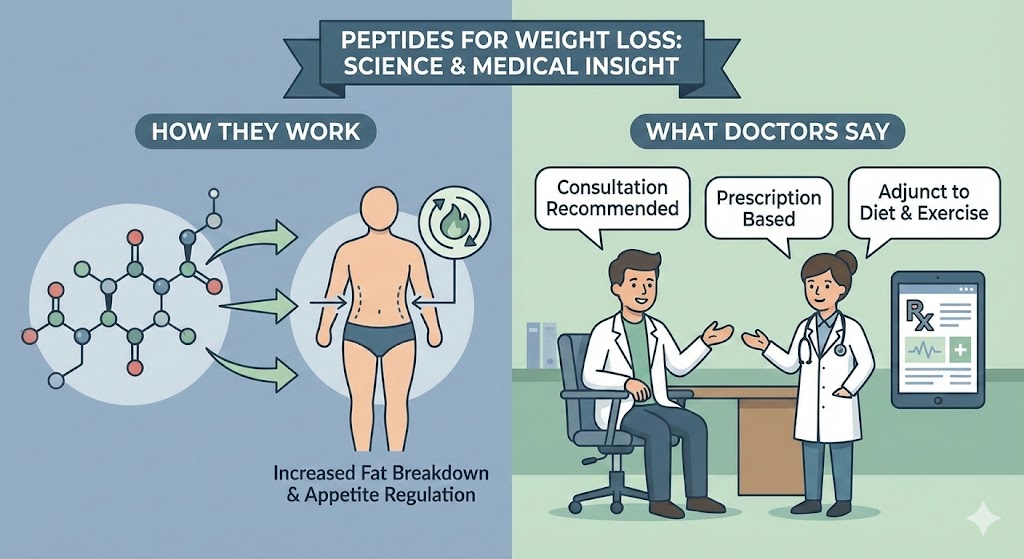
Peptides trigger weight loss by binding to specific receptors in your body. Depending on the peptide, they can increase growth hormone release, reduce appetite signals, or directly target fat cells for breakdown. Most weight loss peptides require injection and work best alongside proper nutrition and exercise.
Think of peptides as messengers. Your body already produces thousands of them naturally. Therapeutic peptides simply amplify or mimic signals your system recognizes.
The mechanism varies by peptide type. GLP-1 agonists like semaglutide slow gastric emptying and reduce hunger signals to the brain. Growth hormone secretagogues boost your natural HGH production, which accelerates fat metabolism. Meanwhile, specific fat-targeting peptides like AOD 9604 work directly on adipose tissue.
Understanding these mechanisms matters because it determines which peptide fits your goals. Someone dealing with constant hunger needs a different approach than someone with stubborn localized fat.
What Are the Best Peptides for Weight Loss?
The most effective peptides for weight loss include semaglutide (Ozempic/Wegovy), tirzepatide (Mounjaro), AOD 9604, and CJC-1295 with Ipamorelin. Semaglutide shows 15-20% body weight reduction in clinical trials. AOD 9604 targets fat specifically without affecting blood sugar or muscle tissue.
Semaglutide: The Headline Grabber
Semaglutide dominates the conversation for good reason. The New England Journal of Medicine published trials showing average weight loss of 14.9% over 68 weeks. Participants also saw improvements in blood pressure, cholesterol, and inflammatory markers.
The peptide works by mimicking GLP-1, a hormone your gut releases after eating. This slows digestion and tells your brain you feel full. Most users report dramatically reduced food noise and fewer cravings.
Side effects typically include nausea during the initial weeks. Starting at lower doses and titrating up slowly minimizes discomfort.
AOD 9604: The Fat-Specific Option
AOD 9604 offers a more targeted approach. This peptide fragment comes from human growth hormone but only activates fat-burning pathways. It skips the muscle-building and blood sugar effects entirely.
Research published in Obesity Research demonstrated that AOD 9604 increased fat metabolism without changing appetite or glucose tolerance. This makes it appealing for people who want body recomposition without appetite suppression side effects.
Many physicians combine AOD 9604 with other protocols. The peptide works well alongside lifestyle interventions and complements rather than replaces foundational habits.
CJC-1295 with Ipamorelin: The Growth Hormone Route
This combination stimulates your pituitary gland to release more natural growth hormone. Higher HGH levels increase fat oxidation, improve sleep quality, and support lean muscle retention during caloric deficits.
The appeal here is working with your body’s existing systems. Rather than introducing external hormones, these peptides encourage your glands to produce more of what they already make.
Results develop more gradually than with GLP-1 agonists. Most users notice improved sleep and recovery within weeks, with body composition changes emerging over months.
Are Peptides Safe for Weight Loss?
FDA-approved peptides like semaglutide and tirzepatide have extensive safety data from large clinical trials. Research peptides like AOD 9604 and BPC-157 have fewer long-term human studies. Working with a qualified physician and using pharmaceutical-grade compounds significantly reduces risk.
The safety profile varies dramatically based on several factors. Source quality matters enormously. Pharmaceutical-grade peptides from licensed pharmacies differ substantially from research chemicals sold online.
Medical supervision catches contraindications that self-administration misses. Peptides can interact with existing conditions and medications. A thorough health history review should precede any protocol.
According to the Journal of Clinical Endocrinology & Metabolism, most adverse effects from GLP-1 agonists resolve within the first month. Gastrointestinal symptoms predominate but typically diminish as your body adjusts.
How Long Do Peptides Take to Work for Weight Loss?
Most people notice appetite changes within 1-2 weeks of starting GLP-1 peptides. Visible weight loss typically appears by week 4-6. Maximum results require 3-6 months of consistent use. Growth hormone peptides work more gradually, with body composition changes developing over 8-12 weeks.
Expectations should match the mechanism. Appetite-suppressing peptides show faster initial results because they immediately change how much you eat. Metabolic peptides require time to shift your body’s baseline fat-burning rate.
Lifestyle factors accelerate or slow results. Protein intake, strength training, sleep quality, and stress management all influence how effectively peptides work. The compound amplifies your efforts rather than replacing them.
Do Peptides Require a Prescription?
FDA-approved peptides like semaglutide and tirzepatide require prescriptions in the United States. Some peptides like BPC-157 and AOD 9604 exist in regulatory gray areas and can be obtained from research chemical suppliers. However, physician-supervised protocols offer significant safety and efficacy advantages.
The prescription requirement exists for good reasons. Dosing, injection technique, and monitoring all benefit from professional oversight. What works for one person may cause problems for another.
Telehealth has expanded access considerably. Many concierge medicine practices and longevity clinics now offer peptide consultations remotely. Insurance rarely covers these treatments, but pricing has become more accessible as demand grows.
Questions to Ask Before Starting Peptide Therapy
Walking into a consultation prepared makes a significant difference. Consider asking about the specific peptide recommended and why it matches your situation. Request information about the pharmacy source and purity testing.
Dosing protocols vary between providers. Some start aggressively while others titrate slowly. Understanding the rationale helps you evaluate whether the approach aligns with your risk tolerance.
Ask about monitoring expectations. Quality providers check bloodwork before starting and at regular intervals. They adjust protocols based on your response rather than following rigid scripts.
Finally, discuss exit strategies. What happens when you stop? Some peptides require tapering. Others can be discontinued abruptly. Knowing the plan prevents surprises later.
The Bottom Line on Peptides for Weight Loss
Peptides for weight loss represent a legitimate therapeutic category backed by substantial research. They work through defined biological mechanisms and produce measurable results when used appropriately.
The best outcomes combine peptide therapy with foundational health practices. No compound replaces the need for quality nutrition, regular movement, adequate sleep, and stress management. Peptides amplify these efforts rather than substitute for them.
Working with qualified providers using pharmaceutical-grade compounds minimizes risk and maximizes results. The investment in proper supervision pays dividends in safety and effectiveness.
Whether peptides fit your situation depends on your goals, health status, and preferences. Armed with accurate information, you can have a productive conversation with your physician about whether this approach makes sense for you.
Interested in being featured in our Hamptons Wellness Guide? Contact our editorial team.
Join us at Polo Hamptons for our Summer Wellness Series featuring leading longevity physicians.
Subscribe to our newsletter for exclusive wellness content delivered weekly.
Support independent luxury journalism. Donate $5 to keep our coverage ad-free.
Related Articles
The Hamptons Guide to Longevity Clinics
What Southampton’s Top Doctors Say About NAD+ Therapy
Sources
NEJM: Semaglutide Trial Results
Harvard Health: GLP-1 Medications Explained
Author

Written by
Recent Posts

Aaron Paul Net Worth — His Character Was Supposed to Die in Season One. Instead He Made $30 Million.

Bryan Cranston Net Worth. He Played a Sitcom Dad for Seven Years. Then He Became the Most Dangerous Man on Television.

Breaking Bad Cast Net Worth. $130 Million Cooked in Five Seasons of Perfect Television

Cailee Spaeny Net Worth — From Springfield, Missouri to A24 and Alien in Three Years Flat

Wagner Moura Net Worth — He Learned Spanish to Play Escobar. Then He Learned English to Take Hollywood.
Categories
- Art
- Articles
- Beauty & Skincare
- Celebrities
- Celebrities|Movies
- Celebrities|The Chronicles
- Chronicles
- Entertainment|Culture
- Event Photos
- Events
- Fashion
- Fashion & Style
- Featured
- Food & Beverage
- Food, Spirits, Wine
- Hamptons
- Hamptons Celebrities
- Hamptons Celebrities|Celebrities|The Chronicles
- Health
- Health & Beauty
- Lifestyle
- Luxury Lifestyle
- Movies|Culture
- Movies|Hamptons Lifestyle
- Press
- Profiles
- Real Estate
- Technology
- The Chronicles
- Travel
- TV
- Uncategorized
- Weddings