
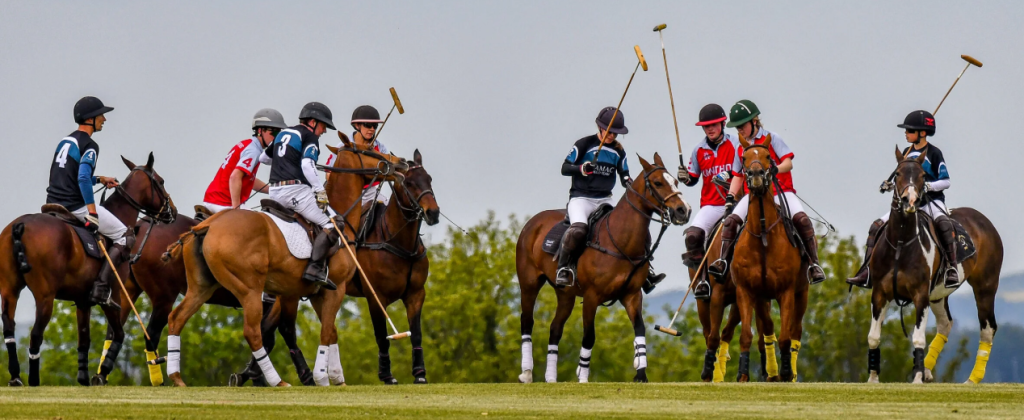
Polo persists in the Hamptons not because wealthy people enjoy horses. It persists because multi-generational wealth requires environments that match its timeline. A family office thinking in 50-year cycles needs gathering points that reward patience, not novelty. Polo delivers exactly that.
What Legacy Money Actually Seeks
Newer wealth optimizes for visibility. A hedge fund manager who closed his first nine-figure deal wants to be seen at the right parties, photographed with the right people, quoted in the right publications. This impulse makes sense. Recognition validates success.
Multi-generational wealth operates differently. Families who’ve held capital for three or more generations have already been validated. Their challenge isn’t proving they belong. Their challenge is finding environments where transactional pressure evaporates.
According to Bain & Company research on ultra-high-net-worth behavior, legacy families increasingly withdraw from public-facing luxury events. They’re not becoming less social. They’re becoming more selective about which social environments deserve their time.
Polo meets their criteria. The sport itself creates natural conversation breaks. Chukkers end. Horses change. Halftime brings everyone onto the field for divot stomping. These rhythms prevent the networking intensity that legacy families actively avoid.
Furthermore, polo rewards repeat attendance in ways that one-time events cannot match. A family that’s attended the same gathering for a decade has accumulated something no newcomer possesses: context. They know the other families. They understand the unspoken protocols. They’ve built trust through proximity over time.
For a deeper analysis of how celebrity wealth concentration mirrors family office patterns, see our coverage of celebrity Hamptons home sales.
The Infrastructure Beneath the Event
Most attendees see polo as entertainment with networking opportunities. Legacy families see it as infrastructure.
Consider the difference. Entertainment delivers experiences. Infrastructure delivers capacity. A concert is entertainment. A concert venue is infrastructure. The distinction matters because entertainment depreciates while infrastructure appreciates.
A polo event that recurs annually for twenty years becomes infrastructure for the families who attend consistently. Relationships deepen. Introductions accumulate. Children grow up knowing each other. By the third generation, the event functions less as a gathering and more as a reunion of people whose families have done business for decades.
This explains why certain Hamptons polo events attract the same families year after year. The event itself may evolve. New sponsors appear. Production values improve. Nevertheless, the core attendee base remains remarkably stable because they’re not consuming an experience. They’re maintaining infrastructure.
McKinsey & Company research on family office priorities confirms this pattern. Legacy families allocate significant resources to relationship maintenance. They understand that deal flow, partnership opportunities, and advisory access all depend on sustained proximity to the right networks.
For brands attempting to reach this audience, the implication is significant. A single sponsorship activates differently than a multi-year commitment. Legacy families notice consistency. They respect brands that demonstrate patience. They trust companies whose representatives appear summer after summer.
Our analysis of Polo Hamptons sponsorship ROI explores this dynamic in detail.

Why the Sport Itself Matters
Not every elite gathering persists across generations. Golf clubs rise and fade. Yacht weeks attract different crowds each year. Charity galas rotate attendees constantly. Polo has demonstrated unusual staying power. The reason relates to what the sport demands.
Polo requires horses. Horses require land. Land in the Hamptons requires either ownership or access. Consequently, polo functions as a natural filter. The sport cannot relocate to a rooftop bar or a gallery opening. It exists only where the infrastructure exists.
Additionally, polo operates at a pace that frustrates impatience. A match unfolds over six chukkers spanning roughly ninety minutes. Nothing can be rushed. This temporal architecture matches how legacy families actually make decisions.
A family office evaluating a direct investment takes months. A merger between two family-held companies takes years. The principals involved in these decisions operate in extended timeframes. They’re comfortable with activities that require patience because patience is how they built and preserved wealth.
The George Clooney net worth story illustrates how patience creates outcomes. Clooney’s Casamigos brand grew from friendships formed over years, not networking sprints. The relationships that produced a billion-dollar liquidity event developed in environments where nobody was pitching.
The Aesthetic Intelligence Factor
Legacy wealth communicates through aesthetics. What someone wears, drives, and displays signals their position in ways that words cannot replicate.
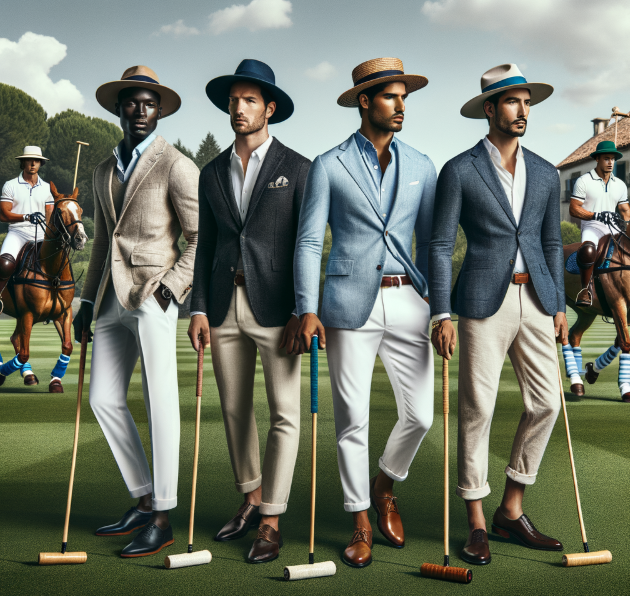
Polo concentrates aesthetic signals at unusual density. The dress code is unwritten but universally understood. Correct shoes matter. Correct hats matter. The absence of visible logos matters most of all.
For a comprehensive guide to these signals, see our analysis of quiet luxury in the Hamptons.
This aesthetic dimension explains why certain luxury brands prioritize polo association. A brand whose visual identity aligns with polo’s understated elegance gains credibility through proximity. A brand whose identity relies on logos and flash reads as misaligned.
The calculation isn’t about reaching the largest audience. It’s about reaching the audience whose aesthetic judgment carries weight. Legacy families notice which brands appear at polo. They notice which brands don’t.
According to Harvard Business Review research on luxury brand positioning, aesthetic alignment with high-credibility environments transfers authority to the aligned brand. The environment vouches for the brand without saying anything.
What Polo Reveals About Taste
A first-time attendee sees horses and champagne. A repeat attendee sees something different. They see which families acknowledge each other. What becomes visible is which conversations extend beyond small talk. What becomes visible is who sits in which cabanas and what that placement means.
This legibility develops over time. The event teaches its attendees how to read it. Each summer adds context. Each context adds depth to what observation reveals.
By the fifth summer, an attendee understands the field’s social architecture. Which introductions to pursue and which to avoid becomes clear. Which families are seeking deal partners versus merely maintaining relationships reveals itself. Who actually controls capital versus who merely manages it and who merely manages it.
For further exploration of celebrity-investor crossover patterns, see our guide to celebrities in the Hamptons 2025.
The Invitation Implicit in Presence
Polo in the Hamptons doesn’t advertise to legacy families. It doesn’t need to. The families already know.
What polo offers instead is an implicit invitation: if you understand why this gathering persists, you belong here. If you see infrastructure where others see entertainment, you think in the right timelines. If you value patience over novelty, your priorities align with the event’s architecture.
The grandmother explaining horses to her granddaughter doesn’t think of herself as transmitting wealth. She thinks of herself as transmitting judgment. The wealth will transfer through legal structures. The judgment transfers through summers at the polo field, absorbing how her family moves through these environments.
Twenty years from now, the granddaughter will sit in the same cabana. She’ll explain horses to her own children. The cycle will continue because cycles are what legacy wealth builds.
For an understanding of how specific celebrities converted cultural capital to financial capital across generations, explore our profiles of Hollywood’s living legends.
Experience Polo Hamptons: Where multi-generational wealth, cultural leaders, and legacy brands converge. Tickets and sponsorship information.
Feature Your Brand: For partnership opportunities, advertising inquiries, or to be featured in Social Life Magazine, contact our team.
Stay Informed: Subscribe to receive Social Life Magazine delivered to your Hamptons residence or Manhattan pied-à-terre.
Support Independent Luxury Journalism: Donate $5 to support our coverage of Hamptons culture, real estate, and the communities that matter.
Related Articles
Part of the Polo Hamptons Series
For the complete strategic framework, read: How Polo Hamptons Became a Meeting Point for Capital, Culture, and Luxury Brands
Continue the 6 Series:
- Why Polo Continues to Attract Power Across Generations
- Why Celebrities and Investors Gravitate Toward the Same Rooms
- What the Best-Dressed Crowd in the Hamptons Reveals About Taste
Related: What Separates a Crowd From a Room—and Why Principals Know the Difference
For features, advertising, and partnership opportunities with Social Life Magazine, visit sociallifemagazine.com/contact. Experience where capital meets culture at Polo Hamptons. Subscribe to our print edition or support independent luxury journalism with a $5 donation.
Author

Written by
Recent Posts
Where Can You Find the Best Made-to-Measure Bespoke Suits in NYC
The Financial Habits Every Successful Entrepreneur Swears By
What Happens If You Delay Hemorrhoid Treatment in New York City

James Franco Net Worth — A $30 Million Career Interrupted

Selena Gomez Net Worth — How a Disney Kid Built a $1.3 Billion Empire
Categories
- Art
- Articles
- Beauty & Skincare
- Celebrities
- Celebrities|Movies
- Celebrities|The Chronicles
- Chronicles
- Culture|Television
- Entertainment|Culture
- Event Photos
- Events
- Fashion
- Fashion & Style
- Featured
- Food & Beverage
- Food, Spirits, Wine
- Hamptons
- Hamptons Celebrities
- Hamptons Celebrities|Celebrities|The Chronicles
- Health
- Health & Beauty
- Lifestyle
- Luxury Lifestyle
- Movies
- Movies|Culture
- Movies|Hamptons Lifestyle
- Press
- Profiles
- Real Estate
- Technology
- The Chronicles
- Travel
- Uncategorized
- Weddings