
In 1957, Ralph Lifshitz wrote his future career in his high school yearbook: “Millionaire.”
He was seventeen years old. Just a kid from the Bronx who shared a single bedroom with his two brothers. His father Frank was a house painter who considered himself an artist, while his mother Frieda made sure they stayed kosher and attended synagogue every Saturday. Meanwhile, their clothes were hand-me-downs. And their neighborhood was Jewish immigrants packed into working-class apartments along Mosholu Parkway.
But every Saturday, young Ralph escaped to the movies. There, he watched Cary Grant move through rooms like he owned them. Similarly, he studied Fred Astaire’s elegance, particularly the way clothes could transform a man into something better than his circumstances. The screen showed him a world that existed somewhere, even if it wasn’t the Bronx.
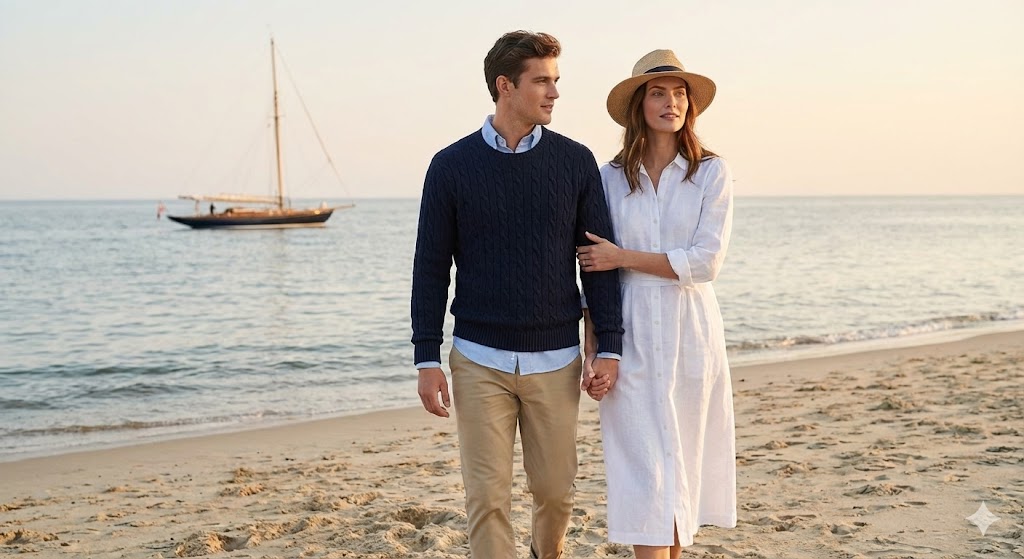
Today, the Ralph Lauren Hamptons compound stretches across multiple oceanfront properties in Montauk. Currently, he owns homes on both sides of what was once playwright Edward Albee’s estate, which he purchased for $16 million. Remarkably, the kid who couldn’t afford the clothes he dreamed about now owns the dream itself, built on 12 acres of Atlantic coastline where presidents vacation and the American aristocracy summers.
The Wound: Living in a Name That Made People Laugh
Ralph Lifshitz was born October 14, 1939, to Ashkenazi Jewish immigrants who had fled Belarus. His father Frank had emigrated from Pinsk, escaping the same Eastern European nightmare that would soon consume six million Jews. Consequently, the family settled in a lower-middle-class Bronx neighborhood where dreams were modest and survival was the goal.
From the beginning, the name was a problem.
“Lifshitz” invited mockery in English-speaking America. As a result, Ralph endured years of jokes, taunts, and deliberate mispronunciations. His brother Jerry faced the same problem. By sixteen, they’d finally had enough.
“Living in the Bronx with a surname like Lifshitz was never going to be easy,” as one biographer noted, “but for Ralph it was particularly torturous.”
In 1955, Ralph and Jerry legally changed their last name to Lauren. However, it wasn’t just about escaping ridicule. Instead, it was about shedding the skin of limitation and stepping into something aspirational. Although a brother named Lenny kept the family name, Ralph chose reinvention.
“People ask how can a Jewish kid from the Bronx do preppy clothes?” Lauren has said. “Does it have to do with class and money? It has to do with dreams.”
The Saturday Escapes
While his classmates dreamed about college degrees and steady jobs, Ralph had his eyes fixed on the movie screen. Indeed, Hollywood’s Golden Age was his education, featuring icons like Cary Grant, Gary Cooper, and Douglas Fairbanks Jr. These men weren’t just actors. Rather, they were templates for who a person could become if they dressed the part and believed it hard enough.
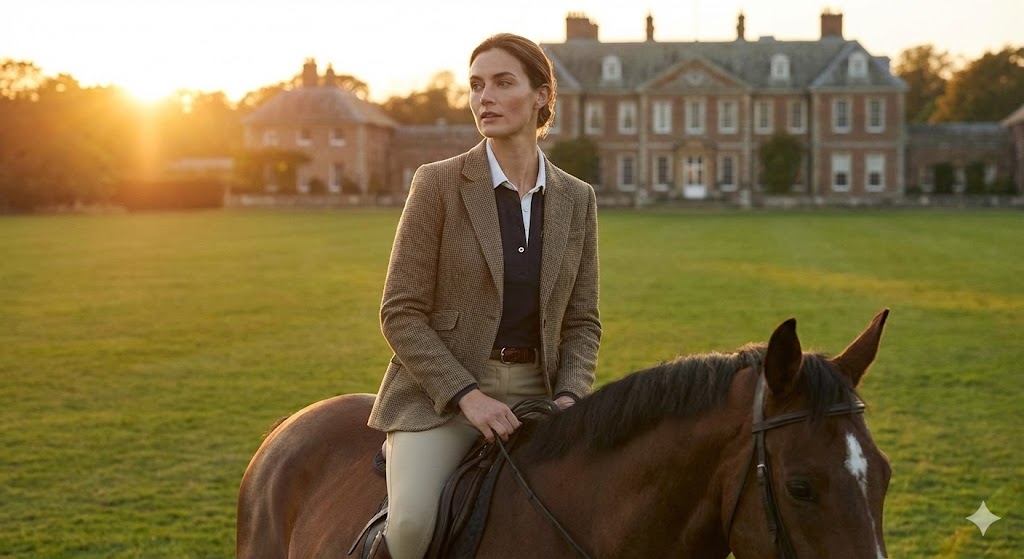
“I was growing up in the Bronx, and it was a time when heroes really meant something,” his nephew Greg Lauren recalled in Esquire. Notably, those heroes weren’t from the neighborhood. Instead, they existed in a parallel universe of country clubs, polo matches, and inherited ease.
Ralph noticed what his classmates missed. To him, clothes weren’t just fabric. Instead, they were stories, essentially permission slips to enter worlds you weren’t born into. Even as a teenager, he had distinctive taste, finding vintage pieces and classic preppy wear while other kids wore whatever their mothers bought.
Importantly, his father Frank understood creativity. “My father, people say he was a house painter, but he wasn’t,” Ralph later clarified. “He painted houses when he couldn’t get a job. But actually, he was an artist. Life wasn’t easy with four children, so he did what he had to do.”
The Chip: The World Is Not Ready for Ralph Lauren
After high school, Lauren took business classes at Baruch College at night while working sales jobs during the day. Subsequently, he served in the Army from 1962 to 1964. Then he landed at Brooks Brothers, the oldest men’s clothing brand in America, selling other people’s clothes while dreaming of his own.
Next, he moved to tie manufacturer Rivetz to learn the neckwear business. By 28, he was selling for Beau Brummell, another tie company. Finally, that’s when he made his move.
Lauren approached his employer with a proposal: let him design a line of ties. He envisioned wide ties and colorful ties, specifically ones made from unexpected fabrics that looked like they belonged in the world he’d seen on movie screens.
Abe Rivetz delivered the verdict: “The world is not ready for Ralph Lauren.”
Nevertheless, Lauren decided the world was wrong.
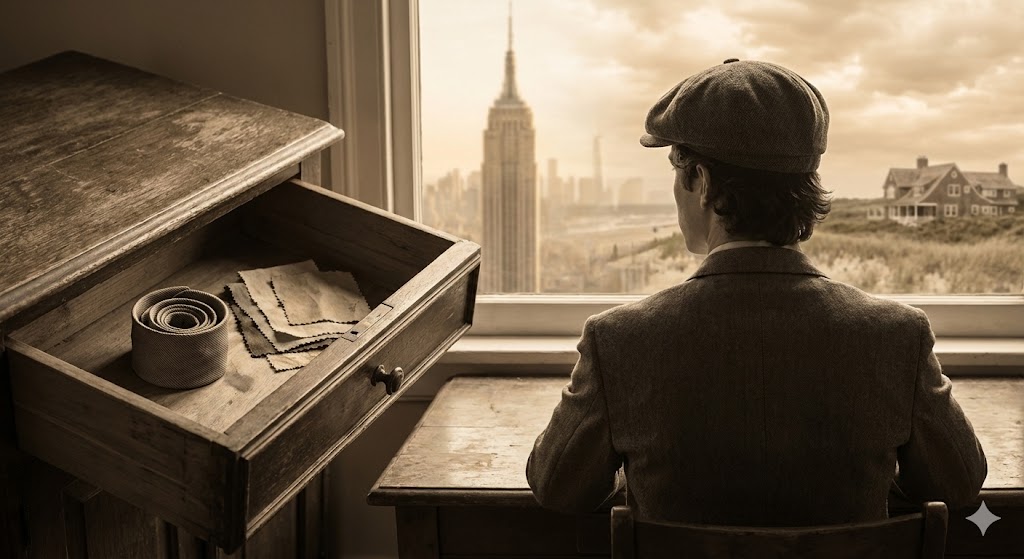
In 1967, he convinced Beau Brummell to manufacture his designs under a name he’d carefully chosen to evoke British aristocracy and American sport: Polo. Accordingly, he set up shop in a single drawer in a showroom in the Empire State Building. Just one drawer—that was his entire inventory.
The First Rejection, Then the Empire
Lauren approached Bloomingdale’s 59th Street flagship with his wide ties. Although the buyer loved them, there was a condition: they would only sell under Bloomingdale’s in-house “Sutton East” label, not the Polo name.
Surprisingly, Ralph said no.
A Jewish kid from the Bronx with ties in a drawer turned down Bloomingdale’s. Remarkably, he walked away from the biggest department store in New York because they wouldn’t let him keep his name on his product.
Six months later, Bloomingdale’s came back. After all, the Polo ties were selling everywhere else. Finally, they agreed to Lauren’s terms.
In his first year, Lauren sold $500,000 worth of neckties to Bloomingdale’s, Neiman Marcus, and Paul Stuart. Moreover, he personally delivered orders in a vintage Morgan convertible, hailing cabs with bags of ties when the car wasn’t available.
By 1968, he introduced a full menswear line. Subsequently, by 1971, women’s wear followed. Then in 1972, he debuted what would become his signature: the mesh polo shirt with the embroidered player on horseback. Essentially, it was the logo of a sport Ralph Lauren had never played, selling a lifestyle he’d invented from Saturday afternoons at the movies.
The Rise: Dressing the American Dream
In 1974, director Jack Clayton was making The Great Gatsby with Robert Redford and Mia Farrow. Specifically, he needed someone who understood the visual language of old money, the Jazz Age aesthetic of reaching for something just beyond your grasp.
Ultimately, he chose Ralph Lauren.
Lauren designed a pink suit specifically for Redford’s Jay Gatsby, the character who had also changed his name and invented himself from nothing. Certainly, the parallels weren’t lost on anyone. Newsweek put the “Gatsby look” on its cover, and suddenly the kid from the Bronx was dressing Hollywood’s vision of American aristocracy.
Three years later came Annie Hall. Diane Keaton won the Best Actress Oscar wearing Lauren’s clothes, though the designer is quick to note that the look was pure Diane. “Annie’s style was Diane’s style—very eclectic. Oversized jackets and vests, floppy men’s hats, and cowboy boots,” Lauren told Vogue. “We shared a sensibility, but she had a style that was all her own.”
The Great Gatsby and Annie Hall established something unprecedented. A fashion designer wasn’t just making clothes anymore. He was making culture. The look, the lifestyle, the aspiration—Ralph Lauren was selling all of it.
The Rhinelander Mansion
In 1986, Lauren opened his flagship store in the Rhinelander mansion on Madison Avenue and 72nd Street. Originally, the building had been designed in the 1890s for a society matron who ran out of funds before construction could be completed. Ironically, Lauren finished what old money couldn’t.
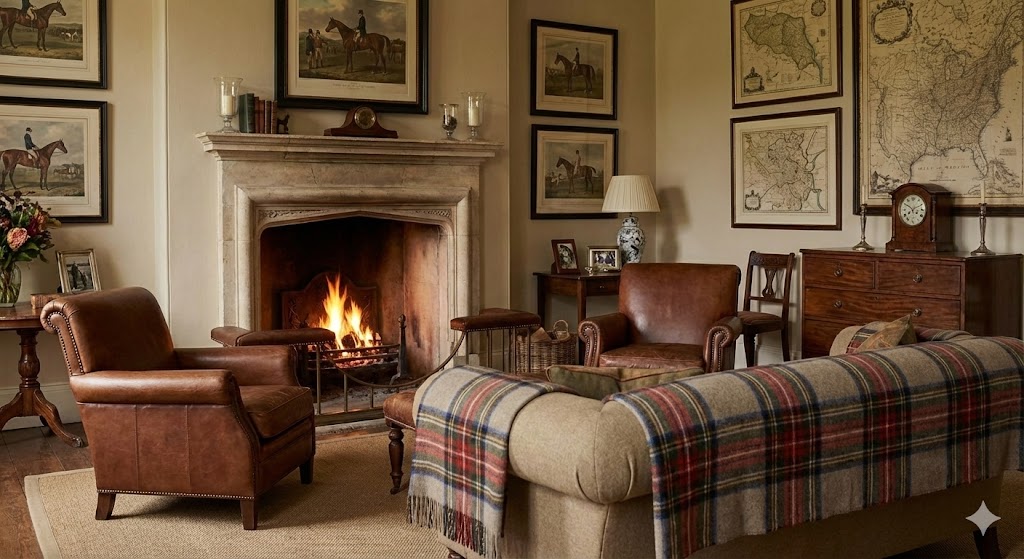
“Everything is as much about setting as the thing itself,” architecture critic Paul Goldberger observed. “You go into that store and you feel good. And so you wanna buy things. Because you’re buying a piece of this life. That was his whole idea—come into my movie, buy a piece of this life.”
Similarly, Jerry Seinfeld, another Bronx-adjacent dreamer, remembers the era: “I remember the jeans and the cologne. Everybody was wearing that. It was very aspirational for me at that time. I was completely broke for most of the seventies and eighties. So it was just, you know… when you made it, that’s what you would buy. Something of style and quality like Ralph.”
The Tell: Inventing the World You Wanted
Ultimately, the wound of being Ralph Lifshitz never fully healed. Columnist Richard Cohen noted in a documentary: “Whenever I read a reference to his name, I think there was a smidgen of antisemitism there. I wrote a column to defend Ralph Lauren. Critics always pointed out that he was from the Bronx and his last name was Lipschitz, and I resented it, so I said no, this isn’t something bad, this is good.”
Yet Lauren transformed the wound into empire. Rather than hide where he came from, he used it. Consequently, the kid who couldn’t afford the clothes he wanted created them for everyone else who felt the same longing.
In 1987, he underwent surgery to remove a benign brain tumor, making a full recovery. Consequently, the near-death experience only intensified his commitment to the life he’d built. He had married Ricky Ann Loew-Beer back in 1964, meeting her in a doctor’s office where she worked as a receptionist. Together, they’ve been partners for sixty years, raising three children: Andrew, David, and Dylan.
Today, the family attends Park Avenue Synagogue in Manhattan. The boy whose mother made sure they kept kosher now leads his synagogue’s capital campaigns. In essence, the heritage he couldn’t escape became the foundation he built upon.
Ralph Lauren Hamptons: The Bronx Kid on the Atlantic
In the 1970s, Ralph and Ricky Lauren discovered Montauk in their white Jeep. Immediately, they fell in love with the wild landscape, the windswept beaches, and the feeling of being at the edge of the world. Somehow, it reminded Ralph of something, even though he’d never seen anything like it growing up.
Soon after, they bought a house built in 1940 by architect Antonin Raymond, who had worked with Frank Lloyd Wright. It featured cedar shingles, Montauk-stone walls, and expansive fireplaces throughout. Notably, the house deferred to the dramatic landscape rather than competing with it.
“Being on the ocean is important to me,” Lauren told Elle Decor, “and the house itself just seems to be a part of the dramatic landscape. The scenery from every inch of this property, and from every room, is beautiful. The dunes of Montauk and the vast horizon are breathtaking.”
Over the decades, the Ralph Lauren Hamptons compound expanded significantly. First, he purchased the property to the west for $12.5 million in 2013. Subsequently, in 2019, he paid $16 million for Edward Albee’s estate directly to the east, the home where the playwright had written “Who’s Afraid of Virginia Woolf?” and lived for over fifty years.
Currently, the Ralph Lauren Hamptons holdings span multiple oceanfront acres, forming a trifecta of properties on Old Montauk Highway. The compound includes main houses, guest houses, pool houses, and tennis courts. Altogether, it encompasses two hundred feet of direct ocean frontage.
Simple Pleasures, Earned
Interestingly, it’s said that Lauren almost bought a much larger house in the Hamptons but chose the more modest Montauk property because it reminded him of the bungalows from his Bronx childhood. Essentially, it was a way of staying true to his roots despite a net worth that now exceeds $11 billion.
Summers in Montauk are lived simply. There are morning walks with the dogs, followed by reading on the veranda. Then comes lobster and tomatoes from the garden, along with chess on the terrace. Clearly, the man who built an empire on aspiration found peace in restraint.
“Our homes are a canvas for living,” Lauren wrote in his book celebrating forty years of Ralph Lauren Home. “Whether we live in the city, the country, on a farm, at the beach, in a penthouse or cabin, each is home and tells our story.”
Indeed, his story is the American story. First, a kid who changed his name to escape mockery. Then, a tie salesman who worked from a single drawer. Later, a designer who dressed Gatsby and Annie Hall. Now, a billionaire who summers in Montauk and worships at Park Avenue Synagogue.
The Dream Made Real
In September 2024, Ralph Lauren presented his Spring 2025 collection at Khalily Stables, a 19-acre equestrian compound in Bridgehampton. Additionally, he brought his vintage car collection. Furthermore, he recreated the Polo Bar restaurant from Manhattan, complete with the same maître d’. Meanwhile, models walked through the bucolic Hamptons landscape wearing the clothes of a man who had spent sixty years turning imagination into fabric.
At 84 years old, he was still designing, still dreaming, and still proving that the world was ready for Ralph Lauren, even when it said it wasn’t.
Today, the Ralph Lauren Hamptons compound sits at the end of Long Island, where the land runs out and the Atlantic begins. Geographically, it’s as far as you can get from the Bronx while staying in New York. But ultimately, it’s not really distance. It’s proof.
Ralph Lifshitz wrote “millionaire” in his yearbook at seventeen. By any measure, he exceeded that goal by a factor of ten thousand. However, the real achievement isn’t the money. Rather, it’s that a kid who couldn’t afford the clothes he saw in movies created a world where anyone could buy a piece of the dream.
Ultimately, he didn’t just change his name. Instead, he changed what American aspiration looked like. And somewhere in Montauk, on oceanfront land he assembled property by property, the kid from Mosholu Parkway watches the same sun set that Cary Grant watched in all those Saturday movies. Only now, he owns the view.
Get the Inside Story
Feature Your Hamptons Brand or Property: Contact Social Life Magazine — We connect luxury brands with the audiences that matter.
Polo Hamptons VIP Experiences & Brand Partnerships: Explore Polo Hamptons — Where icons, tastemakers, and brands converge.
Join the Hamptons Insider List: Get Our Newsletter — Celebrity origin stories, real estate moves, and East End intel before anyone else.
Social Life Magazine Subscription: Subscribe Now — 23 years of Hamptons authority, delivered to your door.
Support Independent Hamptons Coverage: Donate $5 — Keep the real stories coming.
Related Stories
Read more celebrity Hamptons origin stories at Social Life Magazine, including coverage of Billy Joel, Howard Stern, Jerry Seinfeld, Steven Spielberg, and the Long Island icons who shaped East End culture.
Author

Written by
Recent Posts
Behind the Scenes of Weddings Involving Long-Distance Relationships
Why Karaoke Is the Ultimate Entertainment Choice for a Hen Party
Easy Recipes That Feed A Crowd Without The Stress
The Influence Of Social Media On Interior Style Trends
Where Can You Find the Best Made-to-Measure Bespoke Suits in NYC
Categories
- Art
- Articles
- Beauty & Skincare
- Celebrities
- Celebrities|Movies
- Celebrities|The Chronicles
- Chronicles
- Entertainment|Culture
- Event Photos
- Events
- Fashion
- Fashion & Style
- Featured
- Food & Beverage
- Food, Spirits, Wine
- Hamptons
- Hamptons Celebrities
- Hamptons Celebrities|Celebrities|The Chronicles
- Health
- Health & Beauty
- Lifestyle
- Luxury Lifestyle
- Movies|Culture
- Movies|Hamptons Lifestyle
- Press
- Profiles
- Real Estate
- Technology
- The Chronicles
- Travel
- Uncategorized
- Weddings