
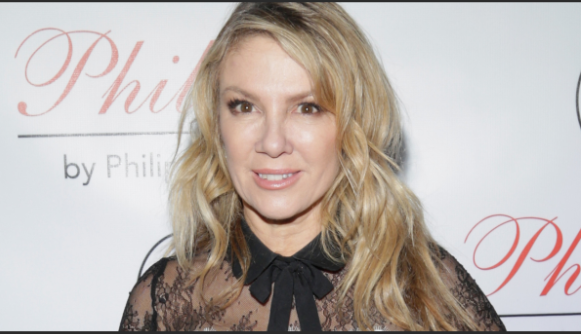
Rhinebeck, New York. Population: 7,500. A girl holds a knife to her father’s face. She’s maybe twelve, maybe younger. Behind her, her mother cowers in the kitchen, blood or tears or both. The father, drunk again, has crossed a line. And the girl—the one who will someday become the longest-running cast member in Real Housewives history—makes a choice.
“Stop it. Stop it right now or I swear I will take this knife and shove it into your neck.”
He stops. This time.
Ramona Singer would later write about that night in her memoir, Life on the Ramona Coaster. She would describe her childhood as “a blur of nightmarish memories, punctuated by my father drinking too much, then drunkenly abusing and berating my mother.” But here’s what matters more than the trauma: she got out. She built a business empire before reality television existed. And when the cameras finally came, she knew exactly how to handle them.
“It’s easy for me to block out the cameras,” she wrote. “Probably because, growing up, I had to block out all the noise in my family. I shut the cameras out, just like I shut out my father’s yelling.”
Ramona Singer Net Worth: The Numbers Behind the Noise
The Ramona Singer net worth currently sits between $16-18 million, depending on the source. Her RHONY salary reportedly reached $500,000 per season, and she appeared in all thirteen seasons of the original run—the only cast member with that distinction. However, television money represents just one slice of her financial pie.
RMS Fashions, her wholesale clothing company, has operated profitably since 1986. “It’s very lucrative,” she told The Observer in 2008, and nothing suggests that’s changed. Additionally, she co-founded True Faith Jewelry with her ex-husband Mario in 2005, launched the Ramona Singer Collection for HSN, created a skincare line called Tru Renewal (later rebranded as Ageless by Ramona), and released Ramona Singer Pinot Grigio in 2011.
Then there’s the real estate. Her Southampton mansion, purchased in 1994 for $875,000, now rents for up to $460,000 per summer. The 7,000-square-foot estate features six bedrooms, a heated pool, Har-Tru tennis court, and enough wine storage for 120 bottles—because of course it does.
The Wound: When Home Becomes a War Zone
Bohdan Mazur came from Ukraine. His wife Veronika came from Budapest. Together they settled in Rhinebeck, a picturesque Hudson Valley town that tourists now visit for antique shops and farm-to-table restaurants. But inside the Mazur household, nothing was picturesque.
Ramona has described the house as a war zone: “dishes flying around the house, lots of screaming, and yelling.” Her father’s alcoholism fueled cycles of abuse that she and her sister Sonya witnessed regularly. During one memorable episode of RHONY, when the housewives visited the Berkshires, Ramona was triggered immediately by the country setting. “I believe my father moved us to the country so he could just hurt my mother and the neighbors couldn’t hear,” she revealed.
The question that haunted her childhood was simple: why didn’t her mother leave? “How can she stay married to this abusive man?” Ramona wrote in her memoir. “Maybe she’s given up, but I haven’t. I have to protect her.”
That protective instinct—the willingness to stand between violence and vulnerability—would shape everything that followed. It made her fierce, unfiltered, and occasionally insufferable. Nevertheless, it also made her rich.
The Chip: First Graduate, First to Escape
Education offered the first escape route. Ramona enrolled at the Fashion Institute of Technology in New York City, pursuing a bachelor’s degree in marketing. She didn’t just graduate—she became the first graduate of FIT’s four-year honors program with a B.S. in marketing. The distinction mattered to her precisely because nothing in Rhinebeck had suggested she was exceptional.
After graduation, she entered Macy’s executive training program as a buyer. Subsequently, she moved into sales management for Calvin Klein and French Connection. Each position taught her how fashion actually moves through the economy—not just design, but distribution, margins, and timing.
At twenty-nine, she was still working for other people. By thirty, she wasn’t. With a $70,000 loan from her father—yes, the same father who had terrorized her childhood—Ramona launched RMS Fashions Inc. The company’s model was elegant in its simplicity: buy excess inventory from retailers, sell it to discount stores like TJ Maxx and HomeGoods. Rather than creating fashion, she arbitraged it.
The business proved profitable enough to fund everything that came later: the Manhattan apartment, the Southampton estate, the lifestyle that would eventually attract Bravo’s attention. By the time cameras arrived in 2008, Ramona wasn’t performing wealth. She had actually built it.
The Rise: Thirteen Seasons and Counting
When The Real Housewives of New York City premiered in March 2008, Ramona was fifty-two years old, married, and running multiple businesses. Unlike some of her castmates, she didn’t need the show for money or exposure. Instead, she agreed to appear on one condition: she could promote True Faith Jewelry.
That promotional instinct defined her approach to reality television. Every drama, every meltdown, every glass of Pinot Grigio served as marketing. “Turtle Time”—her infamous ritual of drinking and dancing—became a brand unto itself. Her taglines became merchandise: “I’m an acquired taste. If you don’t like me, acquire some taste.”
The show made her famous, but her businesses made her wealthy. Throughout the years, she launched product after product: HSN jewelry collections, Ramona Pinot Grigio, Tru Renewal skincare. Meanwhile, she rented out her Southampton mansion for six figures per month during summer seasons when she wasn’t filming there.
By season thirteen, Ramona was the last original housewife still standing. Bethenny Frankel had left (twice), Jill Zarin had been fired, and Luann de Lesseps had been demoted and reinstated. Only Ramona remained, her unfiltered opinions and questionable filter settings intact.
The Tell: The Marriage That Mirrored Everything
Ramona met Mario Singer at a gym in 1990. He approached her at dinner with one of the more unusual opening lines in recorded history: “Aren’t you the girl who wears the black G-String with the green ruffle?” She said yes. They married in 1992.
For years, the relationship seemed genuinely solid. They renewed their vows on television during season three, and Mario called marrying Ramona “the best decision of his life.” Their daughter Avery, born in 1995, appeared regularly on the show as a well-adjusted young woman who seemed to actually like her parents.
Then came season four, and a psychic’s warning that Mario would be unfaithful. Ramona dismissed it as ridiculous. However, in October 2013, Page Six reported that Mario had been having an affair with a twenty-something fitness trainer named Kasey Dexter. The report alleged that Dexter had gotten pregnant and Mario had paid for an abortion. Ramona reportedly first learned of the affair from the newspaper.
What happened next became tabloid legend. In January 2014, Ramona followed Mario to their Southampton home—the same estate she’d built into a summer rental empire—and found him there with Dexter. According to reports, she “threw a fit and called the cops.” When police arrived, she offered them wine.
The marriage limped along for months. Ramona tried therapy, tried reconciliation, tried denial. Finally, in August 2014, she announced on Twitter that she was filing for divorce. “I told Mario it’s over because he lied to me about still being in contact with this Kasey,” she told People. “I said, ‘You are a liar. You are a betrayer. I don’t want you in my life anymore.'”
The divorce was finalized in 2016 after twenty-three years of marriage. Meanwhile, Mario moved in with Kasey Dexter—until she cheated on him too, and he discovered it through hidden cameras he’d installed in their apartment.
The Hamptons Connection: Where the Trauma Became Territory
Ramona’s Southampton estate tells a particular story about American reinvention. Purchased in 1994 for $875,000, the property now commands summer rentals approaching half a million dollars. The 7,000-square-foot home sits on 1.4 acres, featuring a heated pool, tennis court, bocce court, and the kind of landscaping that suggests someone has definitively escaped their origins.
The address—39 Pheasant Close South—places her firmly in Southampton’s most desirable corridor, south of the highway. The master suite alone measures 1,200 square feet, larger than many Manhattan apartments. From the property’s edge, she can see the pond that gives the location its waterfront premium.
This is where Ramona caught Mario with his mistress, and this is where she stayed anyway. She never sold. Instead, she renovated repeatedly, upgraded constantly, and rented to strangers when she wasn’t using it herself. The house that witnessed her marriage’s destruction became another revenue stream. Rather than carrying trauma, she monetized the location.
Recently, real estate agents have noted that Ramona may be pursuing her own license to join Douglas Elliman. If true, she would be turning her Hamptons expertise into yet another business—selling the lifestyle she herself exemplifies.
What the Ramona Singer Net Worth Really Represents
The $18 million figure obscures something more interesting than its size. This is money earned by someone who learned, as a child, that home could become a battlefield at any moment. That early training—the hypervigilance, the quick reactions, the ability to block out chaos and function anyway—became the foundation of a business career.
Ramona didn’t inherit wealth; she borrowed startup money from her abuser. She didn’t marry rich; her husband’s business manufactured religious articles and trophies. She built RMS Fashions before reality television existed, negotiated Bravo contracts for thirteen seasons, and turned a Southampton property into a perpetual income machine.
Her sister Sonya wrote a memoir called Cocaine and Champagne: Road to Recovery. Her brother Bohdan Jr. wrote one called Aspen, Snow Blow and Blo before dying of a heart attack in 2018. The family’s demons claimed casualties. Ramona simply refused to be one of them.
At sixty-eight, she hosts a podcast with her daughter Avery, rents her Southampton mansion for more per month than most Americans earn per year, and remains exactly as unfiltered as she was when Bravo first pointed cameras at her. The show has been rebooted without her. Her net worth suggests she doesn’t need it back.
The girl who held a knife to her father’s throat grew up to become a woman worth $18 million. The noise never stopped—it just became her brand.
Discover more profiles of Real Housewives and Hamptons society in The Archive.
For partnership opportunities, advertising inquiries, or to be featured in Social Life Magazine, contact our team. Join us at Polo Hamptons, where society and spectacle converge.
Related Reading:
Author

Written by
Recent Posts
Behind the Scenes of Weddings Involving Long-Distance Relationships
Why Karaoke Is the Ultimate Entertainment Choice for a Hen Party
Easy Recipes That Feed A Crowd Without The Stress
The Influence Of Social Media On Interior Style Trends
Where Can You Find the Best Made-to-Measure Bespoke Suits in NYC
Categories
- Art
- Articles
- Beauty & Skincare
- Celebrities
- Celebrities|Movies
- Celebrities|The Chronicles
- Chronicles
- Entertainment|Culture
- Event Photos
- Events
- Fashion
- Fashion & Style
- Featured
- Food & Beverage
- Food, Spirits, Wine
- Hamptons
- Hamptons Celebrities
- Hamptons Celebrities|Celebrities|The Chronicles
- Health
- Health & Beauty
- Lifestyle
- Luxury Lifestyle
- Movies|Culture
- Movies|Hamptons Lifestyle
- Press
- Profiles
- Real Estate
- Technology
- The Chronicles
- Travel
- Uncategorized
- Weddings