
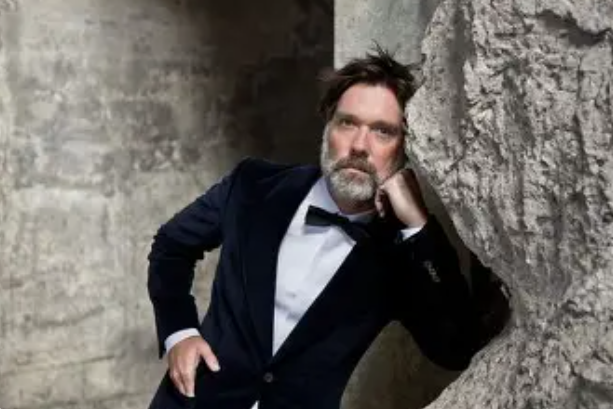
How childhood trauma, parental abandonment, and a near-fatal addiction shaped one of music’s most baroque talents
The boy is fourteen years old, walking through Hyde Park in London with a stranger he met at a bar. In his mind, this will be romantic. He thinks the world is opening up to him, that his newly discovered sexuality is a door to something beautiful. Instead, the man robs him. Then rapes him. Subsequently, he tries to strangle him. The boy survives only by pretending to have an epileptic seizure, convincing his attacker he is dying. Eventually, the man leaves. The boy walks home, changed forever.
That boy was Rufus Wainwright. Consequently, his parents shipped him off to boarding school, unable to process what had happened. They never really talked about it. Moreover, neither could they handle the other revelation that year: their son was gay. In 1987, that felt like a death sentence.
Today, Rufus Wainwright net worth sits at an estimated $8-12 million. Remarkably, he owns property in Montauk, once owned by Irving Berlin himself. Furthermore, he has written two operas performed at the world’s most prestigious houses. He recreated Judy Garland’s legendary Carnegie Hall concert to sold-out crowds. In addition, he married the love of his life and fathered a daughter with Leonard Cohen’s granddaughter.
But the wounded boy in Hyde Park? He’s still there, somewhere inside the $8 million man, still trying to make sense of a world that hurt him before he even understood what hurt was.
The Wound: Born Into Music, Abandoned to It
Rufus McGarrigle Wainwright entered the world on July 22, 1973, in Rhinebeck, New York. Notably, his bloodline reads like a folk music encyclopedia. His father, Loudon Wainwright III, was a sardonic singer-songwriter descended from Peter Stuyvesant, the last Dutch governor of New Amsterdam. Meanwhile, his mother, Kate McGarrigle, was a Canadian folk legend who performed with her sister Anna, putting Québécois music on the global map.
By age three, his parents had divorced. Kate took Rufus and his infant sister Martha to Montreal. Loudon, meanwhile, went to Europe with a performance artist, abandoning his pregnant wife. As a result, Kate lost the baby. She later wrote a song about it called “Go Leave,” which Martha describes as devastatingly painful.
A House of Songs and Silence
The Montreal house was filled with music but starved of certain conversations. Kate raised her children on Glenn Gould and Luciano Pavarotti, on family singalongs and touring schedules. Rufus began playing piano at six. By thirteen, he was touring with “The McGarrigle Sisters and Family,” a folk group featuring his mother, aunt, and sister.
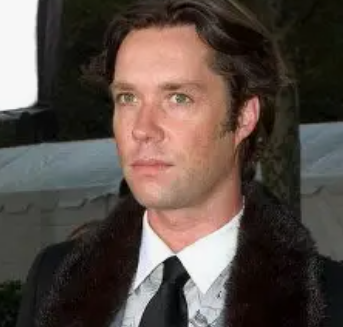
However, when Rufus came out as gay at fourteen, his parents couldn’t handle it. “My sexuality was a big problem for both my parents,” he later told The Talks. Despite having many gay friends and liberal beliefs, the minute it came out they didn’t know what to do.
Interestingly, his grandmother on his father’s side was the only one to call. She told him she’d heard he was gay and that it was fine. That phone call was more than his parents could manage.
The Chip: Transforming Pain Into Performance
Coming of age gay in 1987 meant coming of age in the shadow of death. AIDS was ravaging the community. Shockingly, teachers at school would dismiss victims, saying they deserved it. Rufus remembers thinking he was going to die every week.
Yet something else was happening simultaneously. He discovered opera and devoured it completely. In opera, he found emotions too large for ordinary life, tragedies that made his own seem navigable. Additionally, he found Judy Garland, another wounded performer who turned pain into spectacle.
The Wizard of Oz and the Good Witch
As a child, Wainwright was obsessed with The Wizard of Oz. Frequently, he would dress in his mother’s gown, pretending to be either the Wicked Witch or the Good Witch, depending on his mood. His mother made him perform “Over the Rainbow” for guests.
This wasn’t just childhood play. Rather, it was rehearsal. He was practicing transformation, practicing becoming someone else entirely, someone powerful and magical in a world that made him feel powerless and ordinary.
At fourteen, he wrote “I’m a-Runnin'” for the film Tommy Tricker and the Stamp Traveller. The song earned him a Genie Award nomination. A year later, he received a Juno Award nomination for Most Promising Male Vocalist. Clearly, the wounded child was becoming something else: an artist.
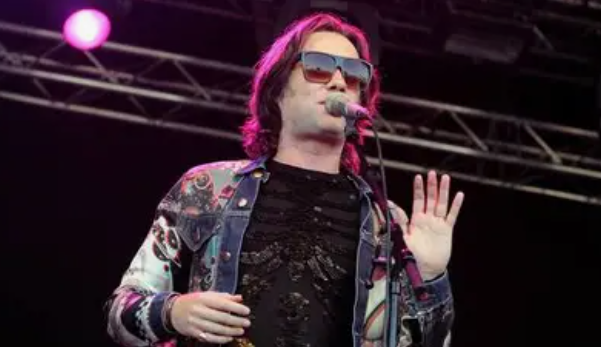
The Rise: From Café Sarajevo to DreamWorks
Throughout the summer of 1995, Wainwright played weekly shows at Café Sarajevo in Montreal. Eventually, he cut demo tapes that impressed his father enough to pass them to family friend Van Dyke Parks. Subsequently, Parks sent them to DreamWorks executive Lenny Waronker, who signed Wainwright to the label in 1996.
Waronker paired him with producer Jon Brion. Together, the two spent most of 1996 and 1997 recording. Wainwright laid down 56 songs on 62 rolls of tape. Remarkably, the sessions cost $700,000. The result was 1998’s Rufus Wainwright, a debut that Rolling Stone named one of the year’s best albums.
Success and Its Shadow
Then came 2001’s Poses, which reached the top of Billboard’s Heatseekers Chart. However, behind the scenes, Wainwright was descending into chaos. Crystal meth had entered his life, and it was consuming everything.
During this period, he consumed massive quantities of crystal meth, Special K, and Ecstasy all at once. As a result, he went blind for an hour. His addiction peaked in 2002 during what he called “the most surreal week of my life.” During that time, he played a cameo on Absolutely Fabulous, spent several nights partying with Barbara Bush, and experienced recurring hallucinations of his father.
Fortunately, Elton John, who had called Wainwright “the as-yet unheralded American treasure,” convinced him to go to rehab. He emerged clean, ready to create his masterwork: the Want albums.
Rufus Wainwright Net Worth 2025: The Financial Picture
As of 2025, Rufus Wainwright net worth is estimated between $8-12 million, according to various financial tracking sources including Celebrity Net Worth. Significantly, this wealth reflects a career that has deliberately resisted commercial calculation in favor of artistic ambition.
Recording Career and Album Sales
Wainwright has released eleven studio albums, from his 1998 debut through 2023’s Folkocracy. Notably, his most commercially successful work, the Want albums (2003-2004), reportedly generated approximately $500,000 in sales and royalties. Similarly, 2007’s Release the Stars earned an estimated $1.5 million, reaching No. 2 on the UK Albums Chart and debuting at No. 23 on the Billboard 200.

Furthermore, his cover of Leonard Cohen’s “Hallelujah” from the Shrek soundtrack introduced him to millions of listeners. The song reached No. 11 on Billboard’s Rock Digital Songs chart, providing ongoing royalty income that continues two decades later.
Opera and Classical Compositions
Wainwright’s two operas represent his most ambitious financial and artistic investments. Prima Donna premiered at the Manchester International Festival in 2009, subsequently playing London’s Sadler’s Wells, the Luminato Festival in Toronto, and the Brooklyn Academy of Music. According to industry estimates, the opera added approximately $1 million to his net worth.
Additionally, his second opera, Hadrian, premiered at the Canadian Opera Company in 2018. The work, based on Marguerite Yourcenar’s Memoirs of Hadrian, received an International Opera Awards nomination for Best World Premiere. Most recently, in 2024, he debuted Dream Requiem, a large-scale composition pairing the Latin Requiem Mass with Lord Byron’s apocalyptic poem “Darkness.”
Judy Garland Tribute and Live Performances
The Rufus Does Judy at Carnegie Hall project stands among his most commercially significant achievements. Backed by a 36-piece orchestra, Wainwright recreated Garland’s legendary 1961 concert, earning a Grammy nomination for Best Traditional Pop Vocal Album. Since then, he has revived the show multiple times, including a 2021 performance at Capitol Studios using the same microphone Garland once used.
Moreover, touring remains a substantial income source. He has performed at Glastonbury, Coachella, Royal Albert Hall, Carnegie Hall, Sydney Opera House, and virtually every major venue worldwide.
Real Estate Holdings
Wainwright’s real estate portfolio reflects his bi-coastal, bi-national life. In 2009, he purchased a home in Montauk, New York, for approximately $999,000. Interestingly, the property, once owned by legendary composer Irving Berlin, is one of the historic Leisurama houses—prefabricated dwellings sold through Macy’s department store in the 1960s. Currently, he rents it seasonally for between $5,000 and $25,000 per month.
In 2016, he paid $1.45 million for a 2,100-square-foot home in the Hollywood Hills. Built in 1926, the three-bedroom, three-bathroom property was listed for sale in January 2024 for $2.2 million. Additionally, he maintains a small studio apartment in Manhattan’s Gramercy Park, where he has lived since before his rehab days.
The Tell: Where the Wound Still Shows
Listen to Wainwright long enough and the original hurts surface. “Dinner at Eight,” from Want Two, fantasizes about besting his father in a boxing match with lyrics about putting up fists and not running from the scene. Meanwhile, “Go or Go Ahead” traces his addiction with brutal honesty, thanking guardian angels who left him stranded.
In a 2020 interview with Hot Press, he admitted he still wakes at four in the morning, absolutely pulverised by fear. He explained that if he discards his darker imagination and doesn’t give it its due occasionally, he will suffer from extreme depression.
Ultimately, the darkness never fully leaves. Instead, he has learned to live alongside it, transforming it nightly into something beautiful on stage, channeling the wounded boy into art that connects with other wounded souls.
The Connection: Montauk, Marriage, and Motherhood
Why Montauk? This remote hamlet at the tip of Long Island, praised for some of the best beaches in the Hamptons, has attracted famous residents from Andy Warhol to Edward Albee. For Wainwright, it represents the end of the earth—a place to retreat from the world that once hurt him so badly.
Significantly, it was in the Hamptons that he reconnected with Jörn Weisbrodt, a German art administrator working at The Watermill Center. They married in Montauk on August 23, 2012. Artist Justin Vivian Bond officiated. Remarkably, the man who once thought being gay was a death sentence had finally found love.
A year before his mother Kate died in January 2010, Wainwright’s childhood friend Lorca Cohen—Leonard Cohen’s daughter—offered to have his child. Kate strongly encouraged him to accept. On February 2, 2011, Viva Katherine Wainwright Cohen was born. Sadly, his one regret remains that his mother didn’t live to see her.
He has since reflected that your mother gives birth to you twice—once when you’re born, and once when she dies. That whole period around his mother’s death was mystical, heartbreaking and dark, but also magical in many ways.
The Paradox of Success
Rufus Wainwright net worth in 2025 tells one story: $8-12 million, property in Montauk and Hollywood Hills, Grammy nominations, operas at the world’s finest houses, collaborations with Elton John and Sting and Mark Ronson. Impressively, his career has spanned three decades and produced work that will outlive us all.
Nevertheless, there’s another story running beneath it. A boy in Hyde Park. A teenager watching his community die of AIDS while teachers said they deserved it. A son whose parents couldn’t talk to him about who he really was. A man who went blind from crystal meth before he turned thirty.
That mansion in the Hamptons is beautiful. Historically, it was once owned by Irving Berlin, a man who wrote songs that defined American optimism. But for Wainwright, it’s also something else entirely: a place where a wounded child finally found a home, where he can look out at the Atlantic and know that he survived, that he transformed his pain into something lasting, that the darkness didn’t win.
At fifty-two, Rufus Wainwright is still that boy in his mother’s gown, still rehearsing transformation, still becoming the Good Witch. The only difference now is that the whole world is watching. And they’re standing, applauding.
For more celebrity profiles and Hamptons lifestyle coverage, visit SocialLifeMagazine.com. For ticket information about Polo Hamptons events, visit PoloHamptons.com.
Subscribe to our newsletter for exclusive Hamptons coverage. Support independent journalism with a $5 donation.
Related: Norah Jones Net Worth 2025 | James Taylor Net Worth 2025
Author

Written by
Recent Posts
Aaron Paul Net Worth — His Character Was Supposed to Die in Season One. Instead He Made $30 Million.
Bryan Cranston Net Worth. He Played a Sitcom Dad for Seven Years. Then He Became the Most Dangerous Man on Television.
Breaking Bad Cast Net Worth. $130 Million Cooked in Five Seasons of Perfect Television

Cailee Spaeny Net Worth — From Springfield, Missouri to A24 and Alien in Three Years Flat

Wagner Moura Net Worth — He Learned Spanish to Play Escobar. Then He Learned English to Take Hollywood.
Categories
- Art
- Articles
- Beauty & Skincare
- Celebrities
- Celebrities|Movies
- Celebrities|The Chronicles
- Chronicles
- Entertainment|Culture
- Event Photos
- Events
- Fashion
- Fashion & Style
- Featured
- Food & Beverage
- Food, Spirits, Wine
- Hamptons
- Hamptons Celebrities
- Hamptons Celebrities|Celebrities|The Chronicles
- Health
- Health & Beauty
- Lifestyle
- Luxury Lifestyle
- Movies|Culture
- Movies|Hamptons Lifestyle
- Press
- Profiles
- Real Estate
- Technology
- The Chronicles
- Travel
- TV
- Uncategorized
- Weddings