
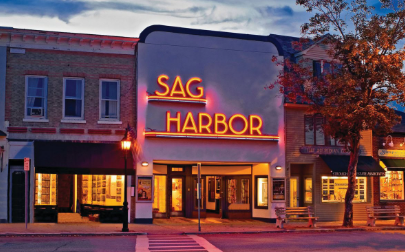
The Phoenix That Lit Main Street Twice
The bulldozer arrived at 8:20 pm on December 16, 2016. Meanwhile, icicles hung from firefighters’ helmets after nineteen companies had battled the blaze for hours in freezing temperatures. Consequently, the village’s most beloved landmark—its Art Deco facade, its concave white stucco walls, its century of celluloid dreams—had to come down. Furthermore, artist April Gornik stood outside the American Hotel, watching the demolition through tears. Nevertheless, as the iconic neon sign tumbled into rubble, she was already planning its resurrection. Indeed, Martin Scorsese would later call this place “a beacon of culture on Long Island.” Moreover, he wasn’t exaggerating.
The Origin Story of the Sag Harbor Movie Theater
From Vaudeville to Talkies
The first theater on this site opened in October 1915. Subsequently, George Kiernan’s vaudeville house at 90 Main Street drew an immediate warning from local authorities. Town historian Dorothy Zaykowski reports that notices went out to “all law-abiding people” advising them to “decline from patronizing the place.” Nevertheless, the entertainment persisted.
By 1919, the venue had transformed into the Elite Theater, switching from live acts to the emerging phenomenon of silent films. Additionally, the space evolved with the technology. In October 1929, the theater presented “Kitty”—believed to be the first talkie shown on Long Island’s East End. Consequently, a cultural revolution had arrived in this former whaling village.
John Eberson’s Masterpiece
The transformation that defined the Sag Harbor movie theater came in 1936. Mike Glynne, who owned theaters throughout the East End, commissioned famed architect John Eberson to redesign the space. Furthermore, Eberson was no ordinary architect. He had designed the legendary Loews Paradise in the Bronx and Loews Valencia in Queens—two of New York’s five “Wonder Theatres.”
Eberson demolished the original auditorium entirely. Subsequently, he erected a new fireproof structure of steel and concrete at a cost of $25,000. Additionally, he created the concave arc facade that would become Sag Harbor’s most recognizable silhouette. Moreover, he installed the eighteen-foot-long Art Deco neon sign—red and blue letters spelling “SAG HARBOR”—that would beckon moviegoers for generations.
The new theater opened June 3, 1936, with Shirley Temple in “Captain January.” Consequently, the 516-seat auditorium, with its maroon concrete walls and high ceilings, established itself as Main Street’s cultural anchor. Indeed, Kenny Studios and Rambusch Decorating Company of New York handled the interior design. The result was atmospheric perfection.
Gerald Mallow’s Quirky Kingdom
In May 1978, a moment occurred that would define the theater for the next four decades. Gerald Mallow, an independent and foreign film aficionado, purchased the venue. Furthermore, his wife Francoise told a patron at the American Hotel about the acquisition. “You poor woman,” came the reply. “Your husband must have escaped from a mental institution.”
Nevertheless, Mallow proved the skeptics wrong. That summer, he screened a French film called “Madame Rosa.” To his surprise, 275 people attended. Consequently, a long tradition of foreign and art-house programming began. Moreover, Mallow maintained what he called “movie house, not art house” fare—intellectual without being pretentious.
The Sag Harbor movie theater became the only single-screen art-house cinema left in the Hamptons. Additionally, Mallow’s programming philosophy was distinctively purist. There were no advertisements before films. Indeed, there weren’t even previews. When the theater darkened, you watched what you came to see—nothing else.
The Fire That Changed Everything
December 16, 2016
The blaze started at a neighboring café in the early morning hours. Subsequently, flames spread rapidly through Main Street’s connected structures. Furthermore, the freezing temperatures and high winds created hellish conditions for the nineteen fire companies that responded.
Throughout that bitter morning, firefighters battled the inferno. Icicles formed on their helmets and uniforms. Meanwhile, Baron’s Cove Inn opened its doors to displaced residents. Additionally, local merchants brought hot coffee and food to the exhausted crews. Nevertheless, by afternoon, the verdict was clear: the facade had become structurally dangerous.
That evening, village officials made the agonizing decision. Consequently, a bulldozer approached the building that had anchored Main Street for over a century. However, in that moment of destruction, community spirit intervened. Village officials gave permission to save the iconic neon sign. Subsequently, Chris Denon of Twin Forks Moving and Storage collected the damaged but recognizable letters from the rubble.
The Woman Who Refused to Let It Die
April Gornik had been preparing for this moment—though not this way. The renowned landscape artist and her husband, painter Eric Fischl, had moved to Sag Harbor in 1985. Furthermore, they had become deeply invested in the village’s preservation.
As early as 2009, a citizens’ committee had attempted to purchase the cinema from Mallow. Subsequently, when Mallow approached the Sag Harbor Partnership in July 2016 about selling, Gornik became vice president of the effort. Indeed, they were scheduled to close by December 28. The fire came twelve days early.
“We were set to be in contract by the end of December when the fire threw everything into disarray,” Gornik later explained. “But we didn’t lose hope.” Furthermore, Fischl made a critical early gift of $1 million to jump-start the campaign. Consequently, the race to save the Sag Harbor movie theater began.
The $20 Million Resurrection
Celebrity Firepower
Billy Joel lives just blocks from Main Street. Consequently, when approached about supporting the restoration, he didn’t hesitate. “He just said ‘yes’ instantly,” Gornik recalled. Furthermore, days after the fire, Joel paid tribute at Madison Square Garden by playing Ennio Morricone’s “Cinema Paradiso” on piano.
Martin Scorsese added his considerable weight to the campaign. “I believe in the power of film not only to entertain, but to bring unsung heroes to life,” Scorsese said. Additionally, he noted that on the evening of the fire, the cinema was showing two European films—”neither of which were considered blockbuster hits, but that wasn’t the point.”
Dame Julie Andrews joined the advisory board. Subsequently, documentary filmmakers D.A. Pennebaker and Chris Hegedus signed on. Furthermore, the Hamptons International Film Festival’s executive director Anne Chaisson contributed expertise. Indeed, the restoration attracted an all-star team of cultural leaders.
From Single Screen to State-of-the-Art Triplex
The Sag Harbor Partnership finalized the $8 million purchase in April 2017. Subsequently, NK Architects’ Allen Kopelson created plans—pro bono—for a complete reimagining. Furthermore, the vision expanded beyond simple restoration.
The new Sag Harbor movie theater would feature three screening rooms instead of one. Cinema 1 seats 231 with 53 separated speakers. Additionally, the architects created a rooftop bar—The Green Room—with the Truffaut Terrace offering sunset views unavailable anywhere else in the Hamptons. Moreover, an art gallery and educational spaces filled the original footprint.
Donations ranged from thirty-five cents to one million dollars. Consequently, the final tally exceeded $20 million in community support. Furthermore, the popcorn stand was named after Billy Joel in recognition of his generosity. The cinema finally received its certificate of occupancy in fall 2020.
What Makes the Sag Harbor Movie Theater Iconic
The Sign That Refused to Die
The eighteen-foot neon sign has been saved twice. In May 2004, Mallow had stripped the weather-beaten original letters from the facade, destined for the dump. Subsequently, residents Brenda Siemer and playwright Joe Pintauro spearheaded a successful fundraising campaign. By October 2005, a $22,000 replica illuminated Main Street once more.
When the 2016 fire demolished the facade, the replica sign fell into the rubble. However, sculptor and ironworker John Battle, along with Chris Denon, salvaged and repaired it—gratis. Consequently, on May 25, 2019, at 8:20 pm—exactly the same time the facade had fallen—the sign returned to its rightful place. Indeed, the village held a ceremony thanking the first responders whose bravery had made everything possible.
Programming That Honors the Legacy
Giulia D’Agnolo Vallan serves as founding artistic director. She is also the U.S. programmer and selection committee member for the Venice Film Festival. Consequently, the programming reflects serious cinematic ambition.
The annual Festival of Preservation, presented by Martin Scorsese, celebrates film restoration. Furthermore, partnerships with the Hamptons Doc Fest bring world-class documentaries to the village. Additionally, collaborations with Eric Fischl and April Gornik’s Church Sag Harbor create cross-cultural programming. Indeed, the cinema hosts everything from blockbusters to student shorts.
“This is the place to discover something different and new,” explains acting executive director Genevieve Villaflor. Furthermore, the nonprofit mission extends beyond entertainment. Educational initiatives serve school-age children and the broader community alike.
What Locals Know
The rooftop experience transforms a movie night into an event. The Green Room offers craft cocktails before or after screenings. Additionally, the Truffaut Terrace provides unobstructed views as the sun sets over the village.
Summer Saturday nights draw crowds, but weeknight screenings offer intimate experiences. Furthermore, the chocolate-covered popcorn deserves its legendary status. Indeed, the entire audience routinely watches all credits—then sits discussing first impressions before their eyes adjust.
Experience the Sag Harbor Movie Theater Today
What to Expect
The cinema operates as a 501(c)(3) nonprofit. Consequently, ticket prices remain accessible—ranging from $7.50 to $15. Furthermore, various membership deals support ongoing operations while providing benefits to regular attendees.
Three screening rooms offer different experiences. Cinema 1 handles major releases and special events. Additionally, smaller rooms host independent films and retrospectives. The third-floor spaces—including The Green Room—are available for private event rentals.
The cinema screens both mainstream releases and independent fare. Consequently, you might catch the latest blockbuster one night and a restored classic the next. Furthermore, Q&A sessions with filmmakers occur regularly, leveraging the East End’s creative community.
The Insider Move
Arrive early enough to visit The Green Room before your screening. Order a signature cocktail on the Truffaut Terrace and watch the sunset paint Main Street in amber light. Furthermore, check the programming calendar for the Festival of Preservation each fall—Martin Scorsese’s personal involvement attracts serious cinephiles. Additionally, the Billy Joel popcorn stand isn’t just a name: the Piano Man’s support helped resurrect this place from literal ashes. Indeed, every kernel you eat honors that legacy.
The Legacy of the Sag Harbor Movie Theater
Why It Endures
The Sag Harbor movie theater represents something rare: a community that fought for its cultural heart—and won. Furthermore, the victory required unprecedented cooperation between artists, celebrities, local government, and ordinary residents. Consequently, the new cinema exceeds what existed before the fire.
“Everyone who loves Sag Harbor understands that the cinema was a manifestation of a quirky, inimitable quality that differentiates us from other towns and villages out here,” April Gornik has observed. Additionally, the restoration demonstrates what’s possible when cultural preservation becomes a community priority.
The sign still glows red and blue over Main Street. Meanwhile, John Eberson’s atmospheric design lives on in the rebuilt facade. Furthermore, Gerald Mallow’s four-decade commitment to independent film continues through sophisticated programming. Indeed, the old and the new happen at once—exactly what Sag Harbor has always been about.
A Beacon Still Burning
Martin Scorsese was right: this place is a beacon. However, its light nearly went out on that freezing December morning. Consequently, the resurrection story—the billionaire and the thirty-five-cent donors, the Piano Man and the ironworker, the bulldozer and the salvaged sign—has become as compelling as any film screened within these walls.
The Sag Harbor movie theater endures because it embodies something the East End desperately needs: proof that not everything historic must fall to development. Furthermore, it demonstrates that cultural institutions can emerge from tragedy stronger than before. Indeed, the phoenix didn’t just rise—it evolved.
Ninety Main Street awaits. The neon beckons. Moreover, the lights are about to dim.
Continue Your Hamptons Journey
- Feature & Partnership Inquiries
- Polo Hamptons Tickets & Sponsorships
- Join Our Email List
- Subscribe to Print Edition
- Support Social Life Magazine
Related Articles
Author

Written by
Recent Posts
Norm MacDonald Net Worth
Sam Kinison Net Worth

Ray Romano Net Worth
Dennis Miller Net Worth

Ellen DeGeneres Net Worth
Categories
- 2025 Social Life Events
- Access to Digital + Physical Magazine
- Art
- Articles
- Beauty & Skincare
- Beauty & Wellness
- Business Strategy
- Celebrities
- Chronicles
- Design History
- Design History|Design Trends
- Design History|Hamptons
- Design Process
- Design Process|Luxury Living
- Design Trends
- Design Trends|Hamptons
- Event Photos
- Events
- Family
- Fashion
- Fashion & Style
- Featured
- Food & Beverage
- Food, Spirits, Wine
- Hamptons
- Hamptons Celebrities
- Hamptons Design
- Hamptons Design|Design Process
- Hamptons Design|Luxury Living
- Hamptons|Luxury Living
- Health
- Health & Beauty
- Home & Design
- Home & Living
- Lifestyle
- Luxury Home Design|Design Process
- Luxury Home Design|Design Trends
- Luxury Home Design|Hamptons Design
- Luxury Home Design|Interior Design
- Luxury Lifestyle
- Luxury Living
- Luxury Living|Design Process
- Luxury Living|Hamptons
- Luxury Living|Hamptons Design
- Press
- Profiles
- Real Estate
- Technology
- The Chronicles
- Travel
- Trending
- Uncategorized
- Weddings
- Wellness