
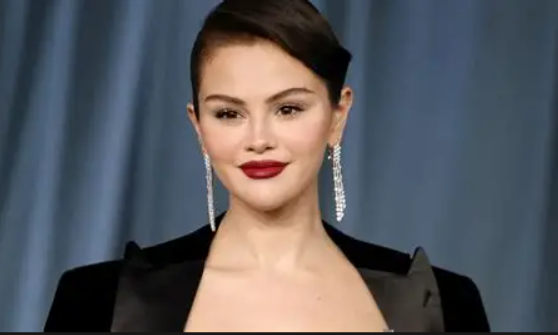
Selena Gomez was worth $95 million in 2022. By September 2024, Bloomberg placed her on its Billionaires Index at $1.3 billion. That is not a typo. Her net worth jumped by over $1.2 billion in roughly two years. Music did not drive the surge. Neither did acting or Instagram. Instead, a cosmetics company with ten products did all the heavy lifting.
The Selena Gomez net worth 2026 story is the clearest case study in modern business of how a single brand, launched at the right moment with the right psychology, can create generational wealth faster than any traditional entertainment career. While Taylor Swift built her $1.6 billion fortune over two decades of touring and catalog ownership, Gomez reached the same tier in roughly 24 months on the back of a $23 blush.
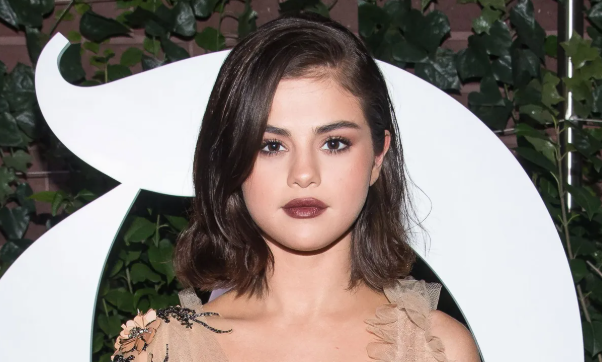
The Selena Gomez Net Worth 2026 Breakdown: Where the Money Lives
According to Bloomberg, approximately 81% of the Selena Gomez net worth 2026 figure derives from her stake in Rare Beauty. The company generated $212 million in net sales in the twelve months ending March 2025. From just ten products. Sold exclusively through its own website and Sephora.
Forbes offers a more conservative estimate, placing her fortune between $700 million and $800 million. The discrepancy depends entirely on which valuation multiple analysts apply to Rare Beauty and how much of the company Gomez actually owns. She is widely reported to hold a majority stake, likely around 51%, though the exact percentage remains a closely guarded private detail.
Regardless of which estimate you accept, the trajectory is staggering. In 2019 her fortune sat at $75 million. By 2022 it had grown modestly to $95 million. Then Rare Beauty detonated. By mid-2023 her net worth reached $800 million. By September 2024, Bloomberg certified her as a billionaire. The hockey stick curve is almost vertical.
Beyond Rare Beauty, her income streams include approximately $6 million per season for Only Murders in the Building, where she stars alongside Steve Martin and Martin Short and serves as executive producer. Her Instagram following exceeds 420 million, making her the most followed woman on the platform and valuing each sponsored post at an estimated $1.7 million. She co-founded Wondermind, a mental health platform, and holds investments in Gopuff and the ice cream brand Serendipity. Combined, these supplementary income streams contribute roughly $15 to $20 million annually before accounting for Rare Beauty.
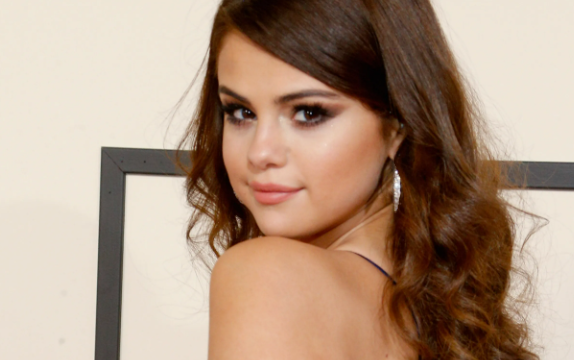
Rare Beauty: The Anti-Luxury Luxury Brand
Rare Beauty launched in September 2020, during a pandemic that had shut down physical retail across the country. Gomez chose a direct-to-consumer model. She paired it with an exclusive Sephora partnership. Department stores were off the table. Mass retail at Target or Walmart was never considered. Amazon was excluded entirely. The positioning was deliberate and precise: accessible enough for Gen Z wallets at $20 to $40 price points, prestige enough for Sephora shoppers who associate the retailer with quality curation.
The hero product, a $23 Soft Pinch Liquid Blush, went viral on TikTok. Paid influencer campaigns did not drive the virality. Users genuinely loved the formula and filmed themselves applying it. That single SKU generated $70 million in sales in 2023 alone. At just $23, it outperformed entire beauty lines. Some of those competitors had billion-dollar backing, massive marketing budgets, and decades of brand equity.
The TikTok hashtag #rarebeauty accumulated over 422,000 posts. The blush-specific hashtag #rarebeautyblush exceeded 56,500 posts. These numbers represent organic consumer enthusiasm, not paid media. When your customers create your marketing for free, your margins look like nothing else in the industry.
The Marketing Math That Changes Everything
Most direct-to-consumer beauty brands spend 30% to 50% of revenue on marketing. Rare Beauty spends approximately 11%. The difference is Selena Gomez herself. Her social media presence functions as a perpetual marketing engine that would cost any other brand hundreds of millions of dollars annually to replicate through traditional and digital advertising channels.
Industry analysts at McKinsey have studied this dynamic closely. They found that founder-led brands with authentic personal narratives achieve customer acquisition costs 60% to 70% lower than traditional competitors. Consequently, Gomez’s openness about mental health does not just build goodwill. It builds a marketing moat. No competitor can cross it because no competitor can replicate her personal story.
The Rare Impact Fund, which receives 1% of all Rare Beauty sales, has raised over $16 million for youth mental health services across 26 organizations on five continents. This philanthropy is genuine and deeply personal. It is rooted in Gomez’s own battles with bipolar disorder, anxiety, and depression. However, it also reinforces the brand identity at every purchase touchpoint. The result is a loyalty loop that traditional cosmetics companies cannot manufacture through CSR initiatives alone. When a customer buys Rare Beauty blush, she is not just buying pigment. She is joining a movement. As a result, repeat purchase rates are exceptional by industry standards.
What Celebrity Beauty Brands Got Wrong That Gomez Got Right
The celebrity beauty space is littered with failures. Gwen Stefani’s Gxve Beauty appears to have shut down, with its website and social media accounts going dark. Brad Pitt’s Le Domaine skincare launched at $385 per serum and was mocked by both consumers and industry founders who wrote open letters telling him to stop. Dozens of influencer-backed brands have launched, spiked, and faded within 18 months.
Gomez avoided the three mistakes that kill most celebrity beauty brands. First, she did not rush to market. She spent two years developing formulations before launching, ensuring that the products performed well enough to survive the inevitable TikTok scrutiny. Second, she did not overprice. Rihanna’s Fenty Beauty operates in the prestige tier. Kim Kardashian’s SKIMS positions itself as accessible luxury. Meanwhile, Rare Beauty found the narrow lane between affordable and aspirational. Gen Z responded enthusiastically. Third, she made the brand about something larger than herself. This was perhaps the most important decision of all. Rare Beauty is not about looking like Selena Gomez. It is about feeling okay being yourself. Ultimately, that distinction separates a celebrity endorsement from a cultural movement.
The Marriage That Created a Music Industry Power Couple
In September 2025, Gomez married Grammy-nominated producer Benny Blanco in a Santa Barbara ceremony attended by Taylor Swift and other A-list guests. Blanco, who has produced hits for Ed Sheeran, Justin Bieber, Rihanna, and Katy Perry, represents a strategic complement to Gomez’s portfolio. His production and songwriting credits generate millions in publishing royalties annually, adding a second major income engine to the household.
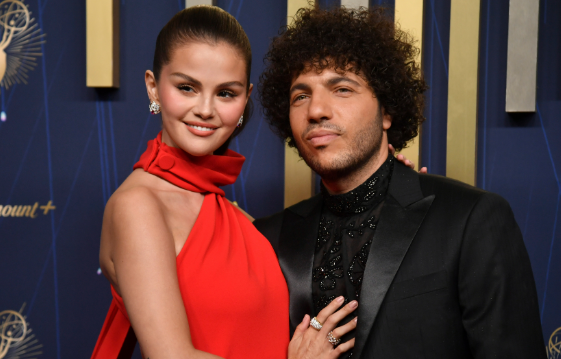
The marriage follows a pattern seen across celebrity wealth creation in 2025 and 2026. Taylor Swift and Travis Kelce merged pop and football audiences. Kim Kardashian leveraged the NikeSkims partnership to bridge fashion and athletics. Gomez and Blanco bridge performance and production, covering both sides of the music industry’s value chain. When one partner creates the songs and the other produces them, the royalty checks arrive from both directions.
Only Murders, Emilia Perez, and the $6 Million Season
Gomez earns approximately $600,000 per episode of Only Murders in the Building, totaling $6 million per ten-episode season. She also serves as executive producer, granting her backend participation in the show’s commercial performance. Season 5, confirmed for premiere on September 9, 2026, will continue this income stream for another year.
Her film career added further credibility in 2025 when Emilia Perez won the Golden Globe for Best Musical/Comedy Film. The recognition positioned Gomez as a serious actress capable of carrying dramatic roles, not just a pop star moonlighting on a Hulu comedy. This diversified credibility across music, television, film, and business creates what wealth advisors call an antifragile income profile. When one sector softens, others compensate. If streaming contracts decline, Rare Beauty earnings increase. If cosmetics face a downturn, acting income persists. The portfolio is engineered for resilience.
The Psychology of Imperfection as a Business Strategy
The deeper lesson behind the Selena Gomez net worth 2026 figure is psychological. Every major celebrity beauty brand built in the last decade has been founded on a specific emotional proposition. Rihanna’s Fenty Beauty was founded on inclusion. Kim Kardashian’s SKIMS was founded on body acceptance. Kylie Cosmetics was founded on insecurity transformed into empowerment. Hailey Bieber’s Rhode was founded on effortless aesthetics.
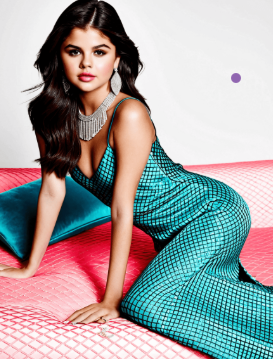
Gomez built Rare Beauty on the most disarming proposition of all: imperfection is enough. In a beauty industry that has always sold transformation, promising consumers they could look like someone they are not, Gomez sold acceptance. Her message was simple and radical: you are already enough. Beauty products are just a bonus.
The consumers who responded were not buying blush. They were buying permission to stop performing perfection. For a generation raised on Instagram filters, FaceTune, and impossible beauty standards, that permission was worth far more than $23. It was priceless. And Gomez captured it in a tube of liquid pigment.
What Comes Next: The Path to $2 Billion
Rare Beauty has reportedly explored raising capital at a $2 billion valuation. If that round materializes, Gomez’s majority stake would be worth over $1 billion from Rare Beauty alone, before accounting for any other income or assets. Expansion into physical retail beyond Sephora, international markets across Asia and the Middle East, and new product categories like skincare and fragrance all represent growth vectors that could push valuation higher.
At 33 years old, newly married, with a billion-dollar brand, an Emmy-worthy television career, and the most-followed woman on Instagram, Selena Gomez has proven that vulnerability is not a weakness in business. It is a moat. The girl from Grand Prairie, Texas, whose mother worked three jobs to keep them afloat, now commands more wealth than most Fortune 500 CEOs. She did it with ten products and the radical idea that people would pay $23 to feel okay about themselves.
The Disney-to-Billionaire Pipeline That Almost Did Not Happen
Gomez’s path from Disney Channel to the Bloomberg Billionaires Index was anything but guaranteed. Her early career followed the standard child star trajectory. She appeared on Barney and Friends alongside Demi Lovato at age seven. She landed Wizards of Waverly Place at 15, earning $30,000 per episode and building a teen fanbase that would later become the foundation for everything that followed. But the transition from tween television star to credible adult entertainer is one of the most treacherous passages in the entertainment industry.
For every success story like hers, dozens of former child stars see their careers stall or implode. Growing up in public creates pressures that most people cannot imagine. Gomez herself has been candid about the challenges. Doctors diagnosed her with lupus in 2013. In 2017, friend Francia Raisa donated a kidney to save her life. Later, she received a bipolar disorder diagnosis. She chronicled her mental health journey in the Apple TV documentary Selena Gomez: My Mind and Me.
Any one of these experiences could have derailed a lesser career. Instead, they became raw material for the brand that would make her a billionaire. Consequently, Rare Beauty’s entire identity rests on one idea: beauty does not require perfection. That message carries authentic weight. The founder has publicly lived through struggles her audience recognizes as real, not manufactured for marketing. Vulnerability became the value proposition. Pain became the product positioning. And 420 million Instagram followers responded by making Rare Beauty one of the fastest-growing cosmetics companies in the world.
The Social Media Empire Behind the Numbers
As of early 2026, Gomez is the most followed woman on Instagram with over 420 million followers. She was the first woman to reach 400 million on the platform. Only Cristiano Ronaldo and Lionel Messi have larger Instagram audiences globally. Her TikTok audience exceeds 58 million. Her YouTube channel has accumulated nearly 13 billion views.

This dominance has a direct financial impact. It extends well beyond sponsored post revenue. Every Rare Beauty product launch receives instant, organic amplification to an audience larger than the population of the United States and the European Union combined. When Gomez films herself applying a new shade, the video reaches hundreds of millions of people. Not a single dollar goes to paid media distribution. By contrast, traditional cosmetics companies spend billions annually trying to achieve a fraction of this organic reach.
The Instagram following also generates significant direct endorsement income. At an estimated $1.7 million per sponsored post, even a modest cadence of brand partnerships generates eight figures annually. Previous deals with Puma, reportedly worth $30 million, and Coach, worth $10 million, demonstrate the scale of compensation she commands from fashion and lifestyle brands seeking her audience access. These endorsement deals function as a steady cash flow supplement to the Rare Beauty equity appreciation that drives the Selena Gomez net worth 2026 headline number.
Frequently Asked Questions
Is Selena Gomez actually a billionaire?
Bloomberg added Gomez to its Billionaires Index in September 2024 at $1.3 billion. Forbes disputes this, estimating her net worth closer to $700 million to $800 million. The difference depends on how analysts value her stake in Rare Beauty, which is a private company without publicly audited financials.
How much of Rare Beauty does Selena Gomez own?
She is widely reported to hold a majority stake, likely around 51%. The exact percentage has not been publicly confirmed because Rare Beauty is privately held.
How much does Selena Gomez earn per Instagram post?
With over 420 million followers, her sponsored Instagram posts are valued at approximately $1.7 million each, making her one of the highest-paid influencers on the platform.
How much does Selena Gomez make per episode of Only Murders in the Building?
Gomez earns approximately $600,000 per episode, totaling $6 million per ten-episode season. She also receives additional compensation as an executive producer.
Connect With Social Life Magazine
Feature Article Ideas / Advertising / Brand Partnership Inquiries
→ Contact Social Life Magazine
Polo Hamptons Tickets, Cabanas & Brand Sponsorships
→ Polo Hamptons
Join Our Email List
→ Subscribe Here
Social Life Magazine Print Subscription
→ Get Your Subscription
Support Our Work – Donate $5
→ Donate via PayPal
Author

Written by
Recent Posts

Zendaya and Tom Holland: They Got Married. You Weren’t Invited.
Britney Spears Cashed Out. Then Came the DUI.
Michael B. Jordan. No Toll Money. One Oscar.
Netflix Dropped Meghan. She Swears It’s Fine.
Taylor Swift: $2 Billion. A Ring. 89 Days.
Categories
- Art
- Articles
- Beauty & Skincare
- Celebrities
- Chronicles
- Event Photos
- Events
- Fashion
- Fashion & Style
- Featured
- Food & Beverage
- Food, Spirits, Wine
- Hamptons
- Hamptons Celebrities
- Health
- Health & Beauty
- Lifestyle
- Luxury Lifestyle
- Press
- Profiles
- Real Estate
- Technology
- The Chronicles
- Travel
- Uncategorized
- Weddings