
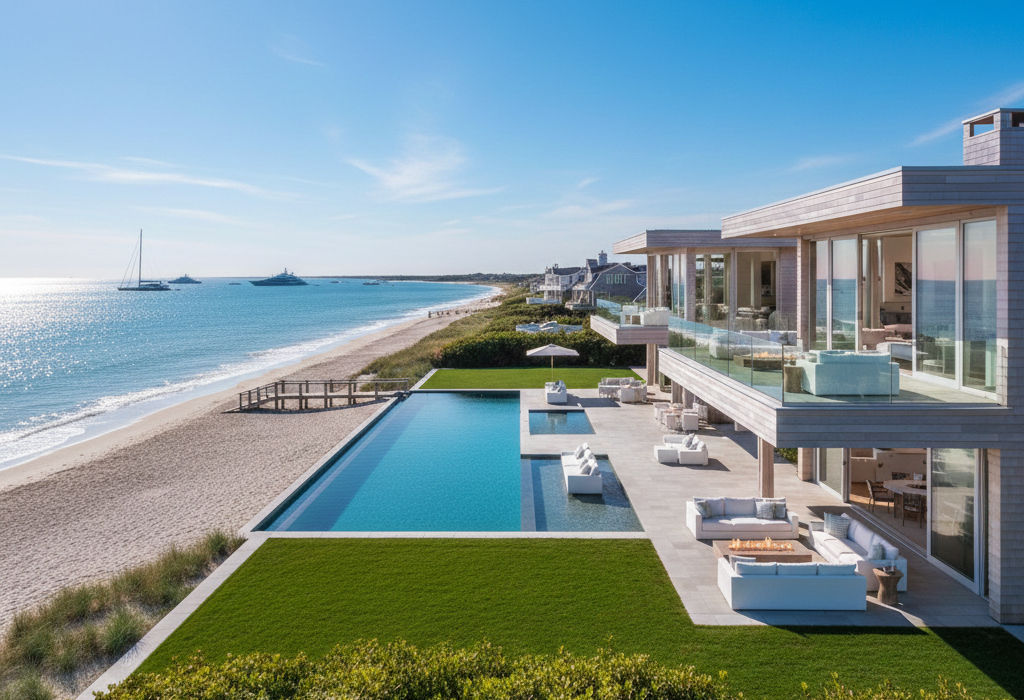
Quick Answer: The billionaire lifestyle in 2026 is defined by assets that appreciate, experiences that can’t be bought at any price, and privacy that money alone cannot guarantee. The ultra-wealthy spend $22.7 billion annually on private jets, $3.6 billion on super-prime yachts, and have driven luxury real estate prices up 147% in Dubai, 117% in Palm Beach, and 73% in Aspen over five years. But the true currency of the elite isn’t money—it’s access.
What does it actually mean to live like a billionaire?
Not the Instagram version with rented supercars and borrowed watches. The real thing. The compound in Southampton that never appears on any listing. The G650 that flies empty to position for your next departure. The art collection insured for more than most countries’ GDP.
Social Life Magazine has spent two decades covering the world’s wealthiest individuals at charity galas, polo matches, and private events from the Hamptons to Monaco. This guide distills that access into the most comprehensive examination of how the ultra-wealthy actually live, spend, invest, and think about luxury in 2026.
Table of Contents
- Ultra-Luxury Real Estate: Where Billionaires Buy
- Private Aviation: The $22.7 Billion Sky
- Superyachts: Floating Palaces of the Elite
- Collections: Cars, Art, and Appreciating Assets
- Billionaire Enclaves: The World’s Most Exclusive Addresses
- The Invisible Army: Staff and Security
- Giving Back: Billionaire Philanthropy
- The Billionaire Mindset: How They Think Differently
Billionaires Worldwide
Combined Wealth
Annual Jet Spending
Annual Yacht Spending
Ultra-Luxury Real Estate: Where Billionaires Buy
Real estate remains the cornerstone of billionaire wealth preservation. Unlike stocks or businesses, prime property in trophy locations has historically maintained value through economic cycles while providing the privacy and prestige that define ultra-high-net-worth living.
The ultra-luxury real estate market operates on rules invisible to typical buyers. Properties trade off-market through networks of family offices and private bankers. Asking prices are suggestions. And the most desirable homes never appear on any listing service.
The Global Trophy Markets
Five markets dominate billionaire real estate investment in 2026:
| Market | 5-Year Price Change | Entry Point (Ultra-Prime) | Notable Residents |
|---|---|---|---|
| Dubai | +147% | $30M+ | Tech founders, crypto billionaires |
| Palm Beach | +117% | $50M+ | Finance, old money |
| Aspen | +73% | $25M+ | Tech, entertainment |
| The Hamptons | +45% | $20M+ | Finance, media, entertainment |
| Monaco | +38% | $50M+ | European royalty, F1 figures |
For comprehensive coverage of the Hamptons market, see our guide to Real Estate of the Rich & Famous, including detailed breakdowns of Celebrity Hamptons Homes and the Most Expensive Houses in the Hamptons.
Record-Breaking Transactions
The most expensive home sales reveal where serious money flows:
- $238 million: Ken Griffin’s Manhattan penthouse (220 Central Park South) — the most expensive U.S. home purchase on record
- $147 million: Barry Rosenstein’s Further Lane compound in East Hampton — highest Hamptons transaction
- $115 million: Len Blavatnik’s 2025 purchase of Terry Semel’s Further Lane estate — new single-parcel Hamptons record
- $105 million: The Ford family’s Jule Pond estate in Southampton
The Off-Market Advantage
Approximately 70% of ultra-luxury transactions ($50M+) occur off-market. Why?
Privacy: Sellers don’t want the world knowing their home is for sale.
Discretion: Buyers don’t want competitors knowing where they’re investing.
Control: Both parties can negotiate without public scrutiny.
The result: a shadow market where the best properties circulate among family offices and private wealth advisors before ever reaching public consciousness.
The New Frontier Markets
As established markets become crowded, billionaires are pioneering new locations:
- Belize: Private islands with regulatory flexibility
- Fiji: Ultimate isolation with improving infrastructure
- Japan’s Snow Belt: Niseko and surrounding areas for ski estates
- Sardinia: European Mediterranean alternative to overcrowded Côte d’Azur
Private Aviation: The $22.7 Billion Sky
For billionaires, private aviation isn’t about luxury—it’s about time arbitrage. The ability to be anywhere in the world within hours, without security lines, delays, or scheduling constraints, creates a productivity advantage impossible to replicate.
The private jet market reached $22.7 billion in annual spending in 2025, driven by both ownership and charter demand from the ultra-wealthy.
The Fleet Hierarchy
| Aircraft Category | Price Range | Range | Typical Owner |
|---|---|---|---|
| Light Jet (Citation CJ4) | $10-15M | 2,000 nm | Centimillionaires |
| Super-Mid (Challenger 350) | $25-30M | 3,200 nm | Lower-tier billionaires |
| Large Cabin (G550) | $55-65M | 6,750 nm | Single-digit billionaires |
| Ultra-Long Range (G700) | $75-80M | 7,500 nm | Multi-billionaires |
| Boeing Business Jet | $100M+ | Global | Deca-billionaires, royalty |
Ownership vs. Charter vs. Fractional
How billionaires access private aviation depends on their usage patterns:
- Full Ownership: 400+ flight hours annually justifies the $3-5M yearly operating costs
- Fractional (NetJets, Flexjet): 50-200 hours annually; lower capital commitment with guaranteed availability
- Charter/Membership: Under 50 hours; maximum flexibility, no asset management
“The jet isn’t a luxury. It’s infrastructure. I can do three cities in a day and be home for dinner with my kids. Try that commercial.”
— Private equity founder, Hamptons resident
Superyachts: Floating Palaces of the Elite
A superyacht is the ultimate statement of wealth: a mobile estate requiring a crew of dozens, annual operating costs exceeding $5 million, and the ability to access any coastline on Earth with complete privacy.
The superyacht market saw $3.6 billion in transactions over the past 12 months, with the ultra-wealthy commissioning increasingly ambitious vessels.
The World’s Largest Private Yachts
| Yacht | Length | Est. Value | Owner |
|---|---|---|---|
| Azzam | 590 ft (180m) | $600M | Sheikh Khalifa bin Zayed Al Nahyan |
| Eclipse | 533 ft (162m) | $500M | Roman Abramovich |
| Dubai | 531 ft (162m) | $350M | Sheikh Mohammed bin Rashid Al Maktoum |
| Blue | 525 ft (160m) | $400M | Sheikh Mansour bin Zayed Al Nahyan |
| Dilbar | 512 ft (156m) | $600M | Alisher Usmanov (seized) |
The True Cost of Yacht Ownership
Purchase price represents only a fraction of yacht ownership costs:
Annual Operating Costs (100m+ Superyacht)
Crew (30-50 staff): $2-4 million
Fuel: $500K-2M depending on usage
Maintenance & Repairs: $1-3 million
Insurance: $500K-1M
Docking & Marina Fees: $500K+
Total Annual Cost: $5-10 million (approximately 10% of vessel value)
The Somnio: Yacht Residences at Sea
The latest evolution: permanent yacht residences. The Somnio, currently under construction, will feature 39 private residences priced from $20 million, with Michelin-starred dining, a 10,000-bottle wine cellar, and a full-time crew. Owners can sail the world while maintaining a permanent address at sea.
Collections: Cars, Art, and Appreciating Assets
Billionaire collections serve dual purposes: passion fulfillment and wealth preservation. The right collection—whether cars, art, wine, or watches—can appreciate faster than traditional investments while providing enjoyment impossible to replicate.
Car Collections
The world’s most impressive car collections belong to billionaires who view automobiles as rolling sculpture:
- Jay Leno: 180+ cars, 160+ motorcycles worth $80-100 million, including a McLaren F1 valued at $21 million
- Sultan of Brunei: Approximately 7,000 vehicles including 600 Rolls-Royces
- Ralph Lauren: $350 million collection featuring rare Ferraris and Bugattis
For our complete coverage, see Luxury Collections of Celebrities.
Art as Asset Class
Contemporary art has become a preferred store of value for the ultra-wealthy:
| Artist | Record Price | 10-Year Appreciation |
|---|---|---|
| Jean-Michel Basquiat | $110.5M | +340% |
| Jeff Koons | $91.1M | +180% |
| David Hockney | $90.3M | +420% |
| Banksy | $25.4M | +600% |
Watches as Portable Wealth
Ultra-rare timepieces have emerged as a billionaire asset class:
- Patek Philippe Grandmaster Chime: $31 million (auction record)
- Patek Philippe Nautilus: 2-3 year waitlists, 100%+ secondary market premiums
- Richard Mille: Starting at $100K, collectible models exceed $2 million
Billionaire Enclaves: The World’s Most Exclusive Addresses
Certain streets, neighborhoods, and private communities have become synonymous with extreme wealth. Residence in these enclaves signals membership in an exclusive club where neighbors might include heads of state, tech founders, and old-money dynasties.
The Hamptons: America’s Premier Summer Colony
The Hamptons remain the summer destination for finance, media, and entertainment elite. Key addresses include:
- Meadow Lane, Southampton: “Billionaires Row” — five miles of oceanfront estates owned by Ken Griffin, Leon Black, and other titans
- Further Lane, East Hampton: Home to the Hamptons’ most expensive transactions, including Barry Rosenstein’s $147M compound
- Lily Pond Lane, East Hampton: Historic enclave with estates owned by entertainment royalty
- Georgica Pond, East Hampton: Waterfront privacy preferred by Beyoncé & Jay-Z, Steven Spielberg, and Martha Stewart
For complete coverage, see our Celebrity Hamptons Homes guide.
Other Premier Enclaves
- Billionaires’ Row, NYC (57th Street): Supertall luxury towers including 220 Central Park South and One57
- Bel Air, Los Angeles: The “Platinum Triangle” with estates exceeding $100 million
- Kensington Palace Gardens, London: “Billionaires’ Row UK” — average home price exceeds £35 million
- The Peak, Hong Kong: Asia’s most exclusive address with prices exceeding $100,000 per square foot
The Invisible Army: Staff and Security
Behind every billionaire lifestyle stands an army of professionals managing properties, coordinating logistics, ensuring security, and anticipating needs before they arise.
The Estate Team
A typical billionaire household employs:
| Position | Annual Compensation | Responsibilities |
|---|---|---|
| Estate Manager | $150-300K | Overall property operations, staff supervision |
| Private Chef | $100-250K | Daily meals, event catering, dietary management |
| Personal Assistant | $80-200K | Scheduling, correspondence, travel coordination |
| Security Director | $200-500K | Threat assessment, team management, logistics |
| Household Staff (4-10) | $50-80K each | Housekeeping, grounds, maintenance |
Security Protocols
For deca-billionaires, security represents a seven-figure annual expense:
- Residential Security: 24/7 monitoring, panic rooms, counter-surveillance
- Travel Security: Advance teams, armored vehicles, extraction protocols
- Cyber Security: Device management, encryption, social media monitoring
- Family Security: Discreet protection for children, schools, activities
Giving Back: Billionaire Philanthropy
The ultra-wealthy face unique responsibilities and opportunities in philanthropy. Giving Pledge signatories have committed over $600 billion to charitable causes, while private foundations reshape education, healthcare, and environmental policy.
The Giving Pledge
Founded by Bill Gates and Warren Buffett, the Giving Pledge has secured commitments from 244 billionaires to donate the majority of their wealth. Notable signatories include:
- Mark Zuckerberg & Priscilla Chan
- MacKenzie Scott (over $17 billion donated since 2019)
- Michael Bloomberg
- Elon Musk
Strategic Philanthropy
Modern billionaire giving focuses on systemic change rather than traditional charity:
- Education: Charter school networks, university endowments, scholarship programs
- Healthcare: Disease research, hospital wings, medical technology
- Environment: Conservation land purchases, clean energy investment, climate policy
- Arts: Museum funding, artist fellowships, cultural preservation
The Billionaire Mindset: How They Think Differently
Beyond material possessions, billionaires share certain mental frameworks that contributed to their success and continue to guide their decisions.
Time Over Money
The ultra-wealthy obsess over time efficiency. Private aviation, staffed households, and personal assistants exist to eliminate friction and maximize productive hours.
“You can always make more money. You can never make more time.”
— Common billionaire refrain
Ownership Over Income
As explored in our Oprah Winfrey net worth analysis, the difference between millionaires and billionaires often comes down to ownership. Salaries create comfort. Equity creates dynasties.
Network as Net Worth
Access to other ultra-wealthy individuals creates opportunities invisible to outsiders: co-investment deals, board positions, policy influence, and strategic partnerships that multiply wealth.
Long-Term Thinking
While most investors think in quarters, billionaires think in decades. Real estate held for 20 years. Art collected over a lifetime. Businesses built to span generations.
Experience the Billionaire Lifestyle Through Social Life Magazine
Subscribe for exclusive access to Hamptons events, celebrity coverage, and insider perspectives on how the ultra-wealthy live, entertain, and invest. Join the community that’s been covering high society for over two decades.
Related Coverage
This pillar article connects to our comprehensive luxury lifestyle coverage:
Hub 2A: Real Estate of the Rich & Famous
- Celebrity Hamptons Homes: Who Lives Where
- The Most Expensive Houses in the Hamptons
- Celebrity NYC Penthouses
- Billionaire Beach Houses
Hub 2B: Luxury Collections of Celebrities
Cross-Pillar Links
Frequently Asked Questions
What is the billionaire lifestyle really like?
The billionaire lifestyle centers on time optimization, privacy, and access. Ultra-wealthy individuals use private aviation ($22.7B annually), staffed estates, and exclusive enclaves to maximize productive time while maintaining privacy. Contrary to popular perception, many billionaires live relatively simply day-to-day, with their wealth concentrated in businesses, real estate, and investments rather than conspicuous consumption.
How do billionaires spend their money?
Billionaires allocate wealth across real estate (trophy properties averaging $50M+), private aviation ($3-80M aircraft), yachts ($10-600M), collections (art, cars, watches), philanthropy (many pledge 50%+ of wealth), and staff/security ($1-5M annually). The largest expenditure is typically real estate, which serves as both residence and wealth preservation.
Where do most billionaires live?
Billionaires concentrate in financial and tech centers: New York, San Francisco, London, Hong Kong, and Beijing. For secondary residences, the Hamptons, Palm Beach, Aspen, Monaco, and Dubai dominate. The fastest-growing billionaire markets are Dubai (+147% in 5 years) and Miami/Palm Beach (+117%).
What do billionaires do for fun?
Ultra-wealthy leisure includes yacht cruising, private golf/tennis, art collecting, car collecting, philanthropy events, and travel to exclusive destinations. Many billionaires are passionate collectors, whether of cars (Jay Leno), art (Eli Broad), or wine. Social activities often blend business networking with entertainment at charity galas, polo matches, and private clubs.
How much staff do billionaires employ?
A typical billionaire household employs 10-30 full-time staff including estate managers ($150-300K), private chefs ($100-250K), personal assistants ($80-200K), security teams ($500K-2M), and household staff. Those with multiple properties may employ 50+ people across their various estates, yachts, and aircraft.
What is the most expensive billionaire home?
The most expensive private residence purchase on record is Ken Griffin’s $238 million Manhattan penthouse at 220 Central Park South. The most expensive home ever listed was the Bel Air estate “The One” at $500 million (ultimately sold for $141 million). In the Hamptons, Barry Rosenstein’s $147 million Further Lane compound holds the record.
Connect With Social Life Magazine
Feature Article Ideas / Advertising / Brand Partnership Inquiries
→ Contact Social Life Magazine
Polo Hamptons Tickets, Cabanas & Brand Sponsorships
→ Polo Hamptons
Join Our Email List
→ Subscribe Here
Social Life Magazine Print Subscription
→ Get Your Subscription
Support Our Work
→ Donate $5 via PayPal
Author

Written by
Recent Posts
What a Concierge Medicine Company Does to Help Practices Thrive

Personal Injury Attorney: Understanding Your Legal Options After an Accident
Things to Consider Before Hiring a Lafayette Truck Accident Lawyer

Navigating the Road to Recovery After a Winchester Car Accident

What to Know About Filing a Personal Injury Claim in Brooksville
Categories
- Art
- Articles
- Business of Luxury
- Celebrities
- Culture
- Entertainment
- Events
- Faces of Summer 2026
- Fashion
- Fashion & Style
- Featured
- Finance
- Food, Spirits, Wine
- Hamptons
- Hamptons Celebrities
- Health
- Health & Beauty
- Lifestyle
- Luxury Lifestyle
- Press
- Profiles
- Real Estate
- Technology
- The Chronicles
- Travel
- Uncategorized
- Weddings