

The accounting job bored him within months. Terry Semel had just graduated from Long Island University with a degree in business, and the numbers on spreadsheets couldn’t hold his attention. Then a friend mentioned a sales training program at Warner Bros., one of Hollywood’s legendary studios. Semel didn’t hesitate. The son of a Brooklyn coat designer and a bus company executive walked away from accounting in 1965 to become a movie salesman, traveling across America with a list of upcoming films, persuading theater owners to bet on Warner’s slate. He was twenty-two years old.
Sixty years later, his East Hampton estate sold for $115 million to Len Blavatnik, setting a new record for a single residential parcel in Hamptons history. Terry Semel net worth 2025 is estimated around $300 million, though the figure matters less than the legacy: twenty-four years running Warner Bros., six years running Yahoo!, and a neuroscience institute at UCLA that bears his name. The trajectory from Bay Terrace, Queens, to Further Lane, East Hampton, passes through Batman, The Matrix, a missed Google acquisition, and now Alzheimer’s disease. Understanding the fortune requires understanding the journey.
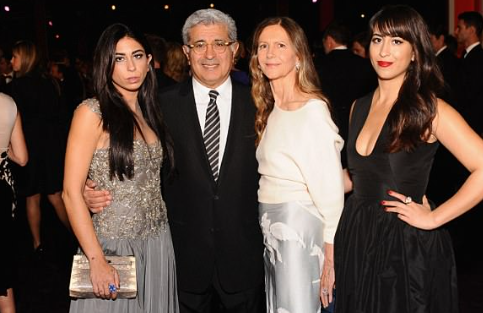
Terry Semel Net Worth 2025: The Brooklyn Boy Who Sold Movies
Terence Steven Semel was born February 24, 1943, in Brooklyn, New York, to a Jewish family that understood work. His father Benjamin designed women’s coats. His mother Mildred rose to executive at a bus company. They raised Terry and his two sisters in Bay Terrace, a community in Bayside, Queens, where middle-class strivers sent their kids to public schools and hoped for better. Terry was the middle child, neither the eldest with its responsibilities nor the youngest with its freedoms.
From Accounting to Hollywood
Semel graduated from Long Island University in 1964 with an accounting degree, then simultaneously pursued an MBA at City College of New York while working his way up at Warner Bros. The sales training program taught him how to read theater owners, how to pitch upcoming releases, how to travel relentlessly. By 1971, he was domestic sales manager at CBS-Cinema Center Films. Two years later, he became vice president of distribution at Walt Disney. In 1975, Warner Bros. brought him back as president of distribution. That same year, he met Robert Daly, the man who would become his partner in building an empire.
The Semel-Daly partnership defined Warner Bros. for two decades. Semel handled operations, talent retention, and deal-making. Daly managed corporate relationships. Together they greenlit approximately four hundred films, including Batman, Lethal Weapon, The Goonies, The Matrix, and multiple Academy Award nominees. At least thirteen received Best Picture nominations. Three won the top honor. When Semel became president and COO in 1982, Warner’s annual revenues were around $750 million. By 2001, revenues had grown to approximately $11 billion.
The Yahoo! Years: When Tech Met Hollywood
Both Semel and Daly resigned from Warner Bros. in July 1999. Semel was fifty-six, rich, and restless. When Yahoo co-founders Jerry Yang and David Filo offered him the CEO position in 2001, Semel saw another opportunity to build something. The internet company was struggling in the post-dot-com crash. Semel brought Hollywood discipline to Silicon Valley chaos, implementing formal business processes and acquiring properties like Flickr and Overture.
The Deals That Got Away
Semel’s Yahoo tenure includes two of the most expensive missed opportunities in tech history. Yang and Filo suggested he look at buying Google, whose founders admired Yahoo’s original team. Semel had dinner with Larry Page and Sergey Brin. They wanted $1 billion and didn’t really want to sell. Semel offered to think about it. At a second dinner, he agreed to the $1 billion. Page and Brin replied they now wanted $3 billion and still didn’t want to sell. The deal collapsed. Google went public in 2004 at a $23 billion valuation. Today the company is worth over $2 trillion.
The Facebook miss hurt even more. Yahoo’s board gave Semel a mandate to buy the social network for up to $1.2 billion. Mark Zuckerberg wanted $1 billion. Semel tried to negotiate down to $850 million. Zuckerberg walked away. Facebook went public in 2012 at a $104 billion valuation. Today it’s worth over $1 trillion. Two trillion-dollar companies slipped through Semel’s fingers because of negotiating tactics that had worked in Hollywood but failed in tech.
The $70 Million Compensation Controversy
By 2006, shareholders were restless. Yahoo’s stock had underperformed. Semel’s compensation package, including stock options worth $70 million on an annual salary of $1, drew outrage. He resigned as CEO in June 2007, handing the reins to co-founder Jerry Yang. He remained as non-executive chairman until January 2008. The tech titan who had built Warner Bros. into a global powerhouse couldn’t replicate the magic in Silicon Valley.
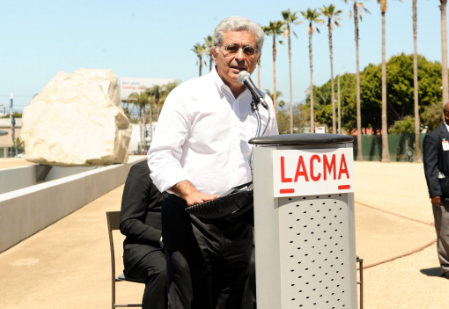
The East Hampton Estate: From Schwarzman to Blavatnik
In 2005, Semel purchased the Further Lane property from Stephen Schwarzman, founder of Blackstone, for $43 million, reportedly $1 million above asking price. The 8.5-acre oceanfront parcel stretched from Further Lane to the dune-protected beach. Semel commissioned the late architect Charles Gwathmey to design structures on the property, converting a five-bedroom cottage into a guesthouse while building a modern main residence.
Twenty Years of Further Lane
Semel’s neighbors on Further Lane included some of the wealthiest people in America: Jerry Seinfeld, Lorne Michaels, Larry Gagosian, and other entertainment and finance titans. The property could accommodate a 20,000-square-foot residence with room for pool, tennis court, and pool house. Marketing materials touted space for “golf, garages, ponds, orchards and horses.” Semel had built his retreat from the pressures of running companies.
Then came the illness. In 2019, the Los Angeles Times reported that Semel had been battling Alzheimer’s disease for several years. The man who had greenlit The Matrix and negotiated with Mark Zuckerberg was losing his memory. His son Eric filed a petition in Los Angeles Superior Court to appoint a temporary conservator. The family retreated from public life. The East Hampton estate, once a symbol of achievement, became an asset to manage.
The $115 Million Sale: Record-Setting and Bittersweet
In July 2025, the property sold to Len Blavatnik’s LLC for $115 million, the highest price ever paid for a single residential parcel in Hamptons history. The sale closed off-market. Semel’s company, Windsor Digital Studio, transferred the deed. The $72 million gain over twenty years represents substantial appreciation, but the circumstances, with Semel too ill to enjoy any future properties, cast the transaction in melancholy light.
The Semel Institute Legacy
More enduring than the real estate is the Jane & Terry Semel Institute for Neuroscience and Human Behavior at UCLA, one of the largest institutes in the country studying the brain and its disorders. Endowed by Semel and his wife Jane, the institute researches conditions including the very disease now affecting its benefactor. In 2005, UCLA awarded Semel its Medal, the university’s highest honor. The man who built Hollywood’s biggest studio also built an institution that might one day cure what afflicts him.
The Tell: Hollywood Power and Its Limits
Terry Semel’s career embodies a particular kind of American success: the middle-class kid who rose through talent and relentlessness, who mastered one industry then tried to master another, who accumulated wealth and prestige and institutional recognition, and who ultimately faced a disease that respects none of it. The coat designer’s son became co-chairman of Warner Bros. The Bay Terrace kid bought a compound on Further Lane. The movie salesman sold his estate for more than anyone had ever paid.
What the Numbers Don’t Capture
Terry Semel net worth 2025 at approximately $300 million captures wealth but not impact. Four hundred films greenlit. The Matrix, which redefined action cinema. Batman, which launched superhero franchises. An internet company guided through the dot-com crash. A neuroscience institute that trains researchers. Three children. A wife named Jane who stood beside him through decades of dealmaking. The Further Lane estate was spectacular, but the legacy lies elsewhere.
At 82, Semel lives with Alzheimer’s, cared for by family while his former property passes to a new owner. Len Blavatnik will presumably build something magnificent on that oceanfront land. But the ghosts of Semel’s parties will linger: the Hollywood power players who gathered on Further Lane when Terry Semel was running things, when Warner Bros. dominated, when Yahoo! still seemed like it might win. The record-breaking sale closes a chapter in Hamptons history. The man who wrote that chapter has already moved on to battles no fortune can win.
Related Articles:
- Len Blavatnik Net Worth 2025: The Billionaire Behind the Hamptons’ Biggest Deal
- Ann Tenenbaum Net Worth 2025: Venture Capital, Philanthropy, and a $120M Hamptons Exit
- John Foley Net Worth 2025: Peloton, the Boom-Bust Cycle, and Hamptons Real Estate
For features, advertising, or partnership inquiries, visit sociallifemagazine.com/contact. Join us at Polo Hamptons. Subscribe to our print edition or support independent Hamptons journalism with a $5 donation.
Author

Written by
Recent Posts

Planning an Arizona Road Trip? Practical Details to Handle Before You Leave

Short Homecoming Dresses That Feel Polished, Not Overdone
Men’s Health After 40: Important Changes to Pay Attention To
What You Need to Know About Spray Tanning

Simple Ways to Upgrade Your Summer Drink Routine
Categories
- Art
- Articles
- Business of Luxury
- Celebrities
- Culture
- Entertainment
- Events
- Faces of Summer 2026
- Fashion
- Fashion & Style
- Featured
- Finance
- Food, Spirits, Wine
- Hamptons
- Hamptons Celebrities
- Health
- Health & Beauty
- Lifestyle
- Luxury Lifestyle
- Press
- Profiles
- Real Estate
- Technology
- The Chronicles
- Travel
- Uncategorized
- Weddings