
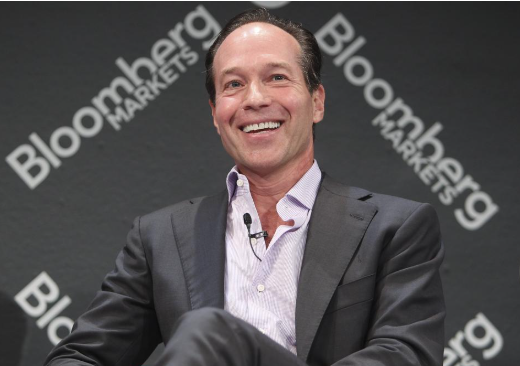
Barry Rosenstein net worth sits at approximately $1.5 billion as of early 2026. That figure appears modest alongside the names in this series. However, Rosenstein holds a distinction none of them share: in May 2014, he paid $147 million for an 18-acre oceanfront compound on Further Lane in East Hampton — the most expensive residential property ever sold in the United States at the time. He then tore it down and built something larger. The house became a headline. The man behind it remained, deliberately, one of the least profiled billionaires on the East End. That gap — between the number everyone knows and the biography almost no one has read — is the story worth telling.
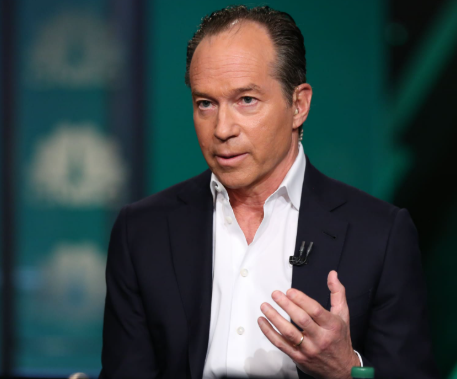
The Room Before the Room
Barry Rosenstein was born in 1960 and grew up in West Orange, New Jersey. He graduated from Lehigh University in 1981, Phi Beta Kappa — the academic distinction that signals someone who studies harder than the room expects. Subsequently, he earned an MBA with honors from the Wharton School at the University of Pennsylvania in 1984. Wharton produced Perelman in this same era. The Philadelphia finance network is not accidental.
After Wharton, Rosenstein joined Merrill Lynch’s mergers and acquisitions division. That gave him the technical foundation. Moreover, it placed him in proximity to the most combustible period in American M&A history — the mid-1980s, when Milken’s junk bond machine was running and the hostile takeover had just been legitimized in Delaware. Consequently, he moved from Merrill Lynch to work as a principal at Plaza Securities Corporation, the vehicle run by corporate raider Asher Edelman. Edelman was among the most feared activists of the 1980s. Working alongside him, Rosenstein learned the mechanics of buying a company’s stock, demanding change, and holding management to account through position size. He absorbed the playbook. He would later build an entire institution around it.
Sagaponack Partners and the Copart Bet
In the early 1990s, Rosenstein moved to San Francisco and took on early-stage private investment. Notably, he played a foundational role in funding Copart, Inc. — currently the world’s largest auto salvage company, a business that now processes millions of vehicles annually. The Copart investment produced significant returns. Additionally, he founded and led Sagaponack Partners, a private equity firm named after the Hamptons village that would later anchor his personal life. That name choice was not arbitrary. Furthermore, it signaled something about how Rosenstein thought: the Hamptons was not a reward for the work. It was part of the framework from the beginning.
The Belief System — Activism as an Investment Thesis, Shown Through Two Campaigns
Rosenstein founded JANA Partners in 2001 with approximately $35 million in capital. The name is an acronym — Joint ANalysis — and the strategy was clear from launch: identify publicly traded companies trading below their potential, acquire a meaningful stake, and force the changes needed to close the gap. JANA did not invent activist investing. However, Rosenstein brought to it a private equity research discipline that distinguished his campaigns from the blunter approaches of the earlier corporate raider generation. He built board relationships. White papers followed. Shareholder surveys backed every demand with data. By October 2011, JANA Partners had returned 200% since inception — a cumulative figure that placed Rosenstein alongside Carl Icahn, Daniel Loeb, and Bill Ackman in the first rank of activist investors.
Whole Foods: The Campaign That Defined the Era
In April 2017, Rosenstein disclosed that JANA and several co-investors held 8.8% of Whole Foods Market — the second-largest shareholder position after Vanguard. Publicly, he called for board changes and better technology deployment. Behind that framing was a simpler thesis: Whole Foods had built a powerful brand and then allowed operational discipline to collapse. Management had insulated itself. The stock had stagnated. Rosenstein pushed. By June 2017, Amazon announced it would acquire Whole Foods for $13.7 billion. Rosenstein sold his position for approximately $300 million. The campaign ran from disclosure to payday in roughly three months. Moreover, it demonstrated something that JANA’s methodology had long argued: the gap between what a company is worth and what it trades at closes fastest when a credible outside voice forces the issue.
Beyond Whole Foods: The Broader JANA Record
Additionally, JANA ran consequential activist campaigns at Qualcomm — pushing for cost cuts and compensation reform — and at Tiffany & Co., where the fund won board seats and pressed for strategic change. Conagra Brands, Walgreens Boots Alliance, and McGraw-Hill Companies each faced sustained JANA engagement at various points. Furthermore, in 2018, Rosenstein launched JANA Impact Capital, a fund designed to deploy activism in service of environmental, social, and governance outcomes — an early institutional attempt to prove that ESG and activist returns could coexist. Harvard Business School published a case study on the approach in November 2018.
The Timeline: From $35 Million to a $147 Million Address
| Period | What Happened | Net Worth / AUM Marker |
|---|---|---|
| 1960–1984 | Born West Orange, NJ. Lehigh University (BA, Phi Beta Kappa, 1981). Wharton MBA with honors (1984). Joins Merrill Lynch M&A division. Subsequently works under corporate raider Asher Edelman at Plaza Securities. | — |
| 1990s | Moves to San Francisco. Funds Copart, Inc. (world’s largest auto salvage company). Founds and leads Sagaponack Partners, a private equity fund. Returns to New York to build public markets platform. | — |
| 2001 | Founds JANA Partners with ~$35M. Deploys private equity research methodology to public market activism. Early campaigns: Kerr-McGee, El Paso, Charles River Laboratories, Houston Exploration, CNET Networks. | AUM: $35M |
| 2005–2011 | Buys 27 Drew Lane, East Hampton for $19.2M (2005); hires architect Rick Cook to build a 7-bed, 9.5-bath residence. JANA reaches 200% cumulative returns since inception by October 2011. AUM grows significantly. Rosenstein ranked among top-tier activists alongside Icahn, Loeb, Ackman. | AUM: ~$5B+ |
The Record-Setting Years: 2014–2020 |
||
| 2014 | Purchases 60 Further Lane, East Hampton — three contiguous oceanfront parcels totaling ~18 acres — for $147 million. Transaction sets a record as the most expensive residential sale in United States history. Property formerly owned by Tweedy, Browne managing director Christopher H. Browne. Rosenstein begins demolition and new construction. | AUM: ~$11B (peak) |
| 2015–2016 | Construction begins on 16,300 sq ft primary residence at 60 Further Lane. Plans include theater, two wine rooms, yoga space, 82-ft lap pool, “Barry’s Terrace.” Rosenstein donates two historic 18th-century Dominy craftsmen’s workshops — displaced by the pool house build — to the village of East Hampton for public display. | AUM: ~$9B |
| 2017–2019 | April 2017: JANA discloses 8.8% Whole Foods stake. June 2017: Amazon acquires Whole Foods for $13.7B. Rosenstein sells for ~$300M. Lists 27 Drew Lane for $70M (2018). Closes JANA Partners and JANA Nirvana event-driven funds (2019); pivots entirely to focused activism through JANA Strategic Investment. | AUM: declining from peak |
| 2020–2026 | Sells 27 Drew Lane for $35.75M (2020) — roughly half of $70M ask. JANA Strategic Investment Series A generates 14% annualized gains over four years, outperforming S&P 500 by cumulative 34%. Current AUM approximately $2B (2025). JANA takes 5% stake in Lamb Weston (2024–2025), pushes for strategic alternatives. Rosenstein net worth est. ~$1.3B–$1.5B. | ~$1.3B–$1.5B personal |
The Hamptons Chapter: Further Lane and the Record That Stands
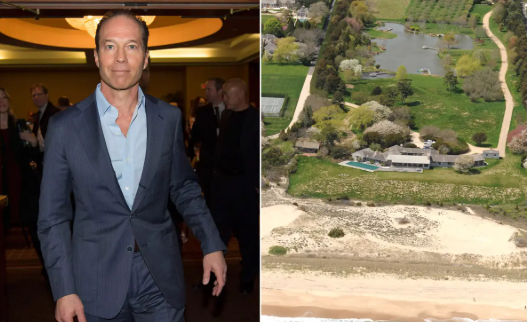
Among the East End’s hedge fund class, Barry Rosenstein’s Hamptons footprint carries a specific piece of permanent market history. The $147 million paid for 60 Further Lane in May 2014 still ranks as the highest recorded price for a residential transaction in the Hamptons. More significantly, it exceeded the prior national record — Copper Beech Farm in Greenwich, Connecticut at $120 million — by $27 million and held the title of most expensive residential sale in America for several years afterward. The three-parcel oceanfront compound runs from the road to the dunes on Further Lane, one of the two or three most storied private addresses on the South Fork.
Rosenstein did not buy the house to keep it. He demolished the existing multi-wing residence — originally designed for Christopher H. Browne and his partner, architect Andrew Gordon — and commissioned architect Rick Cook of CookFox to design a replacement. Public records from the East Hampton village Zoning Board show the new primary residence at 16,300 square feet. Additionally, plans include a theater and projection room, a walk-in freezer, a staff lounge, two wine rooms, an 82-foot lap pool running perpendicular to a reflecting pool, and a 2,656-square-foot pool house approved by the ZBA — plus an outdoor terrace the plans formally designate as “Barry’s Terrace.”
The Dominy Detail
One aspect of the Further Lane compound rarely reaches financial press: Rosenstein’s pool house construction required the removal of two 18th-century Dominy craftsmen’s workshops on the property. The Dominy family produced furniture and clocks in East Hampton from the late 1700s through the early 1800s — their work appears in the Winterthur Museum and the Metropolitan Museum of Art. Rather than demolishing the timber-frame structures, Rosenstein donated them to the village of East Hampton for relocation to North Main Street, where they remain publicly accessible.
Furthermore, the pool house was designed to match the setbacks and proportions of the original Dominy buildings. The structure carries the informal designation “Dominy Pavilion” in project documentation. That combination — a $147 million oceanfront compound paired with a careful act of historic preservation — does not fit the standard activist hedge fund caricature.
Barry Rosenstein Net Worth: What He Actually Built
Barry Rosenstein net worth, estimated between $1.3 billion and $1.5 billion as of early 2026, derives from a career that looks very different depending on which decade you examine. At JANA’s peak, the fund managed approximately $11 billion in assets. The management fee alone on that AUM — typically 1.5% to 2% for an institutional activist — generated nine-figure annual revenue at the firm level. Moreover, JANA’s performance fees through successful campaigns like Whole Foods produced concentrated event-driven profits. The $300 million from the Amazon acquisition of Whole Foods represents a single campaign return. Rosenstein has run dozens of campaigns.
However, JANA’s AUM has contracted substantially from that peak — from approximately $11 billion down to roughly $2 billion by 2025. The 2019 decision to close the event-driven funds and focus entirely on the concentrated activist strategy narrowed the asset base deliberately. Additionally, a period of underperformance in the mid-2010s cost Rosenstein investor capital. JANA Nirvana and JANA Partners (the original event-driven vehicle) closed. What remained — JANA Strategic Investment — recovered strongly, generating 14% annualized returns over four years through 2025 against the S&P 500’s benchmark. Consequently, the current picture is a smaller, tighter, more focused operation than the peak years suggest.
The $147 Million Investment Logic
Notably, the Further Lane purchase itself deserves analysis as an investment rather than as consumption. Rosenstein paid the record price in 2014 when the Hamptons market was at a particular inflection point — before the ultra-luxury compression of COVID-era remote work and before the second generation of technology billionaires began systematically acquiring South Fork oceanfront. Furthermore, Further Lane is one of the finite oceanfront addresses in East Hampton where the lot sizes, the dune frontage, and the road position compound irreplaceably. The $147 million, at the time widely described as excessive even by Hamptons standards, looks different against the trajectory of East Hampton oceanfront values over the subsequent decade. Rosenstein built a Hamptons compound that remains — by transaction record — the most expensive ever purchased on the East End.
Public Reputation vs. What the Room Goes Quiet About
The approved narrative on Barry Rosenstein: he is the activist who forced Amazon to buy Whole Foods, named his firm after a Hamptons village, paid the most ever recorded for a Hamptons estate, and runs a disciplined billion-dollar fund out of New York with a reputation for doing his homework before calling any board. He ranks among the five or six most consequential activist investors of the 2000s. Moreover, he built that reputation without the tabloid footprint of an Icahn or the media cultivation of an Ackman. His profile is almost entirely professional. That deliberate absence from celebrity coverage is itself a positioning choice.
Inside the room, however, two details attract sustained attention. First, the AUM contraction from $11 billion to $2 billion represents a substantial loss of institutional confidence over roughly a decade. The event-driven fund closures in 2019 were not a strategic pivot executed from strength — they followed years of performance that underperformed the strategy’s own early promise. Second, the 27 Drew Lane sale in 2020 for $35.75 million against a $70 million ask — a discount of roughly 49% — suggested that even Rosenstein’s real estate judgment, so celebrated in 2014, was not immune to market reality. Furthermore, the timeline is worth holding: he paid $19.2 million for Drew Lane in 2005, spent substantially to rebuild it, listed it for $70 million, and sold it for half that asking price fifteen years later. The $147 million Further Lane compound represents one real estate thesis. Drew Lane represents the other.
The ESG Experiment
Additionally, the JANA Impact Capital launch in 2018 attracted significant attention as an early hedge fund attempt to monetize ESG activism. The premise — that pushing companies on environmental and social governance could generate both returns and positive outcomes — was ahead of the institutional conversation at the time. By 2019, however, JANA Impact had not raised the capital its ambitions required. The fund remained far smaller than planned. Consequently, Rosenstein folded the Impact strategy back into the broader activist platform rather than continuing it as a standalone product. That trajectory — ahead of the ESG wave, but unable to fully capitalize on it — describes a pattern in Rosenstein’s career: genuine strategic insight, executed at a timing that required more patience than the institutional capital cycle allowed.
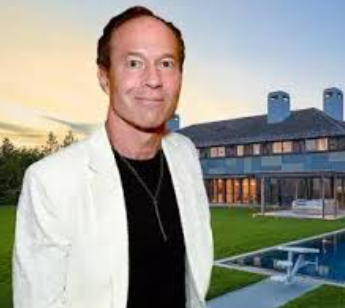
Contribution: Rock Hall, Brown, and the Springsteen Archives
Rosenstein’s philanthropy runs through institutions rather than named buildings, though his involvement carries meaningful weight in each. He serves as trustee emeritus and current Investment Committee member at Brown University — a governance role at one of the Ivy League’s most endowment-conscious institutions. Moreover, he holds trusteeships at the Rock and Roll Hall of Fame in Cleveland and at the 92nd Street Y in New York, one of the most significant cultural and educational institutions in the city. Additionally, Rosenstein is a founding trustee of The Bruce Springsteen Archives and Center for American Music at Monmouth University — a commitment that carries biographical resonance for a New Jersey native whose career trajectory runs from West Orange through Wharton through the corridors of activist finance.
Furthermore, the Dominy workshop preservation at Further Lane represents a form of place-based philanthropy with no institutional naming attached. He did not put his name on the structures. He relocated them at his own expense and returned them to the public. That impulse — preservation over display — runs counter to the naming-rights model that characterizes the philanthropy of most figures in this series.
What the Art Collection Represents
Rosenstein also maintains a substantial contemporary art collection that periodically surfaces in auction coverage and collector profiles. The collection includes modern and contemporary works consistent with the tastes of his hedge fund peer group. Unlike Perelman’s $6 billion collection or Black’s $1 billion assemblage, however, Rosenstein’s holdings have not been a centerpiece of his public profile. Consequently, the collection reads as personal accumulation rather than institutional identity — which, given Rosenstein’s broader preference for operating without a public personality, tracks precisely.
The East End Verdict on Barry Rosenstein Net Worth
Barry Rosenstein net worth is the ledger of a man who understood one thing with unusual precision: undervalued assets close their gap fastest when someone credible forces the issue. He applied that logic to equities from 2001 through the present, generating 200% cumulative returns by 2011 and a $300 million payday from Whole Foods in 2017. He applied that same logic to real estate in 2014 when he paid $147 million for Further Lane oceanfront that everyone called excessive. Ultimately, the two theses run on the same engine — identify what the market misprices, pay the record price, and build the position for the long term.
On Further Lane, that compound now stands at 16,300 square feet with an 82-foot pool and a formally designated terrace bearing his name. Among the Citadel-level fortunes and the Apollo-scale institutions profiled in this series, Rosenstein is the outlier — a $1.5 billion figure who made the biggest residential purchase in American history at the time, then built a $2 billion activist fund that beats the S&P 500 by double digits. Neither number is what the other names in this corridor would recognize as significant. However, for a man who named his firm after a Hamptons village before anyone knew his name outside Wall Street, the address was never incidental.
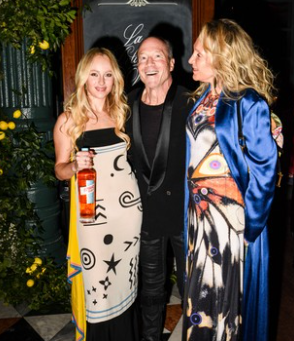
The Number That Defines the Record
Furthermore, among all the properties on the East End documented across 23 years of Social Life Magazine coverage. The Further Lane transaction remains the single highest recorded residential sale. David Tepper bought and demolished a Sagaponack mansion. Ronald Perelman held The Creeks for decades as the Hamptons’ largest Georgica Pond estate. Barry Rosenstein paid a number that no one has yet exceeded. He then built something worthy of it, preserved the historic structures his project displaced, and named a terrace after himself. That is, by any measurement, a very specific expression of how a New Jersey kid who learned the playbook from a corporate raider in 1984 eventually decided to hold the record.
Social Life Magazine has been operating inside that room for twenty-three years
Five summer issues from Westhampton to Montauk, fall delivery to Upper East Side doorman buildings. 25,000 readers in each of 5 issues who are the demographic every luxury brand is trying to reach. By doing things significantly less effectively than simply being in the magazine. The brands here are not buying exposure. They are being introduced to people who have already decided to trust the publication that introduced them. If your brand belongs in that introduction: sociallifemagazine.com/contact.
The email list is the year-round version of the same room — 82,000 readers, same zip codes, the winter conversation. Free. Eleven seconds. Join it here.
Polo Hamptons is the event version of the same insight
There are gatherings people attend and gatherings where something actually happens — where the introduction that required six months of mutual adjacency becomes, on a July afternoon, simply a handshake between two people who were always going to meet. Category-exclusive sponsorships from $14,000. Private cabanas from $6,500. One sponsor per category. Most are already claimed. polohamptons.com.
The print subscription is the physical object on the coffee table in the house on Further Lane, handed by the family office principal to the person he is trying to introduce to the concept of your brand before the introduction has technically happened yet. Five summer issues. sociallifemagazine.com/subscription.
And then this, which is the most honest sentence here and therefore the one most likely to be skimmed: independent luxury media with no advertiser leverage and no engagement algorithm is genuinely rare, which is why the judgment, when present, is worth something. You have already formed an opinion about whether it was present here. If yes: paypal.com/donate. The amount is whatever you think that judgment is worth, which is the only honest way to price it.
Related Reading:
Ken Griffin Net Worth: Citadel’s $49B Meadow Lane Titan
David Tepper Net Worth: The Revenge Mansion at $20B
Ronald Perelman Net Worth: The Creeks and a $19B Fall
Leon Black Net Worth: Apollo’s $13B Shadow on Meadow Lane
Henry Kravis Net Worth: KKR’s $12B Meadow Lane Patriarch
Hamptons Hedge Fund Billionaires: The Complete Net Worth Guide
Barry Rosenstein net worth data sourced from Bloomberg Billionaires Index, Forbes, and public reporting. JANA Partners AUM figures from SEC 13F filings. Real estate details from East Hampton property records and public reporting. Social Life Magazine is an independent publication and has no affiliation with Barry Rosenstein or JANA Partners.
Author

Written by
Recent Posts
7 Mindful Meal Prep Tips for Stop Food Waste Day

Rebecca Ferguson Net Worth: The Advantage of Not Being the Lead
What Makes a Dinner Party Truly Unforgettable (Hint: It’s Not the Food)
Tips for Managing Grease and Oil in Everyday Dishwashing
Austin Butler Net Worth: The Method Actor in a Post-Method World
Categories
- Art
- Articles
- Beauty & Skincare
- Celebrities
- Celebrities|Entertainment
- Celebrities|Television
- Celebrities|The Chronicles
- celebrities|the-archive
- Chronicles
- Entertainment|Culture
- Event Photos
- Events
- Fashion
- Fashion & Style
- Featured
- Food & Beverage
- Food, Spirits, Wine
- Hamptons
- Hamptons Celebrities
- Hamptons Celebrities|Celebrities|The Chronicles
- Health
- Health & Beauty
- Lifestyle
- Luxury Lifestyle
- Movies
- Press
- Profiles
- Real Estate
- Technology
- The Chronicles
- Travel
- Uncategorized
- Weddings