

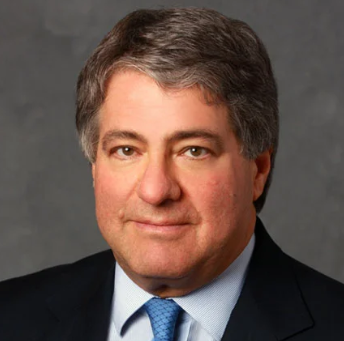
Leon Black net worth sits at approximately $13 billion as of early 2026. That number came almost entirely from Apollo Global Management — the firm he co-founded in 1990 from the ashes of Drexel Burnham Lambert. Today, Apollo oversees roughly $908 billion. Remarkably, Black built it from the wreckage of a firm convicted of securities fraud, with partners he recruited from the same ruins, using a strategy no established investor wanted to touch. Even so, by the time they pushed him out in 2021, the machine was running with or without him.
That Meadow Lane compound in Southampton tells a compressed version of the acquisition logic he applied to everything else.
The Room Before the Room
Leon David Black was born on July 31, 1951, in New York City, New York. His father, Eli Black, had emigrated from Poland as a child — the family name was originally Blachowitz. He became a prominent businessman who eventually controlled United Brands Company, the banana conglomerate. His mother, Shirley Lubell, meanwhile, was an artist. By external measure, the upbringing was distinguished: Dartmouth undergraduate with a philosophy and history degree in 1973, then Harvard Business School for his MBA in 1975.
By February 1975, Black was twenty-three and still at Harvard. That month, his father walked into his Pan Am Building office on the 44th floor and threw himself through the window. Eli Black was, at that point, fifty-three years old. The suicide followed federal investigations into United Brands’ $1.25 million bribe to Honduras’s president, paid to secure banana export concessions. That scandal preceded the coining of the term “banana republic” as a financial metaphor. That same year, Black graduated Harvard Business School. His father’s death and the mechanics of corporate scandal were now permanent fixtures in his understanding of what institutions could do to the people who ran them.
The Rejection That Redirected Everything
Indeed, he tried to get on Wall Street immediately. Yet Lehman Brothers interviewed him and, according to accounts that have circulated in finance for decades, told him he lacked the brains and personality to succeed there. Instead, he went to work as an accountant at Peat Marwick, then at the publisher Boardroom Reports. Subsequently, in 1977, a family friend introduced him to Fred Joseph at Drexel Burnham Lambert. Through that connection, Joseph brought him into the most aggressive and controversial investment bank in America. Within four years of arriving at Drexel, nonetheless, Black made partner.
The Belief System — Distressed Is Just Undervalued, Shown Through One Move
At Drexel, Black worked directly under Michael Milken — the junk bond king who financed the LBO boom of the 1980s by packaging high-yield debt for corporate raiders. Over thirteen years, Black rose to managing director, head of Mergers and Acquisitions, and co-head of Corporate Finance. Among his key roles, he handled Drexel’s most important and most temperamental client: Carl Icahn, who preferred doing business after midnight, which suited Black’s night-owl tendencies precisely. Internally, colleagues described him as prone to outbursts and intensely competitive. Outside the firm, however, the clients trusted him completely. When Drexel pleaded guilty to six felony counts and paid $650 million in penalties, and paid $650 million in penalties, most of its senior executives faced career exile. That final year, Black received the largest bonus at the firm: $16.6 million.
Drexel declared bankruptcy in 1990. That same year — almost immediately — Black co-founded Apollo Global Management with former Drexel colleagues Josh Harris and Marc Rowan. In essence, the firm’s founding thesis was simple and contrarian: the collapse of the junk bond market had created a generation of distressed companies whose debt was trading at panic prices rather than economic reality. Specifically, California regulators had seized Executive Life Insurance Company, one of Milken’s biggest clients, and needed to unload approximately $6 billion in high-yield bonds that the market considered toxic. Black knew exactly which bonds they were — he had helped originate some of them. Accordingly, he bought the portfolio for $3.25 billion — a fraction of face value. Within two years, moreover, junk bond prices had recovered and the portfolio had nearly doubled in value.
The LBO as Architecture
Consequently, that founding trade defined Apollo’s operating philosophy for thirty years: find the asset that the market has priced for catastrophe, determine whether the catastrophe is real or perceived, buy it at the distressed price, and either restructure it or wait for the discount to close. The leveraged buyout — using the target company’s own future cash flows as collateral for the debt used to acquire it — was the mechanism. Black had learned it at Drexel. At Apollo, moreover, he refined it into an industrial system.
Over time, under his leadership, Apollo executed some of the largest and most complex private equity transactions in history: LyondellBasell, Caesars Entertainment, ADT, Realogy. Notably, the firm’s investor base — pension funds, sovereign wealth funds, insurance companies, university endowments — was precisely the demographic Apollo’s transactions restructured and served simultaneously. In practice, this created an interesting alignment: Apollo’s clients were often the same institutions whose assets Apollo’s deals directly affected.
The Timeline: Wins, Wreckage, and What Came Next
| Period | What Happened | Net Worth / AUM Marker |
|---|---|---|
| 1975 | Father Eli Black dies by suicide after United Brands bribery scandal. Black graduates Harvard Business School the same year. | — |
| 1977–1990 | Joins Drexel Burnham Lambert; becomes Milken’s right hand, head of M&A. Earns $16.6M bonus in Drexel’s final year. Lehman had rejected him for lacking “brains and personality.” | ~$60M personal by 1990 |
| 1990 | Co-founds Apollo Global Management with Josh Harris and Marc Rowan. Raises ~$400M based on Black’s Drexel reputation. Immediately acquires Executive Life’s $6B junk bond portfolio for $3.25B. Portfolio nearly doubles in two years. | Apollo AUM: ~$400M seed |
| 1990s–2000s | Apollo scales through LBOs and distressed investing: LyondellBasell, Caesars, ADT, Realogy, and dozens of others. AUM grows from hundreds of millions to over $100B. Black’s reputation becomes synonymous with ruthless deal execution. | AUM: $50B+ by mid-2000s |
| 2007–2008 | Apollo distributed $2.7B in carried interest, capital gains, and dividends to its owners in 2007–2008, of which ~$1B is credited to Black personally. Financial crisis creates new wave of distressed opportunities. | ~$5B personal est. |
| 2011 | Apollo Global Management goes public. Black retains significant ownership stake. AUM surpasses $75B at IPO. | AUM: $75B+; ~$7B personal |
The Epstein Years and After: 2012–2026 |
||
| 2012 | Pays $119.9 million for Edvard Munch’s The Scream at Sotheby’s — the highest price ever paid for a work of art at that time. Acquires Phaidon Press fine art publisher the same year. Named Chairman of the Museum of Modern Art in 2018. | ~$9B personal |
| 2012–2017 | Pays Jeffrey Epstein $158 million in fees for tax and estate planning advice. Epstein’s strategies save Black an estimated $1.3 billion in taxes. Epstein carried a 2008 felony sex crimes conviction when the payments began. | AUM: $200B+ by 2017 |
| 2020–2021 | Epstein relationship becomes public. Apollo commissions Dechert LLP review. Review finds no criminal wrongdoing but confirms $158M in payments. Black steps down as CEO and chairman of Apollo and MoMA in March 2021. Files RICO suit against Josh Harris (dismissed). Pays $62.5M to U.S. Virgin Islands to exit Epstein-related claims. | ~$10B personal |
| 2021–2026 | Launches Elysium Management family office; expands internationally with Abu Dhabi office (Scimitar). Apollo reaches $908B AUM as of Q3 2025 under Marc Rowan’s leadership. Senate Finance Committee continues investigating Black’s tax strategies. Sexual misconduct lawsuits ongoing. Black retains ~14% of Apollo stock. | ~$13B personal (est.); Apollo AUM $908B |
The Hamptons Chapter: Meadow Lane’s Largest Compound
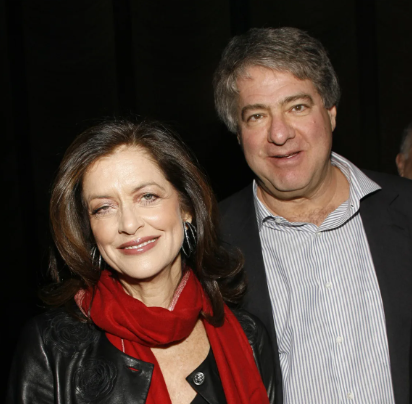
Leon Black owns one of the largest contiguous landholdings on Meadow Lane — the barrier strip between the Atlantic Ocean and Shinnecock Bay that constitutes the most concentrated address in Hamptons finance. According to Hello! magazine’s recent survey of Meadow Lane residents, his compound is a ten-bedroom property that has been in the family for years. In total, the acquisition price was approximately $43 million for the beachfront component. Beyond Southampton, Black and his wife Debra maintain a Manhattan townhouse valued at over $50 million. They also own a Beverly Hills mansion — $38 million, purchased from Tom Cruise in 2016.
Among the Meadow Lane cohort, Black holds compound scale closest to Ken Griffin’s. His visibility profile, though, has shifted dramatically since 2021. Before the Epstein disclosures, Black was one of the most prominent names on the East End’s philanthropic and cultural circuit: MoMA chairman, art world figure, cancer research donor. After 2021, he remained one of the largest landholders on Meadow Lane, but his profile on the social calendar became considerably quieter.
The Art Collection as a Parallel Biography
Still, even the real estate understates the full picture. Black’s art collection carries an estimated value of approximately $1 billion — a parallel portfolio that includes works by Raphael, Van Gogh, Picasso, Brâncuși, and Pollock. The centerpiece is the Munch Scream, purchased anonymously in 2012 at Sotheby’s for $119.9 million, setting the world auction record at the time. He also acquired Phaidon Press, the fine art book publisher, in 2012 — the same year as the Munch purchase. For a private equity investor whose career was built on identifying undervalued assets, the art collection follows an identical logic: acquire the canonical work, hold it, do not need to sell. The collection exists on Meadow Lane, in Manhattan, and in storage — it generates no income. It requires no exit. For someone who spent thirty years engineering exits, that permanence may, in fact, be the point.
Leon Black Net Worth: What He Actually Built
Leon Black net worth, which Bloomberg and most current sources place near $13 billion, derives almost entirely from one institution built over three decades. Apollo Global Management, as of Q3 2025, manages approximately $908 billion in assets, according to Bloomberg and company filings. Wikipedia’s profile of Black places his Apollo stake as the primary wealth driver. As a result, this makes it one of the three largest alternative asset managers on earth, alongside Blackstone and KKR. The firm’s AUM has grown roughly 200-fold since Black co-founded it in 1990.
At Apollo’s IPO in 2011, Black held a substantial majority of his stake. That ~14% current ownership, held directly and through trusts, reflects both distributions over time and some margin account exposure — approximately 25% of his shares are held in margin accounts per a July 2025 13D filing. The Elysium Management family office, launched after his Apollo departure, has since opened an international office in Abu Dhabi under the name Scimitar, run by his son Ben Black alongside Abu Dhabi-based financier Asad Hussaini. The credit platform is called Fortinbras. According to Forbes, Black remains one of the 200 wealthiest individuals in the world.
The Epstein Calculation
The financial architecture of the Epstein relationship is, by this point, a matter of public record. Between 2012 and 2017, Black paid Epstein’s company $158 million for tax and estate planning advice. Epstein’s strategies, per the Dechert review, saved Black an estimated $1.3 billion in taxes. The net economic logic, therefore, was approximately $1.15 billion in after-fee savings. Notably, Epstein had been convicted of felony solicitation of a minor in 2008 — four years before the payments began. The Senate Finance Committee, as of July 2025, is still investigating whether Black’s tax strategies constituted evasion, with Senator Ron Wyden calling on the IRS to examine the matter. The $62.5 million Black paid to the U.S. Virgin Islands in 2023 resolved civil claims related to Epstein’s activities there, without admission of liability.
Public Reputation vs. What the Room Goes Quiet About
On the surface, the approved public narrative in finance: Leon Black is the architect of modern private equity. A man who built Apollo from nothing, at a moment when no one else saw the opportunity, into an institution that manages nearly a trillion dollars and employs thousands of professionals globally. Ruthless in deals, loyal to clients, and a genuine patron of the arts at a level that reshaped auction records. His co-founders — Josh Harris, Marc Rowan, Antony Ressler — are, all of them, billionaires. Overall, the machine generated extraordinary wealth at every level of the organization. Even the Lehman interviewer who turned him away, in retrospect, looks, in retrospect, like a minor historical figure who misjudged a room.
Yet the insider correction is harder to contain than for most figures in this series, because it is documented. Apollo’s own commissioned review confirmed the $158 million in Epstein payments. Similarly, the same review confirmed the $1.3 billion in tax savings. Subsequently, sexual misconduct allegations — including a lawsuit alleging rape of a minor at Epstein’s Manhattan townhouse in 2002 — are ongoing, contested, and not resolved. Black’s attorneys have called the allegations “frivolous and sanctionable.” The Ganieva lawsuit was dismissed in May 2023. Additional claims, represented by Wigdor LLP, remain active as of 2026.
The Pattern the Room Actually Notices
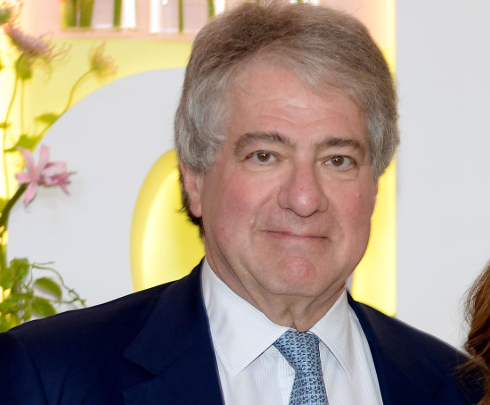
Notably, what finance insiders discuss quietly is not the allegations themselves but the structural parallel to his father. Eli Black ran an institution that collapsed because of decisions made at the top that the organization could not survive publicly. Leon Black ran an institution that survived him. Apollo continued without interruption under Marc Rowan. But the dynamic was identical: a private decision at the top that the institution could not absorb when it surfaced.
Of course, the parallel is not exact. Eli Black committed fraud. Leon Black, by contrast, paid for services from a convicted criminal, saved a great deal of money doing it, and has denied the other allegations. Nevertheless, the pattern is hard to miss once you know the biography. In both cases, the men built and were publicly undone by what they did privately, at roughly the same age threshold. Black’s father was fifty-three when he died; Black stepped down from Apollo at sixty-nine. The distances are different. The structure, nevertheless, is similar.
Contribution: To Whom, and at What Scale
At the center of Leon Black’s philanthropy is the Melanoma Research Alliance, co-founded by Black and his wife Debra after she was diagnosed with melanoma in 2004. In total, together, they have committed more than $150 million to melanoma research through the MRA — the largest private investment in melanoma science in history. To date, the MRA has funded hundreds of research projects and, by the organization’s own accounting, contributed to treatment advances that have meaningfully shifted survival rates for late-stage melanoma. Furthermore, it remains the most personal major philanthropy of any figure in this series: it came from a direct medical emergency in Black’s family, not from institutional positioning.
Beyond the MRA, Black pledged $200 million to women’s initiatives following the Epstein disclosures in 2021. During the COVID-19 pandemic, he and Debra committed $20 million through a partnership with Aramark and the Mayor’s Fund to deliver care packages to more than 100,000 New York City healthcare workers. His cultural philanthropy — MoMA trustee, Lincoln Center trustee, Asia Society trustee, Mount Sinai trustee — reflected the standard institutional portfolio of a senior New York finance figure at his wealth level. After 2021, he vacated all of those positions — or they became untenable — following the disclosures.
What the Record Does and Doesn’t Show
The honest accounting is that Black’s most significant philanthropic work — the melanoma research — predates the scandal and is unambiguously personal. The $200 million women’s initiatives pledge came directly after the scandal, and its fulfillment has not been publicly detailed at the same level as the MRA commitment. The art collection, while not philanthropy, functioned as cultural patronage through MoMA. That patronage, however, ended with the chairmanship. What remains of the philanthropic record, ultimately, is the melanoma work — which stands independently of everything else in the biography.
The East End Verdict on Leon Black Net Worth
Ultimately, Leon Black net worth is the ledger of someone who found the architecture of accumulation at Drexel, was handed the blueprint when Drexel collapsed, and built the blueprint into an institution that now manages nearly a trillion dollars. The personal fortune — approximately $13 billion — is a fraction of what Apollo oversees. That ratio is, in fact, the private equity founder’s condition: you build the machine that runs on other people’s capital, and your wealth is the carry, the ownership stake, the distributions. Accordingly, Black’s machine kept running after he left. By any measure of institution-building, that is the thing he built correctly.
On Meadow Lane, he owns the largest contiguous compound, a Munch that cost more than some of his neighbors’ houses, and a biography that is more complex than any other property holder on that barrier strip. Among Hamptons power players, Black represents the private equity archetype at its most unambiguous: the distressed buyer who looked at Drexel’s ruins, identified the value others couldn’t see, and made it the foundation of everything. The subsequent chapters are harder to frame as a single thesis.
What Meadow Lane Signals in 2026
In practice, the Black compound on Meadow Lane does what Meadow Lane real estate has always done: it holds value independent of the biography of the person who owns it. The hedge fund geography of the Hamptons has a long memory for addresses and a shorter memory for the details attached to them. Property transfers. Value compounds. Moreover, that surrounding corridor — Griffin, Kravis, Perelman — does not reorganize itself around its occupants’ reputations. It simply exists, year after year, as the most concentrated proof that the people who built the machinery of American capital chose the same strip of South Fork sand to keep returning to. Still, Black is part of that geography. After all, he built the thing that earned him the address. Social Life Magazine has covered Meadow Lane for 23 years, and the address has never stopped meaning what it means.
Social Life Magazine has been operating inside that room for twenty-three years — five summer issues from Westhampton to Montauk, fall delivery to Upper East Side doorman buildings, 25,000 readers who are the demographic every luxury brand is trying to reach by doing things significantly less effective than simply being in the magazine. The brands here are not buying exposure. They are being introduced to people who have already decided to trust the publication that introduced them. If your brand belongs in that introduction: sociallifemagazine.com/contact.
The email list is the year-round version of the same room — 82,000 readers, same zip codes, the winter conversation. Free. Eleven seconds. Join it here.
Polo Hamptons is the event version of the same insight. There are gatherings people attend and gatherings where something actually happens — where the introduction that required six months of mutual adjacency becomes, on a July afternoon, simply a handshake between two people who were always going to meet. Category-exclusive sponsorships from $14,000. Private cabanas from $6,500. One sponsor per category. Most are already claimed. polohamptons.com.
The print subscription is the physical object on the coffee table in the house on Further Lane, handed by the family office principal to the person he is trying to introduce to the concept of your brand before the introduction has technically happened yet. Five summer issues. sociallifemagazine.com/subscription.
And then this, which is the most honest sentence here and therefore the one most likely to be skimmed: independent luxury media with no advertiser leverage and no engagement algorithm is genuinely rare, which is why the judgment, when present, is worth something. You have already formed an opinion about whether it was present here. If yes: paypal.com/donate. The amount is whatever you think that judgment is worth, which is the only honest way to price it.
Related Reading:
Ken Griffin Net Worth: Citadel’s $49B Meadow Lane Titan
David Tepper Net Worth: The Revenge Mansion at $20B
George Soros Net Worth: The $40B Number Forbes Doesn’t Show
Hamptons Hedge Fund Billionaires: The Complete Net Worth Guide
Leon Black net worth data sourced from Bloomberg Billionaires Index and public company filings. Real estate figures reflect reported transaction records. Social Life Magazine is an independent publication and has no affiliation with Leon Black, Apollo Global Management, or Elysium Management.
Author

Written by
Recent Posts
7 Mindful Meal Prep Tips for Stop Food Waste Day

Rebecca Ferguson Net Worth: The Advantage of Not Being the Lead
What Makes a Dinner Party Truly Unforgettable (Hint: It’s Not the Food)
Tips for Managing Grease and Oil in Everyday Dishwashing

Austin Butler Net Worth: The Method Actor in a Post-Method World
Categories
- Art
- Articles
- Beauty & Skincare
- Celebrities
- Celebrities|Entertainment
- Celebrities|Television
- Celebrities|The Chronicles
- celebrities|the-archive
- Chronicles
- Entertainment|Culture
- Event Photos
- Events
- Fashion
- Fashion & Style
- Featured
- Food & Beverage
- Food, Spirits, Wine
- Hamptons
- Hamptons Celebrities
- Hamptons Celebrities|Celebrities|The Chronicles
- Health
- Health & Beauty
- Lifestyle
- Luxury Lifestyle
- Movies
- Press
- Profiles
- Real Estate
- Technology
- The Chronicles
- Travel
- Uncategorized
- Weddings