
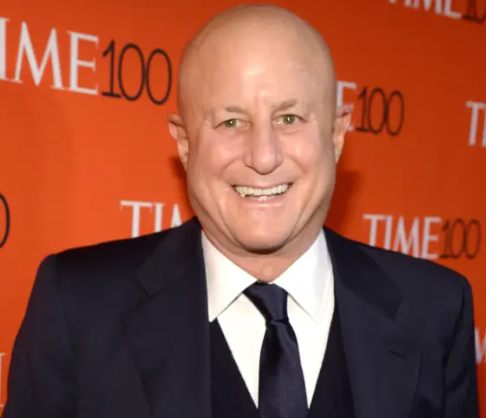
Ronald Perelman net worth peaked at approximately $19 billion in 2018. By 2021, Bloomberg dropped him from their Billionaires Index at $3.3 billion, marking one of the sharpest single-decade fortune collapses in American finance. By early 2026, most estimates place him somewhere between $3 billion and $4 billion. Given the ongoing insurance trial, that range may narrow. Revlon, the company he built his empire on, filed for bankruptcy in June 2022. The Creeks, his 57-acre Georgica Pond estate and the site of the best party in the Hamptons for a decade straight, remains his most valuable remaining asset — and may tell more about the arc of his career than any balance sheet figure.
For roughly thirty years, Perelman was the gravitational center of East Hampton’s social calendar. That era, however, has a precise end date. Moreover, the number attached to it is harder to pin down.
The Room Before the Room
Ronald Owen Perelman was born on January 1, 1943, in Greensboro, North Carolina. His family moved to Elkins Park, Pennsylvania, where his father Raymond Perelman built a manufacturing business. By the time Ronald was twelve, he swept floors in his father’s factory. After earning his undergraduate degree from the University of Pennsylvania’s Wharton School, he returned to manage the family foundry. For years, he worked directly under his father’s authority. That proximity was productive and suffocating in equal measure.
In the late 1970s, Perelman left Philadelphia for New York. MoneyWeek described the move plainly: he went “to get out from under the yoke of his father.” Notably, his first marriage — to Faith Golding, a real estate heiress — provided capital for an early venture — a chain of jewelry stores. Ultimately, that gave him his first taste of acquisition-as-leverage. Subsequently, in 1980, he bought MacAndrews & Forbes, a distributor of licorice extract and chocolate, for $45 million. He took it private in 1984 for $95 million. Then he turned it into a holding company. The licorice and chocolate are gone. What replaced them changed American corporate law.
The Milken Connection
Perelman’s early acquisitions moved on junk bond financing from Michael Milken at Drexel Burnham Lambert. Technicolor, Consolidated Cigar, Pantry Pride — each one built on leveraged debt, each one absorbed into MacAndrews & Forbes. Overall, the method was straightforward: identify an undervalued or mismanaged asset, finance the acquisition with high-yield bonds, restructure aggressively, and either sell or hold. By 1985, he had enough capital, enough Milken financing, and enough confidence to aim at something much larger. He aimed at Revlon — a $365 million public company managed by a board that did not want to sell to him.
The Belief System — The Hostile Bid, Shown Through One Courtroom
Before Perelman’s Revlon bid, Wall Street operated largely as an old boys’ network. Consequently, boards controlled their own fate. Management could resist any buyer they chose, for nearly any stated reason. Perelman’s 1985 hostile takeover of Revlon — financed through Milken’s junk bonds and valued at $2.7 billion — ran directly into that wall and broke it.
Revlon’s board resisted repeatedly. They deployed every available defense. Ultimately, the Delaware Supreme Court ruled against them. The court established what became known as the “Revlon Mode” doctrine: once a board decides its company is for sale, it must maximize shareholder value and sell to the highest bidder. Consequently, Perelman won the company. More importantly, the ruling rewrote the rules for every corporate acquisition that followed.
What the Revlon Mode Actually Changed
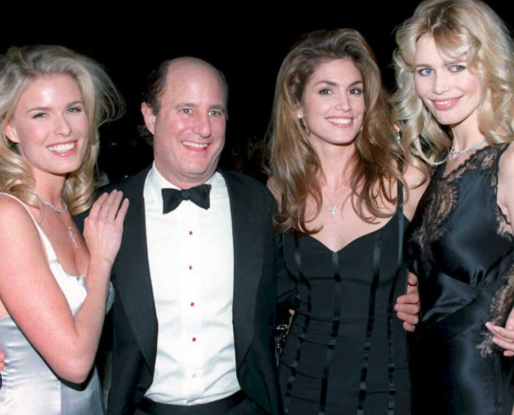
Consequently, Perelman’s Revlon bid did something that decades of gentlemen’s agreements had prevented. It made hostile takeovers legally legitimate at the highest level of American corporate law. Indeed, a Haverford School profile of his legacy summarized the shift precisely: “Before Perelman, deals done on Wall Street were mostly the old boys’ network divvying up prized assets among themselves without too much interference from the outside.” After the Delaware ruling, that era ended for good. Boards remained powerful. However, they could no longer simply refuse a higher bid and call it governance. Perelman collected $2.7 billion worth of cosmetics company and rewrote the merger playbook as a side effect.
The Timeline: Rise, Plateau, and the Fall After 2018
| Period | What Happened | Net Worth / Asset Marker |
|---|---|---|
| 1943–1979 | Born Greensboro, NC. Raised Elkins Park, PA. Wharton undergraduate. Works in family manufacturing business under father Raymond Perelman. Moves to New York late 1970s to build independently. | — |
| 1980–1984 | Acquires MacAndrews & Forbes (licorice/chocolate distributor) for $45M. Takes it private in 1984 for $95M. Uses Milken junk bond financing for early acquisitions: Technicolor, Consolidated Cigar, Pantry Pride supermarkets. | ~$200M personal est. |
| 1985 | Hostile takeover of Revlon for $2.7 billion using Milken junk bonds. Delaware Supreme Court issues landmark “Revlon Mode” ruling: boards must sell to highest bidder. Perelman wins company and reshapes American M&A law. | ~$1B personal est. |
| 1986–1989 | Forbes names Perelman richest man in America in 1989. MacAndrews & Forbes acquires Marvel Comics, New World Entertainment, five S&Ls. Revlon sells vision care division for $575M to service debt. | ~$5B+ by 1989 |
| 1993–1997 | Sells five S&Ls (renamed First Gibraltar Bank) to Bank of America for $1B. Marvel Comics declares bankruptcy 1996; Perelman sells his stake 1997. Revlon continues operating under multi-billion debt load. | ~$6B |
The Plateau and the Unraveling: 2010–2026 |
||
| 2010–2018 | Launches Apollo in the Hamptons annual fundraiser at The Creeks (Georgica Pond, East Hampton). Jon Bon Jovi, Paul McCartney, Sting, Jennifer Lopez, Alicia Keys, Pharrell, Gwen Stefani, and others perform. Perelman plays drums. Net worth reaches peak of ~$19B (Bloomberg, 2018). September 2018: fire breaks out in attic of The Creeks; art allegedly damaged. $410M insurance dispute follows. | Peak: ~$19B (2018) |
| 2019–2022 | Revlon’s $3B debt load becomes unsustainable. Goldman Sachs hired to explore strategic alternatives. COVID hits: Revlon stock collapses from $24 to $5. Perelman sells ~$1B in art, AM General stake (70%), Scientific Games stake ($1B tranche), Lily Pond Lane estate ($84.5M, sold for $30.5M less than asking). Revlon files for bankruptcy June 2022. | $19B → $3.3B (Bloomberg discontinued 2021) |
| 2022–2026 | Bloomberg ends Billionaires Index tracking at $3.3B. $410M art insurance trial begins June 2025. MacAndrews & Forbes now holds two biotech firms and Vericast. The Creeks still in Perelman’s possession; previously sought $180M as pocket listing. Net worth est. $3B–$4B (various sources). | ~$3B–$4B (est.) |
The Hamptons Chapter: The Creeks and the Party That Defined an Era
Among the Hamptons billionaire class, Ronald Perelman’s East Hampton presence operated on a different scale than most. The Creeks — 57 acres on Georgica Pond, accessed off Montauk Highway in Wainscott — is one of the largest private estates in the Hamptons. Built in 1899, the 40-room Mediterranean-style villa was designed by artists Adele and Albert Herter. One detail that circulates in every account of the property: the floors in certain rooms still carry paint drippings from Jackson Pollock, who worked there when the estate functioned as an artists’ colony. At $180 million as a pocket listing, the estate may well be the most valuable single residential property in East Hampton.
Moreover, Perelman’s Georgica Pond footprint extended beyond The Creeks. Additionally, he owned 153 Lily Pond Lane — an 11,435-square-foot, 10-bedroom oceanfront property on 9.25 acres, listed in 2021 for $115 million. He sold it in January 2022 for $84.5 million, roughly $30 million below asking, which itself said something about the urgency of his position at the time.
Apollo in the Hamptons: The Greatest Party on the East End
From 2010 through the late 2010s, Perelman hosted Apollo in the Hamptons at The Creeks annually — a fundraiser for the Apollo Theater in Harlem that became the defining social event of the summer season. The performer list reads like a decade of cultural superlatives: Paul McCartney, Sting, Jon Bon Jovi, Jennifer Lopez, Alicia Keys, Pharrell Williams, Gwen Stefani, Chaka Khan, Chris Martin, Mavis Staples, Jamie Foxx, Justin Timberlake. Perelman played drums. The Roots served as house band. Robert Downey Jr. attended. Jimmy Fallon attended. Christie Brinkley attended.
Social Life Magazine has covered the East End’s social calendar for 23 years — the Apollo in the Hamptons parties at The Creeks represent the high-water mark of the private fundraiser format in this market. Nothing before or since has matched them in consistent star wattage on a single property. Notably, a later investigation revealed that the Apollo Theater paid out nearly $3 million in expenses — rather than Perelman absorbing all costs himself. The event raised substantially more. Overall, the detail colors the mythology without erasing it.
Ronald Perelman Net Worth: What He Actually Built
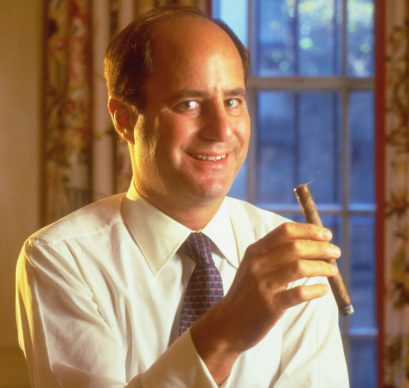
Ronald Perelman net worth, at its peak of approximately $19 billion in 2018 per Bloomberg, derived from a web of MacAndrews & Forbes holdings rather than any single institution. Revlon was the centerpiece — that $2.7 billion hostile acquisition that defined his public identity — but the empire included Marvel Comics, a television production company, five savings and loan banks, Humvee manufacturer AM General, a casino technology company, art, real estate, and more. According to Wikipedia’s comprehensive profile and the Delaware Courts’ landmark Revlon doctrine, MacAndrews & Forbes interests spanned groceries, cigars, licorice, makeup, cars, photography, television, camping supplies, security, gaming, jewelry, banks, and comic book publishing at various points. Additionally, Perelman’s art collection reached an estimated value of $6 billion at its height, featuring works by Jasper Johns, Francis Bacon, Mark Rothko, Andy Warhol, Ed Ruscha, Cy Twombly, and Gerhard Richter.
By contrast, what MacAndrews & Forbes holds today — two small biotechnology firms and Vericast, a check-printing and financial solutions business that underwent a distressed debt exchange — represents a fraction of the former portfolio. Furthermore, the implosion followed a sequence that finance observers have traced with precision: Revlon took on $3 billion in loans to acquire Elizabeth Arden in 2016 for approximately $1 billion. The debt load became structural. COVID arrived. Revlon’s share price, which Perelman held as loan collateral, fell from $24 to $5. Lenders called their positions. Perelman’s decade-long asset divestiture followed — art, real estate, equity stakes, aircraft — in rapid succession. According to Bloomberg’s Billionaires Index, the fortune ran from $19 billion to $3.3 billion in roughly three years. Bloomberg discontinued the calculation in 2021.
The Art Insurance Trial
Currently, the most financially significant open question surrounding Perelman is the $410 million art insurance dispute stemming from the September 2018 fire at The Creeks. The blaze started in the attic and caused damage throughout the top floor. Five works — two Andy Warhols, two Ed Ruscha paintings, and a Cy Twombly — formed the basis of an insurance claim by entities affiliated with Perelman, valued at approximately $410 million. Insurers, who paid roughly $141 million for other property damage from the fire, rejected the art claims.
The trial began in June 2025, overseen by Justice Joel M. Cohen without a jury. Testimony includes Perelman himself and Ken Griffin — who purchased art from Perelman during the divestiture period. The outcome will reset the public net worth estimate in a market where precision has been difficult to establish since Bloomberg’s 2021 exit from the calculation.
Public Reputation vs. What the Room Goes Quiet About
The approved public narrative: Ronald Perelman is the corporate raider who rewrote American M&A law, built a $19 billion fortune from a licorice company, threw the best party in the Hamptons for a decade, and navigated a brutal reversal with the assets largely intact. The Revlon Mode doctrine, which bears his fingerprints on every hostile bid executed in America since 1985, operates as a form of permanent institutional legacy regardless of what any balance sheet shows. Among Hamptons figures of his generation, his cultural footprint — the Creeks parties, the art collection, the Apollo Theater connection — remains singular.
Inside the room, however, the correction runs along two tracks. First, the Revlon bankruptcy of 2022 is not a footnote. Perelman built his identity on Revlon for 37 years. He won it in a hostile takeover. Through multiple debt restructurings, he held on. Eventually, he sent his daughter Debra there as CEO. When the company filed for Chapter 11, it represented the collapse of the core asset in a way the art sales and real estate exits could not fully obscure.
Second, the arc of his five marriages — Faith Golding, Claudia Cohen, Patricia Duff, actress Ellen Barkin, and Harvard-educated psychiatrist Anna Champion — generated tabloid coverage across four decades that has become inseparable from the financial biography. Each divorce involved significant legal proceedings. Moreover, each marriage tracked, with some precision, the social ambitions and cultural positioning of a man who wanted to be taken seriously as more than a Philadelphia businessman.
The Detail Finance Insiders Remember Most
Furthermore, what finance insiders note — and what the popular retelling of the Revlon acquisition tends to skip — is the structural fragility of the leverage model across a very long time horizon. Milken financing made Perelman. The junk bond model created positions so heavily leveraged that a single prolonged asset depression could unwind decades of accumulation. That is precisely what happened. Perelman borrowed against Revlon stock to finance operations and lifestyle. Revlon’s share price was the foundation. When it fell 80%, everything built on top fell with it. The Revlon Mode gave him the legal doctrine. Leverage gave him the fortune. That same leverage, held forty years later, ran the exit in reverse.
Contribution: The Apollo Theater and the Art He Sold
Perelman’s most enduring philanthropic association is the Apollo Theater in Harlem — not through a named wing or endowed chair, but through the annual summer fundraiser he hosted at The Creeks from 2010 through the late 2010s. The event raised millions for the theater over its run, despite the later revelation that the Apollo had paid nearly $3 million in expenses across several years rather than having those costs absorbed by the host. Whatever the accounting, the social infrastructure Perelman built around the Apollo in the Hamptons — drawing A-list performers to a private 57-acre estate for a Harlem institution’s benefit — represents a form of cultural philanthropy with no direct equivalent in this market.
Beyond the Apollo, Perelman has donated to various cultural and educational institutions, including Wharton and the Perelman School of Medicine at the University of Pennsylvania — named after his father Raymond Perelman, whose gift the school honored. He also received a Wharton Distinguished Leader Award. His philanthropic footprint, however, remains more modest in scale relative to net worth than most figures at his peak wealth level.
The Art He Let Go
Notably, the art collection Perelman built over four decades — once valued at up to $6 billion and listed by Art News as among the top 200 collections in the world — served as both cultural capital and collateral. Indeed, works by Jasper Johns, Francis Bacon, Mark Rothko, Andy Warhol, Ed Ruscha, and Cy Twombly defined the collection’s upper register. By 2020, he sold nearly $1 billion in art to meet debt obligations. Notably, some pieces went to Ken Griffin. The Sotheby’s auction of 120 lots in December 2021 included French furniture and modernist design — a final public chapter for a collection that had once been one of the most significant in private hands. That $410 million insurance case over five damaged works represents what he held onto — and what he believes he is still owed for them.
The East End Verdict on Ronald Perelman Net Worth

Ronald Perelman net worth is ultimately the ledger of a man who understood leverage better than almost anyone in his generation — and who held it so long that leverage eventually ran the calculation in reverse. The $2.7 billion Revlon acquisition in 1985 was not just a deal. It was a legal argument about who controls capital in American corporate life, and Perelman won that argument in the Delaware Supreme Court with consequences that outlasted the company he fought for. The Revlon Mode doctrine still governs M&A. Revlon Inc. does not.
On Georgica Pond, The Creeks still stands. Furthermore, the Jackson Pollock floor drippings are still there. The attic that burned in 2018 was rebuilt. For a decade, the estate served as the East End’s most consequential private stage — the place where Jon Bon Jovi played for the Apollo Theater while Perelman drummed alongside the Roots and the Hamptons power grid convened in the dark beside a pond built for exactly that purpose. That period is over. The $180 million pocket listing suggests Perelman knows it too. However, what remains is still one of the most significant private landholdings in East Hampton — 57 acres on one of the most storied bodies of water on the South Fork, designed in 1899 by artists, owned since by a man who played drums.
What Georgica Pond Holds Now
Among the billionaires in this series, Perelman represents the sharpest rise-and-fall arc by far. Ken Griffin compounded steadily. David Tepper made one trade and kept building. Leon Black built an institution that survived him. Perelman built a personal empire held together by one company’s stock price — and when that price broke, the empire followed. The lesson is not that the leverage model fails. It is that leverage held for four decades against a single underlying asset behaves less like a portfolio and more like a bet. Perelman made that bet in 1985 and won. He held it in 2016 and lost. Social Life Magazine has documented 23 years of Hamptons power — and no figure in the East End’s modern financial history moved faster in both directions.
Social Life Magazine has been Publishing in the Hamptons for twenty-three years
Five summer issues from Westhampton to Montauk, fall delivery to Upper East Side doorman buildings, 25,000 readers who are the demographic every luxury brand is trying to reach by doing things significantly less effective than simply being in the magazine. The brands here are not buying exposure. They are being introduced to people who have already decided to trust the publication that introduced them. If your brand belongs in that introduction: sociallifemagazine.com/contact.
The email list is the year-round version of the same room — 82,000 readers, same zip codes, the winter conversation. Free. Eleven seconds. Join it here.
Polo Hamptons is the event version of the same insight.
There are gatherings people attend and gatherings where something actually happens — where the introduction that required six months of mutual adjacency becomes, on a July afternoon, simply a handshake between two people who were always going to meet. Category-exclusive sponsorships from $14,000. Private cabanas from $6,500. One sponsor per category. Most are already claimed. polohamptons.com.
The print subscription is the physical object on the coffee table in the house on Further Lane, handed by the family office principal to the person he is trying to introduce to the concept of your brand before the introduction has technically happened yet. Five summer issues. sociallifemagazine.com/subscription.
And then this, which is the most honest sentence here and therefore the one most likely to be skimmed: independent luxury media with no advertiser leverage and no engagement algorithm is genuinely rare, which is why the judgment, when present, is worth something. You have already formed an opinion about whether it was present here. If yes: paypal.com/donate. The amount is whatever you think that judgment is worth, which is the only honest way to price it.
Related Reading:
Ken Griffin Net Worth: Citadel’s $49B Meadow Lane Titan
Leon Black Net Worth: Apollo’s $13B Shadow on Meadow Lane
David Tepper Net Worth: The Revenge Mansion at $20B
George Soros Net Worth: The $40B Number Forbes Doesn’t Show
Henry Kravis Net Worth: KKR’s $12B Meadow Lane Patriarch
Hamptons Hedge Fund Billionaires: The Complete Net Worth Guide
Ronald Perelman net worth data sourced from Bloomberg Billionaires Index (discontinued 2021), Forbes, and public reporting. Art collection and insurance trial figures from Bloomberg and court documents. Real estate details from public record. Social Life Magazine is an independent publication and has no affiliation with Ronald Perelman or MacAndrews & Forbes.
Author

Written by
Recent Posts
7 Mindful Meal Prep Tips for Stop Food Waste Day

Rebecca Ferguson Net Worth: The Advantage of Not Being the Lead
What Makes a Dinner Party Truly Unforgettable (Hint: It’s Not the Food)
Tips for Managing Grease and Oil in Everyday Dishwashing
Austin Butler Net Worth: The Method Actor in a Post-Method World
Categories
- Art
- Articles
- Beauty & Skincare
- Celebrities
- Celebrities|Entertainment
- Celebrities|Television
- Celebrities|The Chronicles
- celebrities|the-archive
- Chronicles
- Entertainment|Culture
- Event Photos
- Events
- Fashion
- Fashion & Style
- Featured
- Food & Beverage
- Food, Spirits, Wine
- Hamptons
- Hamptons Celebrities
- Hamptons Celebrities|Celebrities|The Chronicles
- Health
- Health & Beauty
- Lifestyle
- Luxury Lifestyle
- Movies
- Press
- Profiles
- Real Estate
- Technology
- The Chronicles
- Travel
- Uncategorized
- Weddings