
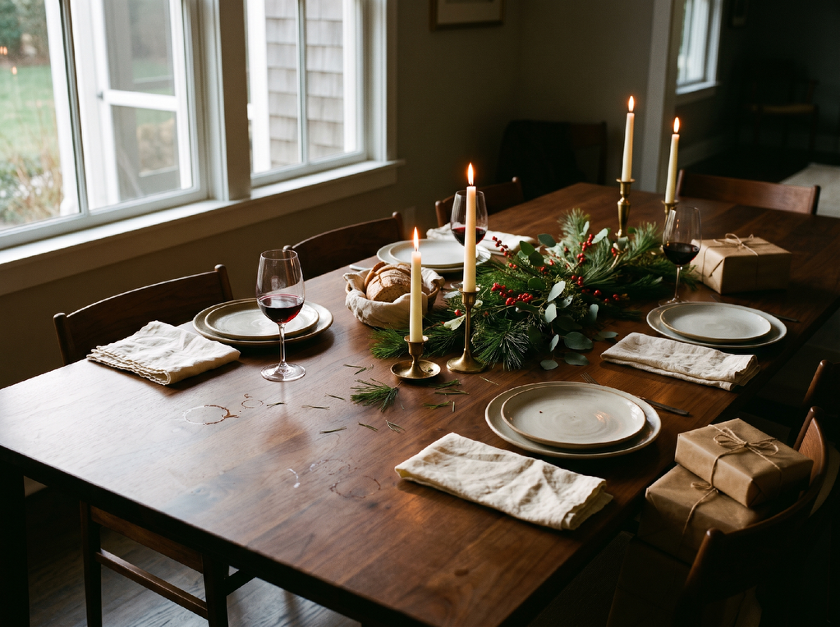
By late November, most hosts are juggling more than a single dinner party. There’s the family gathering out east, the client appreciating gifts that need to go out before everyone leaves for the holidays, and the neighbor who always drops by unannounced with a bottle of wine. It adds up fast. The National Retail Federation projects that 2025 U.S. holiday retail sales will surpass $1 trillion for the first time, with shoppers expecting to spend an average of $890.49 per person on gifts, food, and decorations this season (NRF, 2025). That’s not just a spending statistic. It’s a signal of how much planning, taste, and logistics go into pulling off a season that looks effortless from the outside.
Hosting well during the holidays isn’t about doing more. It’s about choosing the right shortcuts so the things that matter, the table, the toast, the handwritten note, get your full attention.
Building Your Holiday Hosting & Gifting Toolkit
Every seasoned host keeps a mental toolkit of go-to solutions. A hostess gift that never misses. A tablescape upgrade that takes ten minutes but reads as intentional. A food gift substantial enough to send to a client without feeling transactional. These aren’t afterthoughts, they’re the pieces that let you host multiple events in a single week without losing your mind by December 20th.
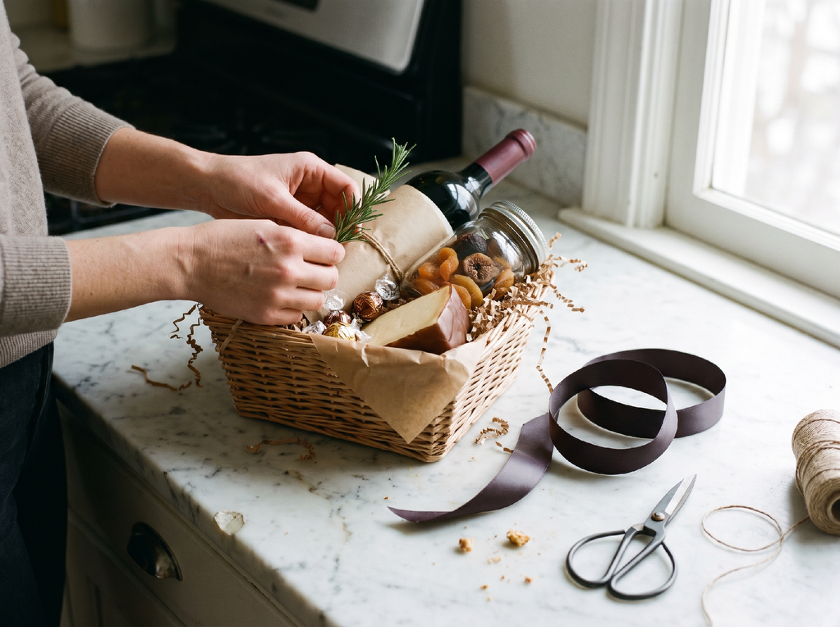
Take the scenario of a host with three obligations in one weekend: a staff appreciation gift due Friday, a family dinner Saturday, and a hostess gift needed for a Sunday brunch she’s attending. Rather than shopping three separate times, many hosts turn to curated Christmas gift baskets that arrive assembled, wrapped, and ready to hand over. It’s one category that solves for client appreciation, last-minute hostess gifts, and out-of-town family presents at once, without sacrificing the sense that real thought went into the choice. A basket built around a specific theme, a coffee lover’s assortment, a wine and cheese pairing, a chocolate-forward selection, tends to land better than a generic gift card because it signals you thought about the recipient specifically.
The toolkit approach matters because it removes decision fatigue at the exact moment you have the least bandwidth for it.
Timing It Right: When to Send Holiday Gifts
Timing separates a gift that feels considered from one that feels like an afterthought. NRF’s 2025 consumer survey found that 42% of shoppers plan to start holiday shopping before November, citing spreading out their budget (54%) and avoiding last-minute stress (41%) as their top reasons (NRF, 2025). That data points to a clear window: mid-to-late November is when out-of-town family gifts and corporate appreciation gifts should already be in transit, not still sitting in a cart.
Shipping delays compound during the first two weeks of December, and any host who has watched a courier tracking page refresh on December 22nd knows the stress isn’t worth it. If you’re sending gifts to family who won’t see you in person, or to clients you want to thank before the office closes for the year, build your calendar backward from December 1st rather than December 20th.
Readers looking for the full data picture on how holiday shopping timelines are shifting can review the NRF’s holiday data and trends directly. It’s the same logic behind a well-planned advent calendar or a staggered gifting schedule, spreading the effort out so no single week carries the full weight of the season.
Setting the Table: Hosting Essentials That Impress
The table is where hosting reputations are made or quietly forgotten. You don’t need a full redesign every year. A well-chosen cheese and charcuterie board, fresh greenery down the center of the table, and cloth napkins in a seasonal color go a long way toward making a Tuesday dinner feel like an occasion.
Small, tactile details tend to outperform big-budget centerpieces. A place card in your own handwriting. A single taper candle at each setting instead of one large arrangement. Linens that have been properly pressed rather than pulled straight from storage. Guests notice these things even when they can’t articulate why a table feels special.
If you’re hunting for gift ideas that double as table conversation pieces, our archive piece on gift ideas for stylish makers rounds up small-batch finds that work equally well as hostess gifts or place-setting surprises.
Budgeting for a Season of Giving
PwC’s Holiday Outlook 2026 found that shoppers expect to spend $708 on gifts this year, and eight in ten consumers plan to follow a budgeting strategy even while keeping up their usual holiday traditions (PwC, 2026). That’s a useful reminder that budgeting isn’t the opposite of generosity, it’s what makes generosity sustainable across an entire season of obligations.
A workable framework: allocate a fixed amount for immediate family, a separate smaller pool for hostess and client gifts, and a modest buffer for the gift you inevitably forgot about until last week. Ready-made options, whether that’s a curated basket, a cheese board kit, or a small luxury item, tend to offer better value per dollar than piecing together an equivalent gift item by item, because you’re not paying for packaging and presentation twice.
I’d push back on the instinct to treat budgeting as unglamorous. The hosts who plan their spend in October are the same ones who aren’t scrambling, overpaying for rush shipping, or grabbing whatever’s left on the shelf come mid-December. For more detail on how consumer spending patterns are shifting this year, see PwC’s full Holiday Outlook.
Presentation and Personal Touches That Make Gifts Memorable

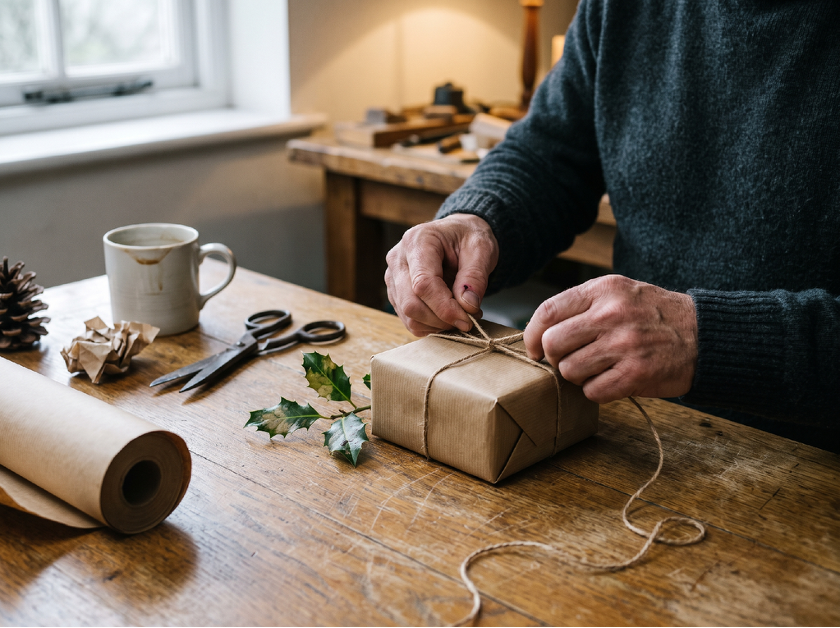
Presentation is where a good gift becomes a memorable one. A handwritten note tucked into the ribbon, wrapping paper that matches your own aesthetic rather than whatever was on sale, and inclusive language like “Happy Holidays” or “Season’s Greetings” on cards going to a mixed group of recipients all signal genuine effort.
Food gifts benefit especially from thoughtful presentation. Something like a premium tin of caviar, similar to what we’ve covered in our guide on what caviar actually costs, reads as a considered luxury gift precisely because of how it’s presented, not just what’s inside the tin. The same logic applies to any curated food or gift assortment: the wrapping and the note do as much work as the contents.
Don’t skip the note. It’s the cheapest part of any gift and the part people remember longest.
Closing Thoughts
Holiday hosting isn’t really about taste, it’s about logistics dressed up as taste. The hosts who seem effortless in December are usually the ones who started planning in October, built a simple budget, and leaned on a few reliable go-to solutions instead of reinventing their approach for every single occasion.
Start your gift list now, send anything going out of town before Thanksgiving, and don’t be afraid to repeat a formula that worked last year. Nobody remembers that you gave the same thoughtful gift twice. They remember that you thought of them at all.
Author

Written by
Recent Posts

How to Read Your Brokerage Statement (and Spot What It’s Costing You)

IRA or Taxable Account? Where Your Next Dollar Should Go
How to Move a Brokerage Account Without Losing a Dime

The Credit Cards That Pay You in Stock

Should You Let AI Trade for You? What Brokers Now Allow
Categories
- Art
- Articles
- Business of Luxury
- Celebrities
- Culture
- Entertainment
- Events
- Faces of Summer 2026
- Fashion
- Fashion & Style
- Featured
- Finance
- Food, Spirits, Wine
- Hamptons
- Hamptons Celebrities
- Health
- Health & Beauty
- Lifestyle
- Luxury Lifestyle
- Press
- Profiles
- Real Estate
- Technology
- The Chronicles
- Travel
- Uncategorized
- Weddings