
The most coveted form of self-care in the Hamptons this year isn’t a new infrared treatment or a wellness app with a waitlist. It’s something far simpler: sitting down with your hands and letting your mind go quiet. After years of optimizing every waking hour, a growing number of East End residents are trading high-tech interventions for something slower and more tactile.
Call it the de-tech turn. Wellness culture spent the last decade chasing biometrics and personalized protocols. Now the pendulum is swinging back toward activities that ask for nothing but attention. No app, no subscription, no screen. Just a task simple enough to lose yourself in.
Why Hands-On Hobbies Are Having a Moment
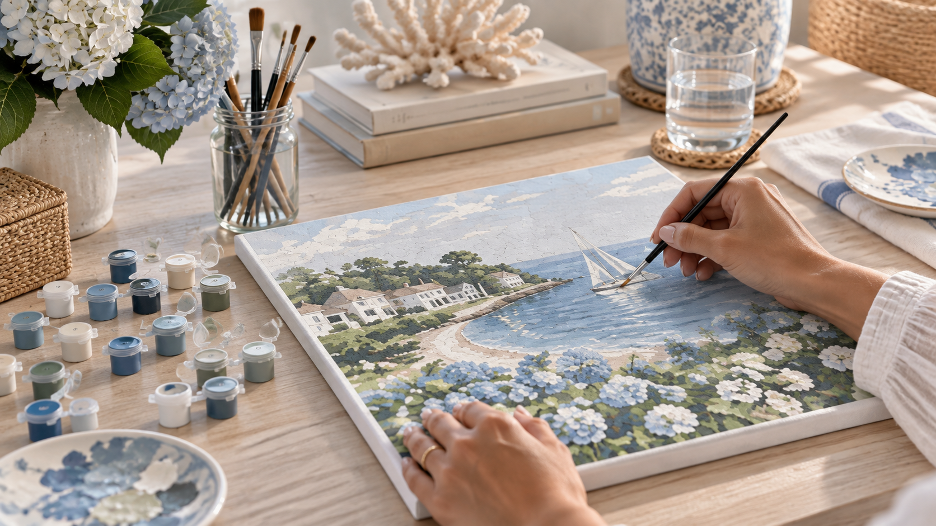
The data backs up what’s happening on porches and in sunrooms across the East End. Yelp’s 2026 Home, Beauty and Lifestyle Trends report clocked searches for hands-on craft activities climbing sharply this year, with fabric and sewing supply searches up nearly 3,800% and quilting supply interest up over 500%. That’s not a niche uptick. It’s a broad consumer swing away from screens and toward things you can actually hold.
The Global Wellness Summit’s 2026 forecast gives this shift a name: the “over-optimization backlash.” After years of stressful, data-driven wellness routines, the report predicts a move toward simple, sensory, emotionally grounding activities instead. Painting, in other words, is having a moment precisely because it demands so little. For anyone who wants the calming side of painting without overthinking what to create, paint by numbers is an easy fit.
Picture it. It’s a Friday evening, the week has been long, and instead of reaching for a phone, someone sits down at a small table with a canvas, a set of numbered paints, and nothing else on the agenda. There’s no decision fatigue involved, just color by color, section by section, until the noise in their head quiets down. It’s a low-stakes way back into making something with your hands, and for anyone who wants to start that ritual without hunting through a dozen craft store aisles, it helps to browse the options here and pick a design that actually appeals to you rather than whatever happens to be in stock nearby.
The Quiet Science Behind the Calm
There’s a reason this particular kind of task feels so restorative. Kaiser Permanente’s clinical wellness guidance lists structured creative hobbies, painting included, among the activities shown to lower stress and lift mood, and the health system specifically recommends short, consistent sessions over occasional marathon ones. Fifteen focused minutes a few times a week beats a single exhausting weekend project.
That guidance lines up with a randomized controlled trial published through PMC and the National Institutes of Health, which found that structured art therapy produced a measurable reduction in emotional exhaustion among healthcare workers, with the benefit still holding three months later. The task itself doesn’t need to be complicated to work. It just needs to be repeatable and just engaging enough to hold your attention without demanding much of it.
That appetite for accessible self-care is generational, too. Wellness research cited in 2026 trend coverage from McKinsey found close to 30% of Gen Z and millennial consumers in the US say they’re prioritizing wellness a lot more than they were a year ago, compared with roughly 23% of older generations. Cheap, low-effort rituals that still deliver a real psychological payoff are exactly what that demand is pointing toward.
Bringing the Ritual Home
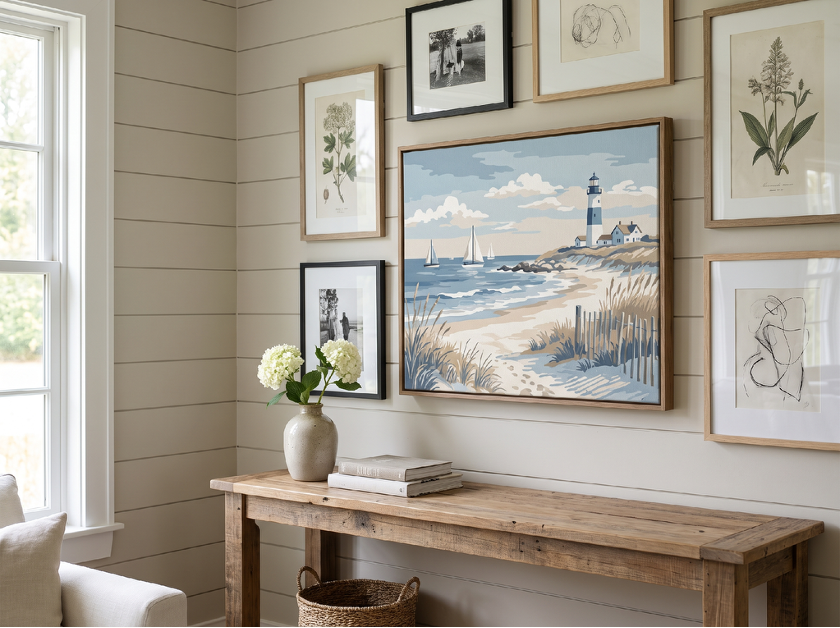
There’s also an aesthetic payoff that fits neatly into how the Hamptons already live. A finished canvas doesn’t have to be tucked in a drawer. Framed well, it becomes part of a room’s design story, sitting comfortably among the deliberate, unfussy pieces that define the East End’s evolving design sensibility. That’s the appeal of quiet luxury generally: nothing shouts, but everything is considered, including the art on the wall that you made yourself.
For those thinking bigger, this ritual can anchor an entire space. A reading nook, a sunroom corner, or a dedicated hobby table all work well for designing a dedicated retreat at home, somewhere that exists purely for slow, screen-free time. It doesn’t need to be elaborate. A good chair, decent light, and a surface to work on is genuinely enough.
Making It a Habit, Not a Fad
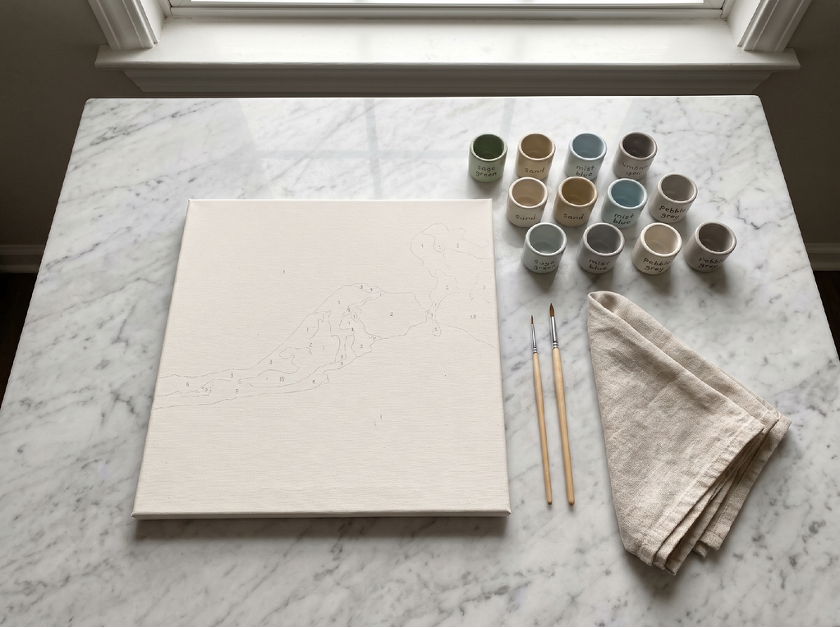
The hardest part of any new ritual isn’t starting it. It’s keeping it going after the novelty wears off. Consistency matters more than intensity here, echoing the same short-and-regular approach Kaiser Permanente recommends for stress relief generally. Twenty minutes most evenings beats one long session a month.
It also helps to treat it as one piece of a broader self-care rhythm rather than a standalone activity. Pairing an evening with a canvas alongside the kind of unhurried rituals already woven into Hamptons life, the sort found in a restorative morning of wellness and connection, gives the habit a natural home rather than making it feel like one more item on a to-do list.
Conclusion
This is a season of maximalist wellness trends, packed with devices, protocols, and subscriptions promising to optimize every hour of the day. Against that backdrop, the simplest ritual might be the most luxurious one available: a canvas, a set of paints, and enough quiet to actually hear yourself think. Sometimes the most restorative thing you can do with your hands is the one that asks the least of them.
Author

Written by
Recent Posts
How to Pick a Homecoming Dress for Your Body Type and Feel Amazing in It
How to Prepare a Home for Sale When Major Repairs Are Not Affordable
From Everyday Comfort to Personal Style: My SHEIN Slipper Habit
5 Best Mitsubishi Heat Pump Companies in Seattle
Tech Gadgets as Modern Corporate Gifts: Useful Ideas for Employees and Clients
Categories
- Art
- Articles
- Business of Luxury
- Celebrities
- Culture
- Entertainment
- Events
- Faces of Summer 2026
- Fashion
- Fashion & Style
- Featured
- Finance
- Food, Spirits, Wine
- Hamptons
- Hamptons Celebrities
- Health
- Health & Beauty
- Lifestyle
- Luxury Lifestyle
- Press
- Profiles
- Real Estate
- Technology
- The Chronicles
- Travel
- Uncategorized
- Weddings