
Introduction
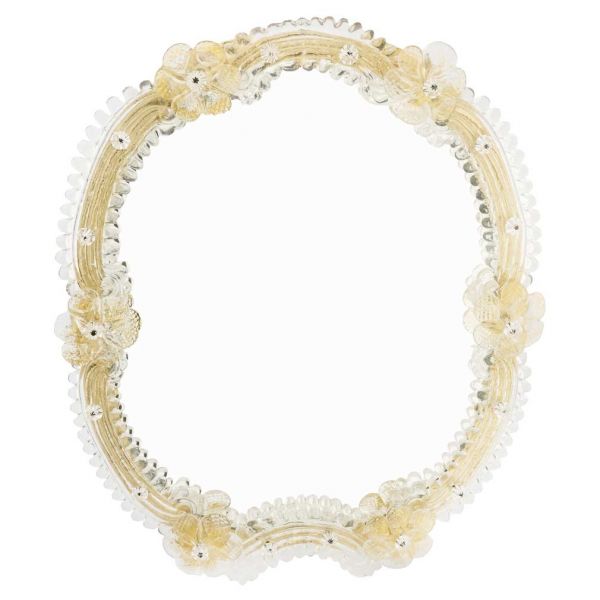
When you think of the most beautiful mirrors one can find to decorate a high-end public space or a distinctive residence, you typically think of italian mirrors. The mirrors, handmade by Murano Glass masters in Venice, Italy, are regarded not only as elegant interior design accents but also as real works of art. They are functional yet also make stunning decorative pieces. They originated in Murano, Venice, where they are still handmade with intricate designs and expert craftsmanship. This article will tell you all you need to know about Italian mirrors and help you pick the right Venetian mirror for your interior design.
History of Italian Mirrors
date back to ancient Egypt in the 1st century BC, but those were small and primarily made of metal discs, usually bronze. They often had elaborate handles, such as female figures, a divinity, or columns, and would have been very expensive. This means that they were only owned by the upper classes. You can see them in murals decorating the tombs of dignitaries and royalty.
The Romans also attempted to create similar mirrors, but after the Roman Empire collapsed in the 5th century, there is little evidence that mirrors were produced again in Europe until the 14th century.
14th Century Murano Glass Mirrors
In the 14th century, Venetian glass makers attempted to make mirrors with limited success. The first recorded glass mirror dates back to 1369, but the glass wasn’t clear, and the production process was complicated, making them very expensive to produce. It wasn’t until the 15th century that stunning Italian mirrors were created on the island of Murano.
15th Century Murano Glass Mirrors
Angelo Barovier was an eminent glassmaker of the 15th century. He was a member of the Barovier family, who had been glassmakers since the 13th century. They are still going strong today as Barovier & Toso, having merged with the Toso family.
Barovier created Cristallo glass, which is transparent and colorless, making it perfect for mirrors. Cristallo glass is made by adding manganese, quartz pebbles, and a type of soda ash to the normal glassmaking ingredients. The result is a clear glass similar to rock crystal.
These Venetian mirrors had intricate details such as frames made of engraved glass with beveled borders, making them hard to make and expensive. They were generally custom-made for royalty and the nobility.
Because the Italian mirrors were stunning, competitors from other countries tried to steal the secrets of how they were made from the Murano glassmakers. To stop the glassmakers from giving away these secrets, the glassmakers’ guild was created in Murano, which supported master glassmakers with high wages and other benefits, but kept them isolated from the outside world.
The Venetian mirror industry was getting more and more prominent, but prices were high, and only the extremely wealthy could afford them. By the end of the 15th century, a Murano glass mirror could cost as much as a naval ship! King Henry VIII of England and King Francis I of France were both avid collectors of Italian mirrors.
16th Century Murano Glass Mirrors
The Barbini Family
The Barbini family started making glass in the 16th century and soon became the nobility of glassmakers in Murano. They were skilled mirror makers and made spectacular mirrors with such embellishments as engraving with diamond points.
17th Century and Onward
In the following century, in 1665, Gerolamo Barbini and his brothers, Marco and Domenego, were taken to France to create mirrors for the palace of Versailles. The Mirror Gallery in the palace measures 220 feet (73 meters) and contains 306 Venetian mirrors. It is quite a sight to behold.
There was a dark period in Murano in the late 17th and 18th centuries when many glass masters were lured to European courts by promises of great riches. However, the Barbini family managed to survive in Murano during this period, producing enameled glass and working as maestri conzadori, advising other glassmakers on the island.
In 1822, Angelo Barbini bought the Palazzo de Mula, giving his family the name of ‘Barbini di Palazzo Da Mula’. Of his ten children, five became glassmakers. In the 20th century, their descendants combined the traditions of mirror-making with present-day innovations. Their mirrors can be found in luxury hotels such as the Hotel Cipriani and Caffe Quadri in Venice.
The Cultural Significance of Venetian Mirrors throughout the Years
Venetian mirrors aren’t simply decorative touches. They also have a place in Italian culture. They represent wealth, power, and prestige. Although they are now accessible to more people, they are rare, produced by very few artisans on Murano Island, and still quite expensive. You can find these Italian mirrors in the lobbies of exclusive hotels, in the homes of the wealthy, and in the finest restaurants.
During the Renaissance, mirrors stood for clarity and truth because they were transparent and luminous. They symbolized self-reflection and the search for knowledge, and who’s to say if this isn’t still true today?
How Venetian Mirrors are Made Today
Venetian mirrors today are created with both traditional methods and modern twists. It is a meticulous process using the cristallo technique. Quartz pebbles are heated and then cooled very quickly, which makes it easy to grind them into a powder. The next step is to add manganese dioxide and plant ash and to melt the mixture at high temperatures until it fuses. It is then made into a sheet of glass, which is cut and shaped. Murano glass mirrors come in different shapes, not just oval, and the frames are made of glass.
The artisans will then etch and engrave the mirrors with intricate designs. This takes great precision to avoid damaging the glass. It takes months, if not years, of training to be able to do this. Sometimes the glassmakers create beveled edges, which are angled and polished in a way that reflects the light. Intricate floral or geometric shapes are often engraved onto the glass surface or on the frame. This makes the mirrors beautiful, not only functional. It is not surprising that these mirrors were bought by royalty and nobility and graced their palaces. Now, you too can have a stunning Italian mirror, which is more accessible financially than it was.
The frames are made of glass pieces, which are cut and fitted together. Often, floral elements are added. The frames are fixed on either by being fused or with resin.
The next step is to coat the back of the mirror with a refractive layer, which can be either silver or mercury. Silver is preferred for safety reasons.
The final step is to polish and finish the glass. This gives the mirror clarity and intensity.
How to Identify an Authentic Venetian Mirror
Because they are highly desired by both collectors and the general public, Murano glass mirrors are copied. To make sure that you are buying an authentic Italian mirror, take some or all of these steps –
- The best way to know if an Italian mirror is authentic is if it comes with documentation stating that it is a genuine mirror from Murano. However, if it doesn’t have one, it doesn’t mean that it isn’t authentic.
- The quality of the glass is key. If it is an authentic Italian mirror, the glass will be crystal clear with no bubbles or distortions.
- See if it has hand-etched or engraved designs on either the mirror or the frame or both. The decorations are intricately detailed and symmetrical. There may be tiny glass flowers in the frame that aren’t easy to replicate.
- The edges of the mirror are beveled and polished.
- Venetian glass mirrors are heavy because the glass is solid and has a metal backing.
- If you are buying an antique Venetian mirror, it may show some signs of age, such as faint cloudiness in the glass or tarnishing on the silver backing.
Modern Interpretations of Italian Mirrors
Today, Italian mirrors continue to be made using traditional methods but often with a modern, innovative twist, such as built-in lighting. They pay homage to the past when they were only accessible to royalty and nobility, but are now more attainable to the general public. Of course, they are not cheap because they are handcrafted, but they aren’t as expensive as they were when they were first created.
You are likely to pay more for antique Murano glass mirrors than new ones, as they are prized by collectors who particularly look for mirrors from the 16th to 18th centuries.
Final Thoughts
Italian mirrors are the living proof of Venice’s incredible artistic heritage. Although they are reflective surfaces, they are also works of art. They showcase many centuries of craftsmanship and innovation and are prized by collectors and fans alike. The more you know about their history, the more you can appreciate the work that has gone into making them. Whether displayed in a public space or a home, they lighten up the room with their unmatched beauty and craftsmanship, and this quality of Italian mirrors has not changed through the centuries.
Author

Written by
Recent Posts

Aaron Paul Net Worth — His Character Was Supposed to Die in Season One. Instead He Made $30 Million.

Bryan Cranston Net Worth. He Played a Sitcom Dad for Seven Years. Then He Became the Most Dangerous Man on Television.

Breaking Bad Cast Net Worth. $130 Million Cooked in Five Seasons of Perfect Television

Cailee Spaeny Net Worth — From Springfield, Missouri to A24 and Alien in Three Years Flat

Wagner Moura Net Worth — He Learned Spanish to Play Escobar. Then He Learned English to Take Hollywood.
Categories
- Art
- Articles
- Beauty & Skincare
- Celebrities
- Celebrities|Movies
- Celebrities|The Chronicles
- Chronicles
- Entertainment|Culture
- Event Photos
- Events
- Fashion
- Fashion & Style
- Featured
- Food & Beverage
- Food, Spirits, Wine
- Hamptons
- Hamptons Celebrities
- Hamptons Celebrities|Celebrities|The Chronicles
- Health
- Health & Beauty
- Lifestyle
- Luxury Lifestyle
- Movies|Culture
- Movies|Hamptons Lifestyle
- Press
- Profiles
- Real Estate
- Technology
- The Chronicles
- Travel
- TV
- Uncategorized
- Weddings