
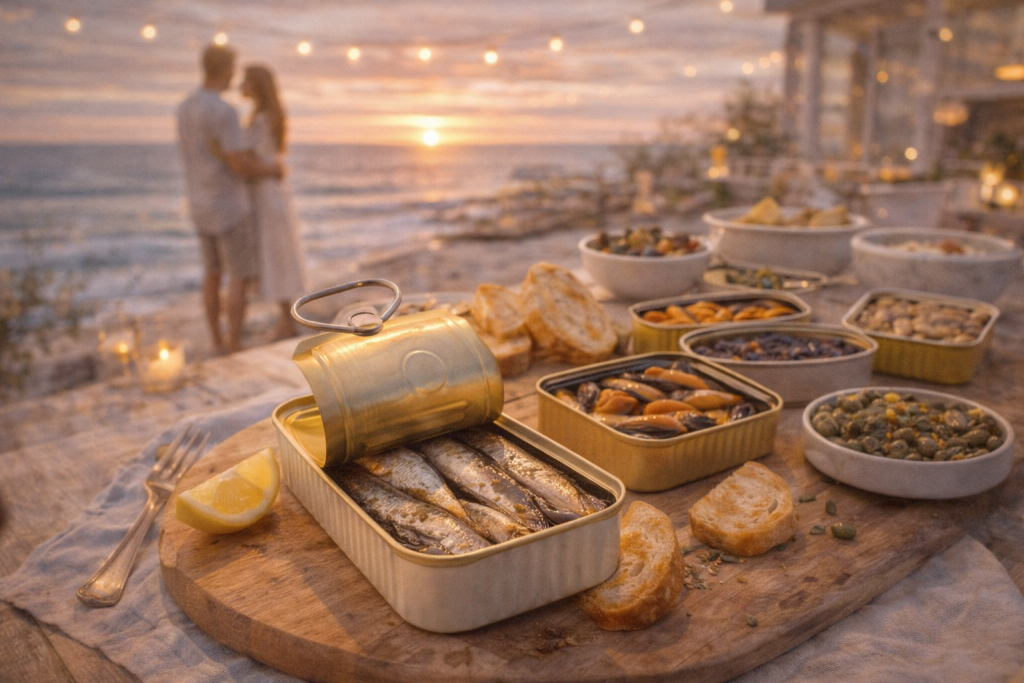
Something unexpected has conquered the cocktail party circuit. Tinned fish, once relegated to emergency provisions and budget meals, has become the appetizer of choice for hosts who want to signal taste without visible effort. The #tinnedfish hashtag has accumulated over 91 million views on TikTok. US sales exceeded $2.7 billion in 2024, with projections reaching $11 billion by 2027. Upscale restaurants now offer “conservas” spreads paired with curated wine selections. The humble tin has officially arrived.
The movement draws on European traditions where quality canned seafood, known as conservas in Spain and Portugal, commands serious respect. These aren’t your grandmother’s emergency tuna. Premium producers pack sardines, octopus, mussels, and anchovies in extra virgin olive oil, using traditional methods that transform preservation into elevation. A single tin can cost $50 and justify it.
Why This Trend Has Staying Power
Several forces converge to explain tinned fish’s ascent. Consumer demand for protein has intensified, with a single can of tuna delivering up to 40 grams. Health-conscious eaters appreciate omega-3 fatty acids, vitamin D, and B12 in convenient form. Shelf stability up to five years appeals to practical households tired of food waste.
But the real driver is premiumization. Brands like Fishwife repositioned tinned fish as “affordable luxury” through artisanal packaging and ethical sourcing. The visual appeal of beautiful tins transforms pantry staples into display-worthy objects. Instagram and TikTok reward aesthetic presentation, and tinned fish delivers.
For Hamptons hosts, the appeal is obvious. Seacuterie boards, those charcuterie-inspired spreads featuring premium tinned fish with crackers and gourmet cheeses, require minimal preparation while suggesting culinary sophistication. Open tins, arrange attractively, serve. The effort-to-impression ratio is unmatched.
The Brands Worth Knowing
Fishwife emerged as category leader after appearing on Shark Tank in January 2024, securing $350,000 from Lori Greiner and Candace Nelson for 6% equity and 2% advisory shares. Founded by Becca Millstein and Caroline Goldfarb in 2020, the company grew from $750,000 in 2021 sales to approximately $7.6 million in 2024. Their products are now available in over 3,200 Whole Foods stores nationwide.
Jose Gourmet offers Portuguese royally-approved trout and earned reputation for consistent quality across products. Gueyu Mar produces chargrilled tuna belly with buttery, melt-in-mouth texture that justifies premium pricing. Conservas de Cambados from Galicia, Spain, offers barnacles, baby eels, and sea urchin roe for adventurous palates.
Scout from Canada has impressed with organic Prince Edward Island mussels and rainbow trout with dill. Donostia Foods imports authentic Spanish conservas including high-end Cantabrian anchovies praised by professional chefs. Conserverie Gonidec from Brittany, France, delivers herbed sardines and mackerel in muscadet wine.
Building the Perfect Seacuterie Board
The seacuterie board has become signature entertaining move for hosts seeking impression without exhaustion. Start with three to five tins offering variety in protein, flavor profile, and origin. Smoked salmon, sardines in olive oil, mussels in escabeche, and anchovies provide foundation.
Accompaniments matter. Quality crackers in various styles, cornichons, Marcona almonds, dried fruits, fine cheeses, and fresh bread complete the presentation. Creme fraiche and high-quality butter serve as spread options. Lemon wedges add brightness.
Presentation elevates ordinary to exceptional. Arrange tins partially opened to reveal contents. Use slate, marble, or wooden boards. Add small forks and spreading knives. The goal is abundant accessibility while maintaining visual cohesion.
Wine Pairings That Work
Some restaurants now offer happy hour tinned fish pairings, treating conservas with same respect as cheese courses. Albariño from Galicia pairs naturally with Spanish seafood. Vinho Verde’s slight effervescence cuts through rich olive oil. Muscadet’s mineral quality complements briny fish.
For Champagne lovers, the combination works beautifully. Bubbles refresh the palate between bites while acidity balances fattiness. Dry rosé offers approachable pairing that guests appreciate without wine knowledge.
The vermouth tradition from Spain, where conservas and vermouth define pre-dinner ritual, translates perfectly to Hamptons aperitivo hour. Dry vermouth on ice with an orange peel creates sophisticated complement to tinned seafood spreads.
The Sustainability Story
Responsible sourcing has become central to premium tinned fish positioning. Fishwife sources from healthy fisheries and certified sustainable aquaculture farms, working with small boat fisherfolk in Alaska, California, Oregon, and Galicia. MSC and ASC certifications provide third-party verification.
Mussels are particularly appealing from sustainability perspective since they require no feed, actually filtering and cleaning water as they grow. Sardines reproduce quickly and occupy low position on food chain, avoiding bioaccumulation concerns affecting larger predatory fish.
For environmentally conscious Hamptons residents, the sustainability story adds dimension to entertaining choices. Serving responsibly sourced conservas aligns with values while providing conversation starter beyond typical appetizer fare.
Beyond the Trend: Why Tinned Fish Has Legs
The global canned seafood market was estimated at $35.77 billion in 2024, projected to reach $44.27 billion by 2030 at 3.5% annual growth. This isn’t a flash trend but structural shift in how consumers approach convenient protein. As lifestyles become increasingly fast-paced, ready-to-eat options that deliver nutrition without compromising quality will continue gaining share.
The TikTok “Tinned Fish Date Night” phenomenon introduced younger audiences to conservas culture, creating generational adoption that traditional marketing could never achieve. These consumers will age into wealth, bringing tinned fish preferences with them.
For Hamptons entertaining, tinned fish solves multiple problems simultaneously. It’s elegant without being precious, convenient without being lazy, conversational without being controversial. As the category matures, expect continued innovation in flavors, sourcing, and presentation. The tin is just getting started.
Discover Hamptons entertaining trends through Social Life Magazine. Experience culinary culture at Polo Hamptons. Subscribe to our print edition for lifestyle content, join our email list for weekly updates, or support independent journalism with a $5 contribution.
Related: Tequila Ocho: The Single-Estate Spirit Taking Over Hamptons Bars | Kosterina: Why Greek Olive Oil Commands Premium Prices
Author

Written by
Recent Posts

Aaron Paul Net Worth — His Character Was Supposed to Die in Season One. Instead He Made $30 Million.

Bryan Cranston Net Worth. He Played a Sitcom Dad for Seven Years. Then He Became the Most Dangerous Man on Television.

Breaking Bad Cast Net Worth. $130 Million Cooked in Five Seasons of Perfect Television

Cailee Spaeny Net Worth — From Springfield, Missouri to A24 and Alien in Three Years Flat

Wagner Moura Net Worth — He Learned Spanish to Play Escobar. Then He Learned English to Take Hollywood.
Categories
- Art
- Articles
- Beauty & Skincare
- Celebrities
- Celebrities|Movies
- Celebrities|The Chronicles
- Chronicles
- Entertainment|Culture
- Event Photos
- Events
- Fashion
- Fashion & Style
- Featured
- Food & Beverage
- Food, Spirits, Wine
- Hamptons
- Hamptons Celebrities
- Hamptons Celebrities|Celebrities|The Chronicles
- Health
- Health & Beauty
- Lifestyle
- Luxury Lifestyle
- Movies|Culture
- Movies|Hamptons Lifestyle
- Press
- Profiles
- Real Estate
- Technology
- The Chronicles
- Travel
- TV
- Uncategorized
- Weddings