
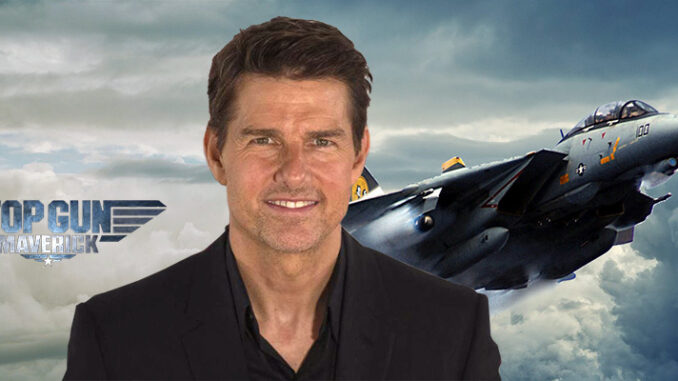
Forget the number. Everybody knows the number. Forbes prints it. Google surfaces it. Fan accounts debate whether it rounds up or down. The Tom Cruise net worth conversation, as typically conducted, is the least interesting conversation you can have about Tom Cruise.
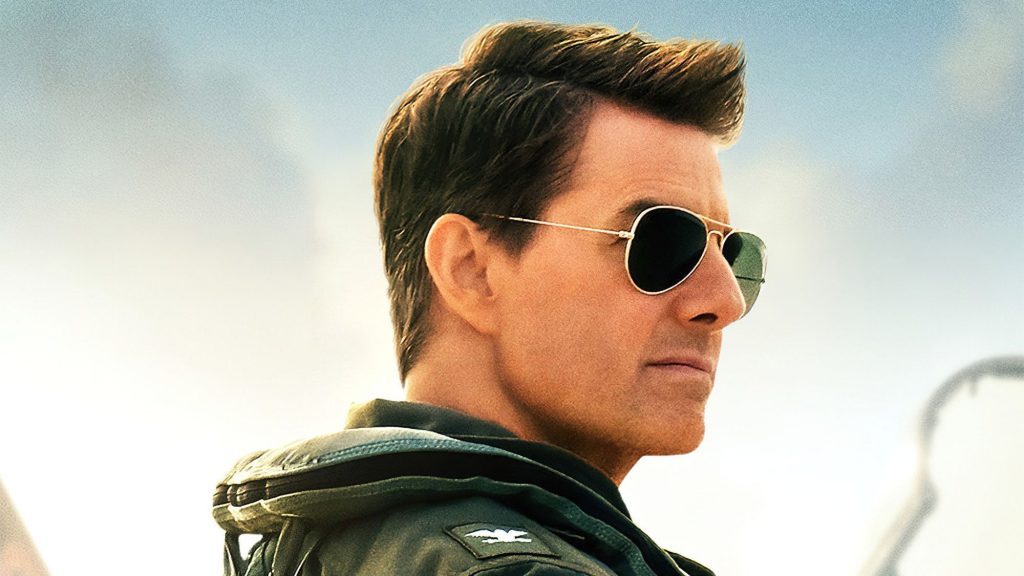
The interesting conversation starts with a different question. Not how much, but what for. Because Cruise is the only major star in Hollywood history whose wealth functions less like a personal fortune and more like the operating budget of a decades-long military campaign. Every dollar serves the mission. The mission has never changed. And the mission — remaining a classical movie star in an era that is actively deleting the job description — requires a funding structure that would make a private equity principal weep with admiration.
Currently estimated at $600 million, the Tom Cruise net worth figure represents something that no other celebrity balance sheet does: the total infrastructure cost of never once breaking character across a forty-year career. That is not wealth. That is a capital expenditure schedule disguised as a filmography.
The Wound: Syracuse, Dyslexia, and the First Reinvention
Thomas Cruise Mapother IV grew up in a household that moved constantly. By the time he reached high school, the family had relocated more than a dozen times across the United States and Canada. His father, an electrical engineer, was abusive. His mother worked multiple jobs. Stability was not part of the vocabulary.
Dyslexia compounded the fractures. Cruise has described his childhood reading experience as watching words swim across the page. Notably, school was a place where he failed visibly and often. Wrestling became the outlet — physical, binary, something where the body could solve problems the brain could not decode on a printed page.
Then a high school drama teacher cast him in Guys and Dolls. The switch flipped. Within months, Cruise dropped out of a seminary program, moved to New York, and started auditioning. He was eighteen years old. The speed of the pivot tells you everything about the chip. According to Biography.com, he landed his first film role within two years of arriving in Manhattan. Most actors spend a decade in that trench. Cruise treated it like a sprint because standing still meant returning to a life built on quicksand.
The Rise: From Risky Business to the Tom Cruise Net Worth Machine
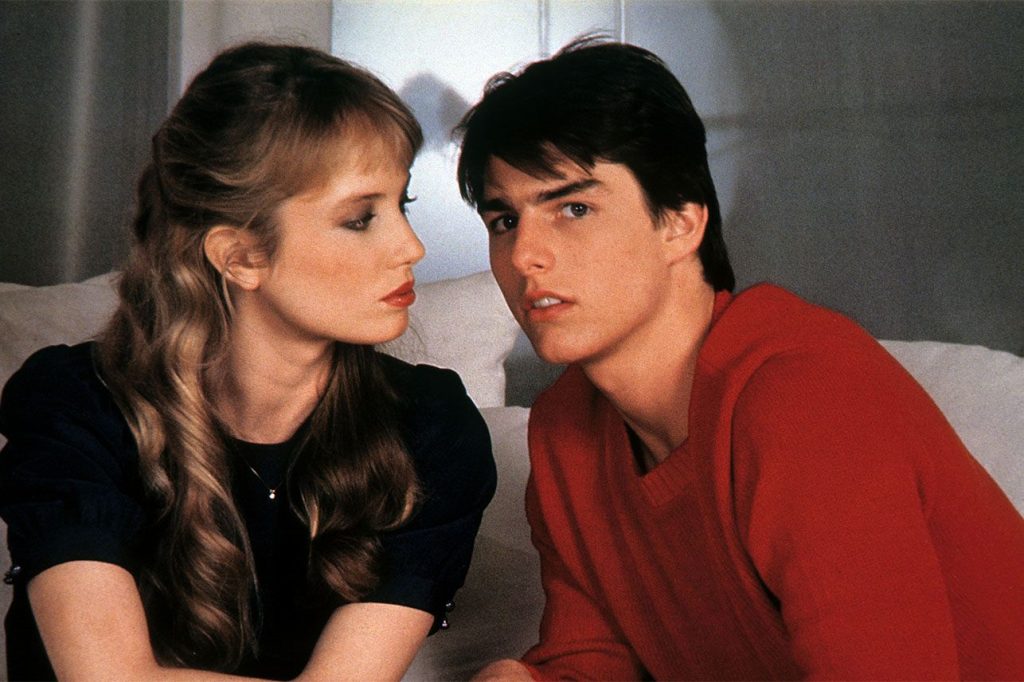
Risky Business in 1983 was not just a breakout. It was a proof of concept. Cruise demonstrated, at twenty-one, that his face on a poster could open a film. Top Gun in 1986 scaled the proof of concept into an industry. By the time Rain Man and Born on the Fourth of July arrived, Cruise had accomplished something that looked obvious in retrospect but was architecturally brilliant: he built commercial gravity and critical legitimacy simultaneously.
Most actors choose a lane. Cruise refused the choice. Furthermore, he structured his deals to make the refusal profitable. The backend compensation model he pioneered — tying his pay to a film’s gross revenue rather than accepting a flat fee — became the foundation of the Tom Cruise net worth empire. Mission: Impossible was the masterpiece of this strategy. He did not merely star in the franchise. He produced it, controlled it, and built a compensation architecture where every sequel compounded his stake.
Consider the math. The Wall Street Journal reported that Cruise’s backend deal on Top Gun: Maverick generated over $100 million in personal earnings from a single film. That figure does not reflect star power alone. It reflects contractual engineering — the kind of deal architecture that requires understanding leverage, timing, and market positioning at a level most CEOs never achieve.
The Mission: Why Every Dollar Funds the Performance
Here is where the Tom Cruise net worth story separates from every other celebrity profile on the internet. Most wealthy actors use money to buy optionality. They diversify. They invest in restaurants, tequila brands, production slates. Portfolios designed to generate income independent of their physical presence on a set become the goal.
Cruise does the opposite. Every financial decision funnels back into the single project of remaining Tom Cruise, Movie Star. His production company exists to guarantee creative control. Stunt training exists to guarantee spectacle. The promotional intensity — those press tours where his energy level suggests a man powered by a small nuclear reactor — exists to guarantee that the audience cannot look away.
Consequently, his spending is not consumption. It is reinvestment. The flight training for Top Gun: Maverick alone required him to log hundreds of hours in military aircraft. Bain & Company research on entertainment economics frames this dynamic precisely: the value of a franchise star is not their salary but their willingness to absorb risk that the studio would otherwise bear. Cruise absorbs more risk than any performer alive. His body is the collateral.
This is what separates him from Glen Powell, who is trying to become the next version of this species, and Miles Teller, who had the talent but not the frictionless trajectory the modern market demands. Cruise is not competing with them. He is competing with the concept of obsolescence itself.
The Elephant in the Cockpit: Scientology and the Cost of Belief
No honest accounting of the Tom Cruise net worth picture can skip the Church of Scientology. Cruise has been the organization’s most visible member for over three decades. The relationship has cost him a marriage to Nicole Kidman, a marriage to Katie Holmes, and a measurable quantity of public goodwill.
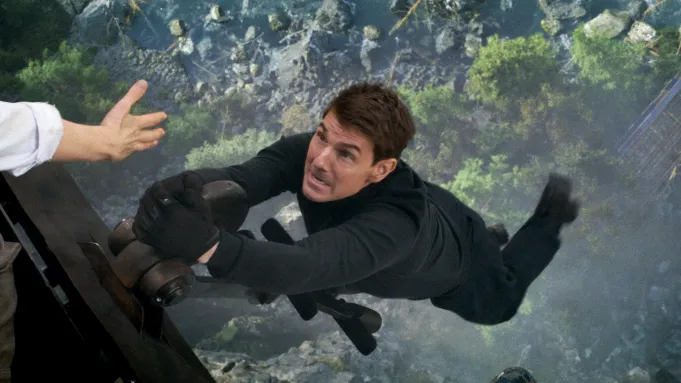
The financial dimensions remain opaque by design. Cruise has never disclosed his contributions to the church. Journalistic estimates range widely. What is clear, however, is that the Scientology association has not damaged his box office performance in any statistically meaningful way. Top Gun: Maverick earned $1.49 billion globally. Audiences may have opinions about his personal beliefs. They buy tickets anyway.
This creates a paradox that the entertainment industry has never adequately explained. In an era where a single controversial tweet can end a career, Cruise maintains a three-decade affiliation with one of the most criticized organizations in American life — and his commercial value only increases. The answer, most likely, is that his commitment to Scientology and his commitment to stardom share the same psychological root. Both require total belief. Both demand that doubt be treated as the enemy. Additionally, both produce results that make outsiders uncomfortable precisely because the intensity is so absolute.
Post-Maverick: The Endgame of a Man Who Cannot Stop

Cruise turns 64 in 2026. Mission: Impossible — The Final Reckoning is scheduled for release. The title is either ironic or prophetic. Given Cruise’s history, betting on ironic is the safer play.
The endgame question is simple. What happens when the body can no longer cash the checks the will keeps writing? Cruise has sustained injuries on set — broken ankles, separated shoulders — and returned to work faster than medical professionals recommended. McKinsey’s analysis of the entertainment industry’s future suggests that star-driven theatrical releases will continue declining as a share of total content consumption. The trend does not favor what Cruise sells.
Nevertheless, this is a man who has treated every structural headwind as a personal challenge. Streaming was supposed to kill theatrical. He made the biggest theatrical hit of 2022. Franchise fatigue was supposed to end sequel culture. He delivered the most acclaimed sequel in decades. As the Top Gun Maverick hub explores in detail, the species of movie star Cruise represents is functionally extinct. His response to extinction is to keep running.
Meanwhile, Jennifer Connelly, his Maverick co-star, demonstrated what the system does to performers who lack Cruise’s structural advantages. She won an Oscar. She disappeared. When she returned, audiences acted surprised. The contrast is instructive. Cruise builds infrastructure to prevent disappearance. Most actors lack the leverage, the capital, or the pathological commitment required to do the same.
What the Tom Cruise Net Worth Number Actually Means
Six hundred million dollars. That is the current estimate. It will grow. More importantly, it will keep being spent — on training, on production, on the machinery of a career that functions less like a job and more like a vocation that has swallowed its host.
The Tom Cruise net worth figure is not a scoreboard. It is an expense report. Every line item answers the same question: what does it cost to be the last person on earth who can do a thing that used to define an entire industry? The answer, apparently, is everything. Every dollar. Every relationship. And every year of a life organized around a single, all-consuming proposition: that one human being, doing real things in real machines at real speed, is still worth the price of a theater ticket.
The market keeps saying yes. Biology will eventually say no. The fascinating question is which one Cruise will listen to. Based on forty years of evidence, the smart money says neither.
Related Reading
- Top Gun Maverick and the Extinction of the Movie Star Species
- Glen Powell Net Worth: The Man Trying to Become Something That Might Not Exist
- Miles Teller Net Worth: When Friction Stopped Being Charisma
- Jennifer Connelly Net Worth: Durability as Its Own Form of Stardom
- Barbenheimer and the Weekend America Pretended Movies Still Work Like That
You Already Know What Comes Next
There is a version of this story you read everywhere. The safe version. The version where every celebrity profile is a press release with adjectives and every lifestyle feature reads like it was written by a committee afraid of its own shadow. That version is comfortable. It is also forgettable. Social Life Magazine does not publish that version.
If you have a story worth telling — a brand worth positioning, a launch worth amplifying, a personal narrative that deserves more than a templated feature — reach out to our editorial team. We build features that move needles, not fill pages.
Want guaranteed placement and full creative control? Submit a Paid Feature and let our team craft a profile that positions you exactly where you belong.
Join 82,000 insiders who get our editorial picks, event invites, and luxury lifestyle intelligence before anyone else. Subscribe to the Social Life email list and stop being the last to know.
Polo Hamptons returns this summer with the most exclusive brand activations and VIP experiences on the East End. Sponsorships, cabanas, and guest lists are filling now. Visit polohamptons.com before the field closes.
Get Social Life Magazine delivered — five summer issues from Memorial Day to Labor Day, plus Fall and Winter editions. Subscribe to the print edition and own the only magazine the Hamptons actually reads.
If this kind of writing — the kind that treats a Tom Cruise net worth analysis with the same rigor as a portfolio thesis — adds value to your week, consider a $5 contribution to keep independent luxury journalism alive. No paywall. No algorithm. Just work that respects your intelligence.
Author

Written by
Recent Posts
Ryan Gosling Net Worth: The $70M Art of Not Trying
Cillian Murphy Net Worth: The Art of Quiet Fortune

Margot Robbie Net Worth: Barbie’s $80m Power Broker

Barbenheimer Box Office: The Weekend Hollywood Faked a Comeback
Top Gun Maverick and the Extinction of the Movie Star Species
Categories
- Art
- Articles
- Beauty & Skincare
- Celebrities
- Celebrities|Entertainment
- Celebrities|Television
- Celebrities|The Chronicles
- celebrities|the-archive
- Chronicles
- Entertainment|Culture
- Event Photos
- Events
- Fashion
- Fashion & Style
- Featured
- Food & Beverage
- Food, Spirits, Wine
- Hamptons
- Hamptons Celebrities
- Hamptons Celebrities|Celebrities|The Chronicles
- Health
- Health & Beauty
- Lifestyle
- Luxury Lifestyle
- Press
- Profiles
- Real Estate
- Technology
- The Chronicles
- Travel
- Uncategorized
- Weddings