
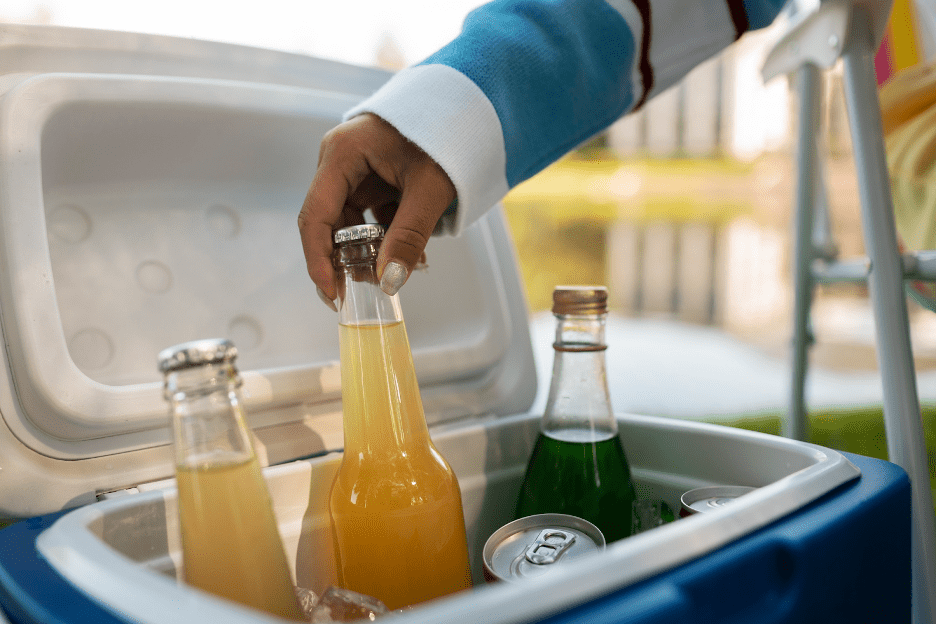
You prepared the ideal camping meal. Will everything be ruined or kept fresh by your portable refrigerator?
A camping refrigerator can change the way you camp. Wet sandwiches and melting ice are over. Instead, you receive cold beverages and fresh meals.
However, choosing the incorrect refrigerator leads to issues. Your food goes bad. The battery in your car dies. You become frustrated.
This guide helps weekend campers, over-landers, and van-lifers choose smart. We ignore the marketing jargon and concentrate on functional features. You’ll discover a refrigerator that becomes your most useful travel companion.
Features of Your Camping Fridge That Are Important
1. Effectiveness
There is only one primary function of your refrigerator. When it’s hot outside, keep things cool.
Avoid refrigerators with simple dials. Accurate digital controls are required. Set precise temperatures, such as -18°C for frozen meat or 3°C for milk.
Dual-zone refrigerators provide the ideal configuration—two distinct sections with varying temperatures. For drinks, run one side cold. For meat, keep the other frozen.
This is ideal for lengthy journeys. You keep frozen goods and fresh food together.
Everything stays chilled adequately with a good camping fridge. It shouldn’t matter how hot it is outside. Your food remains fresh and safe.
2. Power Solutions That Operate Anywhere
Power options must be universally compatible. Avoid being stuck with a single-source refrigerator.
The best refrigerators use 12V or 24V from the outlet in your car. They can also be powered by 240V wall power at home or a campsite. Solar panels are also functional.
Being stranded is prevented by battery protection. The refrigerator monitors your car’s battery level. It automatically turns off when the power is low.
There will be enough fuel left for you to start your engine. The majority of refrigerators have three levels of protection. Select the setting that corresponds to the type of battery you have.
In remote locations, this feature keeps batteries from dying.
3. Battery Lifespan
Among all the appliances in your setup, your refrigerator consumes the most electricity. When you’re off the grid, efficiency counts.
Intelligent compressors and proper insulation save energy. Variable-speed compressors, such as those made by LG or Secop, perform better. Rather than operating at maximum capacity, they modify their speed according to cooling requirements.
New vacuum insulation panels reduce heat transfer. As a result, the compressor operates less frequently. According to research, these panels save more than 20% on energy consumption.
Eco mode is available on many refrigerators. This setting maximizes compressor cycles and slightly raises temperatures. Your battery has a longer lifespan.
4. Size
Don’t purchase the largest refrigerator you come across. How you travel determines size.
For quick excursions, weekend couples require 25–40 liters. Families on three to five-day trips should bring forty-five to sixty liters. Long-distance off-grid travelers need more than 65 liters, ideally dual-zone.
Vehicle space and storage requirements should be balanced. Consider weight as well.
Internal design is essential. Packing is made easier with detachable baskets. On bumpy roads, dividers keep things organized. They prevent your food from moving around.
Choose not by maximum capacity but by the trip’s length and the group’s size.
5. Portability
Weight and design are essential because you’ll move this refrigerator a lot.
When empty, refrigerators weighing more than 25 kg are challenging to move. They become cumbersome when food and beverages are added. In small cars, size is essential, so look for comfortable and sturdy handles. In SUVs and vans, every inch matters. Before purchasing, measure your area.
Obtain a durable exterior. Reinforced corners provide drop protection. Cases made of metal or high-impact plastic are better able to withstand outdoor abuse.
There will be bumps and scrapes on camping trips. Your refrigerator must withstand rough treatment, rocky campsites, and confined car spaces.
You save your back with good portability features.
6. Lower Noise Levels
Noisy refrigerators ruin quiet camping nights. Loud compressors ruin the tranquil wilderness atmosphere and interfere with sleep.
The noise level in a quiet library is around 40 dB. You should keep your camping refrigerator at 45dB or lower.
Before purchasing, check the noise rating. At night, some refrigerators make noises similar to those of lawn mowers. While you sleep, others whisper.
It is crucial when you sleep near your refrigerator in a camper van.
7. Smart Controls
Modern refrigerators are equipped with ingenious features that facilitate camping.
Obtain a clear LED display that indicates battery voltage, current temperature, and set temperature. You need this basic information quickly.
More sophisticated models connect to your phone through Wi-Fi or Bluetooth. Check the temperature from the driver’s seat or inside your tent. No more rising to adjust.
Power tracking and remote diagnostics are now features of smart refrigerators. When you leave the lid open, some of them send out alerts. Owners of boats and RVs can remotely monitor their appliances with the help of these connected features.
8. Built to Last
Your camping refrigerator must be able to withstand years of harsh use.
Examine the materials first. Aluminum or steel casings with powder coating are more durable than plastic ones. They are heavier but more resilient to shocks.
Check the latches and hinges. On rough roads, weak hardware breaks. You don’t want your refrigerator to pop open when you’re driving.
Weather seals are also necessary. Dust and moisture are kept out by strong, thick seals. It safeguards the internal electronics.
Seek extended warranties. Manufacturer confidence is demonstrated by the compressor’s three to five-year lifespan. Reputable companies that provide replacement parts and excellent customer service should be avoided.
9. Getting the Most Out of Your Investment

Avoid being pressured to purchase every feature that is offered. You should only pay for what you will use.
For extended travel, dual-zone refrigerators are ideal. However, a freezer compartment might not be necessary for weekend campers. Although they cost hundreds more, Wi-Fi controls sound cool.
Campers on a tight budget should concentrate on three things: battery protection, a dependable compressor, and adequate insulation. You can get excellent performance without going over budget with these essential features.
Power plants or solar panels can be added later. Start with the practical fundamentals.
Conclusion
When looking for a camping refrigerator, avoid high-end brand names. Pay attention to what works.
First, look for dependable cooling. Next, assess the build quality and energy efficiency. These three characteristics are most important.
Next, choose the power and size options based on your camping style. Following these guidelines will keep your food fresh for many years. Your camping excursions become much less stressful.
Author

Written by
Recent Posts

Chris Pontius Net Worth: The Man Who Survived Being Himself

Sandy Mahl Net Worth: The Woman Behind Garth Brooks Who Chose Silence

Tracey Walter Net Worth: The $3M Career Hidden in 200 Films

Stanley Livingston Net Worth: The $2M Exit Nobody in Hollywood Studied

Telma Hopkins Net Worth: The $4M Career Pivot Nobody Studied
Categories
- Art
- Articles
- Beauty & Skincare
- Celebrities
- Celebrities|The Chronicles
- celebrities|the-archive
- Chronicles
- Event Photos
- Events
- Fashion
- Fashion & Style
- Featured
- Food & Beverage
- Food, Spirits, Wine
- Hamptons
- Hamptons Celebrities
- Hamptons Celebrities|Celebrities|The Chronicles
- Health
- Health & Beauty
- Lifestyle
- Luxury Lifestyle
- Press
- Profiles
- Real Estate
- Technology
- The Chronicles
- Travel
- Uncategorized
- Weddings