
Every August the same conversation happens somewhere between Southampton and Montauk. Someone at the table has just come back from the Adriatic, tanned in a way that looks earned rather than bought, and they cannot stop talking about an island called Hvar. The rest of the table nods politely, then quietly googles it in the car home.
I was that person once. I went for four days and stayed for eleven. What follows is a fair warning.
The island that does not try too hard
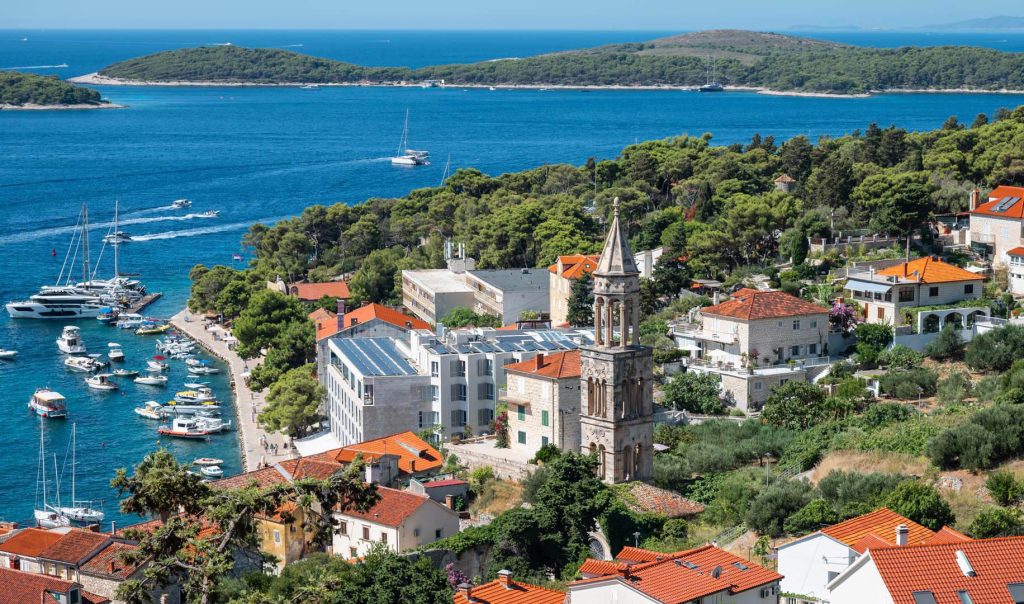
Hvar sits off the coast of Split, about an hour by fast catamaran, and it has been a stop for people with boats and time on their hands since the Venetians ran the place. The town itself is small, a horseshoe of pale limestone around a harbor, with a Renaissance square, a hilltop fortress and a 16th-century arsenal that once repaired galleys and now hosts the occasional exhibition.
What strikes you first is the light. Hvar claims more sunshine hours than almost anywhere else in Europe, and the stone seems to soak it up during the day and give it back in the evening. The second thing you notice is the scale. You can walk from the ferry pier to the top of the fortress in twenty minutes, and on the way you will pass a Michelin-recognized restaurant, a family bakery that has been there for generations and at least three superyachts that would not look out of place in Sag Harbor.
For anyone used to the Hamptons, the comparison writes itself, with one important difference. Nobody is trying to get you onto a list. The best table on the Riva is usually the one you walk up to.
There is also a rhythm to the day here that takes a little getting used to. Mornings are slow, lunch is late, and the town goes quiet between three and five before waking up again for the evening passeggiata along the harbor. Fight it for the first day, then give in.
Yachts, tenders and the Pakleni islands
The real reason the sailing crowd loves this place is what sits just offshore. The Pakleni islands are a chain of small, pine-covered islets a ten-minute tender ride from the town harbor, and they turn a stay in Hvar into something closer to a private cruise.
Palmizana is the one everyone mentions, with a sheltered marina, a botanical garden planted by a Croatian family more than a century ago and a handful of restaurants where lunch turns into a four-hour affair. Most of the tables face the water, the fish comes off boats you can see from your chair, and the wine list leans heavily on local Plavac Mali, which is exactly what you want with grilled octopus and a view.
If you are chartering, and you should at least consider it, the usual pattern is a week out of Split with two or three nights on anchor around Hvar. Those without their own boat can book a skippered day trip and get most of the same experience, minus the crew and the bill. Either way, the water around the Pakleni is that particular Adriatic blue that photographs look fake in.
Beach clubs and how to do them
Hvar earned a reputation as a party island in the 2010s, and some of that is still true. Carpe Diem runs a beach club on one of the islets that fills with a young, well-dressed crowd from late afternoon. Hula Hula, a short walk west of town, is where people go for sunset, a DJ and a cocktail that costs about what it would at Gurney’s.
The trick is timing. Late June and the first half of September give you warm sea, open restaurants and a fraction of the August crowd. The island has quietly moved upmarket over the past few years, with a Relais & Chateaux property in the old Palace hotel, a discreet resort near Stari Grad with its own olive groves, and a growing number of restored stone villas with pools that rent for the week. The old backpacker energy has not disappeared, but it now has somewhere else to go after midnight.
One more piece of advice for the boat crowd: the harbor in Hvar town is small and berths are allocated on a first-come basis in summer. Arrive by early afternoon or plan to anchor out and tender in, which frankly is the nicer option anyway.
Beyond the harbor
Do not spend the whole trip in town. Stari Grad, on the north side, is one of the oldest settlements in Europe and has a plain of ancient Greek field boundaries that is UNESCO-listed and still farmed. The lavender fields in the interior around Velo Grablje bloom in late June and smell like the whole island has been through a spa. And the little fishing village of Vrboska, with its stone bridges over a narrow inlet, is the kind of place that makes you check real estate listings on your phone.
Rent a car for a day, or better, a small speedboat, and follow the south coast. There are coves along there that you will have to yourself even in high season.
The practical part
Getting there is easier than it sounds. Fly into Split via any of the big European hubs, then take the catamaran directly into Hvar town. For a full picture of ferry times, villas, boat rentals and what is actually open when, the local guide at Hvar is the most useful thing I found before the trip and the one I kept returning to while I was there.
Book accommodation early for July and August, bring flat shoes for the cobblestones and leave a day free at the end of the trip with no plan. That is the day you will remember.
Author

Written by
Recent Posts

Nicole Miller
Unlocking the Berkshires
Dalia Forman Design

Alberto Luzzi
How to Pick a Homecoming Dress for Your Body Type and Feel Amazing in It
Categories
- Art
- Articles
- Business of Luxury
- Celebrities
- Culture
- Entertainment
- Events
- Faces of Summer 2026
- Fashion
- Fashion & Style
- Featured
- Finance
- Food, Spirits, Wine
- Hamptons
- Hamptons Celebrities
- Health
- Health & Beauty
- Lifestyle
- Luxury Lifestyle
- Press
- Profiles
- Real Estate
- Technology
- The Chronicles
- Travel
- Uncategorized
- Weddings