
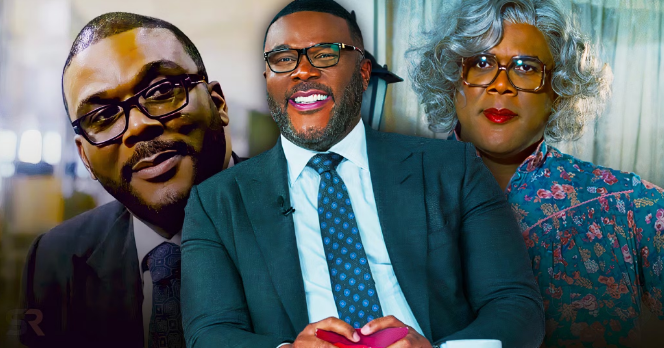
How a Homeless Playwright Built a $1.4 Billion Empire
Tyler Perry wrote his first play while living in his car. Today, Forbes estimates his net worth at $1.4 billion, making him the wealthiest actor on the planet. That gap between rock bottom and billionaire status didn’t close by accident. It closed because Perry made one decision in the 1990s that most of Hollywood still refuses to make: he kept ownership of everything he created.
While other filmmakers chase studio deals that trade creative control for upfront cash, Perry built a vertically integrated media empire on his own terms. He writes, directs, produces, and distributes content through his own 330-acre studio complex in Atlanta. Furthermore, he negotiated a $150 million annual deal with ViacomCBS that pays him to create content he still owns. The result is an annual income between $200 million and $250 million, more than most studio executives will earn in a lifetime.
Tyler Perry Net Worth Breakdown: Where the Billions Come From
Understanding Tyler Perry’s net worth requires looking beyond a single number. His wealth is distributed across multiple asset classes, each generating independent revenue streams that compound year over year.
Film and Television Library
Perry owns 100% of his content library, which includes more than 1,200 television episodes, over 20 feature films, and two dozen stage plays. His Madea franchise alone has grossed nearly $700 million worldwide, with each installment produced for less than $10 million. The content library is valued at approximately $320 million and continues to generate passive income through syndication, licensing, and streaming rights.
The ViacomCBS Deal
In 2017, Perry signed a landmark content deal with Viacom (now Paramount Global), committing to produce 90 episodes of original scripted content annually. The agreement pays Tyler Perry Studios $150 million per year for content production. As a result, shows like The Oval and Sistas debuted on BET with strong initial ratings, becoming two of the top cable series for Black audiences.
Perry also negotiated a 25% equity stake in the BET+ streaming platform as part of the contract. That stake alone is valued at approximately $50 million. In fact, Perry reportedly made a $2 billion offer to acquire BET outright in 2023, though Paramount Global wanted more.
Cash, Investments, and Real Estate
Beyond content, Perry holds approximately $300 million in cash and investments. His real estate portfolio spans properties in Atlanta, Beverly Hills, Jackson Hole, and the Bahamas. Additionally, he owns two private aircraft and has invested strategically in luxury properties, often buying and reselling at significant profit margins.
Tyler Perry Studios: The 330-Acre Power Move
Tyler Perry Studios is not just a production facility. It is a physical monument to what ownership looks like when scaled to its logical conclusion. Located on the former Fort McPherson army base in southwest Atlanta, the 330-acre complex is one of the largest film production studios in the United States.
From Confederate Ground to Black-Owned Empire
Perry purchased the former military base in 2015 for $30 million and invested an additional $250 million in redevelopment. The irony is not lost on him. “Think about the poetic justice in that,” Perry told CBS This Morning. “The Confederate Army is fighting to keep Negroes enslaved in America on this very ground. And now this very ground is owned by me.”
The complex features 12 sound stages, 50,000 square feet of permanent sets, a quarter million square feet of office space, and 40 buildings on the National Register of Historic Places. Those permanent sets include a White House replica (built for The Oval), a luxury hotel lobby, a 16,000-square-foot mansion, and a 1950s-style diner relocated from a town 100 miles away.
Studio as Revenue Engine
Tyler Perry Studios generates revenue not only from Perry’s own productions but also from leasing facilities to other filmmakers. Major productions including Netflix’s Bridgerton and various Marvel projects have utilized the Atlanta complex. According to industry analyses, studio rental income contributes over $100 million annually to Perry’s bottom line. Moreover, Georgia’s generous film tax incentives amplify the financial advantage of producing in Atlanta rather than Los Angeles.
Perry also announced plans for a Tyler Perry Entertainment District, a nearly 1.3 million-square-foot mixed-use expansion on an adjacent 38-acre parcel. The development would include office space, retail shops, theaters, and associated parking, with completion targeted for 2028.
The Lionsgate Formula That Changed Everything
Before the studio, before the ViacomCBS deal, before the billion-dollar net worth, Tyler Perry cracked the code with one film: Diary of a Mad Black Woman.
The $5.5 Million Bet
Perry scraped together $5.5 million to finance his first feature film. Lionsgate matched the investment but agreed to unusual terms: a modest marketing fee and a 12% distribution fee, with profits split evenly. Critically, Perry retained ownership of the content.
The film earned $50.6 million at the domestic box office. Subsequent television syndication and home video sales pushed total revenue past $200 million. Under the deal’s terms, Perry kept half of everything after costs. Subsequently, he replicated this model across 14 Madea films, each produced for under $10 million and collectively grossing nearly $700 million worldwide.
Why Ownership Beats Salary
Perry learned this lesson from Oprah Winfrey during an appearance on her show in 2001. “Write your own checks and be in full control,” was the takeaway that would define his entire business strategy. Consequently, while other filmmakers accept upfront fees and surrender backend rights, Perry controls every dollar from production through distribution.
As McKinsey’s media research consistently shows, content ownership is the single greatest predictor of long-term wealth in entertainment. Perry understood this intuitively two decades before the streaming wars made it obvious to everyone else.
Tyler Perry Net Worth: The Real Estate Portfolio
Billionaires don’t keep wealth liquid. They park it in assets that appreciate while generating tax advantages. Perry’s real estate strategy reflects this principle with surgical precision.
The Beverly Hills Compound
In 2004, Perry purchased 22 acres in Beverly Ridge Estates for $4.3 million and spent years building a 24,545-square-foot Tuscan-style villa now valued at over $18 million. The eight-bedroom, twelve-bathroom estate became internationally famous when Prince Harry and Meghan Markle lived there briefly in 2020 after leaving the British royal family. Perry, who had never met the couple, offered the property as a safe haven through their mutual friend Oprah Winfrey.
Strategic Property Plays
Perry treats real estate like a profit center, not just a lifestyle marker. He purchased a Mulholland Estates mansion for $14.5 million in 2017 and sold it to Pharrell Williams nine months later for $15.6 million. Previously, he acquired a Hollywood Hills property in 2006 for $9.6 million and sold it in 2013 for $13.25 million. His former Atlanta Buckhead mansion, purchased for $9 million in 2007 with millions more in upgrades, eventually sold for $17.5 million.
Beyond residential properties, Perry owns a log cabin in Jackson Hole, Wyoming, and a private island in the Bahamas. The total real estate portfolio, combined with two private aircraft, represents approximately $40 million in what Forbes categorizes as “homes and toys.”
From Poverty to Power: The Tyler Perry Origin Story
The Tyler Perry net worth story only makes sense against the backdrop of where he started. Born Emmitt Perry Jr. in New Orleans, he grew up in poverty marked by severe physical abuse from his father and sexual abuse by a family friend’s mother. He dropped out of high school, earned his GED, and worked odd jobs to survive.
The Play That Almost Died
In 1992, Perry wrote I Know I’ve Been Changed, a musical play inspired by the therapeutic power of writing he had learned about on The Oprah Winfrey Show. The debut performance played to an empty audience. Nevertheless, Perry persisted for six years, saving every penny to restage the production. In 1998, the play finally achieved a sold-out run and moved to Atlanta’s prestigious Fox Theatre.
“You got to understand, I had no mentors,” Perry told Forbes in 2020. “My father doesn’t know anything about business, and my uncles and mother, they know nothing about this. I didn’t go to business school. Everything I’ve learned, I’ve learned in progress.”
Building the Madea Machine
Perry’s stage productions became the foundation of his empire. Before breaking into film, he earned over $100 million from theater ticket sales alone. Merchandise generated another $20 million, and video sales of his live performances added $30 million more. At his peak, Perry was selling 35,000 tickets per week to his touring productions. His character Madea, the sharp-tongued grandmother in a floral dress, became a cultural phenomenon that eventually spawned a franchise worth hundreds of millions.
Tyler Perry’s Philanthropic Footprint
Perry’s generosity matches his ambition. His philanthropic giving includes a $2.75 million donation to help older homeowners in Atlanta pay their property taxes. In 2009, he donated $1 million to the NAACP. During the 2018 holiday season, he covered over $430,000 in layaway balances at Walmart locations across Atlanta.
When Rayshard Brooks was killed in police custody in 2020, Perry volunteered to pay for the funeral and pledged to fund the college education of all four of Brooks’s children. His charitable work extends internationally as well, including sponsoring disaster relief in Haiti and Texas. In 2009, Perry sent 65 children from a Philadelphia day camp to Walt Disney World.
In 2020, Time magazine included Perry in its list of the 100 most influential people. The following year, he received the Jean Hersholt Humanitarian Award from the Academy of Motion Picture Arts and Sciences, recognizing his commitment to using wealth as a tool for social impact.
What Tyler Perry’s Net Worth Teaches About Building Wealth
Tyler Perry’s $1.4 billion fortune isn’t a Hollywood fairy tale. It is a case study in ownership economics that any ambitious entrepreneur can learn from. The core lesson is deceptively simple: own what you create.
Perry retained full ownership of his content when every industry norm pushed him toward selling rights for upfront cash. He built his own studio when renting space would have been easier. He negotiated equity stakes in platforms when flat fees were the standard offer. As a result, every piece of content he has ever produced continues to generate revenue decades after creation.
According to Bain & Company’s media analysis, the entertainment industry’s shift toward streaming has made content libraries more valuable than ever. Perry positioned himself ahead of this curve by two decades. His model, which treats creative output as appreciating assets rather than disposable products, generated a net worth that places him among George Lucas, Steven Spielberg, and Oprah Winfrey in the billionaire entertainment elite.
The man who wrote his first play while sleeping in his car now owns a production complex larger than Warner Bros., Disney, and Paramount’s lots. Hollywood told him no. He built his own Hollywood. That is the Tyler Perry net worth story, and it is far from finished.
Connect With Social Life Magazine
Feature Article Ideas / Advertising / Brand Partnership Inquiries
→ Contact Social Life Magazine
Polo Hamptons Tickets, Cabanas & Brand Sponsorships
→ Polo Hamptons
Join Our Email List
→ Subscribe Here
Social Life Magazine Print Subscription
→ Get Your Subscription
Support Our Work – Donate $5
→ Donate via PayPal
Related Articles
→ Hollywood Actor Net Worth Rankings: Who Tops the List
→ Celebrity Net Worth: The Ultimate Guide to Hollywood Wealth
→ Celebrity Success Secrets Revealed Through Research
→ TV Personality Net Worth Rankings: Talk Show Hosts & Media Moguls
Author

Written by
Recent Posts

AI for personal finance: where PennyGuard fits

How to Pick a Homecoming Dress for Your Body Type (and Feel Amazing in It)

World Cup Injury Attorney for Vancouver Events
What a 3-Carat Engagement Ring Actually Costs in 2026: The Real Numbers
The Skincare Habits That Make a Real Difference Over Time
Categories
- Art
- Articles
- Business of Luxury
- Celebrities
- Culture
- Entertainment
- Events
- Faces of Summer 2026
- Fashion
- Fashion & Style
- Featured
- Finance
- Food, Spirits, Wine
- Hamptons
- Hamptons Celebrities
- Health
- Health & Beauty
- Lifestyle
- Luxury Lifestyle
- Press
- Profiles
- Real Estate
- Technology
- The Chronicles
- Travel
- Uncategorized
- Weddings