
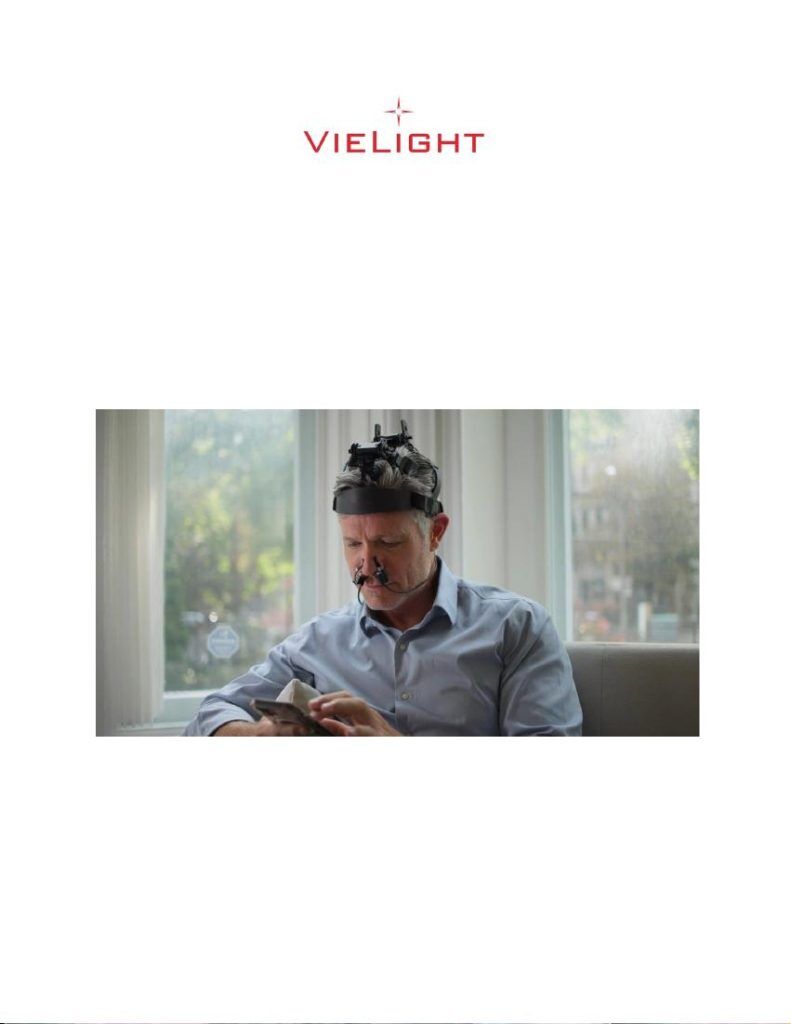
The hedge fund manager closes his eyes for twenty minutes every morning before the markets open. A headset pulses near-infrared light into his brain at 40 Hz while he reviews pre-market data. He won’t tell his competitors what he’s doing. The UFC champion does the same thing before stepping into the octagon. So does the BYU quarterback who just delivered his team’s best season in four years.
Welcome to the world of Vielight brain photobiomodulation, where light becomes the ultimate performance-enhancing technology that doesn’t show up on any drug test.
For the high-achiever who’s already optimized sleep, nutrition, and training, this represents the next frontier. Moreover, it’s backed by research from Harvard Medical School, the University of Utah, and over 35 published clinical trials. The question isn’t whether it works. The question is whether you can afford to let your competition use it first.
How Vielight Brain Photobiomodulation Actually Works
Forget everything you think you know about “light therapy.” This isn’t a spa treatment or a seasonal affective disorder lamp. Vielight brain photobiomodulation delivers precisely calibrated near-infrared light at 810 nanometers directly into brain tissue through both transcranial and intranasal pathways.

The science is elegant. Your mitochondria, the energy factories in every cell, respond to near-infrared light by producing more ATP, the molecule that powers all cellular activity. Furthermore, the technology targets cytochrome oxidase c, a mitochondrial enzyme that absorbs this specific wavelength and triggers a cascade of beneficial effects.
Dr. Lew Lim, founder and CEO of Vielight, developed the patented technology after years of research into how light energy penetrates biological tissue. His devices deliver industry-leading irradiance of 400 mW/cm², far exceeding competitors who dilute their power across dozens of weak LEDs. The result is genuine brain penetration rather than superficial skin warming.
The Neuro Gamma device pulses at 40 Hz, which modulates gamma brain waves associated with focus and cognitive processing. The Neuro Alpha pulses at 10 Hz, promoting relaxation and recovery. Consequently, users can choose their protocol based on whether they need pre-performance activation or post-exertion restoration.
BYU Football’s Breakthrough Season: A Case Study
In 2024, BYU football adopted Vielight Neuro technology as standard equipment for all athletes. The results were hard to ignore. The program delivered an 11-2 record, an Alamo Bowl victory, a No. 13 finish in the AP Top 25, and their first 11-win campaign since 2020.
Tom Holmoe, former BYU Athletic Director and three-time Super Bowl champion, explained the decision. After reviewing photobiomodulation research led by Professor Elisabeth Wilde at the University of Utah’s Neurology Department, BYU saw compelling evidence for including the technology in their performance program.
Brett Mortensen, Director of BYU Football Athletic Training, broke down the science for athletes. The device supports cellular energy production and may help with the brain’s adaptive responses during a demanding competitive season. Additionally, diffusion MRI scans showed decreased inflammation markers in players using the Vielight device compared to placebo groups.
Dr. Larry Carr, a former BYU linebacker inducted into their Hall of Fame, became one of the technology’s most vocal advocates. After suffering cognitive and emotional symptoms from football-related brain injuries, he discovered Vielight under guidance from University of Utah researchers. His improvement was so dramatic that he now actively participates in clinical studies and helps other players access the technology.
From the Octagon to the Boardroom: Who’s Using It
UFC World Featherweight Champion Ilia Topuria uses the Vielight Neuro Duo and MIP devices as part of his training regimen. His performance coach, Dr. Aldo, works with Vielight technology because it’s supported by the most published studies in brain photobiomodulation.
The adoption extends across sports. Two-time Judo Olympian Angelica Delgado, Team USA’s highest-ranked athlete in her discipline, uses the devices daily. She reports that the technology clears her morning fog and dramatically speeds up recovery between training sessions.
Stanley Cup champion Tim Thomas, a four-time NHL All-Star, reflected on what the technology could have meant for his career. After years of head impacts compounded by other health challenges, he struggled to find treatments that made lasting differences. Vielight was the first thing that helped him feel cognitively restored since retirement.
But the technology isn’t limited to collision sports. Ultra-marathon champion Lisa Tamati, with over 140 races completed, uses the Neuro Duo for increased focus and energy. She employs the Alpha mode to calm her nervous system at night and the Gamma mode before workouts.
The Executive Edge: Why Business Leaders Are Adopting
Dominic Jake King Lim, Operations Director at Vielight, understands the executive use case intimately. High-profile business managers live in states of chronic high-demand and stress. Their success depends on mental clarity, decision-making speed, and emotional resilience. This is precisely where the technology offers an edge.
For the Hamptons crowd navigating complex deal structures, managing family offices, or running capital-intensive ventures, cognitive performance isn’t optional. The ability to stay sharp through a twelve-hour negotiation or maintain composure during market volatility separates successful operators from everyone else.
The appeal for executives mirrors what athletes experience. Pre-meeting focus enhancement and post-stress recovery create a sustainable performance protocol. Unlike pharmaceuticals with side effects and tolerance buildup, photobiomodulation works with the body’s natural cellular mechanisms.
Young millionaires are already investing heavily in wellness technologies that previous generations would consider experimental. According to McKinsey research, wellness spending is growing at twice the rate of luxury goods among affluent consumers. Gen Z and millennials drive 41% of the $2 trillion global wellness industry despite representing only 36% of the adult population.
The Science Behind the Claims
Vielight’s research partnerships read like a who’s who of neuroscience. Harvard Medical School, the University of Utah, Boston University, Stanford University, and the University of California have all conducted studies using the devices.
A University of Utah study with 43 participants showed significant improvements in reaction time, grip strength, and balance after 8-10 weeks of at-home photobiomodulation treatment. Furthermore, fMRI imaging demonstrated increased functional connectivity in specific brain networks.

Research published in Nature’s Scientific Reports showed that pulsed near-infrared transcranial and intranasal photobiomodulation significantly modulated neural oscillations. The Vielight Neuro is the most published brain photobiomodulation device globally, with over 35 clinical trials completed or ongoing.
Dr. Elisabeth Wilde, Associate Professor of Neurology at the University of Utah, specializes in using advanced neuroimaging to evaluate therapeutic interventions for traumatic brain injury. Her work with Vielight represents the kind of rigorous academic validation that separates legitimate technology from wellness theater.
What This Means for High Performers
The wealthy have always sought edges that others can’t access. Whether it’s concierge medicine, personalized supplement protocols, or executive health screenings costing $25,000 annually, the affluent invest in optimization. Vielight brain photobiomodulation fits this pattern perfectly.
Status in 2025 isn’t about the car you drive or the watch you wear. As we’ve explored in our coverage of status symbols young millionaires actually buy, the new elite invest in experiences, health optimization, and technologies that can’t be faked with a credit card.
When someone casually mentions their continuous glucose monitor or their personalized longevity protocol, they’re signaling serious resources and serious intent. The Vielight headset represents the same kind of insider knowledge. It’s the tool that your competition doesn’t know about yet.
For the newly-rich VC seeking cognitive sustainability after a grueling funding cycle, the technology offers drug-free support. For the medspa entrepreneur exploring cutting-edge wellness offerings, it represents a differentiation opportunity. For the fashion brand founder managing the stress of seasonal launches and Hamptons relevance, it’s the recovery tool that keeps creativity flowing.
The Investment Perspective
The Neuro Gamma 4 represents Vielight’s flagship transcranial-intranasal device. While the price point exceeds typical wellness purchases, the per-use economics favor those who actually use it. A twenty-minute session every other day adds up to technology that costs less than a single concierge medicine visit.
Vielight is certified under ISO 13485, MDSAP, and MDR as a medical device manufacturer. Their technology is FDA and Health Canada registered. With over 100,000 devices in the market and no reports of significant adverse events, the safety profile matches the regulatory credibility.
For those exploring minimalist luxury approaches, a single high-quality device that replaces multiple wellness interventions aligns with the less-but-better philosophy reshaping affluent consumption.
The Bottom Line
Vielight brain photobiomodulation technology represents the convergence of serious neuroscience and practical performance enhancement. From BYU football’s breakthrough season to UFC champions and NHL legends, the adoption pattern is clear. Elite performers are using light to gain edges their competitors don’t understand.
For the Hamptons executive, the family office principal, or the entrepreneur building something significant, the question isn’t whether the technology works. The published research answers that question. The question is whether you want to be early or late to a competitive advantage that’s already reshaping peak performance.
The hedge fund manager with the headset isn’t sharing his protocol with competitors. The UFC champion isn’t advertising his recovery routine. They’ve found an edge, and they’re keeping it quiet. Now you know what they know.
Learn more about Vielight technology at vielight.com
By Lily Ravas
Contact: lily@lilyravas.com
Stay Connected with Social Life Magazine
- Contact Social Life Magazine for features, advertising, and partnership opportunities
- Experience Polo Hamptons for tickets and sponsorships
- Subscribe to Our Newsletter for insider access
- Print Subscription for the full luxury experience
- Support Our Journalism with a $5 contribution
Related Articles
Author

Written by
Recent Posts
The Real Reason Smart, Motivated People Don’t Follow Through
Simple Eating Habits That Boost Your Wellness
When to Seek Professional Support for Persistent Mental Health Symptoms
Creative Strategies Couples Use to Pay for Their Big Day
How International SEO Helps Brands Succeed Across Borders
Categories
- 2025 Social Life Events
- Access to Digital + Physical Magazine
- Art
- Articles
- Beauty & Skincare
- Beauty & Wellness
- Business Strategy
- Celebrities
- Chronicles
- Design History
- Design History|Hamptons
- Design Process
- Design Trends
- Event Photos
- Events
- Family
- Fashion
- Fashion & Style
- Featured
- Food & Beverage
- Food, Spirits, Wine
- Hamptons
- Hamptons Celebrities
- Hamptons Design
- Health
- Health & Beauty
- Home & Design
- Home & Living
- Lifestyle
- Luxury Home Design|Design Process
- Luxury Home Design|Design Trends
- Luxury Home Design|Hamptons Design
- Luxury Home Design|Interior Design
- Luxury Lifestyle
- Luxury Living
- Luxury Living|Design Process
- Luxury Living|Hamptons
- Luxury Living|Hamptons Design
- Press
- Profiles
- Real Estate
- Technology
- The Chronicles
- Travel
- Trending
- Uncategorized
- Weddings
- Wellness