
The Before
The Wagner Moura net worth story begins where all good origin stories begin: before anyone was paying attention.
Wagner Moura arrived in Salvador in 1976, Bahia, Brazil. The cultural capital of Afro-Brazilian life. A city whose relationship with Rio de Janeiro and Sao Paulo is roughly analogous to New Orleans’ relationship with New York and Los Angeles: it is the place where the art is made, not the place where the money is counted. He grew up in a middle-class family and studied journalism at the Federal University of Bahia before deciding that reporting on stories was less interesting than inhabiting them. A decision that would eventually lead him to inhabit Pablo Escobar so convincingly that Colombian audiences initially refused to believe a Brazilian was playing their most infamous citizen.
His early career in Brazilian cinema produced critically acclaimed performances that made him one of the most respected actors in South America without generating any recognition whatsoever in the English-speaking world. The reason: the international distribution infrastructure that now makes Brazilian content globally accessible did not exist for most of his early career. He was famous in a market of 210 million people and invisible to the other 7.8 billion.
The Pivot Moment
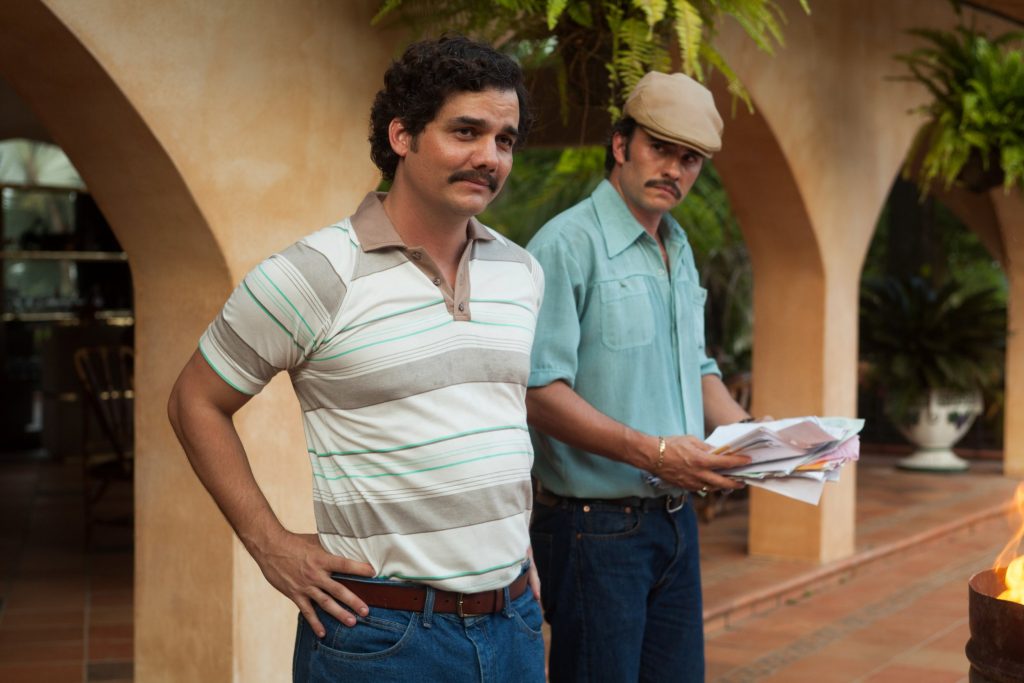
Narcos on Netflix changed everything with the comprehensiveness of a currency revaluation. Moura landed the role of Pablo Escobar, a role that required him to learn Spanish. A language he did not speak. Well enough to portray the most famous Colombian who ever lived without the performance feeling like an imitation. He learned Spanish in approximately one year, with sufficient fluency that Colombian viewers. While occasionally noting his accent, accepted the performance as authentic. The commitment to that linguistic transformation is itself a form of career investment whose returns have been extraordinary.
The Narcos Economics
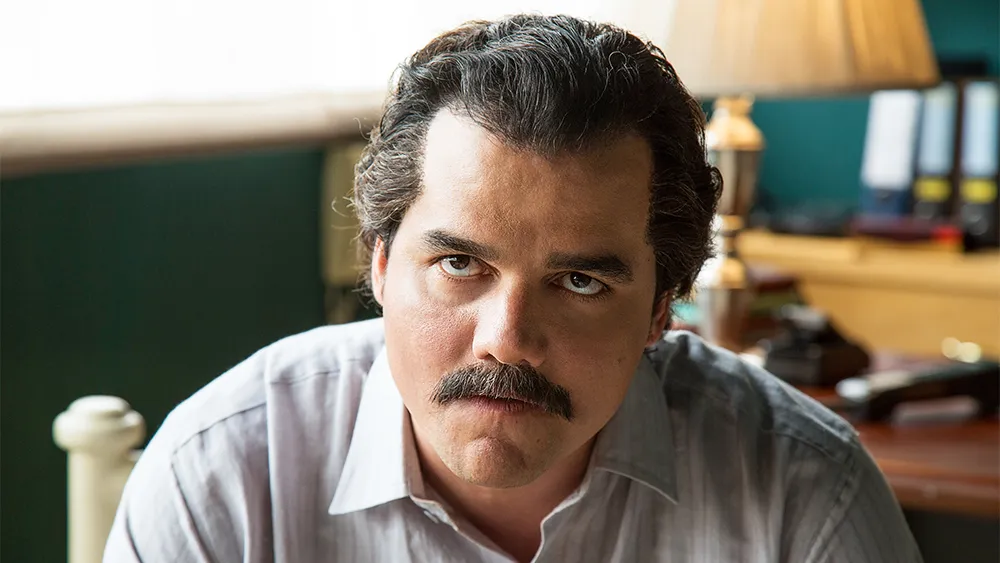
His Narcos compensation reportedly escalated from modest first-season rates to fees in the $150. 000 to $300,000 per episode range for subsequent seasons. That generates total Narcos income of approximately $3 million to $5 million. More importantly, the show made him recognizable to English-speaking audiences and established him as an actor who could anchor a prestige television series. This opened the door to Hollywood film work that his Brazilian career alone could not have accessed.
The Climb

Plot: n the near future, a team of journalists travel across the United States during a rapidly escalating civil war that has engulfed the entire nation.
Ref: LMK110-J10441-150124
Supplied by LMKMEDIA. Editorial Only. Landmark Media is not the copyright owner of these Film or TV stills but provides a service only for recognised Media outlets. pictures@lmkmedia.com
Civil War was the Hollywood film role that completed his crossover. Alex Garland cast him as Joel. A journalist covering the American civil war with an enthusiasm that masks the adrenaline addiction that war correspondents develop as a coping mechanism. The role required Moura to perform in English. His third professional language after Portuguese and Spanish. The performance demonstrated that his abilities translate across languages without diminishing. His directorial debut, Marighella in 2019, showed ambitions that extend beyond acting into filmmaking. Adding a dimension that will eventually generate income from multiple creative positions.
What He Built
Wagner Moura net worth at $8 million reflects a career built across three languages. Two continents. The specific kind of talent that forces industries to expand their definition of who is allowed to participate. The Brazilian film industry could not pay him at Hollywood scale. Netflix could and did. A24 could and did. Each expansion of his market added revenue streams that his early career could not have anticipated. That his talent. Once visible to the global audience, made inevitable.
The Soft Landing
Wagner Moura is forty-nine years old and has achieved something that very few actors in the history of cinema have accomplished: he has built a career across three languages and two film industries without losing credibility in either one. He is respected in Brazil, recognized globally. And positioned for a decade of Hollywood work that will push the $8 million net worth toward figures that reflect the true scope of his talent. He learned Spanish for Escobar. He learned English for Garland. The willingness to learn, to transform, to become whatever the material requires regardless of the language it requires it in. Is the quality that separates Moura from actors whose careers are limited by the single market they were born into. His career has no borders. His net worth will eventually reflect that.
The Deeper Math
Read more about the Civil War cast in our Civil War A24 Cast Net Worth hub, or explore the full A24 Genre Stars Net Worth pillar.
What It Means Now
The linguistic dimension of Moura’s career adds a layer of complexity that most net worth analyses ignore but that profoundly affects his earning potential and his market position. He performs professionally in three languages, Portuguese, Spanish. And English. This means his addressable market includes the entertainment industries of Brazil, Latin America, and the English-speaking world. Very few actors operate across all three markets simultaneously. This gives Moura a competitive position that is virtually uncontested. The economic value of trilingual fluency in the entertainment industry is not additive but multiplicative. The reason: each language opens access not just to that language’s audience but to the production infrastructure. Each director relationships, and the casting networks that operate within each linguistic market.
The Longer Arc

His directorial debut, Marighella in 2019, about the Brazilian revolutionary Carlos Marighella. Signals ambitions that extend beyond acting into content creation and production. The film was controversial in Brazil. Banned initially by political pressure and then released to strong audience response. This gave Moura experience navigating the intersection of art and politics that few directors encounter with their first feature. The controversy itself generated marketing value. The critical response confirmed that Moura’s storytelling instincts. Refined through decades of acting in other people’s films, translate successfully to the director’s chair. Future directing projects will generate income from a different creative position. Adding revenue diversification to a career that is already more structurally complex than most actors achieve in a lifetime.
The Market Signal
The Salvador, Bahia origin adds a cultural dimension that enriches Moura’s screen presence in ways that net worth figures cannot capture. Bahia is the heart of Afro-Brazilian culture, the center of capoeira. Candomblé. The specific rhythmic sensibility that distinguishes Brazilian art from the art of every other South American nation. Growing up in Salvador means absorbing a physical expressiveness, a musicality of movement and speech. That translates to screen performance as a quality that American audiences recognize as compelling even when they cannot identify its source. Moura moves differently from American actors. He speaks differently. He occupies space differently. And that difference, which is cultural rather than trained. Gives his performances a texture that no acting school can replicate. That makes him memorable in every role regardless of the role’s size or significance.
In Perspective
The journalism background that preceded his acting career adds another layer of analytical intelligence to his performances. He does not merely inhabit characters. He investigates them, approaching each role with the same methodological rigor that a journalist brings to a subject. This means his characterizations have a specificity. A groundedness that distinguishes them from performances built on instinct alone. The Escobar portrayal was journalism translated into performance. The Civil War journalist role was journalism performed by a former journalist. Each role benefits from the investigative habit of mind that his abandoned first career instilled. That habit. Applied across three languages and two continents, produces work that is both emotionally immediate and intellectually rigorous.
The Takeaway
The physical transformation for Narcos deserves attention as a career investment with measurable returns. Moura gained approximately 40 pounds to play Escobar. That physical commitment is a form of career capital expenditure. The weight gain made the performance more convincing. The convincing performance made the show more successful. This successful show made Moura more famous. The fame generated Hollywood opportunities. Each link in that chain traces back to the decision to gain weight. The investment was literal pounds. The return was figurative millions.
The Takeaway
His position as the most internationally recognized Brazilian actor of his generation gives him access to a market that is growing faster than any Western entertainment market. Brazilian streaming content is expanding rapidly. Portuguese-language original productions on Netflix, Amazon, and Globoplay command increasing budgets and talent fees. Moura can anchor productions in this market while simultaneously working in English-language films. That dual-market capability means his career has two independent engines of growth. If Hollywood slows, Brazil accelerates. If Brazil plateaus, Hollywood continues. The diversification is geographic rather than generic. And geographic diversification, in entertainment careers as in investment portfolios, is the most reliable hedge against any single market’s volatility.
You are reading this because you already understand something most people scroll right past. The intersection of culture, money, and taste is not a Venn diagram. It is a mirror. Social Life Magazine has spent 23 years holding that mirror up to the people who shape the Hamptons, Manhattan, and the corridors between them. If you see yourself in these pages, we should talk. Reach out at sociallifemagazine.com/contact.
If your brand, your launch, or your personal story belongs in front of 82,000 affluent readers and a digital audience that keeps growing, our editorial features are built for exactly that moment. Learn more at Submit a Paid Feature.
Our email list reaches 82,000 subscribers who actually open, read, and act. If your audience is high-net-worth, culturally engaged, and based between Park Avenue and Montauk, you are already in the right place. Join the list.
Polo Hamptons returns to Bridgehampton this July with 1,200 guests, Getty Images coverage, and seven years of BMW title sponsorship behind it. If your brand belongs in that conversation, visit polohamptons.com.
A print subscription to Social Life Magazine puts 25,000 copies per issue into the boutiques, lobbies, and living rooms where decisions get made, from Westhampton to Montauk every summer and Upper East Side doorman buildings for Fall and Winter. Subscribe at sociallifemagazine.com/subscription.
If this publication has added value to your world and you want to support independent luxury journalism, you can contribute directly at our donation page.
Author

Written by
Recent Posts

Breaking Bad Cast Net Worth. $130 Million Cooked in Five Seasons of Perfect Television

Cailee Spaeny Net Worth — From Springfield, Missouri to A24 and Alien in Three Years Flat

Wagner Moura Net Worth — He Learned Spanish to Play Escobar. Then He Learned English to Take Hollywood.

Robert Eggers Net Worth — He Made a $3.5 Million Film in Puritan English and Hollywood Listened

Brie Larson Net Worth — A $6 Million Indie Film Won Her an Oscar. Marvel Paid Her the Rest.
Categories
- Art
- Articles
- Beauty & Skincare
- Celebrities
- Celebrities|Movies
- Celebrities|The Chronicles
- Chronicles
- Entertainment|Culture
- Event Photos
- Events
- Fashion
- Fashion & Style
- Featured
- Food & Beverage
- Food, Spirits, Wine
- Hamptons
- Hamptons Celebrities
- Hamptons Celebrities|Celebrities|The Chronicles
- Health
- Health & Beauty
- Lifestyle
- Luxury Lifestyle
- Movies|Culture
- Movies|Hamptons Lifestyle
- Press
- Profiles
- Real Estate
- Technology
- The Chronicles
- Travel
- TV
- Uncategorized
- Weddings