
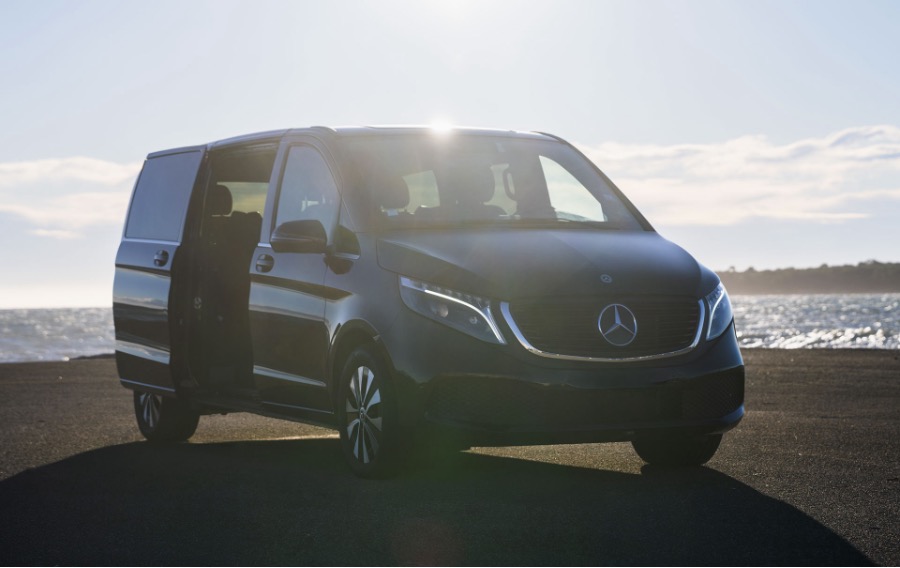
The phrase gets used loosely, “ultra-luxury transport,” slapped on everything from a black sedan to a stretch limousine with a minibar nobody touches. On the French Riviera, where the clientele has genuinely seen it all, the definition narrows considerably. It has less to do with the car’s badge and far more to do with what happens before you ever step into it, and what quietly continues after.
It starts before the wheels touch the ground
For travellers arriving by private jet into Nice or Cannes-Mandelieu, the standard set by the flight itself becomes the benchmark for everything that follows. A driver waiting curbside at general aviation, tracking the aircraft in real time so a delay never becomes a missed pickup, isn’t a nice touch, it’s the baseline expectation. Anything less reads as a downgrade the moment the cabin door opens.
That handoff is where Kingdom Limousines has built its reputation among the Riviera’s regular arrivals, running a fleet that spans Mercedes S-Class sedans and the fully electric EQS through to V-Class vans for larger parties, matched to whichever leg of the trip needs covering, an airport transfer, a full day at the disposal of one client, or a run between Nice, Cannes, Saint-Tropez and Monaco.
What separates the real thing from the imitation
A handful of details tend to give it away:
- A driver who anticipates the schedule rather than simply following the GPS, knowing which corniche to take when the coast road backs up
- Genuine discretion, no idle conversation, no phone out, no assumption that a client wants to talk
- A vehicle presented the same way at the end of a long day as at the start of it, nothing worn, nothing rushed
- Flexibility that survives a change of plan without friction, a dinner reservation moved by two hours, an extra stop nobody mentioned that morning
None of it photographs particularly well, which is exactly the point. The best version of this service is built to be almost invisible, noticed only in its absence, and most travellers only truly register the difference the first time they experience the alternative: a driver running late, a car that smells faintly of the last passenger’s lunch, a route chosen without any thought for the traffic that everyone local already knew to avoid.
Why the Riviera raises the bar higher than most destinations
Geography does a lot of the work here. The coast road between Nice and Saint-Tropez turns into a genuine bottleneck for most of the summer, narrow historic centres in Cannes and Antibes make casual parking close to impossible, and the private aviation crowd landing throughout festival and Grand Prix season expects zero friction between the tarmac and the villa. A driver who knows the back routes around a closure, the exact minute a restaurant’s valet stand opens, or which hotel entrance avoids a queue of tourists isn’t offering convenience so much as removing an entire category of decision from a client’s day.
That local fluency is difficult to buy on short notice. It comes from years spent moving the same clientele between the same handful of addresses, learning the rhythm of a season that repeats itself every June through September with its own private choreography of arrivals, departures and last-minute changes. A driver who has done this for a decade reads a client’s mood on the way to baggage claim and adjusts the pace of the drive accordingly, something no amount of route optimisation software will ever manage on its own.
The part that rarely gets mentioned
Ultra-luxury transport on the Riviera also means the quiet parts: a driver who remembers a client’s preferred temperature without being told twice, water already in the door pocket, a route chosen to avoid a stretch of road a passenger mentioned disliking months earlier. None of it is written into any service agreement. It’s simply what gets remembered and repeated once a relationship with a driver moves past a single booking.
That’s ultimately the distinction worth making. A luxury car gets you from one place to another. Genuine ultra-luxury transport removes the need to think about the journey at all, which, on a coastline built almost entirely around being seen and rarely rushed, might be the single most valuable thing money can quietly buy. It rarely shows up in a photograph, a review, or a caption. It shows up in how relaxed a client still is by the time they reach the front door, which, on the Riviera at least, has quietly become the only metric that matters.
Author

Written by
Recent Posts
How to Pick a Homecoming Dress for Your Body Type and Feel Amazing in It
How to Prepare a Home for Sale When Major Repairs Are Not Affordable
From Everyday Comfort to Personal Style: My SHEIN Slipper Habit
5 Best Mitsubishi Heat Pump Companies in Seattle
Tech Gadgets as Modern Corporate Gifts: Useful Ideas for Employees and Clients
Categories
- Art
- Articles
- Business of Luxury
- Celebrities
- Culture
- Entertainment
- Events
- Faces of Summer 2026
- Fashion
- Fashion & Style
- Featured
- Finance
- Food, Spirits, Wine
- Hamptons
- Hamptons Celebrities
- Health
- Health & Beauty
- Lifestyle
- Luxury Lifestyle
- Press
- Profiles
- Real Estate
- Technology
- The Chronicles
- Travel
- Uncategorized
- Weddings