
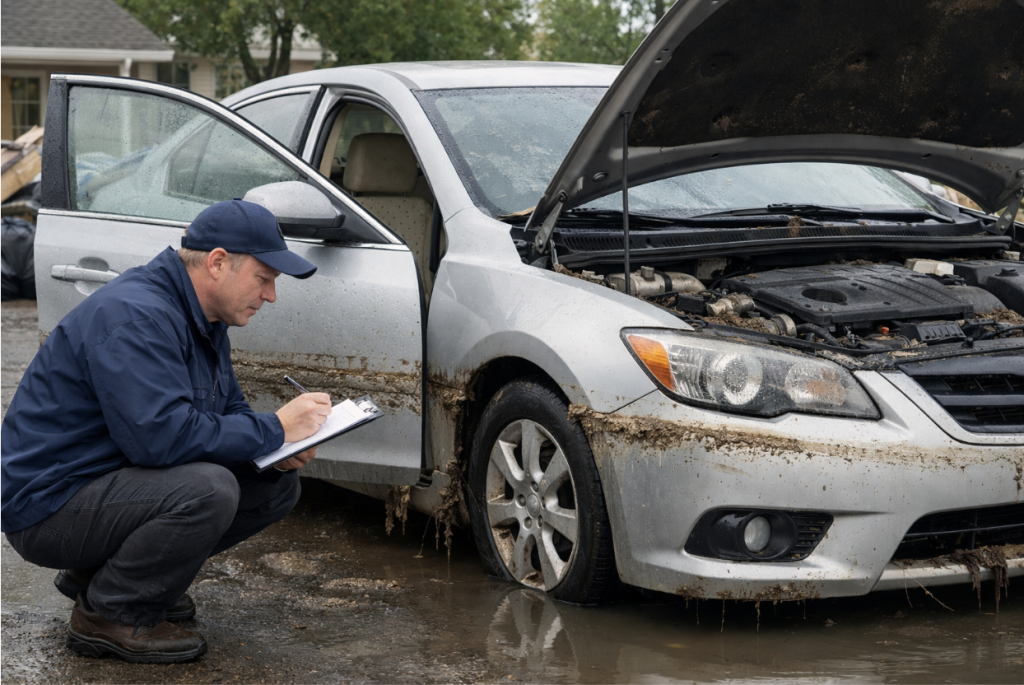
Three feet of water, and your car’s just sitting there. Every hour it stays that way makes things worse — flooding doesn’t stop at ruined upholstery, it eats through wiring and engines quietly, until a car that looked fine yesterday is a total loss today.
It doesn’t matter if the water came from a hurricane, a flash flood, or a creek that finally gave up and jumped its banks; once it’s inside the cabin or under the hood, the clock starts running.
Most people freeze in that first hour, unsure whether to call a tow truck, their insurer, or nobody at all. That hesitation is understandable, but it’s also expensive — the longer a flooded car sits untouched, the more corrosion sets in and the harder it gets to prove exactly what happened for a claim. What you do in the first day matters more than most people realize.
Don’t Turn the Key
Starting the engine is the worst thing you can do to a flooded car. Water sitting in the cylinders causes hydro-lock — the engine turns over, and connecting rods just bend or snap.
Water at the dashboard level? Assume the electrical system’s fried too.
Disconnect the battery if you can reach it safely. Skip the power windows, skip the locks. Let it sit until someone who actually knows flood damage takes a look.
Document Everything First
Insurers move faster when there’s a clear paper trail. Get photos of the water line — outside and in — plus the odometer, the VIN, any mud or debris left in the cabin. Write down the date, the location, and how it happened, whether that’s storm surge, flash flooding, or a levee that gave out.
Save every receipt from towing or emergency storage. A lot of comprehensive policies reimburse those costs, but only if you can prove them.
Sometimes Repair Actually Works
Once water’s above the floorboards, repair rarely pencils out. Below that line, a shop swapping carpet, seats, and a sensor or two might genuinely fix things.
Above the dash, though? Electrical systems, airbags, safety sensors — that’s usually beyond saving.
Get a written estimate, and make sure it’s from someone who specializes in flood damage, not a general mechanic. Once repair costs hit 50-70% of the car’s value, most insurers total it regardless.
Salvage Titles, Explained
A car the insurer declares totaled gets a salvage title. Several states have tightened the rules around these lately, adding inspection requirements before a flood-damaged car can go back on the road.
That title sticks with the vehicle forever and has to be disclosed to whoever buys it next. Good for the buyer, rough for resale value — even a car repaired well loses a lot of its worth once “salvage” is on the paperwork.
If You’re on the Coast, the Math Changes
Living in a storm-surge zone changes the calculation. A car repaired this year could flood again next hurricane season — it’s happened plenty of times. That’s why a lot of coastal owners just cut their losses instead of pouring more money into something that might not survive the next storm.
Rules on flood disclosure and diminished-value claims differ a lot by state, so it’s worth a quick check with your DMV or insurance department before deciding whether to fix it, sell it, or scrap it.
Getting Rid of It the Right Way
Once a car’s totaled, disposal matters — financially and environmentally both. Batteries, fluids, airbag components all need proper handling, which is exactly the kind of thing a reputable buyer takes care of instead of letting it rot in a landfill.
Fast, reliable disposal shouldn’t be one more headache in a bad week. Same-day pickup has gotten pretty common in flood-prone metros, which helps if you just want the thing gone.
In Houston, CashForCars.com runs Houston junk vehicle offers — get a quote, schedule pickup, never move the car yourself.
Know Your Disclosure Obligations
Before you sell or scrap, though, it’s worth a quick look at official guidance on flood-damaged vehicles, just so you know what your state actually requires you to disclose. Skip this and you might end up liable for something you didn’t mean to hide.
Shopping for a replacement instead? Worth understanding how vehicle depreciation actually works before you set a budget — newer isn’t always smarter once you factor in how fast the value drops early on.
And whatever you land on, run a salvage title history check on any used car first. Takes a few minutes, saves you from inheriting someone else’s flood problem.
The Damage Isn’t Always Obvious — Your Decision Shouldn’t Wait
A flooded car often doesn’t show its full hand right away; corrosion and electrical failures tend to show up weeks later. Move fast, document everything, and if the numbers say scrap it over fix it, listen to the numbers.
Did you enjoy learning about what to do with a flood-damaged car? If so, be sure to check out more content from our site.
Author

Written by
Recent Posts
How to Measure Whether a Hair Loss Treatment Is Working
Is Online Psychiatry Covered by Insurance? What to Know Before Booking
Four Habits of Quietly Successful Entrepreneurs

The Most Common Preventable Health Concerns Doctors See Today
What Affects a Rideshare Injury Settlement?
Categories
- Art
- Articles
- Business of Luxury
- Celebrities
- Culture
- Entertainment
- Events
- Faces of Summer 2026
- Fashion
- Fashion & Style
- Featured
- Finance
- Food, Spirits, Wine
- Hamptons
- Hamptons Celebrities
- Health
- Health & Beauty
- Lifestyle
- Luxury Lifestyle
- Press
- Profiles
- Real Estate
- Technology
- The Chronicles
- Travel
- Uncategorized
- Weddings