
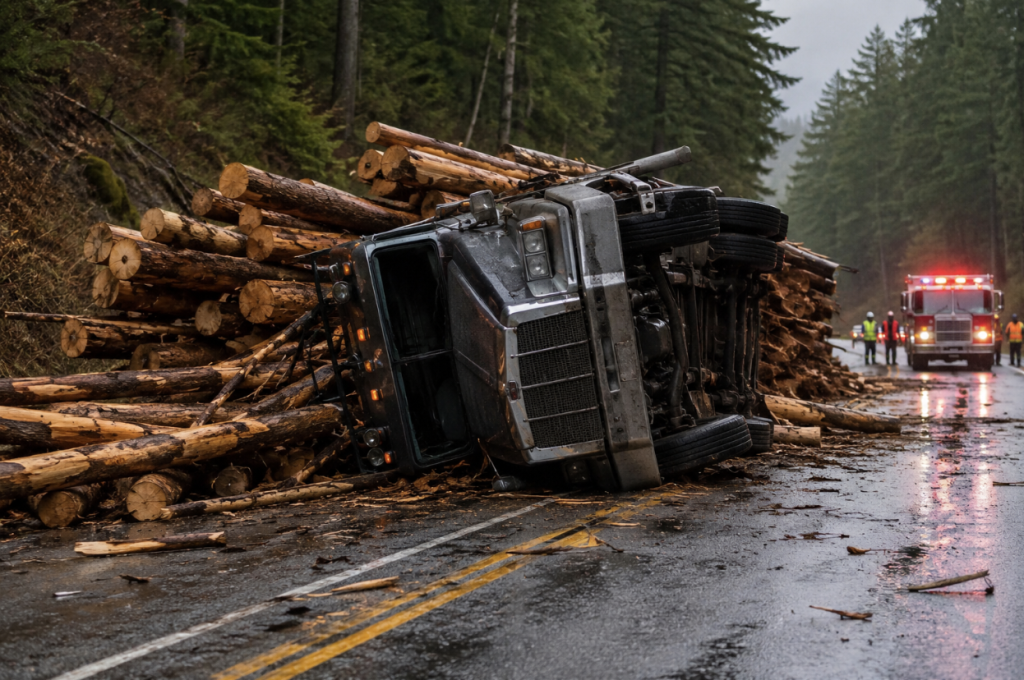
A collision involving a logging truck is not simply another type of commercial vehicle accident. These trucks operate with heavy timber loads, specialized trailers, large braking systems, and routes that may include steep grades, narrow roads, sharp curves, and remote work areas. When something goes wrong, the consequences can be serious for everyone nearby. The legal investigation can also be more complicated than it first appears.
A crash might involve driver conduct, improper loading, defective equipment, inadequate maintenance, company policies, road conditions, or failures by another business involved in the transportation process. That is why identifying the cause of the collision matters before accepting an insurance settlement or assuming that only the truck driver can be held responsible. A careful investigation may uncover several contributing factors and more than one potentially liable party.
The Most Common Causes Behind Logging Truck Collisions
Logging operations create a combination of transportation and cargo-related risks. The truck may be traveling with an extremely heavy load while operating on roads that are less forgiving than major highways. Driver negligence remains one possible cause.
Cargo problems deserve separate attention. Logs must be positioned and secured appropriately, and a problem with the load can affect vehicle stability and create serious hazards during sudden braking or turning.
Other contributing circumstances can include:
- Excessive speed on steep or winding roads.
- Improperly secured or distributed timber.
- Poor vehicle maintenance.
- Driver fatigue or inadequate training.
- Unsafe roadway or weather conditions.
- Defective truck or trailer components.
- Pressure to meet unrealistic delivery schedules.
A strong investigation looks beyond the immediate collision and asks what circumstances allowed the crash to happen.
How Liability Can Extend Beyond the Truck Driver
One of the most important issues in a logging truck claim is determining who actually bears legal responsibility. The answer depends on the facts, applicable state law, employment relationships, contracts, and the evidence collected during the investigation. The trucking or logging company may be responsible for the conduct of an employee driver under applicable principles of vicarious liability. A company could also face direct allegations involving negligent hiring, inadequate training, poor supervision, unsafe scheduling, or insufficient vehicle maintenance.
The person or business responsible for loading the timber may become relevant when an improperly secured load contributes to the collision. A maintenance contractor may also matter if defective repairs or missed maintenance contributed to the crash. In some circumstances, a manufacturer or component supplier can become part of the investigation when a defective part is suspected. Brokers and other transportation businesses may also warrant examination depending on their role in selecting or managing the carrier. This is one reason a Logging truck accident attorney may examine the entire chain of responsibility instead of limiting the case to the driver who was behind the wheel.
Evidence Can Determine the Strength of a Truck Accident Claim
Evidence is especially important in logging truck cases because physical conditions at remote accident locations can change quickly. Weather, road repairs, vehicle removal, cargo relocation, and ordinary cleanup can all affect what investigators are later able to determine. A thorough investigation may involve obtaining accident reports, photographs, witness statements, medical records, trucking documents, maintenance information, driver qualification records, and available electronic vehicle data.
Depending on the circumstances, an attorney may also seek:
- Driver logs and hours-of-service records.
- Inspection and maintenance records.
- Cargo loading documentation.
- Dispatch communications.
- Electronic control module information
- .
- Company policies and training records.
- Truck and trailer inspection records.
- Available surveillance or roadway footage.
- Photographs showing vehicle and cargo conditions.
Prompt evidence preservation can be particularly important when the trucking company or another commercial party controls records that may later become relevant to the claim.
Injuries and Financial Losses Can Extend Far Beyond the Crash Date
The physical impact of a large commercial truck collision can produce injuries that require immediate treatment as well as long-term rehabilitation. The financial consequences may continue long after the vehicles have been repaired or removed from the roadway. Depending on the circumstances and applicable law, compensation may potentially address medical expenses, rehabilitation, lost income, reduced earning capacity, property damage, and certain non-economic losses.
What an Attorney Actually Investigates in a Logging Truck Case
A qualified truck accident lawyer does more than review the police report and send a demand letter to an insurance company. The investigation should attempt to reconstruct what happened before, during, and after the collision. That may require reviewing physical evidence, interviewing witnesses, analyzing photographs, examining vehicle damage, and consulting specialists when the technical issues warrant it.
Accident reconstruction can help establish vehicle movements and collision dynamics. A trucking or transportation specialist may help evaluate operational practices.
Insurance Companies May Focus on Their Exposure, Not Your Future
After a serious commercial truck collision, an insurer may contact an injured person quickly. That does not automatically mean the proposed settlement reflects the full value of the claim. Insurance decisions are based on policy terms, liability evidence, damages, medical documentation, and other factors. A premature settlement can become a problem when additional treatment or future financial losses emerge later.
A Practical Comparison of the Main Liability Questions
| Investigation Issue | What It May Reveal | Potentially Relevant Party |
| Driver conduct | Speed, distraction, fatigue, unsafe maneuver | Driver or employer |
| Cargo securement | Improper loading or inadequate restraints | Loader, carrier, or other responsible party |
| Vehicle maintenance | Missed inspections or defective repairs | Carrier or maintenance provider |
| Mechanical defect | Component failure | Manufacturer or supplier |
| Company practices | Hiring, training, supervision, scheduling | Trucking/logging company |
| Road conditions | Dangerous design or maintenance issue | Potentially responsible roadway entity |
| Insurance coverage | Additional applicable policies | Insurers and covered parties |
This framework is not a determination of liability. Each collision requires a fact-specific investigation under the laws governing the claim.
Steps That Can Protect Your Claim After a Serious Collision
The first priority after a crash is medical care and personal safety. Once immediate medical needs are addressed, preserving information can become important. If it is safe and practical, photographs of the vehicles, roadway, signs, surrounding conditions, and visible cargo can provide useful documentation. Witness contact information should also be preserved. Keep medical records, bills, prescription information, employment documentation, and correspondence connected with the collision. Avoid guessing about fault when speaking with insurers or other parties.
Choosing Legal Help for a Complex Commercial Truck Claim
Experience with ordinary car accidents does not necessarily mean an attorney regularly handles complex commercial trucking litigation. A serious logging truck claim may require knowledge of trucking regulations, cargo securement, commercial insurance, evidence preservation, accident reconstruction, and multiple-party liability.
When evaluating an attorney, look for someone who can explain how they would investigate the collision rather than simply promising a particular financial result. Ask how evidence will be preserved, which parties may need investigation, how commercial insurance coverage will be evaluated, and what experts may be necessary. Clear answers to those questions can tell you much more than a generic promise of aggressive representation.
Conclusion
A logging truck collision can leave an injured person dealing with medical treatment, lost income, property damage, uncertainty about the future, and an insurance process that may feel overwhelming. The legal issues can be just as complicated as the physical consequences because responsibility may extend beyond the person driving the truck. The strongest claims are built on evidence.
Understanding how the truck was operated, how the timber was loaded, whether the vehicle was properly maintained, what the company knew, and which parties controlled critical decisions can make a significant difference in determining liability. If you or someone close to you has been seriously injured in a logging truck collision, getting timely legal guidance can help preserve evidence and clarify your available options before important deadlines or evidence problems arise.
Author

Written by
Recent Posts

Nino’s Beach Brings Generations of Italian Hospitality to the Port Washington Waterfront

The Self-Made Man Who’s One Phone Call From Ruin

Everyone Out Here Is Loaded. Nobody Feels Rich.

What to Do When Illness Threatens a Trip You Already Paid For
How Independent Watch Brands Are Challenging Traditional Luxury
Categories
- Art
- Articles
- Business of Luxury
- Celebrities
- Culture
- Entertainment
- Events
- Faces of Summer 2026
- Fashion
- Fashion & Style
- Featured
- Finance
- Food, Spirits, Wine
- Hamptons
- Hamptons Celebrities
- Health
- Health & Beauty
- Lifestyle
- Luxury Lifestyle
- Press
- Profiles
- Real Estate
- Technology
- The Chronicles
- Travel
- Uncategorized
- Weddings