
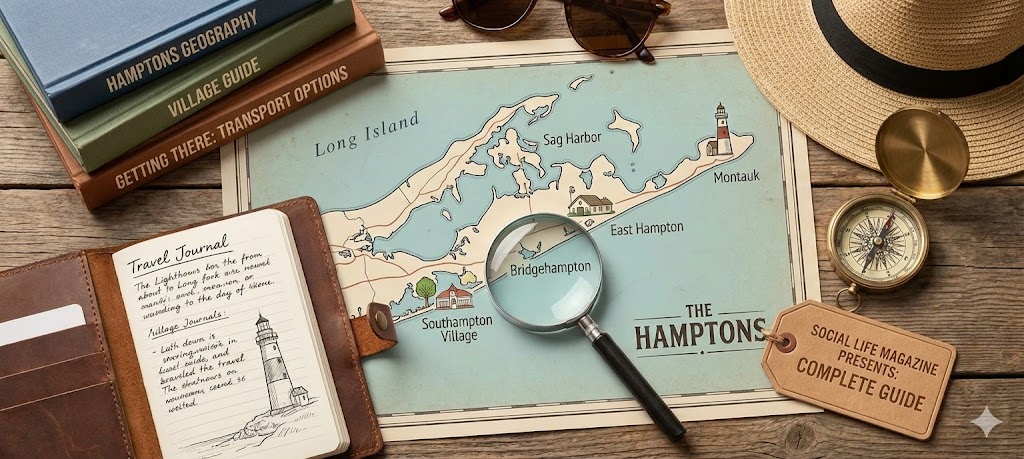
The question “where are the Hamptons” reveals more than geography. It exposes the invisible boundaries, social hierarchies, and quiet rivalries that define one of America’s most storied summer destinations. The Hamptons isn’t a town. It isn’t a county. It’s a collection of villages and hamlets spread across Long Island’s South Fork, each with its own character, price point, and unwritten rules.
Understanding where the Hamptons actually sits on a map is the first step to understanding everything else: why certain addresses command premium prices, why locals never leave their Hampton, and why the 30-mile stretch from Westhampton to Montauk contains more social complexity than most people realize. For those considering property purchases, our Hamptons Real Estate Guide provides comprehensive market analysis.
Where Are the Hamptons Located?
The Hamptons occupy the South Fork of Long Island’s eastern tip, roughly 80 to 130 miles from Manhattan depending on your destination. To visualize the location, imagine Long Island splitting into two fingers at its eastern end. The northern finger is the North Fork, known for vineyards and a more agricultural character. The southern finger is the South Fork, home to the Hamptons.
Geographically, the Atlantic Ocean borders the south. Peconic Bay and Shelter Island sit to the north. This dual-water access creates the dramatic oceanfront beaches and protected bay harbors that define the region’s appeal. According to historical records, the area maintained strong commercial ties to New England, which explains why the architecture resembles Connecticut more than the rest of Long Island.
The Two-Township Structure
Here’s what confuses newcomers: The Hamptons consist of exactly two townships, the Town of Southampton and the Town of East Hampton. These administrative umbrellas contain all the villages and hamlets that carry the Hamptons mystique. Southampton Town covers the western portion. East Hampton Town extends east to Montauk Point.
This structure matters for property taxes, zoning laws, and the subtle distinctions locals use to categorize each other. Southampton tends toward old money discretion. East Hampton leans toward visible celebrity.
The Hamptons Villages and Hamlets Explained
Each community within the Hamptons carries distinct personality. Moving west to east, the progression tells a story of shifting priorities and aesthetics.
Southampton Village
Southampton Village represents the Hamptons’ oldest and most established community. Founded in 1640 by English colonists from Massachusetts, it predates East Hampton by eight years. The village is synonymous with old money discretion. Gin Lane and Meadow Lane contain estates hidden behind hedgerows so tall you cannot see street numbers. If you don’t know where you’re going, you don’t belong.
The village center offers upscale shopping along Jobs Lane and Main Street. Parrish Art Museum anchors the cultural scene. Cooper’s Beach consistently ranks among America’s best beaches. Private clubs like The Bathing Corporation of Southampton and Meadow Club define the social hierarchy. For more on club culture, see our guide to Hamptons beach clubs.
Bridgehampton
Bridgehampton sits at the psychological midpoint of the Hamptons, straddling conservative Southampton wealth to the west and look-at-me East Hampton energy to the east. The hamlet has historically attracted artists and writers. Its Main Street retains more local character than neighboring villages, with longtime establishments alongside newer arrivals.
Bridgehampton also hosts Polo Hamptons, the region’s signature sporting and social event, at 900 Lumber Lane.
Sagaponack
Sagaponack regularly appears on lists of America’s most expensive zip codes. The tiny village, with a year-round population under 600, combines agricultural heritage with oceanfront mega-estates. Potato farms still operate alongside properties valued in the tens of millions. This juxtaposition defines the Hamptons’ peculiar economy.
East Hampton Village
National Geographic once called East Hampton “America’s Most Beautiful Village,” a fact Southampton residents have neither forgiven nor forgotten. The village draws media and entertainment figures who want to be seen. Steven Spielberg, Martha Stewart, and a rotating cast of celebrities maintain homes here.
Main Street runs four lanes wide, lined with luxury boutiques from Prada to Ralph Lauren. Guild Hall provides cultural programming. The Maidstone Club anchors the private club scene with waitlists measured in years.
Sag Harbor
Sag Harbor functions as the anti-Hampton. This proper village, shared between Southampton and East Hampton townships, operates year-round with permanent residents, working restaurants, and a walkable downtown. Once a major whaling port mentioned in Herman Melville’s “Moby Dick,” Sag Harbor retains authentic character while attracting visitors who consider themselves too sophisticated for the Hamptons’ flashier villages.
The American Hotel, an indie movie theater, and restaurants that survive past Labor Day give Sag Harbor a distinctly different atmosphere.
Amagansett
Amagansett attracts a creative and slightly bohemian crowd. The hamlet offers excellent beaches, including Indian Wells Beach, and a downtown with coffee shops and boutiques that feel less manicured than East Hampton. Many residents prefer the slightly lower-key atmosphere while maintaining proximity to East Hampton’s amenities.
Montauk
Montauk represents the end of the line, literally. At Long Island’s easternmost point, Montauk maintains a rugged, windswept character that feels more like coastal Maine than the manicured Hamptons. Surfers, fishermen, and younger visitors favor Montauk’s laid-back energy. The lighthouse at Montauk Point has operated since 1796.
Montauk’s real estate market runs cooler than villages to the west, though that gap has narrowed significantly in recent years.
How to Get to the Hamptons from New York City
The journey to the Hamptons is part of the experience. Your transportation choice signals something about your priorities, budget, and tolerance for the infamous Friday afternoon traffic.
Driving to the Hamptons
Most visitors drive. Take the Long Island Expressway (I-495) to Exit 70, then Route 27 (Sunrise Highway, which becomes Montauk Highway) east. The distance from Manhattan to Southampton is approximately 90 miles. To Montauk, add another 40 miles.
Under ideal conditions, expect two to two-and-a-half hours to Southampton. However, conditions are rarely ideal. Friday afternoon traffic can triple drive time. The road narrows from four lanes to two at Hampton Bays, creating a bottleneck that backs up for miles on summer weekends.
Traffic Strategy: Leave Thursday evening, Friday morning before 10 AM, or Friday after 8 PM. Return Sunday evening after 7 PM or Monday morning. These windows avoid the worst congestion.
Long Island Rail Road (LIRR)
The LIRR Montauk Branch runs from Penn Station through the Hamptons to Montauk. Travel time to Southampton is approximately two hours. To East Hampton, add another 20 minutes.
The train offers predictability that driving cannot match. You know exactly when you’ll arrive regardless of road conditions. The summer “Cannonball Express” offers limited-stop service on Fridays, departing Penn Station at 4:06 PM.
Cost: $20 to $29 each way depending on destination and time. Buy tickets before boarding for the lowest rate.
Hampton Jitney
The Hampton Jitney has transported New Yorkers to the Hamptons for decades. These coach buses depart from multiple Manhattan locations along Lexington Avenue and Third Avenue, dropping passengers throughout the Hamptons.
Travel time runs approximately 2.5 to 3.5 hours depending on traffic and stops. Buses offer WiFi, power outlets, and onboard attendants. The Ambassador class provides extra legroom and complimentary refreshments.
Cost: $30 to $45 one way. Book online for lower rates than on-board purchases.
Helicopter and Seaplane
For those prioritizing speed over cost, Blade offers helicopter service from Manhattan heliports to East Hampton in approximately 40 minutes. Seaplane services provide similar travel times with water landings.
Cost: $500 to $1,000+ per person one way. The price eliminates traffic entirely and positions you for maximum weekend time.
The Hamptons vs. The North Fork
First-time visitors sometimes confuse the Hamptons with the North Fork. They are different places with different characters.
The North Fork, encompassing towns like Southold, Greenport, and Cutchogue, emphasizes wine country and agricultural tourism. Over 50 wineries operate there. The atmosphere trends quieter and less ostentatious than the Hamptons. Real estate costs less. Celebrity density runs lower.
The Hamptons, on the South Fork, emphasize beach culture, social events, and the particular brand of luxury that attracts media coverage. Both regions occupy Long Island’s East End, but they serve different purposes and attract different crowds.
Best Time to Visit the Hamptons
The Hamptons operate on a seasonal rhythm that shapes everything from restaurant hours to traffic patterns. Check our Hamptons Events Calendar for specific dates and social season highlights.
Memorial Day to Labor Day: Peak season. Everything is open, everyone is present, prices are highest, and reservations require advance planning. This is the Hamptons most people imagine.
September to October: Shoulder season offers pleasant weather, reduced crowds, and many restaurants still operating. The water remains warm enough for swimming into early October.
November to April: Off-season. Many restaurants and shops close or reduce hours significantly. The region feels almost abandoned compared to summer. However, accommodations cost a fraction of summer rates, and you can actually get a dinner reservation.
May: Pre-season. The Hamptons wake up as establishments prepare for Memorial Day. Weather can be unpredictable, but you’ll beat the crowds.
First-Time Visitor Itinerary
For those asking “where are the Hamptons” because they’re planning a first visit, here’s how to experience the region efficiently:
Day 1: Arrive in Southampton. Walk Jobs Lane and Main Street. Visit Cooper’s Beach. Dinner in the village at one of the best Hamptons restaurants.
Day 2: Drive to Sag Harbor for coffee and morning browsing. Continue to East Hampton for lunch and Main Street shopping. Afternoon at one of East Hampton’s beaches.
Day 3: Montauk day trip. Visit the lighthouse, explore the town, have seafood at one of the fishing-oriented restaurants. Return west for sunset drinks.
This itinerary provides exposure to the Hamptons’ range of personalities without exhausting yourself driving the full length repeatedly.
Understanding Hamptons Geography Matters
Knowing where the Hamptons are located is more than trivia. The geography shapes real estate values, social dynamics, and the practical logistics of any visit. Southampton’s old money discretion differs from East Hampton’s celebrity visibility. Montauk’s rugged coastline offers different experiences than Sag Harbor’s protected bay. Each village and hamlet exists for a reason, attracts a specific crowd, and operates by particular unwritten rules.
The 30-mile stretch from Southampton to Montauk contains multitudes. Understanding the map is the first step to understanding everything else.
For those planning extended stays, explore our guide to Hamptons summer rentals. For more on Hamptons lifestyle and events, explore Social Life Magazine, the region’s premier luxury publication since 2002.
Plan Your Hamptons Visit
Explore Hamptons Summer Rentals: View Rental Guide
Discover Hamptons Restaurants: View Dining Guide
Polo Hamptons VIP Experiences: Visit Polo Hamptons
Join Our Hamptons Insider Email List: Subscribe Here
Social Life Magazine Print Subscription: Subscribe Today
Support Hamptons Luxury Lifestyle Coverage: Donate $5 to Social Life Magazine
Related Articles
Explore The Archive for more Hamptons travel and lifestyle guides.
Author

Written by
Recent Posts

James Franco Net Worth — A $30 Million Career Interrupted

Selena Gomez Net Worth — How a Disney Kid Built a $1.3 Billion Empire

Spring Breakers A24 Cast Net Worth — Disney Kids Gone Dangerous

Women’s History Month
Must-Have Items for Your Wedding Gift Registry
Categories
- Art
- Articles
- Beauty & Skincare
- Celebrities
- Celebrities|Movies
- Celebrities|The Chronicles
- Chronicles
- Culture|Television
- Entertainment|Culture
- Event Photos
- Events
- Fashion
- Fashion & Style
- Featured
- Food & Beverage
- Food, Spirits, Wine
- Hamptons
- Hamptons Celebrities
- Hamptons Celebrities|Celebrities|The Chronicles
- Health
- Health & Beauty
- Lifestyle
- Luxury Lifestyle
- Movies
- Movies|Culture
- Movies|Hamptons Lifestyle
- Press
- Profiles
- Real Estate
- Technology
- The Chronicles
- Travel
- Uncategorized
- Weddings