
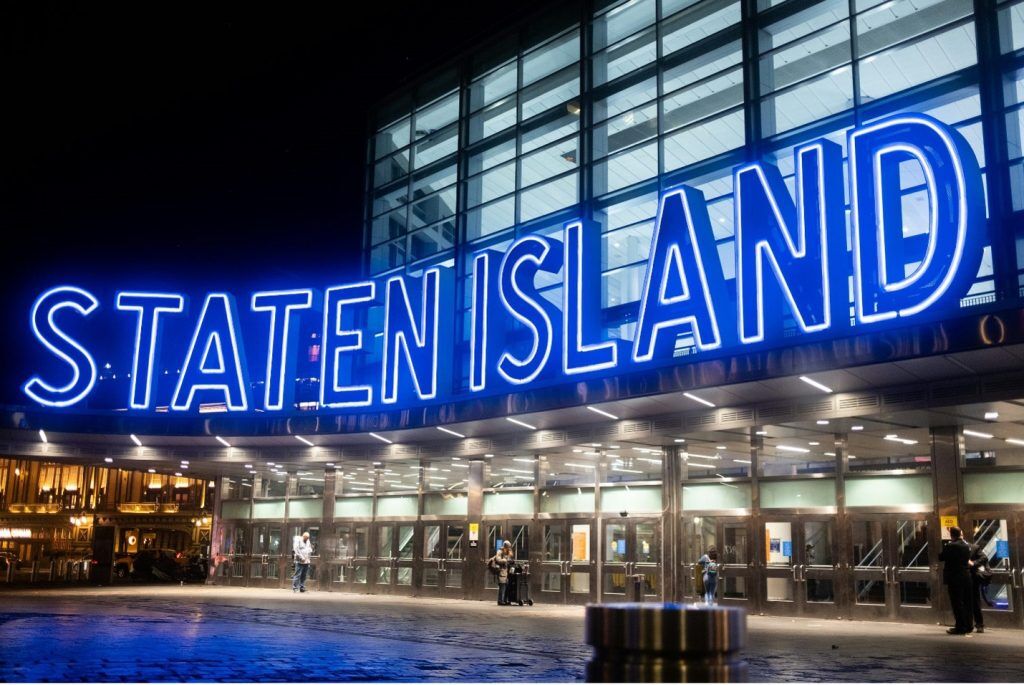
Staten Island may be known for its tight-knit communities and suburban feel, but when it comes to homeownership, it stands out as New York City’s most transient borough.
A recent analysis by PropertyShark reveals that in 2025, homeowners in Staten Island sold their properties after an average of just 6.5 years. This is the shortest homeownership tenure in the city, far shorter than the nearly 13 years seen in the Bronx and Queens. Citywide, the average homeowner stays in their property for about 10.9 years, making Staten Island’s turnover particularly fast in comparison.
This high turnover rate isn’t due to instability, but rather is shaped by the types of buyers moving to Staten Island and their reasons for doing so. Much of the borough’s housing stock is made up of single-family homes and small multifamily units, which attract first-time buyers who have been priced out of other boroughs. For these buyers, however, the move to Staten Island is often considered a temporary step rather than a permanent one.
“Staten Island’s neighborhoods are largely composed of single-family homes and smaller multifamily homes. These properties are attractive to first-time buyers because they are more affordable and offer easy access to Manhattan,” says Adjina Dekidjiev, a seasoned New York City broker with Coldwell Banker Warburg.

Despite the relative affordability, many buyers view these homes as transitional.
“Buyers tend to outgrow these homes quickly as their families expand. They usually end up moving to larger homes, often in New Jersey or Long Island,” Dekidjiev explains.
Income levels also play a key role. Staten Island households earn more than twice the median income of households in the Bronx, which gives residents more financial flexibility to relocate sooner. In contrast, lower-income areas like the Bronx often see residents staying put, as selling would not significantly improve their housing options.
Doug Ressler, business intelligence manager at Yardi Matrix (which works with PropertyShark), explains that in boroughs with longer homeownership tenures, many homeowners are “equity-rich” and have little incentive to move. On Staten Island, however, the relative affluence of its residents makes it easier to relocate.
The type of housing in Staten Island also contributes to this high turnover. Detached homes, which dominate the borough’s market, generally change hands more frequently than co-ops, which are more common in areas like the Bronx and parts of Manhattan.

“Staten Island is a house-driven market, not a co-op market. Detached homes tend to change hands more often because buyers in this segment are more likely to move than those purchasing long-term co-ops,” says Nathan Richardson, founder of CashForHome.com.
Richardson also points out that many buyers moving to Staten Island do not plan to settle there permanently. “A large portion of buyers are families from Brooklyn or Queens who are looking for more space and testing out the commute. They often upgrade or move to another area within a few years, which keeps the sales cycle going,” he says.
Investor activity further contributes to the turnover. As property values rise and neighborhoods improve, real estate investors, including flippers and small landlords, are increasingly active, which shortens ownership durations.
“Staten Island is at a unique crossroads where property prices are climbing, neighborhoods are improving, and investors are circling. This combination creates churn, as first-time buyers, small landlords, and flippers all sell once they’ve gained some equity,” says Richardson. “When PropertyShark tracks homeownership tenure, each investor flip or LLC transfer counts as a short-term ownership period, making the borough appear more transient than it actually is.”

Migration trends also influence the borough’s turnover. Jeff Lichtenstein, CEO and broker at Echo Fine Properties in Palm Beach, Florida, says that Staten Island residents are leaving New York at a higher rate than people from other boroughs.
“We’re seeing more people moving from Staten Island than from other parts of New York,” Lichtenstein says. “Many are relocating to Florida for political reasons. One recent buyer told me, ‘I’m moving to Florida because of politics.’ Staten Island’s more conservative political climate seems to be motivating people to seek out life in the ‘free state of Florida,’ a trend we don’t see as often with residents from Manhattan.”
As Staten Island’s homeownership turnover continues to rise, so does the need for moving services. Whether people are moving to Staten Island or relocating elsewhere, the borough’s quick property turnover means many buyers and sellers rely on professional movers to handle the complexities of relocating. In a borough like Staten Island, where the real estate market is constantly shifting, it’s not just about the properties themselves; it’s about the constant flow of people. Movers Not Shakers, offering expert moving services in Staten Island, is a reflection of this dynamic movement, helping to keep the housing market fluid and ever-changing.
Author

Written by
Recent Posts

Chris Pontius Net Worth: The Man Who Survived Being Himself

Sandy Mahl Net Worth: The Woman Behind Garth Brooks Who Chose Silence

Tracey Walter Net Worth: The $3M Career Hidden in 200 Films

Stanley Livingston Net Worth: The $2M Exit Nobody in Hollywood Studied

Telma Hopkins Net Worth: The $4M Career Pivot Nobody Studied
Categories
- Art
- Articles
- Beauty & Skincare
- Celebrities
- Celebrities|The Chronicles
- celebrities|the-archive
- Chronicles
- Event Photos
- Events
- Fashion
- Fashion & Style
- Featured
- Food & Beverage
- Food, Spirits, Wine
- Hamptons
- Hamptons Celebrities
- Hamptons Celebrities|Celebrities|The Chronicles
- Health
- Health & Beauty
- Lifestyle
- Luxury Lifestyle
- Press
- Profiles
- Real Estate
- Technology
- The Chronicles
- Travel
- Uncategorized
- Weddings