
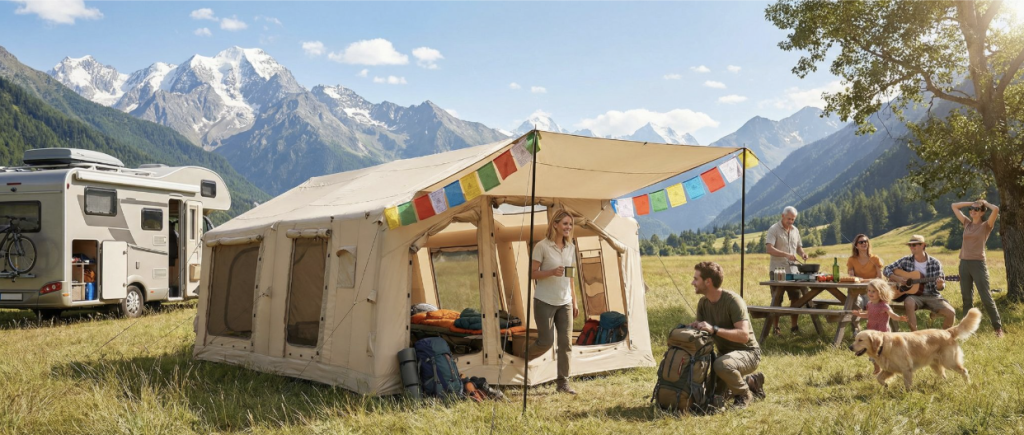
A good outdoor gathering does not always need a packed schedule. For a Hamptons weekend gathering, or any outdoor setting that needs to balance social time with an overnight stay, what people remember may be the evening light, a few comfortable chairs, a simple dinner, or a conversation that does not feel rushed. When camping becomes a way to gather for the weekend, tent space is no longer just a gear decision. It shapes the rhythm and atmosphere of the entire gathering.
When planning an outdoor gathering, many people think first about food, drinks, lighting, tables, and seating. But if the tent space is not planned well, jackets, bags, and small personal items can quickly take over the entrance and rest area. When the night gets cooler and activity moves from outside to inside, the experience can turn into constant tidying and making room. A tent for this kind of setting is not about turning the outdoors into an indoor room. It is about making the shift between resting, talking, organizing, and sleeping feel more natural.
Outdoor Gatherings Need More Than Seating
Many weekend gatherings look well prepared at first: enough chairs, enough food, and lighting in place. But in actual use, the issues often appear beyond the seating area. Where do guests put their bags? Should jackets come inside when the evening cools down? If someone wants to rest for a while, can other people still keep talking? These details directly affect how comfortable the campsite feels.
If the tent is only a sleeping area, there is little buffer between shared activity and personal rest. When the temperature drops, the wind picks up, or someone needs to step away from the group for a short time, the campsite needs a space where people can pause, organize, and settle down. In a social camping setting, the tent does not need to handle every activity, but it should create a more natural transition between conversation and rest.
For outdoor settings that need to support both gathering and overnight use, inflatable tents matter for more than reducing some traditional pole-assembly steps. What matters just as much is whether the finished space can naturally hold jackets, personal items, short rests, and nighttime use. If these needs are not all pushed into the entrance or sleeping area, the tent can better support the comfort of the gathering.
The Shared Area Shapes How Relaxed the Gathering Feels
Outdoor entertaining often loses its relaxed feeling not because there are too many people, but because every function is pushed into the same place. The entrance has to hold shoes and bags. Jackets and snacks end up next to the sleeping area. Someone wants to rest, while another person is still looking for cups or lights. Without clear boundaries, people have a harder time feeling at ease.
A campsite designed for outdoor entertaining needs a clear shared area. It does not have to be complicated, but guests should understand where to sit and talk, where temporary items go, and where the quieter area begins. That way, the gathering is not interrupted by every small adjustment, and the sleeping area is not taken over by daytime items.
For a weekend with several people, a tent with an extended shared space can fit this rhythm more naturally. ZONKOO Draco Plus is a straightforward example among large inflatable tents for camping. The main tent supports sleeping, changing clothes, and organizing personal items, while the Gazebo extension leaves a separate area for dining, resting, and shared activity. Its 252 sq ft of usable space keeps public gathering and private rest from being pushed into the same zone.
Tent Space Also Shapes the Pace of the Gathering
Whether a hosted outdoor weekend feels comfortable depends not only on how it looks at the start, but also on how smoothly it moves from day into night. In the afternoon, people may be drinking, talking, and organizing outdoor items outside the tent. As the evening gets cooler, some things need to come inside. Later, some guests may want to keep talking while others are ready to rest. If the tent has no spare room, these transitions can feel awkward.
Good tent space should allow different rhythms to happen at the same time. Some people can keep sitting outside, while others return to the tent to change clothes or rest. Cups, blankets, lights, and bags after dinner do not all have to be piled into the sleeping area. By night, the tent can return more quickly to a space that feels ready for rest.
For this kind of gathering, good tent space should help afternoon conversation, evening dining, and nighttime rest move naturally from one stage to the next. It should not require the campsite to be reorganized every time the mood changes. A large space without clear use can still become messy, while a moderate space with clear areas can feel much easier to enjoy.
Hosts Should First Picture How the Gathering Will Unfold
Many people start by looking at sleeping capacity, setup time, and waterproof ratings when choosing a tent. These details are useful, but for a friends’ gathering, family weekend, or small overnight gathering, they are not enough on their own. A more practical approach is to think like the host and picture how the gathering will unfold.
Where will guests put jackets and personal items after they arrive? After dinner, will people who want to keep talking disturb those who are getting ready to rest? If the weather changes, is there enough space for the gathering to continue without feeling rushed or disorganized? If these questions have clear answers, the tent is more likely to fit the setting.
For a scene that needs to balance social time with overnight use, whether an inflatable tent house truly works is not about how much it looks like an outdoor room. The key is whether it can shift naturally into a space for rest and sleep after the gathering winds down. The clearer the space is, the less the host has to keep tidying just to maintain the atmosphere.
Good Outdoor Entertaining Should Still Feel Easy
The appeal of an outdoor gathering is not in making the outdoors look overly polished. It is in stepping away from a fixed indoor routine for a while. People can talk in natural light, take their time over dinner in the evening, and enjoy the weekend without following a formal script. Tent space helps keep that ease from being interrupted by clutter and last-minute adjustments.
When every item has a place, shared areas and rest areas do not interfere with each other, and the setup can adjust when the weather changes, a weekend gathering feels more like a real outdoor get-together and less like a task that needs constant management.
The right tent space for social use ultimately serves the people, not the gear. It gives the gathering room to unfold and gives each person somewhere to step back when needed. When the space is planned with care, outdoor living feels more natural, comfortable, and well-balanced.
Author

Written by
Recent Posts
How to Prepare a Home for Sale When Major Repairs Are Not Affordable
From Everyday Comfort to Personal Style: My SHEIN Slipper Habit
5 Best Mitsubishi Heat Pump Companies in Seattle
Tech Gadgets as Modern Corporate Gifts: Useful Ideas for Employees and Clients
Simple Ways to Maintain Your Energy During a Busy Week
Categories
- Art
- Articles
- Business of Luxury
- Celebrities
- Culture
- Entertainment
- Events
- Faces of Summer 2026
- Fashion
- Fashion & Style
- Featured
- Finance
- Food, Spirits, Wine
- Hamptons
- Hamptons Celebrities
- Health
- Health & Beauty
- Lifestyle
- Luxury Lifestyle
- Press
- Profiles
- Real Estate
- Technology
- The Chronicles
- Travel
- Uncategorized
- Weddings