
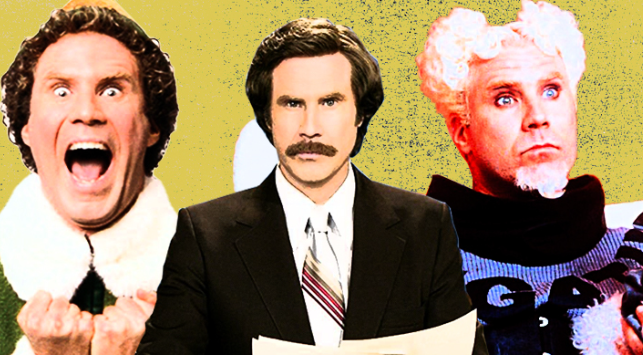
The night before his last day at Saturday Night Live, Will Ferrell walked through Studio 8H alone. Fourteen years earlier, he’d been a twenty-eight-year-old nobody from Irvine with no acting credits and a desperate need to prove he belonged somewhere. Now he was leaving as arguably the most successful cast member in the show’s history. He stood on the empty stage where he’d played George W. Bush, Alex Trebek, and a man in a hot tub for some reason. Then he went home and wondered if anyone would remember him in five years.
They remembered. Today Will Ferrell is worth $160 million, co-owns a production company that shaped modern comedy, and still wrestles with the same insecurity that drove him to make strangers laugh in Orange County strip mall comedy clubs. The money hasn’t fixed the wound. It just made it more expensive to maintain.
Will Ferrell Net Worth 2025: The Irvine Kid Nobody Noticed
Roy Lee Ferrell Sr. played saxophone in the Righteous Brothers’ band. Betty Kay taught at a junior high school. They raised Will and his younger brother Patrick in Irvine, California, the planned suburban community where everything looked perfect and nothing felt real. Then Roy left when Will was eight.
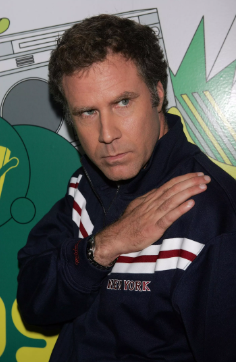
Divorce in the 1970s carried stigma. Irvine was full of intact nuclear families, station wagons in driveways, fathers who came home for dinner. Will became the kid with the weird situation, the boy whose dad was a musician somewhere else, the one who learned early that making people laugh was the fastest way to deflect questions about why his family looked different.
The Class Clown’s Protection
At University High School, Will discovered that humor was armor. The tall, awkward kid with the divorced parents became the guy who would do anything for a laugh. He ran for senior class president on a platform of total absurdity. Teachers didn’t know what to make of him. Classmates adored him. Nobody got too close.
His childhood friend described it to Rolling Stone years later: Will was always performing, always on, always deflecting anything real with something ridiculous. The comedy wasn’t just entertainment. It was a wall.
The Chip That Drove Everything
After graduating from USC, Will worked as a hotel bellhop, credit card telemarketer, and mall kiosk salesman. Meanwhile, he performed at The Groundlings, the legendary improv theater where actors wait years for a slot. The night classes. The open mics. The constant rejection. He kept showing up.
Most aspiring comedians quit after two years. Will stayed for three, then four, slowly moving from the Sunday company to the main stage. The persistence came from somewhere deeper than career ambition. This was a man trying to prove that being different, being from a broken home, being the weird tall kid, could actually be an asset.
Saturday Night and Everything After
Saturday Night Live recruited Will in 1995. For the first season, he mostly played background characters. The breakthrough came with his impression of George W. Bush during the 2000 election, a portrayal so iconic it shaped how America saw its president. Suddenly the kid from Irvine was setting the national conversation.
According to The New York Times, Ferrell’s SNL tenure represented a shift in how the show used physical comedy. His willingness to be absurd, vulnerable, and completely committed to ridiculous premises opened doors for a generation of performers who followed.
The Rise That Built an Empire
Elf made $220 million. Anchorman became a cultural phenomenon. Talladega Nights and Step Brothers cemented his status as the decade’s most bankable comedy star. Each role featured the same archetype: the oblivious man-child who succeeds through sheer commitment to his delusions. The character was fiction. The commitment was autobiography.
In 2007, Ferrell co-founded Funny or Die with Adam McKay and Chris Henchy. The digital platform launched with a viral video of Ferrell threatening a toddler and quickly became essential comedy infrastructure. When traditional studios hesitated on projects, Funny or Die provided creative freedom. The platform spawned Between Two Ferns and launched countless careers.
The Business Behind the Buffoon
Few realize how sophisticated Ferrell’s business operations became. His production company, Gary Sanchez Productions, developed content for multiple platforms. Bloomberg reported that the combined enterprises generated hundreds of millions in revenue. The class clown had become a media mogul.
His investment in LAFC, the Los Angeles soccer franchise, reflected both genuine passion and shrewd diversification. The team’s valuation has grown substantially since launch. Sports ownership placed Ferrell alongside entertainment elite who understand that wealth creation requires multiple streams, each feeding the others.
The Tell That Reveals the Truth
Watch Will Ferrell in interviews. Notice how he rarely sits still, how he deflects serious questions with bits, how he seems genuinely uncomfortable with praise. The class clown is still performing, still using humor as protection, still keeping everyone at arm’s length with laughter.
In a rare vulnerable moment on Conan O’Brien’s podcast, Ferrell admitted he still doesn’t quite believe any of it is real. The $160 million, the cultural impact, the place in comedy history. Part of him is still the kid from the divorced family in Irvine, waiting for someone to realize he doesn’t belong. That uncertainty fuels the work.
The Pattern That Persists
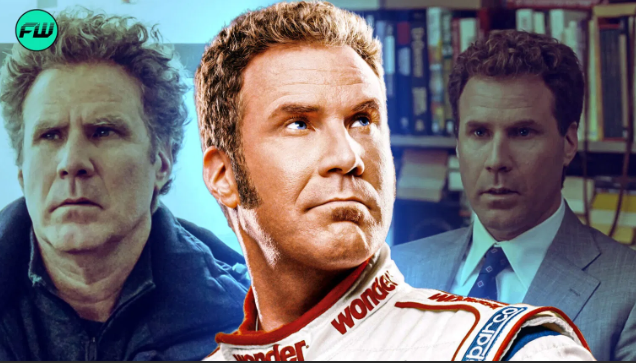
Every few years, Ferrell surprises everyone by taking a dramatic role. Stranger Than Fiction showed genuine acting chops. Everything Must Go revealed depth critics didn’t expect. His recent turn in The Shrink Next Door demonstrated range that his comedy vehicles rarely require. He keeps proving he’s more than the buffoon, even though the buffoon built the fortune. The pattern reveals the wound: the constant need to be taken seriously by people who only want him to be funny.
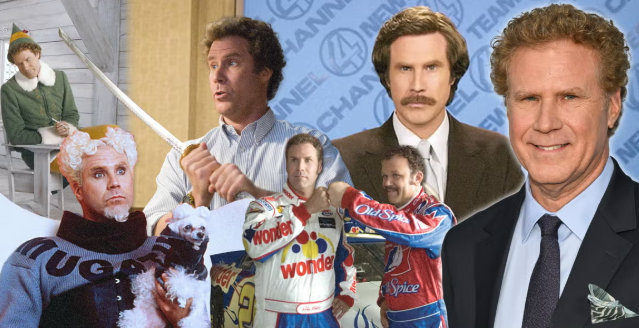
From Irvine to the Hollywood Hills: Geography of Reinvention
Ferrell owns a $10 million compound in the Hollywood Hills, far from the cookie-cutter Irvine subdivision where he grew up. The property sits on a private lot with sweeping views, a space designed for someone who spent childhood feeling exposed and different. His family also maintains connections to both coasts, including regular appearances at Hamptons charity events during summer seasons.
The real estate choices tell a story. Privacy matters to someone who grew up feeling publicly different. The homes aren’t about showing off; they’re about creating space where the performance can finally stop, where the tall, weird kid from the divorced family can just be a husband and father without an audience.
At sixty years old, Will Ferrell has built exactly what the kid from Irvine never had: stability, creative control, and the freedom to be as weird as he wants without worrying if it will cost him everything. The $160 million represents more than career success. It represents a man who took his deepest insecurities and turned them into comedy that connected with millions who felt different too. The fortune is just proof that sometimes the weird kids from broken homes win biggest.
Related Articles
- Comedy’s Richest: The $940 Million Fortune Behind Hollywood’s Funniest Men
- Adam Sandler Net Worth 2025: The Brooklyn Kid Who Built a $440 Million Empire on Being Underestimated
- Steve Martin Net Worth 2025: The Garden Grove Introvert Who Built a $140 Million Renaissance
For features, partnerships, and exclusive content, visit sociallifemagazine.com/contact. Join the Polo Hamptons community for tickets and sponsorship opportunities. Subscribe to our newsletter and support independent luxury journalism with a $5 contribution.
Author

Written by
Recent Posts
Friendship, Philanthropy & a Passport

Rula Lutfi Redefines the Birthday Cake with Lala Bon Bon Pâtisserie
Best Folding Tables for Community Halls and Function Centres

From the Hamptons to Mykonos for a September Encore
Is Business Class Worth It on a Short-Haul Flight?
Categories
- Art
- Articles
- Business of Luxury
- Celebrities
- Culture
- Entertainment
- Events
- Faces of Summer 2026
- Fashion
- Fashion & Style
- Featured
- Finance
- Food, Spirits, Wine
- Hamptons
- Hamptons Celebrities
- Health
- Health & Beauty
- Lifestyle
- Luxury Lifestyle
- Press
- Profiles
- Real Estate
- Technology
- The Chronicles
- Travel
- Uncategorized
- Weddings