
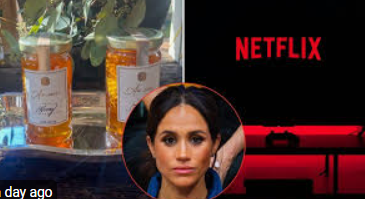
The jam sold out in under an hour. That is the fact Meghan Markle’s team has returned to most reliably since the As Ever brand launched in April 2025 — a jar of strawberry spread in artisanal packaging, $14, gone within sixty minutes of going live. “Our shelves may be empty but my heart is full,” Meghan posted on Instagram afterward. It was a genuine moment. The internet was watching. The jam was real.

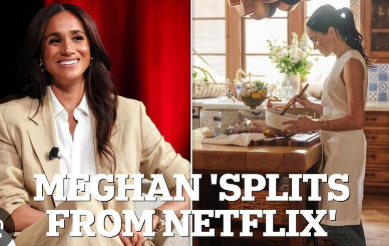
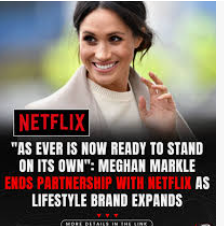
On March 6, 2026, Netflix withdrew as an equity investor in As Ever. The lifestyle brand sells jam, wine, honey, tea, and flower sprinkles — yes, flower sprinkles. It will now move forward without the $150 billion streaming company that co-created, co-branded, and distributed it. Meghan’s spokesperson said As Ever had experienced “meaningful and rapid growth” and was “now ready to stand on its own.” Netflix said the split was “always intended.” Both statements are technically true. The gap between them is the actual story.
The Meghan Markle Netflix Timeline: How Six Years Ends With Flower Sprinkles
In September 2020, Harry and Meghan signed a reported $100 million deal with Netflix. They had left the royal family eight months earlier. They had no production history and no developed projects. There was no conventional reason for Netflix to write a nine-figure check. What they had was global attention — specific, ferocious, commercially legible. The kind that sells out Hermès blankets because one appeared in the background of a trailer.
Netflix Co-CEO Ted Sarandos understood this explicitly. In a Variety cover story last March, he said: “When we dropped the trailer for the Harry and Meghan doc, everything on-screen was dissected in the press for days. The shoes she was wearing sold out all over the world. The Hermès blanket that was on the chair behind her sold out everywhere. People are fascinated with Meghan Markle. She and Harry are overly dismissed.” That assessment was commercially accurate. The Harry and Meghan docuseries, released in December 2022, became Netflix’s most-watched documentary debut ever.
When the Hits Stopped Coming
What followed did not match that opening. Live to Lead, Heart of Invictus, Polo — projects that received polite attention and generated nothing comparable to the debut. By summer 2025, the production deal had been downgraded. It moved from the original five-year arrangement to a “first look deal” — industry language for a relationship that survived but lost its premium pricing.
Then came With Love, Meghan, the cooking and lifestyle series that launched alongside As Ever in March 2025. Season 1 got viewers. Season 2, launched in August, did not break into Netflix’s weekly Top 10 on debut. By late 2025, the series had fallen to 1,217th in the platform’s most-watched rankings. Netflix cancelled it after two seasons. A holiday special aired in December. Then, on March 6, 2026, Netflix pulled its equity stake from the jam company.
Two Accounts, Both True: What Netflix Says Versus What Meghan Says
Here is where the story gets genuinely interesting — which is different from merely entertaining. There are two competing accounts of what happened. The unusual thing: neither account is wrong.
Meghan’s version: As Ever experienced strong early growth. The jam sold out in an hour. The brand found a real audience. Netflix was too cautious about global expansion — too slow, too conservative. She outgrew the partnership and left on her terms. She is “relieved” and is on “good terms” with Sarandos.
Netflix’s version: An insider told the Daily Mail that the streaming giant was “deeply underwhelmed” by As Ever’s performance. The plan to feature As Ever products in Netflix House retail venues was quietly shelved. The brand “just didn’t fit with Squid Game or Stranger Things or Bridgerton like they had hoped.” Netflix’s statement — which said the split was “always intended” — is the language of an institution that was ready to move on.
Where the Two Stories Meet
Both versions describe the same event. A jam that sold out in under an hour is genuinely impressive. A lifestyle brand that couldn’t crack Netflix’s Top 1,000 most-watched content is genuinely underperforming. Those facts coexist without contradiction. The brand had a passionate initial audience. That audience was not large enough for Netflix’s institutional purposes. Meghan’s enthusiasm is real. Netflix’s underwhelm is also real. The split is the only logical outcome when both are simultaneously true.
The qualifying sentence: the failure of With Love, Meghan does not mean the As Ever brand is doomed. A Vulture review called the show “an utterly deranged bizarro world voyage into the center of nothing.” That is devastating criticism — but it targets a television format, not a product. The jam was real. People bought it. Whether the brand can build recurring revenue without Netflix’s reach is still an open question. That question has not been answered yet.
What Netflix Actually Bought and What It Was Worth
To understand this split, consider what Netflix was actually buying across the entire Sussex relationship. The $100 million deal was not primarily a bet on television production quality. It was a bet on attention — the specific, globally scalable, tabloid-fueled fascination the couple generated simply by existing in public. Sarandos said the Hermès blanket sold out. That’s the product. Not a show. A blanket that happened to be in frame.
That attention was real in 2020 and 2021. It generated genuine commercial value with the docuseries debut. What Netflix bet on — and what did not materialize at scale — was converting that attention into durable viewership and purchasing behavior. Harry and Meghan generate tabloid coverage at industrial scale. They do not, it turns out, generate Netflix subscriptions at the same rate. The audience fascinated by them is not the same audience opening a streaming app at 9 p.m. to watch a cooking show.
The Attention Economy, Laid Bare
For As Ever specifically, brand experts told Newsweek the Netflix uncoupling could be “dangerous” as Meghan fights to take the business global. The brand’s current revenue base — direct-to-consumer jam, honey, and tea sold through her website — is not yet at the scale its premium positioning demands. Without Netflix’s distribution infrastructure, the brand needs a new major retail partner or genuine DTC scale to sustain. An As Ever cookbook is reportedly in development. Australia appears to be on the roadmap. Whether the business is building toward something real or performing the appearance of building is the question no press release answers.
Pause for a moment on the specific absurdity of what you are doing. You are reading an analysis of a jam brand. Flower sprinkles. Honey in artisanal packaging. A $14 jar sold out because a woman who was once a television actress married a prince, then un-married the institution he belonged to, and now lives in Montecito making lifestyle content. You followed all of that. So did everyone. Netflix paid $100 million because you followed it. The fact that you are still following it right now is why As Ever has any commercial value at all. It is also why the brand’s long-term success depends on converting that following into something more durable than tabloid attention. That is the water. The brand and the coverage of the brand are the same product.
The Stakes: What Going Independent Actually Requires
The Gwyneth Paltrow comparison is unavoidable, and Meghan’s team knows it. Goop launched in 2008 as a newsletter. It was mocked for a decade. It is now valued at several hundred million dollars. The path from “eccentric celebrity lifestyle brand” to genuine enterprise runs through sustained product quality, cult customer loyalty, and enough runway to outlast the mockery. Paltrow stayed on that path while the internet made her a punchline. The question for As Ever: does Meghan have the same patience — and does the brand have the margin structure to fund a multi-year build without institutional backing?
For Social Life Magazine’s readership — the luxury consumer who knows the difference between cultural relevance and commercial infrastructure — the honest assessment is this: As Ever’s products are genuinely good. The brand aesthetic is coherent. The founder has the most valuable untapped asset in lifestyle marketing: sustained global attention that money cannot buy. What the brand does not yet have is operational depth, a retail network, or a demonstrated revenue trajectory. It is an aspirational luxury business. It is not yet a successful independent one.
What the Next Twelve Months Must Prove
That can change. The cookbook, if it lands, creates a format that doesn’t require Netflix. The Australia expansion, if it executes, builds a non-US customer base. Whether Meghan Markle can build what Gwyneth Paltrow built is genuinely open. A jam that sold out in an hour and a streaming deal that ended with flower sprinkles in a Netflix warehouse does not answer that question. The next year will.
Netflix says the split was “always intended.” Meghan says the brand is “ready to stand on its own.” One of those things is a graceful exit. The other is a confident beginning. They might both be right. The interesting part is watching which one turns out to matter more.
Related: Celebrity Net Worth Rankings 2026: How the Biggest Fortunes Are Actually Built | Supermodel Empire Builders: The $1.3B Blueprint for Celebrity Brands That Last
Want your brand featured alongside stories like this? Contact Social Life Magazine about partnerships and editorial opportunities. Join us this summer at Polo Hamptons — where New York’s power players meet in person. Subscribe to the print edition or join our email list for Hamptons insider access delivered first. And if this story moved you, support independent luxury journalism for $5.
Author

Written by
Recent Posts
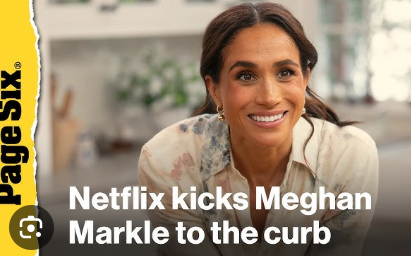
Netflix Dropped Meghan. She Swears It’s Fine.
Taylor Swift: $2 Billion. A Ring. 89 Days.

Chalamet Called It Dead. Ballet Proved Him Wrong.
Ten Rounds at Her Gate. Rihanna Stood Firm.
Cannes Took 80 Years. Barbra Streisand Didn’t Wait.
Categories
- Art
- Articles
- Beauty & Skincare
- Celebrities
- Chronicles
- Event Photos
- Events
- Fashion
- Fashion & Style
- Featured
- Food & Beverage
- Food, Spirits, Wine
- Hamptons
- Hamptons Celebrities
- Hamptons Design|Luxury Living
- Health
- Health & Beauty
- Lifestyle
- Luxury Lifestyle
- Press
- Profiles
- Real Estate
- Technology
- The Chronicles
- The Chronicles|Celebrities
- Travel
- Uncategorized
- Weddings