
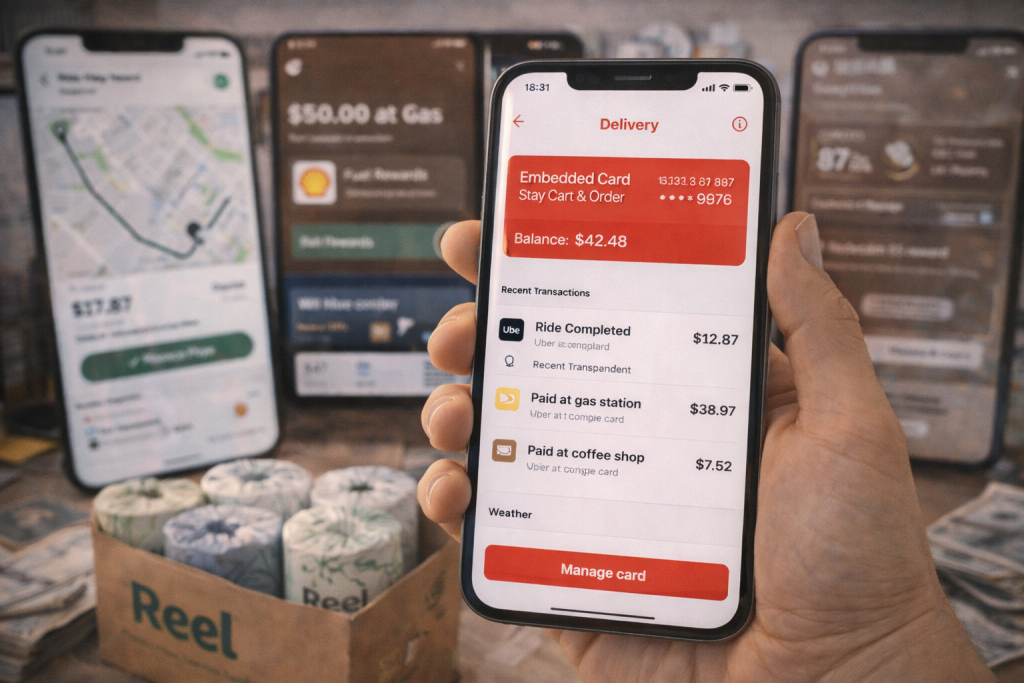
The future of banking won’t be built in banks. It will be embedded in the apps, platforms, and services people already use. This isn’t speculation. The global embedded finance market reached $104.8 billion in 2024 and is projected to grow at 23.3% annually through 2034, potentially reaching $1.7 trillion. By some estimates, 80% of the addressable market remains untapped.
Embedded finance means integrating financial services, payments, lending, insurance, banking, directly into non-financial platforms. When you buy something on Shopify and finance it instantly, that’s embedded lending. Your Uber app processes payment seamlessly, that’s embedded payments. Then your enterprise software offers instant credit lines, that’s banking-as-a-service powering commerce in real time.
Why This Matters Now
Consumer expectations have fundamentally shifted. People want financial services delivered at the point of need, not through separate institutions requiring separate logins, separate applications, separate friction. A Capgemini survey found over 70% of banking executives view embedded finance as a catalyst for innovation, customer expansion, and cost reduction.
The technology enabling this shift has matured. APIs allow non-financial companies to integrate banking, lending, insurance, and investment services through partnerships with fintech providers and traditional financial institutions. What once required building entire banking infrastructure now requires integration with existing platforms.
The COVID-19 pandemic accelerated adoption as businesses sought digital alternatives to in-person financial interactions. Remote work forced companies to embrace digital payments, instant financing, and automated financial workflows. Those habits stuck.
The Market Leaders and Their Strategies
PayPal, Stripe, and Shopify collectively hold over 18% market share in embedded finance. Each has built distinct competitive advantages.
PayPal expanded through acquisitions including Honey and Venmo, integrating payments with shopping and peer-to-peer transfers. Investments in cryptocurrency services and global e-commerce partnerships enhance market presence. The company prioritizes trust, security, and adaptability to maintain digital payments leadership.
Stripe focuses on developer-friendly APIs simplifying payment integration for businesses of all sizes. Infrastructure supporting over 135 currencies and localized payment methods drives global expansion. Strategic investments in fraud detection through Radar, billing systems, and financing products strengthen the service portfolio.
Shopify has transformed from e-commerce platform to financial services ecosystem. Merchants access payments, capital, and banking services without leaving the platform that manages their storefronts. This integration creates switching costs that protect market position while delivering genuine convenience.
Embedded Lending: The Biggest Growth Opportunity
While embedded payments dominated early adoption, lending represents the frontier attracting most investor attention. According to analysis from McKinsey, embedded finance channels accounted for 5-6% of lending revenues from retail and SME customers in Europe in 2023 and could reach 20-25% by 2030.
In the US, the embedded lending market is projected to grow from $7.65 billion in 2024 to $45.74 billion by 2034, a compound annual growth rate approaching 20%. This growth is driven by rapid digitalization, increasing customer demand for fast credit access, and technological innovation enabling real-time underwriting.
Small businesses have long been underserved by traditional banks, factoring services, and conventional lenders. Embedded credit provides opportunity for fintechs and platforms to step into this space, offering short-term financing to help vital small businesses grow. The companies already know merchant cash flow through payment processing, making underwriting faster and more accurate than traditional methods.
How Traditional Banks Are Responding
Rather than viewing embedded finance as existential threat, forward-thinking banks recognize partnership opportunities. Traditional institutions offer scale, trust, regulatory expertise, and capital. Fintechs deliver nimbleness and ability to solve specific problems quickly.
European banks are utilizing open banking to embed advanced Buy-Now-Pay-Later solutions into purchase journeys. Real-time banking data improves credit assessments and customizes payment plans. This trend is prominent in the UK and Nordic regions, where regulatory frameworks and standardized APIs streamline collaboration.
In October 2024, HSBC launched SemFi, a B2B embedded finance technology provider built through joint venture with California-based fintech Tradeshift. The platform allows e-commerce and marketplace venues to embed payment, trade, and financing solutions from HSBC. Traditional banking reaching new customers through fintech partnerships represents the collaborative model gaining momentum.
The Technology Making It Possible
Banking-as-a-Service platforms have lowered entry barriers for non-financial companies to offer financial products. These BaaS providers handle regulatory compliance, risk management, and infrastructure while brands focus on customer experience and integration.
In April 2024, Finzly launched Account Galaxy, empowering banks of all sizes to participate in embedded banking through modern API infrastructure. In February 2025, Alloy introduced products specifically designed to help sponsor banks, BaaS providers, and fintech partners manage identity risk and regulatory requirements collaboratively.
Advanced AI technologies now facilitate hyper-personalized financial offerings across platforms. By leveraging user data, AI delivers tailored solutions including insurance, credit products, and savings plans. DeFi integration enables platforms to deliver blockchain-based financial services including cryptocurrency payments, lending, and staking without traditional banking intermediaries.
What This Means for Hamptons Business Owners
For the restaurateur, retailer, or service provider operating Hamptons businesses, embedded finance offers practical advantages. Payment processing through platforms like Square or Toast includes instant access to capital based on sales history. No bank meetings. No extensive applications. Capital available when seasonal cash flow demands it.
For real estate professionals, embedded mortgage offerings allow clients to access financing without leaving property search platforms. The seamless experience improves close rates while delivering better borrower experiences.
For family offices evaluating investment opportunities, embedded finance represents a sector with massive growth runway. The infrastructure plays, including BaaS providers, payment platforms, and API developers, offer exposure to structural shifts rather than individual company bets.
The Future Financial System
The World Economic Forum characterizes embedded finance as “redefining how financial services are accessed and delivered.” The question is no longer whether traditional institutions should adapt, but how quickly they can.
As businesses embed payments, lending, insurance, and banking into their existing operations, the institutions that enable rather than resist this transition will capture market share. Those clinging to standalone banking models risk disintermediation as customers simply expect financial services delivered where they already transact.
The financial system of the future will be invisible, woven into every app, platform, and service. Embedded finance isn’t a trend. It’s the infrastructure of modern commerce.
Explore fintech innovation through Social Life Magazine. Connect with financial industry leaders at Polo Hamptons. Subscribe to our print edition for wealth and technology content, join our email list for weekly updates, or support independent journalism with a $5 contribution.
Related: Kalshi: The Prediction Market Legalizing Bets on Everything | Moniepoint: Africa’s Fastest-Growing Fintech Unicorn
Author

Written by
Recent Posts
Behind the Scenes of Weddings Involving Long-Distance Relationships
Why Karaoke Is the Ultimate Entertainment Choice for a Hen Party
Easy Recipes That Feed A Crowd Without The Stress
The Influence Of Social Media On Interior Style Trends
Where Can You Find the Best Made-to-Measure Bespoke Suits in NYC
Categories
- Art
- Articles
- Beauty & Skincare
- Celebrities
- Celebrities|Movies
- Celebrities|The Chronicles
- Chronicles
- Entertainment|Culture
- Event Photos
- Events
- Fashion
- Fashion & Style
- Featured
- Food & Beverage
- Food, Spirits, Wine
- Hamptons
- Hamptons Celebrities
- Hamptons Celebrities|Celebrities|The Chronicles
- Health
- Health & Beauty
- Lifestyle
- Luxury Lifestyle
- Movies|Culture
- Movies|Hamptons Lifestyle
- Press
- Profiles
- Real Estate
- Technology
- The Chronicles
- Travel
- Uncategorized
- Weddings