
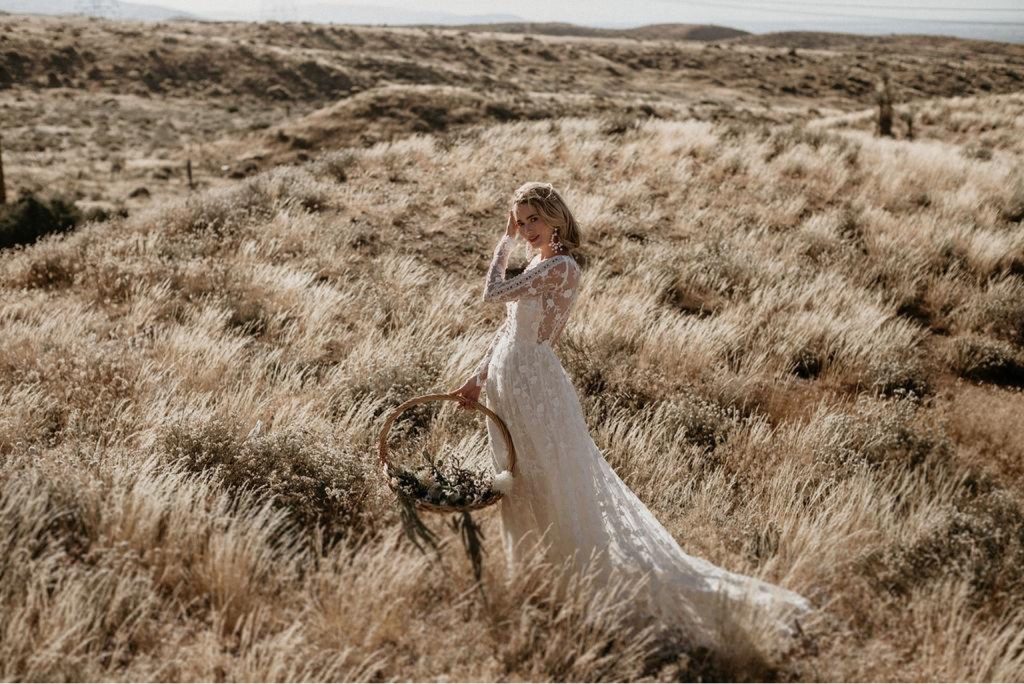
There’s a dirty secret in bridal fashion that nobody talks about at trunk shows. The lace on most wedding dresses? It’s not really lace. It’s polyester engineered to look like lace — stiff, scratchy, and designed to hold shape in a photograph rather than feel good on skin. It’s a fabric built for the camera, not the woman.
For generations, brides have accepted this tradeoff as the cost of elegance. You want lace? Fine. But you’ll pay for it in discomfort. You’ll feel it pulling at your arms when you reach for your partner’s hands. You’ll notice it by hour three when the synthetic lining starts trapping heat against your body. You’ll remember it at the end of the night when you can’t wait to take the dress off.
And somewhere along the way, the industry stopped questioning whether it had to be this way.
The Comfort Problem Nobody Solved
Lace has been the defining fabric of bridal fashion for centuries, and for good reason. Its intricacy communicates craftsmanship. Its delicacy suggests romance. Its translucency creates visual drama that no other fabric can replicate. Brides gravitate toward lace because it feels timeless — the kind of thing that will look as beautiful in photos 30 years from now as it does today.
The broader industry is catching up to the idea that comfort matters. As British bridal designer Phillipa Lepley told Country & Town House, sheer and lightweight fabrics feel “especially en vogue right now, reflecting a broader fashion movement toward lightness, romance, and thoughtful transparency.” And Vogue Business has noted that today’s brides are prioritizing personal expression and comfort over rigid tradition — a shift that’s reshaping the entire bridal market.
But the lace that appears in most bridal salons today is a mass-produced approximation of what lace used to be. It’s manufactured overseas in bulk, cut for efficiency rather than artistry, and paired with rigid underpinnings that create silhouette but eliminate movement. The result is a dress that looks stunning on a hanger and feels like armor on a body.
This is the problem that Dreamers & Lovers set out to solve over a decade ago — and the answer turned out to be deceptively simple: use real cotton lace.
Cotton Lace: The Fabric the Industry Forgot
Cotton lace is not cheap. It’s not efficient. It doesn’t hold rigid shapes, and it requires more skilled construction because you can’t hide shortcuts under stiff fabric. These are the reasons most bridal companies don’t use it.
They’re also exactly the reasons it produces a better dress.
Cotton lace breathes against the skin. It has natural stretch that moves with the body rather than fighting it. It drapes with a softness that synthetic lace can only imitate from a distance. And critically, it develops a more beautiful texture over time — aging like linen rather than degrading like polyester.
Every lace wedding dress in the Dreamers & Lovers collection is built on this foundation. Handcrafted to order in their California atelier, each gown uses exclusive cotton lace patterns — from delicate botanicals to graphic geometric motifs — chosen for how they feel on the body, not just how they photograph.
It’s a fundamentally different design philosophy. And it produces fundamentally different dresses.
Two Dresses That Prove the Point
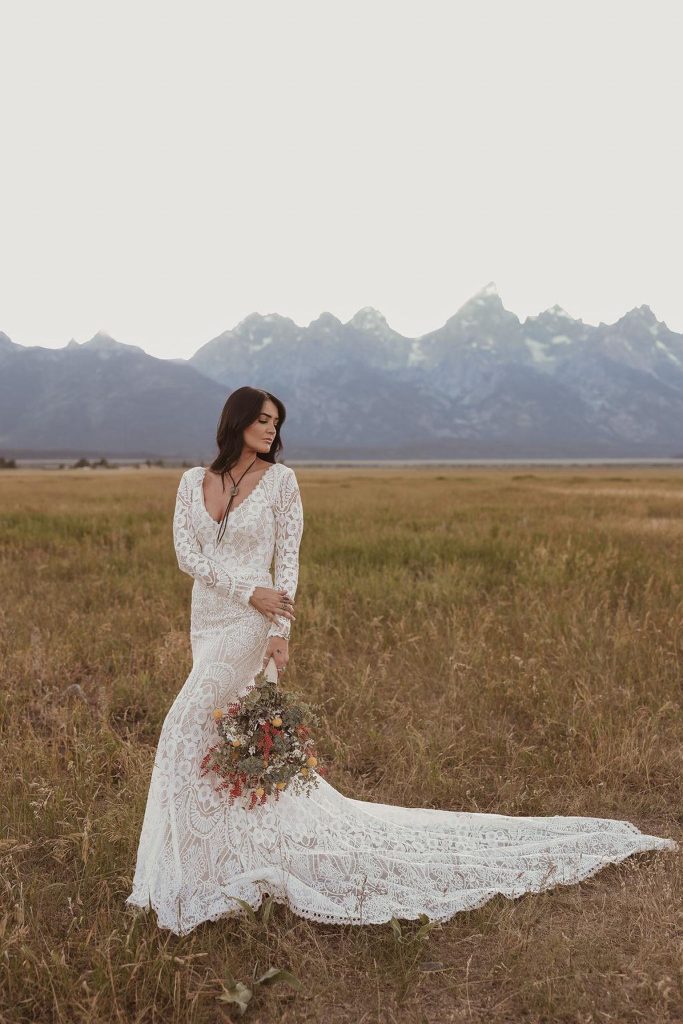
The Josephine is their bestseller, and it’s easy to see why. It’s a long sleeve lace wedding dress with a dramatic train and plunging neckline — features that would typically mean restriction and discomfort in conventional bridal construction. But the cotton lace and art deco-inspired geometric pattern make the sleeves feel like a second skin, not a cage. The result is a dress that delivers the romance and drama of vintage European couture while actually allowing the bride to lift her arms, embrace her people, and move through her wedding day without counting the hours until she can change.
Author

Written by
Recent Posts

Jacob Elordi Net Worth 2026: The House Painter’s Son Who Turned Down Superman

Angus Cloud: The Euphoria Star Found on a Brooklyn Street and Lost at 25

Euphoria Cast Net Worth 2026: Who Won, Who Lost, and Who Disappeared
Euphoria Season 3 Explained: The Origin Story You Need Before April 12

Everyone Watched Dawson. The Smart Money Watched Pacey.
Categories
- Art
- Articles
- Beauty & Skincare
- Celebrities
- Celebrities|The Chronicles
- Chronicles
- Entertainment|Culture
- Event Photos
- Events
- Fashion
- Fashion & Style
- Featured
- Food & Beverage
- Food, Spirits, Wine
- Hamptons
- Hamptons Celebrities
- Hamptons Celebrities|Celebrities|The Chronicles
- Health
- Health & Beauty
- Lifestyle
- Luxury Lifestyle
- Movies|Hamptons Lifestyle
- Press
- Profiles
- Real Estate
- Technology
- The Chronicles
- Travel
- Uncategorized
- Weddings