
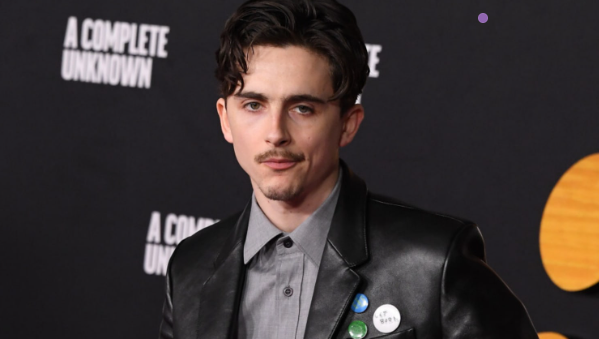
The French-American boy from subsidized housing. The actor who almost didn’t get into drama school. The man who now sells $35 million worth of cologne — and just became the youngest performer in history to earn three Best Actor Oscar nominations.
Est. Net Worth: $35 Million
The building was called Manhattan Plaza, two towers rising over Hell’s Kitchen like concrete promises. Inside, the apartments were small and subsidized, reserved for performing artists under the Mitchell-Lama program. Larry David lived there before Seinfeld. Alicia Keys practiced piano there as a child. Meanwhile, Tennessee Williams wrote there in his final years.
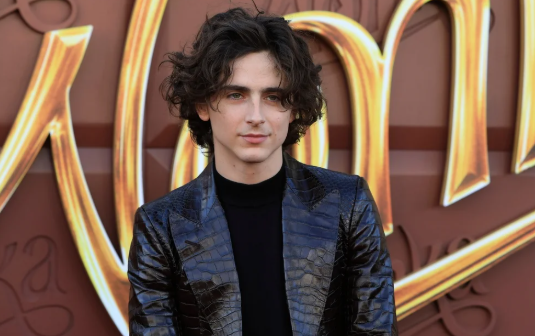
In one of those 1,689 units, a French father and a former Broadway dancer raised two children on a UNICEF editor’s salary and a real estate agent’s commissions. The boy, Timothée, had his mother’s theatrical instincts and his father’s Continental intensity. He would grow up in what locals called “Broadway’s Bedroom,” surrounded by artists, dreamers, and the peculiar magic of people who chose passion over wealth.
By thirty, that boy is worth an estimated $35 million. Already, he holds the record as the youngest performer ever to earn three Best Actor Oscar nominations. His résumé spans Bob Dylan, Willy Wonka, and the messiah of an alien desert planet. Furthermore, he commands $25 million a picture. Yet somewhere inside him, the kid from subsidized housing still remembers what it meant to grow up in a building where art mattered more than money — and where that trade-off was both beautiful and precarious.
2026 Update: Marty Supreme, the Race He Led, and the One He Might Not Win
Four developments define the year since this article was first published: an A24 ping-pong film that swept the early awards season and made its star the clear Oscar frontrunner, a SAG upset that flipped the race with days to spare, a $25 million Paramount heist film that resets his earning floor permanently, and a public relationship that moved from rumor to red carpet reality in the most scrutinized awards season in recent memory.
Marty Supreme: The Performance, the Campaign, the Collapse — and Maybe the Comeback
Josh Safdie’s Marty Supreme premiered at the New York Film Festival in October 2025 and immediately installed Chalamet as the Best Actor frontrunner. Chalamet plays Marty Mauser, a Jewish ping-pong prodigy in 1950s New York who will do nearly anything for mastery of a sport nobody takes seriously. The performance — physically demanding, frequently uncomfortable, occasionally very funny — earned a 93% Rotten Tomatoes score and “universal acclaim” on Metacritic.
What followed was one of the most discussed Oscar campaigns in recent memory. Chalamet leaned into the film’s energy with a marketing blitz that included a viral fake Zoom pitch to A24 employees, orange blimp flights over major cities, limited-edition streetwear designed by Doni Nahmias that instantly sold out and resold online for $10,000-plus, and a series of unorthodox media appearances that kept the film in the conversation from October through March. He won Best Actor at the Critics Choice Awards on January 4. The Golden Globe for Best Actor in a Comedy or Musical followed shortly after. Additionally, he received his second consecutive SAG nomination. Going into nominations on January 22, his odds for a Best Actor win were at 86 percent — his season high.
How the Race Collapsed
Then the race shifted. On January 26, four days after nominations, an anonymously sourced report alleged that director Josh Safdie had overseen a toxic environment on a previous film set. The report — which many in the industry characterized as a potential smear campaign — was amplified widely. Chalamet did not publicly address the claims about Safdie, but the damage to campaign momentum was measurable. His odds began to slide. Then, on March 1, Michael B. Jordan won Best Actor at the SAG Actor Awards for Sinners. Since SAG and Oscar memberships overlap substantially, and the win landed in the middle of Oscar voting, it functioned as a powerful closing argument for Jordan. Within four days, Jordan surged from 10 percent to 57 percent in Gold Derby expert predictions. Chalamet dropped from 70 percent to 29 percent.
As of Sunday morning, Jordan leads in every major prediction market. Chalamet has not won BAFTA (he lost to Robert Aramayo, who isn’t eligible for this Oscar cycle), has not won SAG, and enters the ceremony as the underdog for the first time all season. Whether the Academy rewards the performance, the campaign, or neither is the question that resolves tonight. What is already certain: Marty Supreme is also nominated for Best Picture, with Chalamet carrying a producer credit. A Best Picture win gives him a producer’s Oscar regardless of what happens in the acting race.
The Historic Nomination Nobody Led With

Chalamet’s Best Actor nomination for Marty Supreme is his third nomination in the category — following Call Me by Your Name (2018) and A Complete Unknown (2025) — making him the youngest actor in history to receive three Best Actor nominations. He is thirty years old. The previous record was held by Montgomery Clift, who received his third at thirty-one. Should he win Sunday, he would become the second-youngest Best Actor winner in history, behind only Adrien Brody, who won for The Pianist at twenty-nine.
High Side: The $25M Number That Ends the Net Worth Conversation
While the Oscar campaign has dominated headlines, the most consequential financial development of the past year is simpler. In September 2025, The New York Times reported that Chalamet will earn $25 million for High Side, a Paramount heist film directed by James Mangold — his second collaboration with the director after A Complete Unknown. Chalamet plays Billy, a former MotoGP racer haunted by a career-ending crash whose estranged brother recruits him for a series of superbike bank robberies. The $25 million payday makes him the youngest actor since Jennifer Lawrence to command that salary for a single film.
To put that figure in context: it equals his current estimated total net worth. In other words, a single project doubles the number. When one film can do that to your balance sheet, you have entered the tier occupied by fewer than a dozen working actors at any given time. Dune: Part Three arrives December 18, 2026, with Chalamet expected to earn $10-15 million plus backend participation from a franchise whose first two installments grossed a combined $1.3 billion worldwide. The math between now and year-end 2026 suggests a net worth that lands comfortably above $50 million — and that is before accounting for ongoing Chanel and Cartier income.
Kylie Jenner: “My Partner of Three Years”
At the Critics Choice Awards on January 4, 2026, Chalamet accepted his Best Actor award and publicly referred to Kylie Jenner as “my partner of three years.” It was the most direct public acknowledgment of the relationship he had given to that point. Jenner — who generates roughly $70 million annually from her beauty brands — attended multiple awards shows with Chalamet throughout the season and walked the BAFTA red carpet alongside him in February. Sources describe the relationship as genuine and stable, notable in a season where every element of Chalamet’s public life was subject to microscopic scrutiny. She is not a distraction. She is, by most accounts, a grounding force.
The Wound: Growing Up Between Two Worlds
Timothée Hal Chalamet was born on December 27, 1995, into a household that existed in the hyphen. His mother, Nicole Flender, was a third-generation New Yorker of Russian and Austrian Jewish descent, a Yale graduate who had danced on Broadway before becoming a real estate agent. His father, Marc Chalamet, was French, from Nîmes, working as an editor and correspondent for UNICEF and Le Parisien.
The family spoke French at home. They spent summers in Le Chambon-sur-Lignon, a small village outside Lyon where his paternal grandparents lived. Yet they also inhabited quintessentially New York spaces: the subsidized artists’ building, the performing arts high school, the particular scrappiness of Manhattan kids who navigate wealth they can see but don’t possess.
The Artists’ Building
Manhattan Plaza wasn’t poverty. It was something more complicated: proximity to creativity without the financial security that usually accompanies creative success. Seventy percent of residents were performing artists. Consequently, the building imposed rehearsal hours so neighbors could practice piano without complaints. Timothée’s sister Pauline, now an actress on The Sex Lives of College Girls, has described how their parents kept a tap board under the couch for her to practice on.
“I actually grew up in an arts building in Hell’s Kitchen, about 12 minutes from here,” Timothée told the Saturday Night Live audience during his hosting debut. He said it with pride, but also with the self-awareness of someone who knows the distance he’s traveled. The kid from subsidized housing was now hosting network television.

The Mother Who Made It Possible
Nicole Flender appears in her son’s origin story like a patron saint of determination. A former Broadway dancer who pivoted to real estate, she earned her bachelor’s degree in French from Yale and later taught both French and dance. She worked as an extra on Saturday Night Live in the 1980s. “She’s the reason I’m alive,” Timothée told the SNL audience, “she’s the reason I have an acting career.”
The family’s entertainment connections ran deep. Nicole’s father, Harold Flender, was a screenwriter who wrote for Sid Caesar alongside Woody Allen. Her brother Rodman Flender is a television director. Her sister Amy Lippman created Party of Five. Nevertheless, despite this pedigree, Timothée grew up in federally subsidized housing — a reminder that Hollywood lineage doesn’t automatically translate to wealth.
The Chip: The Kid Who Almost Didn’t Get In
LaGuardia High School, the famed “Fame” school, nearly rejected him. According to his own account, Timothée was initially turned down for admission. It was his sophomore drama teacher who fought for him, giving him the highest possible score and insisting on his enrollment. Consequently, the institution that would shape his career almost missed him entirely.
At LaGuardia, he found his tribe: the children of celebrities, the children of nobody, all bound by the same desperate love of performance. Moreover, he starred in school musicals, developing the singing and dancing skills that would later land him Wonka. He missed half his senior year filming Homeland.
The Heath Ledger Epiphany
As a child, Timothée did commercials, which he claims to have hated. Acting felt like a hustle, not a calling. Then he saw Heath Ledger as the Joker in The Dark Knight, and something shifted. “I was inspired to do it professionally after seeing Heath Ledger’s performance,” he has said. The Australian actor who died at twenty-eight became his north star.
The choice of Ledger as inspiration is telling. Here was an actor who embodied total commitment, who disappeared so completely into roles that it seemed to cost him something essential. For a kid caught between French and American identities, between subsidized housing and celebrity adjacency, Ledger’s example offered a path forward: transformation as survival.
The Rise: From Law & Order to Leading Man
Like most New York actors, Timothée’s first screen credit was a Law & Order episode in 2009. He was thirteen, playing a murder victim. Small TV roles followed: Homeland, Royal Pains, and a stint on a web series that went nowhere. He enrolled at Columbia University to study cultural anthropology, hedging his bets.
Then Christopher Nolan called. In Interstellar (2014), Timothée played the young version of Casey Affleck’s character, a supporting role in a $165 million film that grossed over $675 million worldwide. It was a credential, not a breakthrough. But it taught him how blockbusters worked.
Call Me By Your Name’s Transformation
The real emergence came in 2017, with Luca Guadagnino’s Call Me by Your Name. Playing Elio Perlman, a seventeen-year-old discovering desire in sun-drenched Italy, Timothée delivered a performance of such tender specificity that it redefined what a leading man could be. He learned to play piano and guitar for the role. He performed scenes in English, French, and Italian.
The Academy Award nomination for Best Actor made him the third-youngest nominee in the category ever, after Mickey Rooney and Jackie Cooper. He was twenty-two. As a result, the kid from Hell’s Kitchen had arrived — and he’d done it by playing vulnerability rather than hiding it.
The Blockbuster Strategy
What followed was a masterclass in selective ambition. Timothée took the advice of an unnamed mentor: “No hard drugs and no superhero movies.” Instead, he chose projects that balanced artistic credibility with commercial potential. Lady Bird and Little Women with Greta Gerwig. The King for Netflix. Beautiful Boy, playing a drug-addicted teenager.
Then came Dune. Denis Villeneuve’s adaptation of Frank Herbert’s science fiction epic represented a new tier. “I needed that for the audience to believe this young man will be able to lead a whole planet,” Villeneuve told USA Today. For the first film, Timothée reportedly earned approximately $2.2 million. For the sequel, which grossed over $714 million worldwide, his paycheck increased proportionally. Ultimately, Dune: Part Three arrives December 18, 2026, and he is expected to earn $10-15 million plus backend — with a franchise whose combined first two installments grossed $1.3 billion, the back end matters.
The Tell: The $35 Million Chanel Deal and the Endorsement Economy
The most revealing number in Timothée’s financial portfolio isn’t a film salary. It’s the $35 million he reportedly received to become the face of Bleu de Chanel, which included a short film directed by Martin Scorsese. That single endorsement deal exceeded all his movie salaries combined at the time of signing.
The kid who grew up in subsidized housing now sells luxury cologne. The boy raised between languages and cultures has become the embodiment of sophisticated masculinity for one of the world’s most storied fashion houses. Additionally, he serves as a global ambassador for Cartier and signed with Lucid Motors as the face of their electric vehicle brand — a portfolio that reflects the same strategic logic as his film choices: prestige over volume, credibility over cash.
His current quote for major studio films is $20-25 million. The High Side deal at $25 million makes him the youngest actor since Jennifer Lawrence to command that upfront salary. Between Dune Part Three backend, the Mangold film, and ongoing brand partnerships, the $35 million net worth will look significantly different by December 2026.
The Ethics of Woody Allen
In 2018, Timothée took a stand that revealed his values. After filming A Rainy Day in New York for Woody Allen, he donated his entire salary to three charities: Time’s Up, the LGBT Centre in New York, and RAINN. “I don’t want to profit from my work on the film,” he said. The grandson of Harold Flender, who had written for Allen’s contemporary Sid Caesar, was publicly distancing himself from a director with serious allegations against him.
The gesture cost him financially. Nevertheless, it defined him ethically. He wasn’t willing to trade moral clarity for career advancement, even at a moment when his net worth was still climbing.
The Location Connection: From Manhattan Plaza to Beverly Hills
In October 2022, Timothée purchased an $11 million Beverly Hills estate previously owned by Justin Verlander and Kate Upton. Before them, it belonged to Pete Sampras. The property represents everything Manhattan Plaza wasn’t: private, sprawling, the kind of space that announces arrival rather than aspiration.
Yet he still identifies as a New York kid. He still attends Knicks games. However, the most telling detail isn’t the games — it’s the pickup basketball with Adam Sandler, unchanged from before the Chanel contract. The Hell’s Kitchen scrappiness hasn’t disappeared; it’s just better dressed. When he appeared on ESPN’s College GameDay as a guest picker, his analysis impressed viewers with its sophistication. Indeed, the subsidized housing kid knows how to read a room, any room.
The Chosen One Who Remembers Being Chosen Last

There’s a reason Denis Villeneuve cast Timothée as Paul Atreides, the prophesied messiah of Dune. He has the face of someone destined for greatness and the eyes of someone who knows how fragile destiny really is. The kid who almost didn’t get into LaGuardia. The boy from the subsidized building. The actor who turned down superhero money to chase something harder to define.
Sunday Night, March 15: The Underdog Walks In
On Sunday night, March 15, 2026, that actor walks into the Dolby Theatre as the underdog for the first time all season — a position he has never occupied in an awards race before. Michael B. Jordan leads in every prediction market. Timothée Chalamet, who openly admitted in a Vogue profile that he felt disappointed after losing Best Actor last year, who told the SAG audience that he’s “in pursuit of greatness,” may walk out without the statue again.
What he will not walk out without: a career that, at thirty, already includes the third-most Best Actor nominations ever earned by a performer his age. Furthermore, a Paramount heist film is paying him the youngest $25 million salary in a decade. A franchise conclusion arrives at Christmas. A relationship he’s stopped hiding. And the instinct — inherited from Manhattan Plaza, refined at LaGuardia, tested in auditions and campaign disasters alike — that the work is the point, even when the awards aren’t coming.
At $35 million, Timothée Chalamet has transcended his origins without betraying them. He is simultaneously the embodiment of French-American sophistication and the product of Hell’s Kitchen grit. The Chanel model who donates his problematic paychecks. The blockbuster star who still makes small films with auteurs. The chosen one who remembers what it felt like to be overlooked — and who, on the night that matters most, is being overlooked again.
That’s the origin story that $35 million can’t erase, and that the Oscar race can’t quite contain. Somewhere in Beverly Hills, in an $11 million estate, the boy from Manhattan Plaza is still there. He’s watching tonight with everyone else. He still wants to win. After all, he told us so himself.
Feature your brand in Social Life Magazine: Contact our editorial team for features, advertising, and partnership opportunities.
The East End’s premier sporting event: Polo Hamptons — sponsorships, tickets, and brand activations.
Get the Hamptons insider list: Subscribe to Social Life Magazine
Support independent luxury journalism: Donate $5
Read next:
Leonardo DiCaprio Net Worth 2026: The $300M Blueprint
Celebrity Net Worth 2026: The Ultimate Hollywood Wealth Guide
Author

Written by
Recent Posts

Chair Exercises for Seniors: 10 Best Moves at Home
Florida’s East Coast Best Scenic Drives: 10 Routes Worth the Trip

10 Documentaries that Elevate Dinner Party Talk
The Most Stylish Winter Date Ideas For Couples Who Want Something Different

Spotted: How IT Girls Are Styling Their Phones for the World Cup Season
Categories
- Art
- Articles
- Business of Luxury
- Celebrities
- Entertainment
- Events
- Faces of Summer 2026
- Fashion
- Fashion & Style
- Featured
- Finance
- Food, Spirits, Wine
- Hamptons
- Hamptons Celebrities
- Health
- Health & Beauty
- Lifestyle
- Luxury Lifestyle
- Press
- Profiles
- Real Estate
- Technology
- The Chronicles
- Travel
- Uncategorized
- Weddings