

The summer of 1977, a seventeen-year-old Shelton Jackson Lee watched the Bronx burn from his grandmother’s television in Atlanta. The blackout had plunged New York into chaos, and the cameras captured what looked like the death of a city. His father, a jazz bassist, had moved the family south when Shelton was two, fleeing the very streets now engulfed in flames. Meanwhile, the boy who would rename himself Spike kept one thought burning brighter than any fire: I’m going back.
Today, Spike Lee’s net worth stands at an estimated $50 million, a fortune built from four decades of films that made white America uncomfortable and Black America seen. However, the real measure of his wealth isn’t in box office receipts or Nike endorsement deals. It lives in a four-story brownstone on a quiet block in Fort Greene, Brooklyn, where the man who chronicled gentrification became one of its most complicated symbols.
The Wound: A Displaced Son’s Anger
Shelton Jackson Lee was born in Atlanta in 1957, but the South was never home. His mother, Jacquelyn, a teacher of arts and Black literature, instilled in him a ferocious pride in African American culture. His father, Bill Lee, composed jazz scores that would later accompany his son’s films. The family relocated to Brooklyn’s Crown Heights when Spike was two, then bounced to Cobble Hill before his parents divorced and scattered the pieces of his childhood.
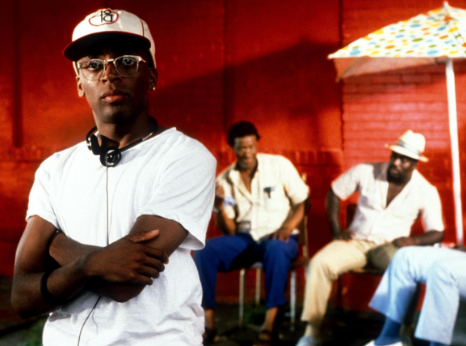
The Geography of Belonging
By adolescence, young Shelton had absorbed the particular pain of the displaced child. He belonged nowhere completely. Atlanta held his grandmother and extended family, but he was a Northerner there. Brooklyn claimed his heart, but his father’s artistic wandering meant no single block felt permanent. This rootlessness would shape everything that followed.
His mother’s death from cancer in 1977 cracked something open. She had been the anchor, the one who read him Langston Hughes and took him to civil rights marches. Without her, the teenage Spike channeled grief into ambition. He enrolled at Morehouse College, his mother’s dream for him, determined to become something undeniable.
The Making of a Provocateur
At Morehouse, surrounded by the Black elite his mother had wanted him to join, Spike discovered film. The medium offered something words couldn’t: the ability to control how Black people were seen. He watched Hollywood depict his community as criminals, buffoons, or noble sufferers. Subsequently, he decided to burn those images down and build new ones from the ashes.
Graduate school at NYU’s Tisch brought him back to New York. His thesis film, Joe’s Bed-Stuy Barbershop: We Cut Heads, won a Student Academy Award in 1983. The Academy voters probably didn’t realize they were rewarding a man who would spend the next forty years making them squirm.
The Chip: Proving White Hollywood Wrong
The rejection came fast and hard. After NYU, Spike tried to make his first feature, a semi-autobiographical film called The Messenger. The Screen Actors Guild shut down production over union disputes. He lost everything he’d raised, roughly $40,000 scraped together from family and friends. Most twenty-seven-year-olds would have found a desk job and called the dream dead.
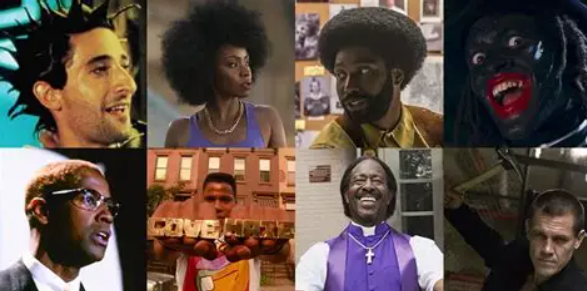
She’s Gotta Have It: The $175,000 Revolution
Instead, Spike wrote She’s Gotta Have It in two weeks. He shot it in twelve days for $175,000, maxing out credit cards and begging favors. The 1986 release grossed over $7 million and announced a new voice in American cinema. More importantly, it proved that Black independent film could find white audiences without pandering to them.
The industry noticed. Columbia Pictures gave him money for School Daze. Universal backed Do the Right Thing. Each project carried the same subtext: You didn’t think I could do this. Watch me. The chip on his shoulder wasn’t metaphorical. It was the engine.
The Nike Deal and Commercial Crossover
When Nike approached him in 1988 to create commercials with Michael Jordan, some accused Spike of selling out. He saw it differently. Mars Blackmon, his character from She’s Gotta Have It, became a cultural phenomenon. The “It’s gotta be the shoes” campaign made Spike Lee a household name beyond art-house theaters. Furthermore, it funded the bigger, angrier films he actually wanted to make.
The Nike relationship reportedly earned him millions over the years. Critics sneered at a Black radical hawking sneakers. Spike understood something they didn’t: in America, money is the only language power respects. He was learning to speak it fluently.

The Rise: $50 Million Built on Uncomfortable Truths
The 1990s established Spike Lee as the most important Black filmmaker of his generation. Malcolm X in 1992 became both his masterpiece and his defining battle. Warner Bros. initially refused to fund the $33 million budget for a three-hour film about a Muslim revolutionary. Spike raised the difference himself, calling in favors from Bill Cosby, Oprah Winfrey, Michael Jordan, and other wealthy Black celebrities.
The Business of Provocation
The film earned $48 million domestically and cemented Denzel Washington as a leading man. Yet the Academy snubbed Spike for Best Director, giving the nomination instead to five white men. The pattern would repeat throughout his career. Hollywood loved his movies. Hollywood just couldn’t bring itself to honor the man making them.
His production company, 40 Acres and a Mule Filmworks, became a fortress of Black creative control. Named after the broken promise to freed slaves, the company produced documentaries, music videos, and commercials alongside feature films. By 2000, Spike had directed twenty-five projects and accumulated a net worth exceeding $40 million.
The Fort Greene Fortress
In 1998, he purchased a four-story brownstone at a corner lot in Fort Greene. The neighborhood was still rough then, crack vials in the gutters and gunshots after dark. The block had history, though. It sat near the African Burial Ground, where enslaved people had been interred during colonial times. Spike saw something the developers hadn’t noticed yet.
The brownstone became his headquarters, his editing suite, his family home. His wife, Tonya Lewis Lee, a producer and author, helped transform the space into a showcase of Black art and memorabilia. The basketball court in back hosted pickup games with neighborhood kids and visiting celebrities. Subsequently, the house evolved into a symbol of what Spike had always wanted: a permanent address in Brooklyn, a place no one could make him leave.
The Tell: Still Fighting at Sixty-Seven
Watch any Spike Lee interview from the past decade and you’ll see the same teenage anger flickering behind his eyes. The 2018 Oscar for Best Adapted Screenplay for BlacKkKlansman should have felt like vindication. Instead, when Green Book won Best Picture that night, Spike visibly tried to leave the auditorium. He told reporters later that every time he thought he was out, they pulled him back in.

The Gentrification Contradiction
The Fort Greene brownstone that once represented Black ownership now sits in one of Brooklyn’s most expensive neighborhoods. Studios that sold for $150,000 when Spike arrived now list for $2 million. He has railed against gentrification in speeches and films while watching his own property value multiply tenfold. The contradiction doesn’t escape him. Indeed, it seems to fuel new anger.
“I’m not against new people moving in,” he told The New York Times in 2014 during a now-famous rant. “I’m against the disrespect.” The word disrespect echoed through the room. It’s the same word a displaced child uses when someone takes his seat at the table.
The Fort Greene Connection: Home at Last
The brownstone makes psychological sense when you understand where Spike came from. A boy whose family kept moving, whose mother died before he could prove himself, whose industry kept him at arm’s length even while cashing his checks. He needed a fortress. He needed a block where everyone knew his name.
The Block as Stage
Fort Greene gave him both. The house sits near the Brooklyn Academy of Music, where cultural tastemakers gather. The park nearby hosts jazz festivals that would have made his father proud. The neighborhood has a creative energy that matches his own restless spirit. Moreover, it remains close enough to Bedford-Stuyvesant that Do the Right Thing feels like a documentary about his neighbors.
At sixty-seven, Spike Lee’s $50 million net worth represents something more than financial success. It’s proof that the displaced boy made it back to Brooklyn and bought his corner. The brownstone isn’t just real estate. It’s a monument to everyone who told him he couldn’t.
The Paradox of the Prophet
Spike Lee built an empire by telling stories about systemic racism, urban neglect, and the Black experience in America. The empire made him wealthy enough to become a gentrifier in the very neighborhoods he documented. He knows the contradiction. He lives it every day in that four-story brownstone.
Maybe that’s the final truth about the Spike Lee net worth story. The wound never fully heals. The chip never disappears. The boy watching the Bronx burn is still in there somewhere, still determined to prove that he belongs in rooms designed to exclude him. At $50 million, he can afford to buy the whole room now. Yet somehow, he’s still fighting for a seat.
Related Articles
- Jordan Peele Net Worth 2025: From Key & Peele Sketches to Horror Empire
- Ava DuVernay Net Worth 2025: The Distribution Disruptor Who Built Array Alliance
- Greta Gerwig Net Worth 2025: Sacramento Girl to Billion-Dollar Director
For features, partnerships, and advertising inquiries, visit sociallifemagazine.com/contact. Experience luxury lifestyle events at polohamptons.com. Subscribe to our print edition or support independent journalism with a $5 donation.
Author

Written by
Recent Posts

He’s Got Millions. He Still Flinches at the Bill.

Streamlining Ground Station Data Pipelines for Deep Space Missions

The Coordination Problem That Kills Growing Marketing Teams
Why Personalized Skincare Is Replacing One-Size-Fits-All Beauty Products
The Return of the Transatlantic Crossing
Categories
- Art
- Articles
- Business of Luxury
- Celebrities
- Culture
- Entertainment
- Events
- Faces of Summer 2026
- Fashion
- Fashion & Style
- Featured
- Finance
- Food, Spirits, Wine
- Hamptons
- Hamptons Celebrities
- Health
- Health & Beauty
- Lifestyle
- Luxury Lifestyle
- Press
- Profiles
- Real Estate
- Technology
- The Chronicles
- Travel
- Uncategorized
- Weddings