
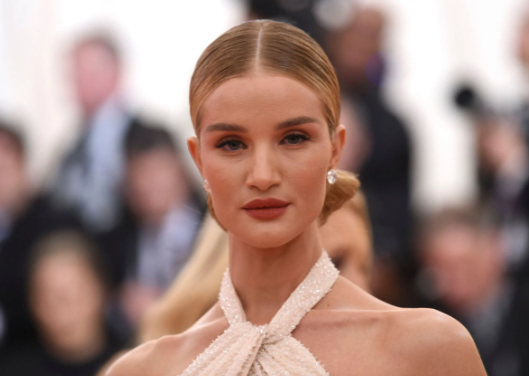
Rosie Huntington-Whiteley has 20 million Instagram followers and gives almost no interviews. Her last major profile appeared in 2020. She attends perhaps three industry events annually. She hasn’t walked a runway in years. Yet her partnerships with Marks & Spencer span over a decade. Her Rose Inc. beauty brand grows quietly. Her Ugg relationship continues generating seven figures. The British supermodel built her empire on a counterintuitive principle: in an attention economy, scarcity compounds value.
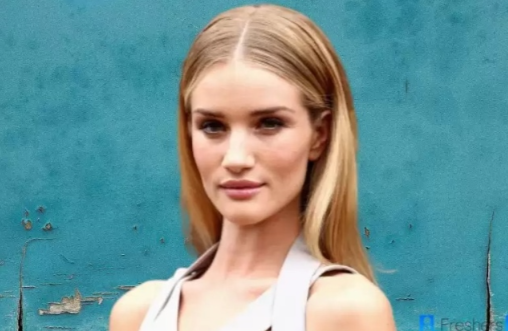
Rosie Huntington-Whiteley’s net worth reaches approximately $30 million, excluding any share of her partner Jason Statham’s estimated $90 million fortune. That $30 million represents entirely independent wealth, accumulated through beauty partnerships, brand launches, and the disciplined management of a personal brand she treats like fine art—valuable precisely because it’s rarely displayed.
The Before: A Farm Girl’s Fashion Education
Rosie Alice Huntington-Whiteley grew up on a farm in Tavistock, Devon, in England’s rural southwest. Her father managed fitness clubs. Her mother taught yoga. The family lived comfortably but modestly, with none of the urban sophistication that typically produces fashion industry entrants. Young Rosie’s early passion wasn’t modeling but acting, with school theater performances suggesting a different creative trajectory entirely.
The School Trip That Changed Everything
At fifteen, during a school trip to London, Huntington-Whiteley accompanied friends to an open casting call at a modeling agency. She wasn’t particularly serious about the opportunity. The agency was serious about her. Profile Models signed her immediately, recognizing the bone structure and 5’9″ frame that would eventually make her one of British fashion’s most reliable exports.
The early years required patience. Unlike American models who could access New York’s commercial market immediately, British models often developed through editorial work that paid little but built credibility. Huntington-Whiteley shot for British Vogue and i-D before earning significant income, learning to treat each job as portfolio investment rather than paycheck.
The Gatekeepers: Burberry and the British Establishment
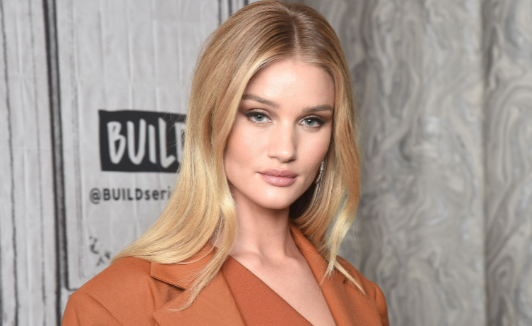
Huntington-Whiteley’s career-making moment arrived in 2008 when Burberry selected her for their spring campaign. The British heritage brand was mid-transformation under Christopher Bailey, repositioning from heritage label to contemporary luxury. They needed a face that read as classically British without seeming dated. Huntington-Whiteley, with her English rose coloring and minimal tabloid presence, fit precisely.
The Burberry Effect
The Burberry campaign legitimized Huntington-Whiteley within fashion’s establishment. Unlike Victoria’s Secret fame, which registered primarily with American commercial audiences, Burberry credibility opened editorial doors internationally. She followed with campaigns for BCBG Max Azria, Thomas Wylde, and eventually the lingerie brands that would provide her primary income.
Victoria’s Secret signed her as an Angel in 2010. She walked five consecutive shows before quietly transitioning away from the brand in 2016. The departure attracted minimal attention because she’d already diversified beyond lingerie work. The Victoria’s Secret money had funded her next phase.
The Transformation: Marks & Spencer and the Long Partnership Model
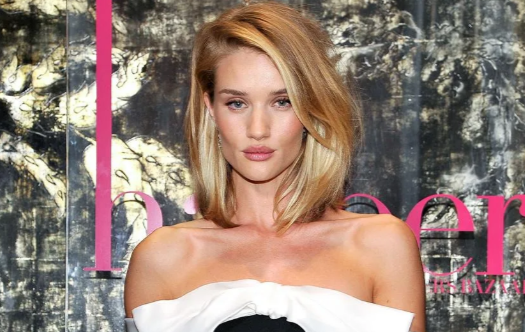
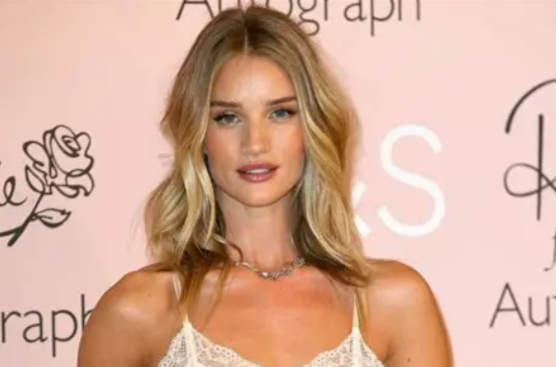
In 2012, Marks & Spencer approached Huntington-Whiteley about designing a lingerie collection for their Autograph brand. The British retailer wanted celebrity credibility without celebrity chaos. Huntington-Whiteley wanted creative control and ongoing royalties rather than flat endorsement fees. The partnership launched Rosie for Autograph, a lingerie and sleepwear line that has generated estimated revenues exceeding £200 million over its lifetime.
Why Partnership Beats Endorsement
The Marks & Spencer relationship illustrates Huntington-Whiteley’s financial strategy. Rather than taking a flat fee to appear in advertisements, she negotiated design involvement and revenue participation. Each collection’s success compounds her earnings. Each year’s renewal reflects accumulated goodwill rather than renegotiated terms. The partnership structure rewards longevity over novelty.
Simultaneously, she maintained relationships with Ugg, ModelCo cosmetics, and various fragrance brands. None of these partnerships required constant publicity. She fulfilled contractual obligations, delivered commercial results, and otherwise maintained the silence that made each appearance more valuable.
The Compounding Ghost Strategy
Industry observers began noticing Huntington-Whiteley’s unusual approach around 2015. While peers flooded Instagram with sponsored content, she posted sparingly. While competitors gave interviews to any publication that asked, she declined most requests. While others chased trending topics and viral moments, she maintained consistent aesthetic standards that made her feed feel curated rather than desperate.
The restraint wasn’t passivity. It was positioning. In attention-saturated markets, rarity becomes differentiating. Her silence made her appearances noteworthy. Her selectivity made her endorsements credible. She became valuable precisely because she couldn’t be bought cheaply.
The Empire Pivot: Rose Inc. and Ownership
Rose Inc. launched in 2018 as a digital content platform before expanding into product in 2021. The beauty brand represents Huntington-Whiteley’s transition from face-for-hire to brand owner. Unlike her Marks & Spencer partnership, Rose Inc. equity belongs entirely to her.
The Content-to-Commerce Pipeline
Rose Inc. began with editorial content: makeup tutorials, skincare routines, interviews with beauty industry figures. The content built audience before the brand sought revenue. When products eventually launched, they arrived to an engaged community rather than a cold market. The strategy mirrors successful direct-to-consumer brands like Glossier, building relationship before requesting transaction.
The product line emphasizes clean formulation and understated packaging, consistent with Huntington-Whiteley’s personal aesthetic. Unlike celebrity beauty brands that rely on the founder’s name recognition, Rose Inc. products must compete on performance. That constraint forces quality that sustains beyond initial curiosity.
The Product Philosophy
Rose Inc. formulations prioritize what Huntington-Whiteley describes as “skin-first” makeup, products that enhance rather than mask. The emphasis on natural finish and buildable coverage reflects her own preferences, developed over years of professional makeup application on editorial shoots. She understands what works on camera because she’s been the subject of thousands of photographs.
The packaging aesthetic runs deliberately minimal, with muted tones and clean typography that distinguish Rose Inc. from the maximalist designs dominating celebrity beauty. That restraint extends from product to marketing to founder visibility itself. The brand whispers where others shout.
Scaling Without Surrendering
Rose Inc. has secured investment to fund expansion while maintaining Huntington-Whiteley’s creative control. The balance between growth capital and founder independence proves challenging for many celebrity brands. She has navigated it by accepting slower growth in exchange for preserved equity percentages and decision-making authority. The compounding ghost doesn’t sell cheap.
Statham and the Partnership Dynamic
Huntington-Whiteley has been in a relationship with actor Jason Statham since 2010. They became engaged in 2016 and have welcomed two children. Statham’s estimated $90 million fortune, accumulated through action film franchises, provides household security independent of Huntington-Whiteley’s earnings. However, she has maintained separate professional identity throughout, never appearing in Statham’s films or leveraging his celebrity for her business ventures.
The couple divides time between Los Angeles and London. They rarely appear together publicly. They give virtually no joint interviews. The privacy extends her compounding ghost strategy into her personal life, maintaining the mystery that makes her professional appearances notable.
The Hamptons Connection: British Supers on the East End
Huntington-Whiteley belongs to a cohort of British supermodels with varying East Coast ties. Naomi Campbell has maintained Hamptons connections for decades. Kate Moss appears periodically at Montauk events. Huntington-Whiteley and Statham have reportedly explored East Coast properties as potential alternatives to their Los Angeles base.
The British Model in American Markets
For Social Life readers, Huntington-Whiteley represents a particular type: the European professional who operates in American markets without fully Americanizing. Her British restraint reads as sophistication to Hamptons audiences accustomed to louder celebrity. Her editorial credibility satisfies fashion-forward residents. Her commercial success demonstrates business acumen beyond mere beauty.
Should she and Statham eventually purchase East End property, their arrival would follow established patterns: quiet acquisition, minimal social circuit participation, occasional charity benefit attendance. The compounding ghost doesn’t change strategies based on zip code.
Closing Reflection
Rosie Huntington-Whiteley’s $30 million net worth understates her financial position. The Marks & Spencer partnership continues generating royalties. Rose Inc. builds equity. The Statham household provides security multiplying any individual achievement. Moreover, her deliberately constrained visibility preserves brand value that more accessible celebrities have long since exhausted.
In an industry that rewards volume, she bet on restraint. In a market flooded with influencer content, she maintained editorial standards. In a career path defined by declining relevance, she engineered increasing value through manufactured scarcity. The compounding ghost playbook works precisely because so few have the discipline to execute it.
Every choice to stay silent when others would speak, every declined interview request, every passed opportunity for viral attention added to her accumulated mystique. The scarcity is real because she actually maintains it. Others claim to value privacy while posting daily. She values privacy and proves it. That consistency is worth everything in markets that punish inconsistency mercilessly. She gives nothing away. That’s why everything she offers is worth so much.
Related Articles
- Miranda Kerr Net Worth 2025: The Beauty Brand Exit That Changed Everything
- Kate Moss Net Worth 2025: Chaos, Controversy, and Somehow Still Compounding
- Claudia Schiffer Net Worth 2025: The Original Compounding Ghost
For advertising inquiries and brand partnership opportunities with Social Life Magazine, contact our team. Interested in sponsoring Hamptons events? Visit Polo Hamptons for tickets and sponsorship packages.
Join our email list for weekly updates on wealth, style, and the people shaping Hamptons culture. Subscribe to our print edition or support our journalism with a $5 contribution.
Author

Written by
Recent Posts

How to Choose Useful Tech Gifts for Employees and Clients in 2026
The Garage Question: Which Car Goes South for the Season?

VandS Clinic Review Treatment: How Seoul Injectable and Laser Options Compare for US Patients
Before Buying a View Home: What a Sloped Lot Means for the Purchase

Powerful Strategies to Stay Ahead in a Fast-Moving Real Estate Market
Categories
- Art
- Articles
- Business of Luxury
- Celebrities
- Culture
- Entertainment
- Events
- Faces of Summer 2026
- Fashion
- Fashion & Style
- Featured
- Finance
- Food, Spirits, Wine
- Hamptons
- Hamptons Celebrities
- Health
- Health & Beauty
- Lifestyle
- Luxury Lifestyle
- Press
- Profiles
- Real Estate
- Technology
- The Chronicles
- Travel
- Uncategorized
- Weddings