

The numbers on Lorenzo Lamas net worth, estimated at $3 million, tell a compressed version of a longer story. They describe a man who had more structural advantages than almost anyone entering the entertainment industry in 1978. Famous father. Famous stepmother. A face that cinematographers did not have to work around. Nine seasons of prime-time network television. A syndicated action series that ran five years. And then the genre that had built him stopped being made, and what was left was the question every celebrity eventually faces: who are you when the machine stops?
Lamas answered that question publicly, repeatedly, and with mixed results. The answer is instructive. Not as a lesson in failure, the man worked continuously for four decades. Rather as a lesson in how badly the entertainment industry mishandles the transition between what it needs from you at twenty-five and what remains when you are fifty.
The Before: A Last Name That Weighed Forty Pounds
Fernando’s Son, Esther’s Stepson, Hollywood’s Expectation
Lorenzo Fernando Lamas was born on January 20, 1958, in Santa Monica, California. His father was Fernando Lamas, Argentine actor, MGM contract player, the man whose name became a cultural shorthand for a specific brand of Latin charm. His stepmother was Esther Williams, the swimmer-turned-actress whose MGM aquatic musicals defined a genre. He was raised in a household where fame was ambient, where talent was the baseline assumption, and where failure carried the specific weight of having had every advantage.
Additionally, the Lamas name was not simply a door opener. It was a set of expectations requiring management. Fernando Lamas had built his reputation on a particular quality, magnetic, physical, slightly dangerous in the way that mid-century Hollywood required its Latin stars to be. Lorenzo inherited the face, the physique, and the genetic implication that what worked for the father would work for the son. This was partly true. It was also, eventually, the trap.
He enrolled at the Hawthorne School in Beverly Hills and studied acting seriously enough to land his first professional role at twenty. That scaffolding was real. What he built on it is the actual story.
The Pivot Moment: Falcon Crest and the Machine
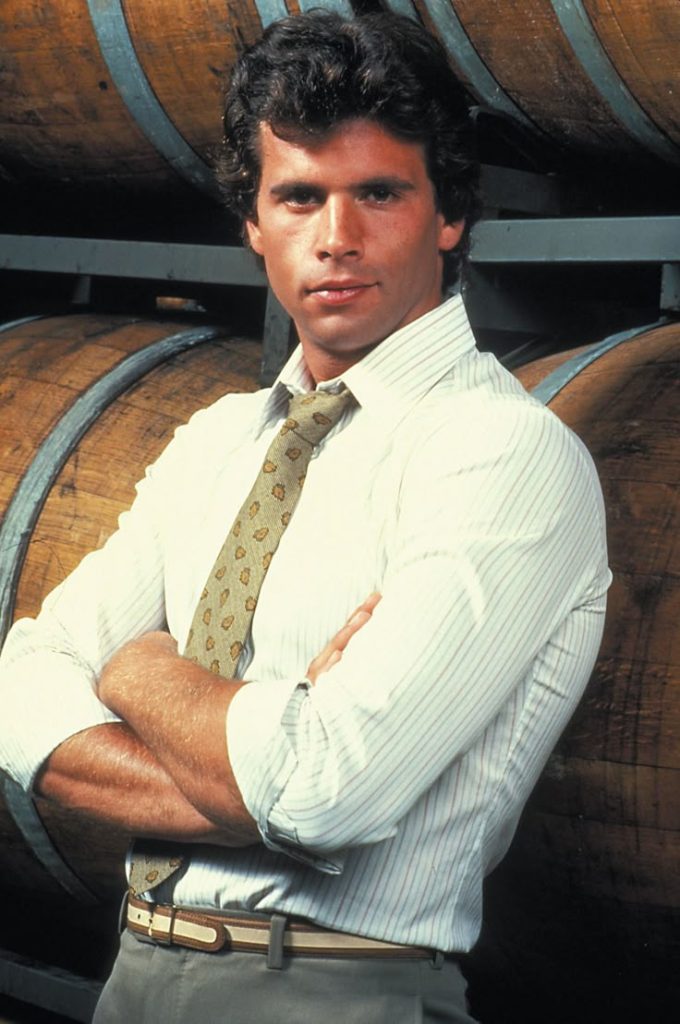
In 1981, Lamas was cast as Lance Cumson in Falcon Crest on CBS. The show ran nine seasons. It aired in the same Friday-night dynasty-drama slot that had made Dallas and Dynasty the dominant cultural artifacts of Reagan-era television. Lance Cumson was the defining role of his career, morally incoherent, perpetually arriving on horseback. Somehow always compelling.
What Lance Cumson Actually Built
The role worked precisely because it required nothing that Lamas had to manufacture. Physical presence. Charisma without warmth. The ability to make villainy entertaining rather than threatening. For a specific demographic of American viewer, Lance Cumson was the organizing principle of Friday nights for nearly a decade. Consequently, Lamas became a recognizable face to twenty million people a week, not because of range, but because the genre asked for exactly what he naturally supplied.
However, this is where the Lewis hidden-game analysis becomes relevant. The machine that was producing Lamas’s success was not his talent. It was a genre. Prime-time soap opera was, in the early 1980s, one of the most commercially powerful formats in American network television. It required a specific type of performer, physically striking, emotionally broad, narratively serviceable. Lamas was optimal for this environment. The environment was temporary. Nobody told him that part.
Read the full Legacy TV and Film Deep Cuts hub — and where Lamas fits in the larger story →
The Climb: Renegade and the Syndication Play
When Falcon Crest ended in 1990, Lamas did what any working actor with nine seasons of network television behind him would do: he leveraged it. Renegade premiered in 1992 in first-run syndication. He played Reno Raines, a man falsely accused of murder who becomes a bounty hunter while clearing his name. The show ran five seasons across 110 episodes and generated the kind of viewership that syndication produces, substantial, loyal, and demographically invisible to the critics who determine cultural reputation.
The Syndication Trap Nobody Names
Here is the hidden game in Lorenzo Lamas net worth: Renegade was a commercial success by the standards of 1990s first-run syndication. It was not a prestige vehicle. It did not produce award nominations or critical re-evaluation of his earlier work. What it produced was money and visibility among his Falcon Crest demographic. It also confirmed, to the industry, that Lamas was a syndication-level star rather than a network-level one.

Furthermore, the economics of first-run syndication in the 1990s were structured in ways that looked like success while building a ceiling. The format kept working actors employed. It did not build careers upward. By the time Renegade ended in 1997, the landscape had shifted entirely. Cable had fragmented the audience. Prestige drama was beginning its long reconfiguration. The Friday-night dynasty soap was not coming back. And Lamas, at thirty-nine, was now definitively associated with a genre and an era that the industry was actively trying to leave behind.
The Hamptons Chapter: What This Story Means in This Room
The Hamptons social circuit does not run on cautionary tales. It runs on success. But the sophisticated version of that circuit, the one that reads Social Life Magazine for analysis, not gossip, understands the Lamas story differently. About what it means to build a career entirely within a single genre, a single demographic, a single era of television economics.
The Structural Lesson Worth Paying For
Every family office manager, every private equity principal, every newly liquid founder summering on the East End has a version of this story in their portfolio. An asset perfectly optimized for one market environment. An investment thesis built on genre permanence. Then the exit that never materialized, because the thing you were selling stopped being bought.
Lamas did not fail at acting. He succeeded enormously within the parameters available to him. The problem was structural, the parameters changed and the adaptation was incomplete. That is a story the Social Life Magazine reader recognizes from business before they recognize it from television.
Explore Hamptons luxury real estate and the celebrity estates of the East End →
What He Built: The Five-Marriage Accounting
Lorenzo Lamas net worth is estimated at $3 million. The gap between that figure and what a nine-season CBS network star might reasonably have accumulated is largely explained by five marriages and their associated financial consequences. The marriages were to actresses Victoria Hilbert, Michele Smith, Kathleen Kinmont, Shauna Sand, and Shawna Craig. Each one generated tabloid coverage. Several cases of litigation were generated. All of them generated costs.
The Personal Economics Nobody Advertises
This is not a moral accounting. Marriages end for reasons that have nothing to do with finances, and the specifics of any individual settlement are private. However, five divorces across a twenty-year period represent a pattern with compounding financial consequences. Combined with the natural deceleration of a career built on genre-specific appeal, the math produces the current figure.
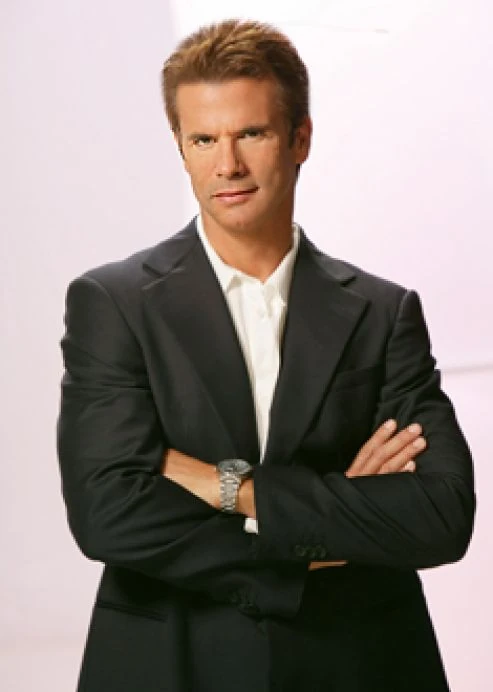
Additionally, Lamas made choices that extended visibility while limiting trajectory. Dancing with the Stars in 2008. Recurring roles on The Bold and the Beautiful. Reality television appearances. A willingness to engage publicly with his own celebrity that the industry simultaneously rewarded with bookings and penalized with reduced seriousness. He remained employed. He did not remain ascendant. The difference between those two conditions is, in the entertainment industry, a chasm.
Moreover, his relationship with his own legacy has been notably clear-eyed. Lamas has not publicly pretended the career went differently than it did. He has acknowledged the marriages, addressed the tabloid years without excessive defensiveness, and continued working. That equanimity, whatever produced it, is worth noting in the accounting.
Explore all celebrity net worth profiles and origin stories at Social Life Magazine →
Where Are They Now: The Honest East End Verdict
Lorenzo Lamas turns sixty-seven in 2025. Still active on social media, he maintains an audience of people who watched Falcon Crest and Renegade and never stopped caring. Work continues to come. Sobriety is something he has spoken about openly. By the available evidence, Lamas has processed the distance between his starting point and his current position, without requiring anyone to pretend that distance is smaller than it is.
The Lesson the Net Worth Teaches
The deeper lesson in Lorenzo Lamas net worth is not about him specifically. It is about the machine.
Detroit Made Cars. Hollywood Made Stars. Same Problem.

The entertainment industry in the 1980s produced stars the way Detroit produced cars, on a platform designed for a specific road. When the road changed, the cars became collectibles. Some found garages. Some did not.
Lamas had Fernando’s face and Esther’s address book. He had nine seasons of CBS network television and a syndication run extending his name another half-decade past the genre’s death. What he lacked was a transition strategy. The industry had stopped needing what he’d spent twenty years perfecting. Structural failure. Not personal.
The Final Ledger
Honest accounting. A complicated verdict. A story worth knowing.
For the Social Life Magazine reader who watched Lance Cumson scheme through a Napa Valley vineyard on a Friday night in 1984, the $3 million is not the ending. It is where the ledger currently stands.
The Hamptons dining guide: where the East End’s most discerning visitors eat →
Related Reading:
Legacy TV and Film Stars: The Deep Cuts That Actually Mattered
Jean Smart Net Worth: The $12M Career Nobody Saw Coming
Where This Story Lives Now
There is a version of the cultural conversation that treats Lorenzo Lamas as a punchline. You’ve heard it. And then there is the version that understands a nine-season CBS network star as a case study in genre risk and market timing. Social Life Magazine has been running that version for twenty-three years. If your brand belongs in that conversation, let’s talk about a feature.
Every week, 82,000 readers open our newsletter because they trust us to find the angle the algorithm missed. Hamptons house. Family office. Discretionary budget. Attention span for something that actually goes somewhere. If you want to be in their inbox, join the list, or get your brand inside it.
The real meetings at Polo Hamptons happen between the chukkers. The right two people end up at the same tent, no agenda, suddenly one. That’s not an accident. That’s what we build. Sponsorships for 2026 are being confirmed now. The people you want access to are already on the field.
Twenty-three summers. Five issues per season. Twenty-five thousand copies from Westhampton to Montauk, through the boutiques, restaurants, and hotel lobbies where the Hamptons actually happens. If you want your name printed in something people keep, the print edition is Further Lane, and it goes places digital doesn’t reach.
This magazine runs on people who believe cultural memory is worth funding. If you’ve read this far, you’re probably one of them. A $5 contribution keeps independent luxury publishing alive in a media landscape that keeps trying to replace it with content.
Author

Written by
Recent Posts

hiTechMODA Season 16
How to Keep Your Personal Number Private When Booking Events, Rentals and Services
Understanding Compensatory Damages in a Personal Injury Case

When Online Family Therapy Makes Sense for Modern Families

Carrier Oils, Essential Oils, and Oil Blends: What Beauty Brands Need to Know
Categories
- Art
- Articles
- Business of Luxury
- Celebrities
- Culture
- Entertainment
- Events
- Faces of Summer 2026
- Fashion
- Fashion & Style
- Featured
- Finance
- Food, Spirits, Wine
- Hamptons
- Hamptons Celebrities
- Health
- Health & Beauty
- Lifestyle
- Luxury Lifestyle
- Press
- Profiles
- Real Estate
- Technology
- The Chronicles
- Travel
- Uncategorized
- Weddings