
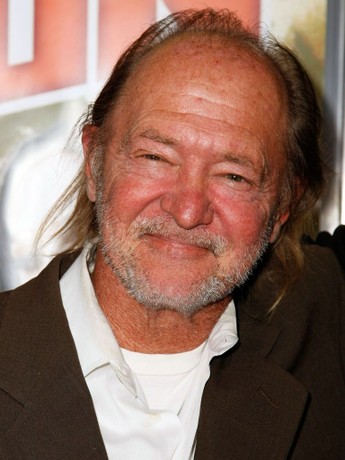
Here is a test. Think of a film you consider genuinely good. Something from the past forty years you have watched more than once and recommended to someone whose taste you respect. Now consider the possibility that Tracey Walter is in it. His credits run from 1979 to the present across more than two hundred films and television productions. The odds are real. Tracey Walter net worth sits at an estimated $3 million, built across four decades of being the actor that directors who know what they are doing keep quietly calling back.
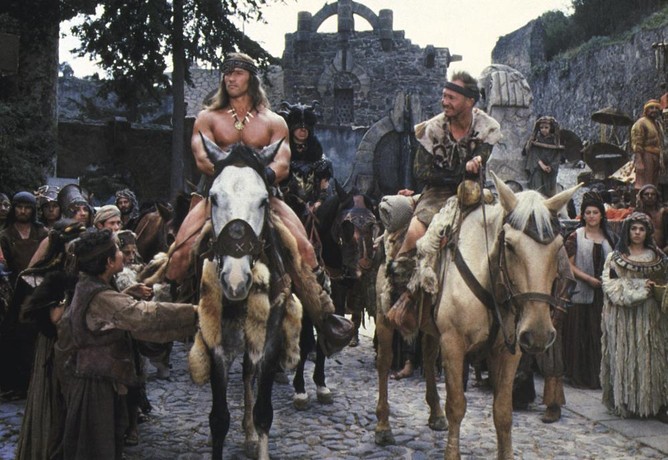
He will not ring a bell by name. The face will. It is a specific face, angular, slightly watchful, the kind that reads as competent without announcing itself. Character actors do not get profiles. They get work. Walter has had more work than almost any performer of his generation, from nearly every director whose taste the critical establishment has spent forty years validating. That accounting is overdue.
The Before: Indiana, Early Credits, and a Face the Camera Trusted
What the Midwest Trains You Not to Do
Tracey Walter was born on November 25, 1947, in Harrisburg, Indiana. The Midwest does not produce performers who need the room to look at them. It produces people who know how to be useful without requiring acknowledgment, a disposition that translates, in Hollywood, into the specific value proposition of the character actor. You show up. You serve the scene, you make the people around you better without pulling focus toward the transaction.
Walter began acting in the 1970s, building early credits through television guest roles and small film appearances. The résumé of a working character actor in this era looks nothing like the résumé of a star. No single defining credit. No breakout moment. A steady accumulation of appearances across productions that required someone who could be trusted to deliver exactly what the scene needed without asking for more than the scene offered.
Notably, this accumulation is itself a form of mastery. Session musicians develop it. Ensemble players develop it. Subordinating ego to the work is a discipline most performers never acquire, because Hollywood’s incentive structure actively discourages it.
The Pivot Moment: Repo Man and the Directors Who Notice
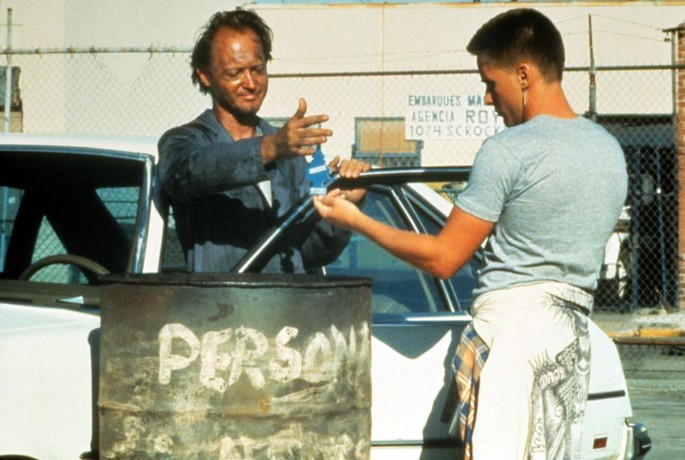
In 1984, Walter appeared in Repo Man, Alex Cox’s punk-inflected science fiction film about a young man who falls into the Los Angeles repossession business. The film is now a canonical text of American independent cinema, formally inventive, culturally prescient. Directors studied it in the 1980s and 1990s as proof that low-budget filmmaking could achieve something when aesthetic ambition exceeded financial resources. Walter played Miller, the philosophical repo man whose monologue about the lattice of coincidence remains one of the film’s most quoted sequences.
Why the Directors Who Matter Kept Calling
The Miller monologue is, on paper, a comic relief scene. In Walter’s delivery, it becomes something rarer, genuinely strange, internally consistent, performed with a conviction that commits to the character’s worldview completely. This is the hidden game in Tracey Walter net worth. The ability to take a scene that could easily land as a throwaway and make it the thing the audience remembers.
Consequently, the directors who care about this quality noticed. Tim Burton cast him in Batman in 1989 as Bob the Goon, the Joker’s primary henchman. Jonathan Demme cast him in Silence of the Lambs in 1991. That film was assembled from the finest available character talent, every supporting role treated as a potential scene-stealer. Steven Soderbergh cast him in Erin Brockovich in 2000. Alex Cox brought him back for subsequent projects. These are not directors who cast carelessly. They are directors who build films from supporting performances outward, understanding that the texture of a movie lives in the margins.
Read the full Legacy TV and Film Deep Cuts hub — and where Walter fits the larger story →
The Climb: 200 Films and the Architecture of Indispensability
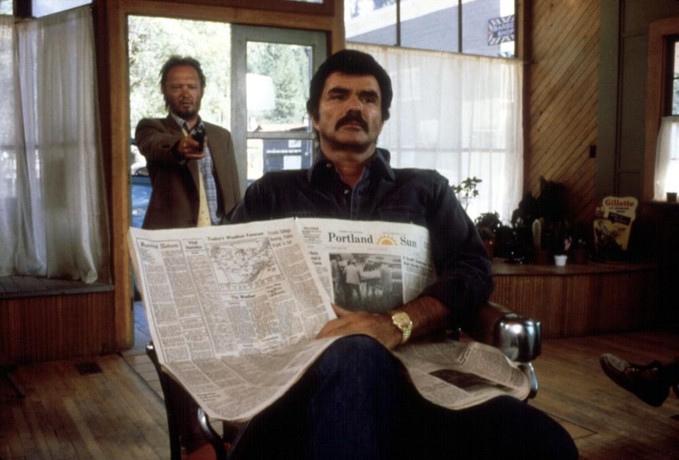
The credits accumulate in a way that defies easy summary. At Close Range in 1986 with Sean Penn. Something Wild in 1986 with Jonathan Demme, the first of multiple collaborations with a director who became one of American cinema’s most respected voices. Married to the Mob in 1988. Pacific Heights in 1990. Equinox in 1992. Television work ran alongside the film credits throughout. The Cosby Show, The A-Team, Murder She Wrote, Seinfeld, appearances across virtually every major network drama and comedy of the 1980s and 1990s.
The Texture Problem Nobody Names
Michael Lewis writes about the hidden game, the statistics nobody was tracking, the value nobody had quantified, the player contributing things the box score did not capture. Tracey Walter is that player. His contribution to a film is rarely quantifiable in the terms the industry uses to measure performance. He does not carry scenes. He does not drive narratives. What he does is provide the texture that makes the scenes carrying the narrative feel real.
This is a harder thing to do than it sounds. A supporting performance that feels authentic does not call attention to its authenticity. It simply exists, providing the visual and tonal information that tells the audience this is a world rather than a set. Remove it and nothing specific seems wrong. The scene still works. Something just feels slightly off, the way a room feels slightly off when a piece of furniture has been moved an inch. Walter has spent forty years being the furniture nobody moved.
Furthermore, two hundred credits across four decades means Walter worked through every significant shift in American film and television production. The independent film boom of the 1980s, the prestige cable era, the streaming transition. He adapted without announcement, taking the work that came, building a career that outlasted every trend supposed to make certain kinds of performers obsolete.
The Hamptons Chapter: The Value the Market Underprices
What the East End Knows About Essential and Invisible
The Social Life Magazine reader has a version of Tracey Walter in their professional life. An advisor nobody profiles whose analysis beats the one who gets the magazine cover. An operator who makes every company they touch run more efficiently without requiring credit. Someone in the room whose absence would be felt as a texture problem even by people who could not explain why something felt slightly off.
Walter’s career is the entertainment industry expression of that value proposition. Essential. Underpriced by the metrics the market uses. Consistently rehired by the people sophisticated enough to understand what they are buying. His net worth does not reflect his contribution to American cinema. The net worth figure does not reflect his contribution to American cinema. Career length does, forty-plus years of continuous employment by directors sophisticated enough to understand what they were buying.
Explore Hamptons luxury real estate and the celebrity estates of the East End →
What He Built: The Numbers Behind the Invisible Career
Tracey Walter net worth is estimated at $3 million. The figure reflects four decades of series work, film appearances, residuals, and the accumulated returns of a career built on reliability rather than stardom. It does not reflect the kind of back-end participation available to above-the-line talent. Walter has never been above-the-line talent. He has been the talent that makes above-the-line talent look better than they would without him.
The Directors Don’t Lie
The most honest accounting of Walter’s value is not the net worth figure. It is the director list. Alex Cox, Tim Burton, Jonathan Demme, Steven Soderbergh, these are not directors who hired the same character actor across multiple decades out of sentimentality. They hired him because he delivered. Every time. In every genre. Across every budget level and production context that the past forty years of American filmmaking produced.
Additionally, the television credits tell the same story. Seinfeld cast everyone. Murder She Wrote cast everyone. The fact that Walter appears across the full spectrum, prestige and commercial, film and television, independent and studio, indicates a range of professional reliability that transcends genre and format. He worked everywhere because everywhere he went, the work was good.
Explore all celebrity net worth profiles and origin stories at Social Life Magazine →
Where Are They Now: Still Working, Still Invisible
Tracey Walter is seventy-seven years old. His recent credits extend into the 2010s and beyond. The career has not stopped. It has simply continued in the way it always has, without announcement, without profile, without the critical retrospective his body of work has earned.
The Hemingway Accounting This Career Deserves
Hemingway believed in the iceberg, the dignity of movement comes from what is below the surface, not what is visible above it. Tracey Walter’s career is structured exactly like an iceberg. The visible portion is the face you recognize from films you have watched a dozen times without connecting the face to a name. Below that visible surface: two hundred credits, forty years of craft, and a director list whose collective taste represents the finest judgment American cinema produced across the same period.
What is unsaid in every scene Walter appears in is the work, the preparation, the commitment, the discipline of serving the material rather than the ego. It does not announce itself. It is simply there, doing what it does, making the scene better in ways that are easier to feel than to describe.
Tracey Walter net worth is $3 million. The work behind that number is the story. And the story has been playing in your living room, largely unattributed, since 1979.
For the Social Life Magazine reader who has seen Repo Man, Batman, or Erin Brockovich and now wants to go back and look for the face: you will find it. It was always there. It is doing exactly what it has always done, making everything around it work better, without asking you to notice.
The Hamptons dining guide: where the East End’s most discerning visitors eat →
Related Reading:
Legacy TV and Film Stars: The Deep Cuts That Actually Mattered
Jean Smart Net Worth: The $12M Career Nobody Saw Coming
Where This Story Lives Now
There is a version of the cultural conversation that only covers the people whose names appear above the title. You already know it. And then there is the version that understands the person making those names look good as the more interesting subject. Social Life Magazine has been running that version for twenty-three years. If your brand belongs in that conversation, let’s talk about a feature.
Every week, 82,000 readers open our newsletter because they trust us to find the angle the algorithm missed. Hamptons house. Family office. Discretionary budget. Attention span for something that actually goes somewhere. If you want to be in their inbox, join the list, or get your brand inside it.
The real meetings at Polo Hamptons happen between the chukkers. The right two people end up at the same tent, no agenda, suddenly one. That’s not an accident. That’s what we build. Sponsorships for 2026 are being confirmed now. The people you want access to are already on the field.
Twenty-three summers. Five issues per season. Twenty-five thousand copies from Westhampton to Montauk, through the boutiques, restaurants, and hotel lobbies where the Hamptons actually happens. If you want your name printed in something people keep, the print edition is Further Lane, and it goes places digital doesn’t reach.
This magazine runs on people who believe cultural memory is worth funding. If you’ve read this far, you’re probably one of them. A $5 contribution keeps independent luxury publishing alive in a media landscape that keeps trying to replace it with content.
Author

Written by
Recent Posts

Next Holidays Makes Holiday Booking Faster, Easier, and More Convenient

The Fertility Pioneer: Inside Dr. David Smotrich’s Mission to Build Families
Beat the Summer Heat Safely: 5 Practical Styling Hacks for Boat Trips and Lake Days
First Date Outfit Ideas: Flattering and Budget-Friendly Dresses to Wear Tonight
Biomechanical Tattoo in LA: When Futuristic Body Art Becomes Personal Style
Categories
- Art
- Articles
- Business of Luxury
- Celebrities
- Entertainment
- Events
- Faces of Summer 2026
- Fashion
- Fashion & Style
- Featured
- Finance
- Food, Spirits, Wine
- Hamptons
- Hamptons Celebrities
- Health
- Health & Beauty
- Lifestyle
- Luxury Lifestyle
- Press
- Profiles
- Real Estate
- Technology
- The Chronicles
- Travel
- Uncategorized
- Weddings