
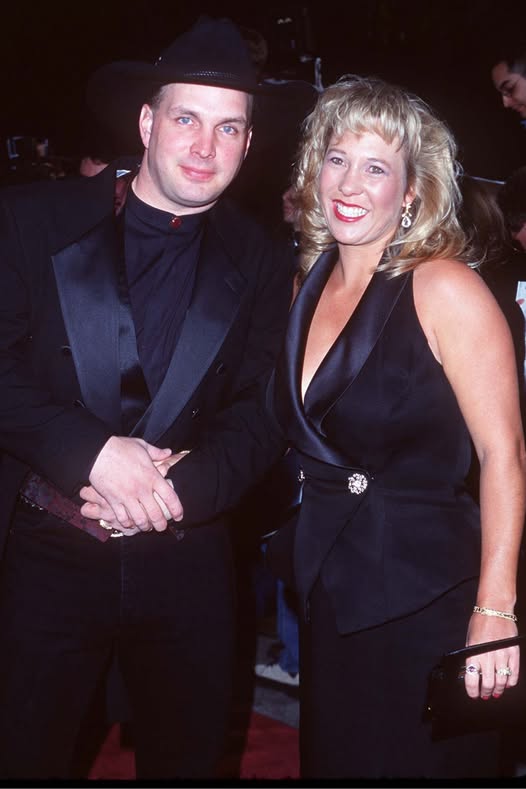
Sandy Mahl net worth estimates vary considerably depending on the source. Some figures cite amounts near $6 million. Others approach $125 million, depending on which divorce settlement reports you choose to believe. The spread itself is instructive. Most people who track celebrity wealth have never heard her name. That is, entirely and deliberately, the point.
This is not a story about a woman who fell out of the spotlight. It is a story about someone who studied the spotlight for fifteen years. She calculated the full cost. Then she walked away with the precision most people reserve for other people’s money.
The Before: Oklahoma and No Particular Reason for Mythology
Sandy Mahl grew up in Owasso, Oklahoma, in circumstances that offered nothing especially mythological. Working class, plainspoken, organized around football Saturdays and the practical ordinariness of the Great Plains. Nothing in that geography predicted what came next. She would one day be adjacent to one of the largest recording careers in American music. Nothing suggested she would spend fifteen years watching what fame extracted from everyone inside its orbit.
She arrived at Oklahoma State University in the early 1980s. Her confidence was the quiet kind. She did not need permission or an audience to occupy space. Building a famous life was never the goal. Building a life was.
The Bar, the Brawl, the Beginning
The origin story starts here. Garth Brooks has polished it through enough retellings that it now moves with the smooth efficiency of myth. She encountered him at a campus bar. There was a confrontation. She handled it first. He noticed. What followed was not exactly a romance. It was a collision between two people moving in opposite directions. They would spend the next fifteen years doing so from inside the same house.
They married on December 6, 1986. He was unknown. She was not yet invisible. Both of those facts were about to change, and in precisely the same direction.

The Climb: Supporting a Career That Would Eventually Erase Her
Between 1986 and 1989, Sandy Mahl served as the functional infrastructure of Garth Brooks’ pre-famous life. She worked while he played clubs in Stillwater and Nashville. Bills were paid. Rent arrived on time. The domestic architecture that allows someone to keep trying past reason was built primarily by her. Most profiles of Brooks mention this in a single sentence. It sits wedged between the record deal paragraph and the first platinum sales figure.
Brooks has acknowledged this in interviews, with the honesty that tends to arrive only after significant distance. He has credited her with keeping him solvent and psychologically intact during the years that produced nothing visible. The acknowledgment is sincere. It also arrives retrospectively, which tells you something about whose story the industry believed it was recording.
The Years Between the Debut and the Divorce
His debut album arrived in 1989. By 1990, Friends in Low Places had recalibrated what a country career could look like commercially. By 1992, per RIAA certification data, he had become the best-selling solo artist in American music history. Sandy was present for all of it. Consequently, her presence became indistinguishable from the background of someone else’s achievement.
Their daughters arrived in sequence. Taylor Mayne Pearl came in 1992. August Anna followed in 1994. Allie Colleen arrived in 1996. Each birth sharpened the question inside that marriage. Whose life was expanding? Whose was sustaining the expansion at cost to itself?

Sandy Mahl Net Worth: The Settlement and What It Actually Bought
In 2001, Garth Brooks announced his retirement from music to raise his daughters full-time. Entertainment media treated this as one of the most remarkable acts of paternal devotion the industry had ever seen. Also in 2001, his marriage to Sandy Mahl ended after fifteen years. These two events received asymmetrical coverage. The retirement generated profiles and retrospectives. The divorce generated brief wire reports and financial speculation that has never resolved into reliable figures.
These estimates reflect this ambiguity directly. Without court records, the settlement figure remains unverifiable. Some sources suggest compensation proportional to a fifteen-year partnership with one of music’s highest earners. Others suggest far more modest amounts. The truth likely lives in sealed paperwork that both parties had strong reasons to protect.
The Ghost Economy and the Woman Who Declined Its Terms
What followed the divorce is the more instructive accounting. Sandy Mahl gave no interviews. She published no memoir. No podcast materialized, no documentary was greenlit, no carefully timed social media reactivation appeared. She raised three daughters in privacy so consistent that tabloid coverage dried up within a few years of the settlement.

This refusal has a name. The ghost economy is the quiet industry built around ex-wives of famous men. It holds a specific expectation: that a woman exiting a high-profile marriage remains available for occasional narrative use. She stays visible enough to validate the story but never complicated enough to challenge it. Sandy Mahl declined every term. Research on celebrity media ecosystems finds a consistent pattern. Ex-spouses who sustain this level of absence do so through deliberate legal and personal discipline. It is never accident.
Three Daughters and the Life Built in the Quiet
The clearest evidence of what Sandy Mahl built after 2001 is visible through her daughters. Taylor, August Anna, and Allie Colleen each navigated public lives without notable dysfunction. Coherence in families like theirs requires sustained institutional investment. Someone made that investment consistently. Allie Colleen pursued her own country music career. All three have spoken about both parents in terms that suggest a post-divorce family structure that genuinely held together.
That outcome does not happen accidentally. It requires sustained, unglamorous, consistently available parenting from someone who treated the work of raising children as the primary work. The evidence points toward Sandy.
Privacy as an Appreciating Asset
Meanwhile, Garth Brooks married Trisha Yearwood in December 2005. Their collaborative albums and joint public appearances over the following two decades continued generating significant media coverage. Throughout all of it, Sandy Mahl remained absent, not in the defeated sense, but in the chosen one.
Her absence created something durable. Total privacy in proximity to ongoing fame is a rare structural position. The famous person must not be at war with you. Your children must remain stable enough not to generate news. You must resist every institutional invitation to participate. Sandy Mahl managed all three conditions simultaneously. That leverage is real and entirely untranslated into dollars.
The Soft Landing: The Ghost Who Moved First

We read female absence from celebrity culture as defeat because the industry trains us to. The narrative logic of entertainment media casts a woman who exits a famous marriage as someone who lost. Her exit becomes evidence of the loss. Silence, in this framework, signals defeat.
The Gladwell correction on Sandy Mahl runs differently. She did not disappear. She made an early and accurate assessment of what the alternative would cost, and declined to pay it. Specifically, she spent fifteen years watching what fame extracted from everyone inside its orbit. She had access to the full ledger. Consequently, she understood something most people in her position never fully process.
Sandy Mahl Net Worth, Measured Correctly
The financial figure remains uncertain. However, the actual accounting is harder to calculate. It includes time, attention, and the unmonetized texture of a life that belongs entirely to you. That figure is almost certainly more favorable than any celebrity database reflects.
Sandy Mahl net worth, measured correctly, looks different from the tabloid version. It includes three daughters who are functional adults. It also includes a privacy intact for more than two decades. Furthermore, it includes the absence of any public statement she will later need to walk back. That is a compounding asset. It does not depreciate. It does not require a publicist or a crisis manager.
Ultimately, the Sandy Mahl net worth that matters is not the one the tabloids debated. She decided her life was not available for narrative use. Then she went and lived it. For women adjacent to enormous cultural power, that decision is rarer than it should be. It is also, by any reasonable long-term accounting, the one that wins.
Related Reading:
For more on women who shaped cultural mythology without proportional credit, explore our It Girls of the Early 2000s hub. For a contrasting kind of quiet legacy, read our piece on Stanley Livingston’s net worth. For profiles of the high-achievers and cultural architects who define the Hamptons social world, visit our Celebrities hub.
Sandy Mahl understood something that most people in proximity to power never learn: the story you refuse to tell is the one you actually own. Social Life Magazine exists in the opposite register. We make the introduction. We create the story. We put the right names in front of the 25,000 readers who summer between Westhampton and Montauk every year, and the 15,000 more on the Upper East Side come fall. If your brand, your business, or your name belongs in rooms it has not yet reached, we know exactly which door opens first. Tell us what you’re building.
The conversation you want to be part of is already happening. It moves through inboxes, dinner tables, and beach clubs from Memorial Day to Labor Day, and it does not pause for people who were not introduced properly. Our email list reaches 82,000 readers who match the demographic that closes the deals you are trying to close. Get on the list before the season starts.
Polo Hamptons is not a party
It is a room where the right 950 people are in the same place at the same time, and the introduction happens over champagne instead of a cold email. Platinum sponsors own the conversation. Gold sponsors get heard. Corporate cabanas get the access without the overhead. The season fills fast. See what is still available.
The print edition of Social Life Magazine lands in Hamptons boutiques and Upper East Side doorman buildings in the hands of people who still read things that matter. Further Lane is where the culture lives between the headlines. Subscribe and stay inside it.
Twenty-three years of this magazine have been funded by readers who understood that independent luxury media does not sustain itself on advertising alone. If something you read here was worth five dollars to you, the button below takes thirty seconds. No obligation. No upsell. Just the honest math of keeping something real alive. Contribute what feels right.
Author

Written by
Recent Posts

Red, White & Bordeaux: A Founding Fathers’ Guide to Raising a Glass

Youmetalks Reviews Show Why This Platform Is a Game-Changer for Safety
Creating Behind-the-Scenes Content Without Recording New Footage
The Invisible Essential: How Smart Travelers Stay Connected from the Moment They Land in Japan
The Hamptons Longevity Protocol: How to Stay Sharp Through Late Dinners, Early Tee Times, and Beach Weekends
Categories
- Art
- Articles
- Business of Luxury
- Celebrities
- Entertainment
- Events
- Faces of Summer 2026
- Fashion
- Fashion & Style
- Featured
- Finance
- Food, Spirits, Wine
- Hamptons
- Hamptons Celebrities
- Health
- Health & Beauty
- Lifestyle
- Luxury Lifestyle
- Press
- Profiles
- Real Estate
- Technology
- The Chronicles
- Travel
- Uncategorized
- Weddings