
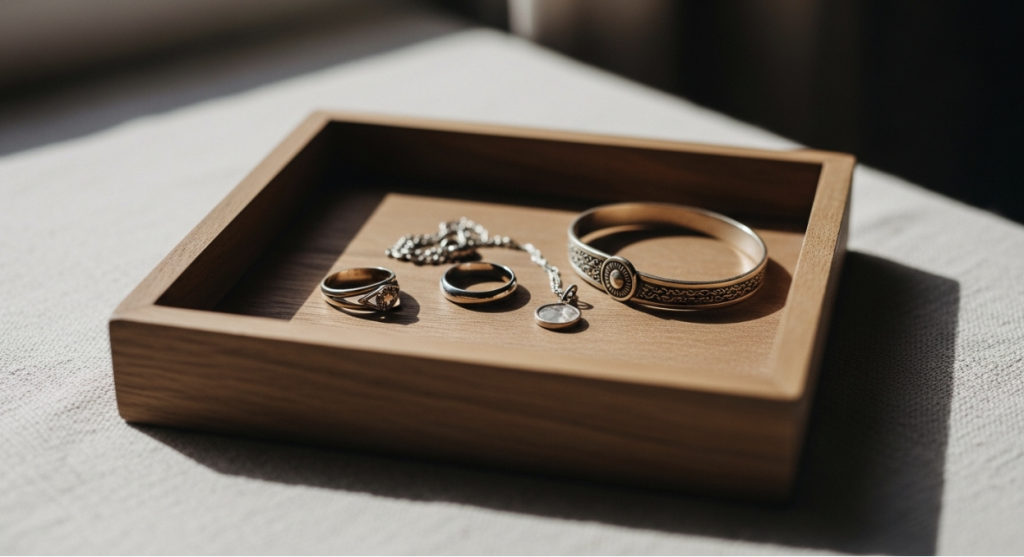
Most people collect jewelry without a plan. A piece catches the eye. An occasion calls for a gift. Over time, a drawer fills with items that have little in common and even less significance. The collections that hold real value work differently. Each piece in them was chosen for a reason. Some mark personal milestones. Others carry the weight of family history. A few are worn so often they develop a character of their own. Understanding how to approach estate pieces, commission something original, and select a wedding band that endures daily wear makes the difference between jewelry that is simply owned and jewelry that is truly kept.
Estate Jewelry: Recognising the Value in What Already Exists
Estate jewelry is any piece that has had a previous owner. Age alone does not define it. A ring from the 1980s qualifies just as much as one from the Victorian era. What matters is provenance: the documented history of where a piece came from and who owned it.
Why Provenance Matters
Provenance affects value in concrete ways. A piece with clear hallmarks, a known carat weight, and a verified history of ownership is far easier to appraise than one without records. Gemstones with certificates from recognised grading laboratories add further assurance. These details are worth gathering before any piece changes hands.
When Estate Pieces Surface
Families often encounter estate collections during transitions. A relative passes. Items surface that nobody knew existed. Some pieces fit naturally with certain family members, while others have no clear home. Before making decisions about what to keep or release, a professional appraisal is worth arranging.
Those weighing their options and considering whether to sell estate jewelry benefit from working with buyers who assess workmanship and historical significance alongside material value. Metal weight alone rarely reflects what a well-crafted piece is actually worth.
Custom Design: Creating Something That Did Not Exist Before
Off-the-shelf pieces serve a purpose, but for specific occasions and individuals, they often fall short. A ring sized precisely, a pendant shaped around a meaningful motif, or a bracelet built to a preferred weight requires a more considered approach—one that reflects true personal intent through custom jewelry design.
The process follows a clear sequence. It begins with a consultation covering lifestyle, occasion, and materials. Sketches are refined into technical drawings, followed by a wax model to assess scale and proportion before production. Adjustments are made at this stage, ensuring accuracy before any final work begins.
The result is precision. The piece fits properly, the setting suits the stone, and the craftsmanship reflects its purpose. Because it is not trend-driven, it holds relevance over time, making it a thoughtful choice for milestone moments.
Wedding Bands: Selecting for the Long Term
A wedding band is not chosen for a single occasion. It is chosen for every day that follows. That shifts the selection criteria considerably. Appearance matters less than comfort, durability, and how well the metal holds up under regular wear.
Key Considerations
Width
Narrower bands are less noticeable day to day. Wider ones make a stronger visual statement but can feel restrictive for some wearers.
Metal Choice
- Platinum: denser, highly durable over time
- White gold: lighter, requires occasional re-plating
- Yellow gold: develops a warm patina with age
- Rose gold: balanced hardness with a warmer tone
Profile
A comfort-fit band curves inward slightly on the interior, reducing friction during long wear. For a piece worn indefinitely, that detail matters.
Those exploring wedding bands should try multiple widths and profiles before making a final decision.
Building a Collection With Purpose
A well-considered jewelry collection is not the result of frequent purchasing. It develops slowly, through careful choices made at significant moments. The pieces that last are the ones acquired with full attention rather than convenience.
A Simple System for Documentation
One useful habit is to document pieces as they enter a collection:
- Photograph
- Occasion or story behind the piece
- Name of the maker (if known)
- Provenance records for estate items
This record becomes more valuable over time, both for insurance purposes and for the family members who will eventually inherit the collection.
Ongoing Care
Maintenance matters equally. Gemstones benefit from periodic professional cleaning. Settings should be checked annually for wear, especially in pieces worn daily. A prong that has shifted slightly is far easier and less expensive to address before a stone is lost than after.
The question worth asking before acquiring any new piece is straightforward:
Does this belong with what I already own, or does it mark something real rather than simply appealing in the moment?
Jewelry chosen with that kind of deliberation tends to hold its significance across decades. Everything else tends to end up in that drawer.
Final Thoughts
The jewelry decisions that carry the most weight are rarely the most expensive ones. They are the ones made with attention. Knowing how to assess estate pieces before releasing them. Commissioning something original when an occasion deserves it. Selecting a wedding band based on how it will feel in thirty years rather than how it photographs today. Each of these approaches reflects the same principle. The pieces worth having are the ones chosen to last, not simply to impress.
Author

Written by
Recent Posts
What Goes Into Planning a Professional Furnace Installation?
Why Sports Card Collecting Is More Than Just a Hobby
From Signature Scents to Scent Wardrobes: The Evolution of Personal Fragrance

Beyond the Booth: How Exhibition Design Is Creating New Brand Experiences

Trading the Hamptons for Hvar: A Summer on Croatia’s Most Glamorous Island
Categories
- Art
- Articles
- Business of Luxury
- Celebrities
- Culture
- Entertainment
- Events
- Faces of Summer 2026
- Fashion
- Fashion & Style
- Featured
- Finance
- Food, Spirits, Wine
- Hamptons
- Hamptons Celebrities
- Health
- Health & Beauty
- Lifestyle
- Luxury Lifestyle
- Press
- Profiles
- Real Estate
- Technology
- The Chronicles
- Travel
- Uncategorized
- Weddings