

Glen Powell did everything right for ten years and nothing happened. That sentence is the entire Glen Powell net worth story. Not the number, currently estimated between $8 and $10 million, depending on who is guessing, but the architecture of the wait. Because Powell’s career is the cleanest test case in modern Hollywood for a question the industry refuses to answer honestly: can you still become a movie star, or did the assembly line shut down while nobody was looking?

He had the jawline. The Texas charm was there from birth. He had the work ethic and the willingness to take small roles and be excellent in them. None of it mattered until a specific crack appeared in a specific wall at a specific moment. The crack was Top Gun: Maverick. Everything before it was prologue. Everything after it is an open question.
Austin, Texas, and the Glen Powell Net Worth Origin Story
Powell grew up in Austin. His father is a cosmetic surgeon. His mother is a homemaker who ran the household with the organizational intensity of a logistics commander. The family was comfortable, upper-middle-class, educated, stable. This matters because it makes his origin story unusual in Hollywood. There is no wound in the traditional sense. No poverty. No broken home. Not even a dramatic escape narrative.
What there was, instead, was a kid who decided at thirteen that he wanted to act and then pursued that decision with a patience that borders on pathological. He appeared as an extra in Spy Kids 3-D at age fourteen. He enrolled at the University of Texas, studied acting, and kept auditioning. By the time he moved to Los Angeles full-time, he had already internalized the lesson that would define his career: showing up is not enough. Showing up consistently for years while nothing happens is the actual job.
Notably, the Austin background gave Powell something most aspiring leading men lack. He was not desperate. Desperation reads on camera. Audiences can smell it. Powell carried the opposite energy, a confidence that came from having a family that would catch him if the whole thing collapsed. According to Texas Monthly, his parents supported the acting ambition without conditions, which gave him the luxury of choosing roles strategically rather than taking anything that paid.
The Decade of Near-Misses That Built the Foundation

Everybody Wants Some!! in 2016 should have been the breakout. Richard Linklater directed it. The reviews were excellent. Powell was magnetic in it. The film made $4 million at the box office. Nobody outside Austin and film-school dorms noticed.
Hidden Figures later that year put him in a film that earned $236 million and won audience affection worldwide. Powell played John Glenn. The performance was solid, warm, precisely calibrated. It did not matter. The film belonged to Taraji P. Henson, Octavia Spencer, and Janelle Monáe. Powell was furniture in someone else’s house.
Set It Up in 2018 proved he could carry a romantic comedy. Netflix released it. The algorithm liked it. Critics called it charming. Furthermore, the film demonstrated something specific about Powell’s screen presence: he could be funny without trying to be funny. The humor came from confidence, not effort. The rom-com audience noticed. Hollywood’s theatrical distribution system did not, because the film lived on a streaming platform where individual star power is structurally invisible.
This is the pattern the Glen Powell net worth trajectory follows. Right performance, right instincts, wrong structural moment. Repeatedly. For a decade. The near-misses were not failures. They were auditions for an industry that had stopped holding open casting calls for the role he wanted.
Top Gun Maverick: The Crack in the Wall

Tom Cruise cast Powell as Hangman in Top Gun: Maverick. The role was not large. The role did not need to be large. It needed to be memorable, and Powell made it the kind of memorable that forces conversations in studio executive offices.
Hangman was arrogant, funny, and ultimately decent, a combination that requires an actor who can hold contradictions without resolving them. Most young actors play arrogance as a mask. Powell played it as personality. The character was not hiding vulnerability beneath bravado. The bravado was the whole person. Audiences responded because the performance felt complete rather than calculated.
Consequently, Maverick’s $1.49 billion global gross gave Powell the one thing a decade of excellent work in smaller films could not: visibility at scale. The Hollywood Reporter profiled him as the breakout star of the year. The profile itself was evidence of the shift. Studios do not greenlight profiles for actors nobody is interested in. The coverage was not journalism. It was market validation.
As the Top Gun Maverick hub examines in detail, the film proved that classical movie stardom still has an audience. What it did not prove is whether anyone other than Tom Cruise can deliver it. Powell is the first real test of that question.
Anyone But You, Hit Man, and the Glen Powell Net Worth Inflection

Anyone But You was not a great film. It did not need to be. It needed to prove that Glen Powell’s name on a poster could sell tickets internationally without a franchise logo above it. The film earned $220 million worldwide on a $25 million budget. That ratio is the kind of number that makes studio CFOs reconsider their entire content strategy.
More importantly, the film proved Powell could open a romantic comedy, a genre Hollywood had abandoned for a decade. The conventional wisdom said audiences no longer wanted rom-coms in theaters. Powell suggested the conventional wisdom was wrong. Audiences wanted rom-coms. They just needed a reason to care about the people in them. Star power, it turns out, was the missing variable all along.
Hit Man shifted the calculus further. Linklater again, but this time with Powell as lead, producer, and co-writer. The film earned critical raves at Venice and Toronto. Additionally, it proved Powell could operate in the space between commercial and prestige, the exact territory where durable careers are built. McKinsey research noted that the most valuable position in modern entertainment is the ability to attract audiences across genre boundaries. Powell demonstrated exactly that.

The Glen Powell net worth figure will likely double or triple within two years based on these trajectories. Back-end deals, production credits, and brand partnerships are the mechanisms. However, the real asset is not the money. The real asset is the proof of concept that a non-franchise actor can still generate theatrical revenue in a market designed to prevent exactly that.
The Open Question: Heir or Placeholder
Here is the uncomfortable part. Powell’s current position, America’s leading man, the next big thing, the Cruise successor, rests on an assumption that may not hold. Audiences might want him specifically. Or they might want the concept of a leading man and Powell happened to be standing in the right spot when the hunger peaked.
The distinction matters enormously. If audiences want Powell specifically, his career has a floor. He can make bad choices, pick weak scripts, and still recover because the audience connection is personal. If audiences want the concept, his career has no floor at all. One or two underperformers and the industry moves on to the next candidate, the way it moved past Miles Teller, who arrived first, got the prestige role first, and watched the moment slide sideways.
Cruise never faced this ambiguity. By 1986, the question was settled. Powell faces it every day. McKinsey’s analysis of entertainment economics confirms the structural challenge: in an era of infinite content options, individual star power has declining predictive value for box office performance. The exceptions are so rare they prove the rule.
Nevertheless, Powell keeps working as though the job still exists. The upcoming slate includes tentpoles and mid-budget originals in equal measure. The production company he is building mirrors, in miniature, the Cruise model of owning the pipeline rather than renting access to it. Whether the model scales to a new generation is the single most interesting business question in Hollywood right now.
What the Glen Powell Net Worth Story Actually Tells You
Eight to ten million dollars. That is the current estimate. It is a rounding error by Cruise standards. It is a fortune by the standards of the ten thousand actors in Los Angeles who have Powell’s bone structure, Powell’s training, and none of Powell’s timing.
The Glen Powell net worth narrative is not about money. It is about the economics of patience in an industry that structurally punishes it. He waited a decade for a door that barely exists. He walked through it. Now he is standing in a room that may or may not have a future, trying to build something permanent on ground that keeps shifting beneath him.
That is not a celebrity story. That is a founder’s story. And the exit, if it comes, will not look like a payout. It will look like proof that one person can still, through craft and stubbornness and impeccable timing, create the thing an entire industry declared dead. The Glen Powell net worth number is secondary. The experiment is the point.
Related Reading
- Top Gun Maverick and the Extinction of the Movie Star Species
- Tom Cruise Net Worth: The Operating Budget of a Man Who Cannot Stop
- Miles Teller Net Worth: When Friction Stopped Being Charisma
- Jennifer Connelly Net Worth: Durability as Its Own Form of Stardom
- Barbenheimer and the Weekend America Pretended Movies Still Work Like That
You Already Know What Comes Next
There is a version of this story you read everywhere. The safe version. The version where every celebrity profile is a press release with adjectives and every lifestyle feature reads like it was written by a committee afraid of its own shadow. That version is comfortable. It is also forgettable. Social Life Magazine does not publish that version.
If you have a story worth telling, a brand worth positioning, a launch worth amplifying, a personal narrative that deserves more than a templated feature, reach out to our editorial team. We build features that move needles, not fill pages.
Want guaranteed placement and full creative control? Submit a Paid Feature and let our team craft a profile that positions you exactly where you belong.
Join 82,000 insiders who get our editorial picks, event invites, and luxury lifestyle intelligence before anyone else. Subscribe to the Social Life email list and stop being the last to know.
Polo Hamptons returns this summer with the most exclusive brand activations and VIP experiences on the East End. Sponsorships, cabanas, and guest lists are filling now. Visit polohamptons.com before the field closes.
Get Social Life Magazine delivered, five summer issues from Memorial Day to Labor Day, plus Fall and Winter editions. Subscribe to the print edition and own the only magazine the Hamptons actually reads.
If this kind of writing, the kind that treats a Glen Powell net worth profile with the same rigor as a seed-stage pitch deck, adds value to your week, consider a $5 contribution to keep independent luxury journalism alive. No paywall. No algorithm. Just work that respects your intelligence.
Author

Written by
Recent Posts
Getting the Size Right on a Valley Dreams Zip Hoodie
The Traffic Patterns Hiding Inside the Accident Data
The Smart Way to Give Your Unused Jewelry a Second Life
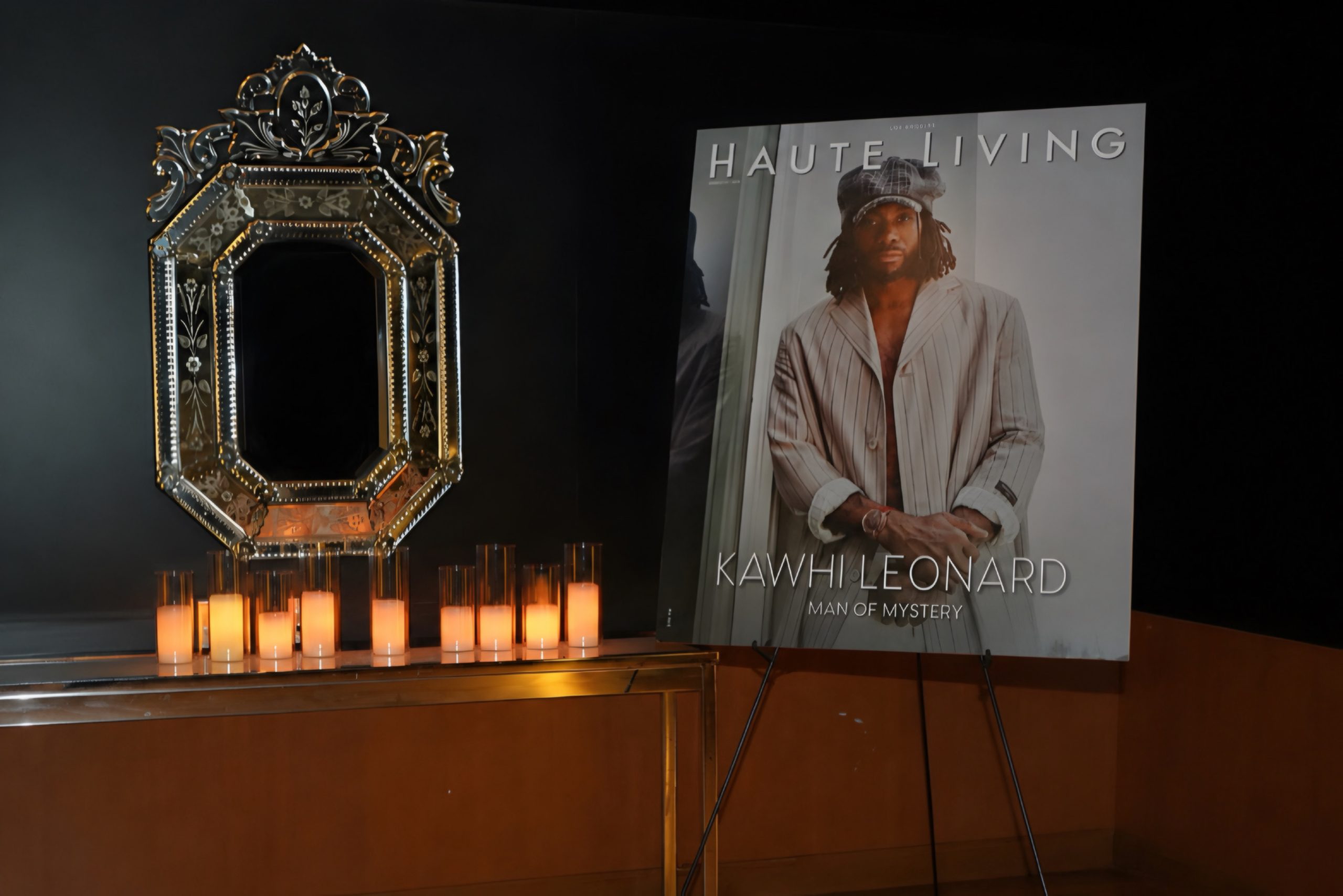
Katsuya Brentwood and Haute Living Honor NBA Star Kawhi Leonard at Private Dinner

The Accountability System Quietly Protecting Your Parents’ Care
Categories
- Art
- Articles
- Business of Luxury
- Celebrities
- Culture
- Entertainment
- Events
- Faces of Summer 2026
- Fashion
- Fashion & Style
- Featured
- Finance
- Food, Spirits, Wine
- Hamptons
- Hamptons Celebrities
- Health
- Health & Beauty
- Lifestyle
- Luxury Lifestyle
- Press
- Profiles
- Real Estate
- Technology
- The Chronicles
- Travel
- Uncategorized
- Weddings