
The four secrets to keeping groundskeeping equipment running all season flawlessly include building a preventive maintenance calendar, pre-stocking critical replacement components, choosing reliable equipment brands, and establishing faster parts sourcing strategies.
Implementing these proactive maintenance steps prevents costly downtime. This ensures luxury estates maintain an impeccable appearance without disrupting summer entertaining schedules.
Beyond those practical foundational steps, there is a particular kind of magic that settles over a well-kept Hamptons estate in midsummer. The hedgerows are sculpted to sharp geometry while the private drive gleams in the morning light, free of debris and imperfection.
The waterfront lawn rolls out in dense, even green toward the dock, as though the land itself is performing. Guests arrive and experience it as effortlessness, which is precisely the point of estate maintenance.
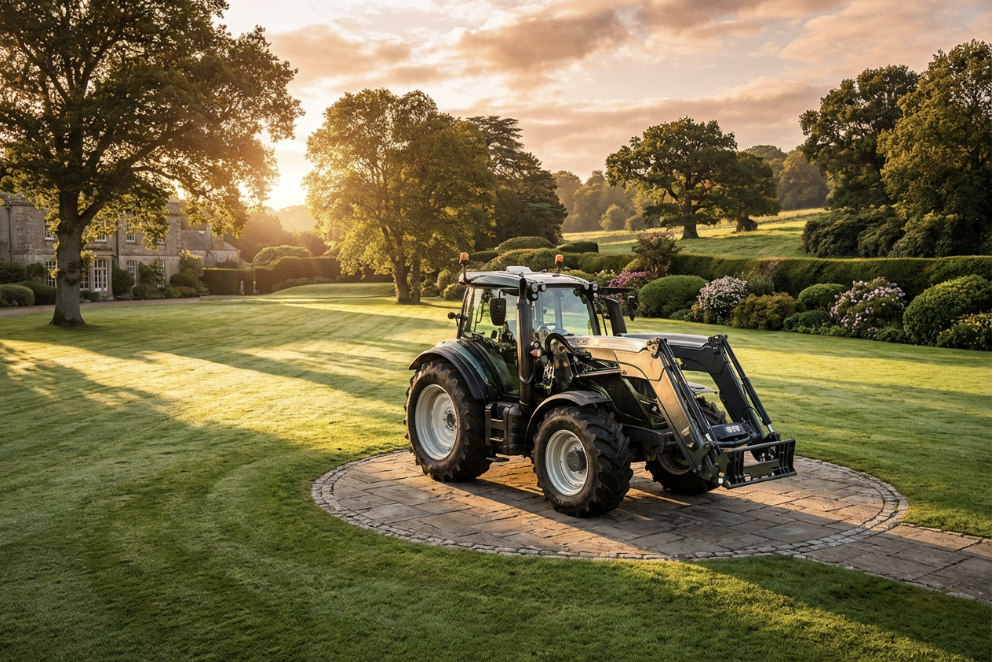
What they never see is the machinery behind it all. Compact tractors working the turf before dawn often rely on accessible components, whether that means general hardware catalogs or HW Part Store’s John Deere aftermarket parts.
Ride-on mowers precision-cut acreage in quiet, overlapping passes while hydraulic loaders clear paths and reposition heavy materials. These are the unsung workhorses of luxury property presentation, and when one fails, the illusion of effortless elegance unravels quickly.
Consider Sarah, a property manager overseeing a 12-acre estate as she prepares for the summer entertaining season. Landscaping is scheduled, caterers are confirmed, and the exterior design is impeccable.
Her only non-negotiable is that the grounds must look perfect when the first guest steps out of the car. Everything she does before that moment is in service of that single standard.
1. Build a Preventive Maintenance Calendar Before the Season Begins
The best maintenance is invisible because it was planned long before the pressure began. On luxury estates, groundskeeping equipment sits idle through winter, runs harder than average during spring preparation, and then carries the full weight of summer peak season.
That cycle is predictable, and predictability is exactly what a well-structured preventive maintenance calendar exploits. It eliminates the margin for downtime when the property needs to look its absolute best.
A property-level maintenance calendar ties service milestones directly to seasonal events rather than treating equipment care as an afterthought. For estate equipment, this typically means organizing inspections and service tasks around four operational phases.
Following this structure ensures that no machine is overlooked during the busiest months of the year.
- Spring activation: Full inspection of all equipment coming out of winter storage, including fluid levels, filters, and hydraulic hoses.
- Pre-season readiness: Final service before the summer schedule intensifies to replace any parts showing early wear.
- In-season monitoring: Scheduled mid-cycle checks every 50 to 100 operating hours, depending on the equipment type.
- Fall wind-down: Full fluid flush, blade removal, hydraulic line protection, and battery maintenance protocols for winter storage.
Equipment that follows a structured preventive maintenance schedule experiences significantly fewer unexpected failures and measurably lower lifetime service costs. Reactive maintenance is expensive, disruptive, and poorly timed for property managers.
Preventive scheduling is the operational discipline that protects both the estate’s appearance and its long-term investment value. When a manager builds a calendar cross-referenced against the summer events schedule, no maintenance window overlaps with a high-traffic weekend.
2. Stock Critical Replacement Components Before Peak Season Hits
There is a reliable truth in estate equipment management where the part needed most urgently is always the one missing from the supply room. Hydraulic seals wear out, and O-rings degrade under intense pressure and summer heat.
Filters reach their service intervals during the most inconvenient weeks of the landscaping schedule. Belts and blades show fatigue exactly when the grounds team has no room for a trip to a dealer or a multi-day shipping wait.
Smart pre-season parts preparedness is about knowing which components are most likely to reach wear thresholds during summer operating conditions. Having them on hand before the season demands them is a simple but highly effective strategy.
For most estate equipment, that short list typically includes hydraulic seal kits, cylinder seals, matched O-ring assortments, and fuel filters. The total cost of maintaining this modest inventory is marginal compared to the cost of a single multi-day equipment failure.
For estates utilizing industry-standard machinery, sourcing decisions become highly strategic when managing maintenance budgets. Estate managers increasingly rely on specialized suppliers who focus on hydraulic and mechanical components rather than broad retail catalogs.
Keeping a focused cache of these components on-site means that early wear signs can be addressed in hours rather than days. The guests scheduled for the following weekend never know that a mechanical issue occurred behind the scenes.
| Pro Tip: Maintaining a small on-site inventory of hydraulic seals, filters, and belts is a high-value strategy. It transforms potential multi-day equipment failures into quick repairs that never disrupt the estate’s summer schedule. |
3. Choose Equipment Brands Built for the Demands of Estate Work
Every maintenance decision an estate manager makes flows downstream from an earlier decision regarding which equipment to use in the first place. Brand selection for luxury estate groundskeeping is a long-term operational strategy.
The right equipment brands deliver durability across varied terrain, ease of service, and operator comfort during extended use. They also guarantee reliable access to replacement parts when unexpected breakdowns occur.
The brands most commonly found on high-caliber estates share a common characteristic beyond their impressive performance specs. Widespread adoption means a mature, accessible service ecosystem is readily available for property managers.
Parts are accessible, technicians are familiar with the machines, and local service centers can provide immediate support. Replacement components are stocked by multiple suppliers who can fulfill orders quickly when time is the ultimate constraint.
Total cost of ownership is the financial framework that makes this selection logic visible and justifiable. A reliable brand often carries a higher acquisition cost, but it returns that investment through measurably fewer breakdowns and lower long-term maintenance spending.
Brand consistency delivers standardization, simplifying parts inventory and consolidating technician training. When the compact tractor and the utility loader share a brand ecosystem, service scheduling becomes far easier to coordinate across the season.
4. Cut Downtime in Half with Smarter Parts Sourcing

Equipment downtime on a luxury estate is never just a mechanical problem because it quickly becomes a severe presentation problem. When a critical machine is out of service during summer peak season, maintenance windows are completely missed.
Staff productivity reorganizes around the gap, and grounds that depend on regular attention begin to show obvious signs of neglect. Managing these risks requires a proactive approach to parts procurement.
The operational insight most high-performing estate managers arrive at is that resolution speed is largely determined by pre-established sourcing strategies. Smarter parts sourcing requires deliberate decisions made in the pre-season window before emergencies strike.
Building a network of reliable vendors ensures that critical components are only a phone call away. Estate managers must focus on the following proactive steps to streamline their parts acquisition process:
- Identify primary suppliers in advance: Know who stocks the necessary components, verify lead times, and confirm shipping capacities for urgent demands.
- Verify part compatibility early: Cross-reference equipment model numbers against supplier inventories during the planning phase.
- Establish relationships proactively: Connect with suppliers who possess genuine expertise in heavy equipment hydraulics.
- Treat lead time as a planning variable: Build supplier shipping windows into the maintenance calendar so replacements arrive ahead of the service date.
Unplanned downtime can cost operations two to three times the value of the failed component itself when labor disruption is factored in. Schedule compression forces teams to work overtime, inflating maintenance budgets unnecessarily.
The Bottom Line
Returning to the estate at midsummer reveals hedges cut to precise geometry and lawns rolling out in deep, even green. The waterfront dock is framed by grounds that look as though perfection is simply the natural state of the property.
That image is the visible result of operational decisions made weeks and months before the season made its highest demands. Flawless outdoor presentation depends on proactive maintenance decisions just as much as landscaping expertise.
These four maintenance secrets do not require significant new financial investment or highly specialized technical expertise. They simply require intentionality and the discipline to build the calendar in April while stocking parts in May.
Evaluating the equipment fleet with a long view establishes strong supplier relationships before an emergency makes the choice urgent. This level of preparedness separates adequately managed properties from truly spectacular luxury estates.
The standard of luxury that guests experience on a Hamptons estate is a direct reflection of the operational excellence they never see. The machinery runs flawlessly, the grounds look perfect, and the management behind it remains entirely invisible to the casual observer.
That is the true craft of seasonal equipment upkeep, and it starts long before the season officially begins. Embracing this proactive mindset guarantees a summer of seamless, uninterrupted elegance.
| Author Profile: HW Part Store is the leading online retailer of aftermarket hydraulic cylinder seal kits, replacement parts, and attachments for a wide range of industrial construction equipment. |
Author

Written by
Recent Posts
What Goes Into Planning a Professional Furnace Installation?
Why Sports Card Collecting Is More Than Just a Hobby
From Signature Scents to Scent Wardrobes: The Evolution of Personal Fragrance

Beyond the Booth: How Exhibition Design Is Creating New Brand Experiences

Trading the Hamptons for Hvar: A Summer on Croatia’s Most Glamorous Island
Categories
- Art
- Articles
- Business of Luxury
- Celebrities
- Culture
- Entertainment
- Events
- Faces of Summer 2026
- Fashion
- Fashion & Style
- Featured
- Finance
- Food, Spirits, Wine
- Hamptons
- Hamptons Celebrities
- Health
- Health & Beauty
- Lifestyle
- Luxury Lifestyle
- Press
- Profiles
- Real Estate
- Technology
- The Chronicles
- Travel
- Uncategorized
- Weddings