
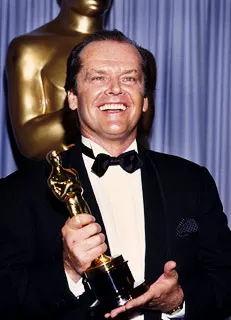
Jack Nicholson built a $400 million fortune by being the most dangerous man in every room he entered. Three Academy Awards. Twelve nominations — more than any male actor in history. A single contract negotiation on Batman that generated $60 million and rewrote how Hollywood compensates its stars. A Picasso collection worth more than most hedge funds manage. And then, at the height of his powers, he walked into a Hamptons beach house on a Paramount soundstage and played the one character he’d spent his entire career avoiding: himself.
The Jack Nicholson net worth story isn’t about money. Money was the byproduct. The story is about a man who discovered at age 37 that everything he believed about his own family was a lie, and who spent the next five decades turning that revelation into the most celebrated acting career in American cinema. Every performance was a negotiation between the mask and the man underneath it. The Hamptons audience — fluent in exactly that negotiation — recognized him immediately.
The Before: A Boy Raised on Someone Else’s Story
John Joseph Nicholson was born on April 22, 1937, in Neptune City, New Jersey. His mother was a showgirl named June Frances Nicholson. His father was either an Italian-American entertainer named Donald Furcillo or June’s manager — nobody knew for certain, and June wasn’t telling. What she did instead was more dramatic than anything her son would later perform on screen. June’s parents agreed to raise the baby as their own child. Jack grew up believing his grandmother was his mother and his actual mother was his older sister.
He didn’t learn the truth until 1974, when researchers from Time magazine informed him during a profile interview. By then, both his mother and grandmother had died. The women who built the lie never had to answer for it. Nicholson later described the revelation as dramatic but not traumatizing, adding that he was already psychologically formed by the time he found out. That assessment — clinical, self-aware, delivered with the precision of someone who’d already spent years studying human behavior for a living — tells you everything about the man who would become Jack Nicholson.
Consequently, every role that followed carries a different weight once you understand the foundation. The charm wasn’t natural. It was constructed. The menace wasn’t performed. It was channeled. Growing up inside a family-sized deception teaches you exactly two things: how people maintain fictions, and how those fictions eventually collapse. Nicholson built a career on both lessons.
The Pivot Moment: Easy Rider and the $12,500 Beginning
After high school — where he was voted class clown and served a full year’s worth of afternoon detentions — Nicholson moved to Los Angeles. His first job was as a gofer at MGM’s animation department, running errands for William Hanna and Joseph Barbera. He started writing screenplays for Roger Corman’s low-budget horror operation. For most of the 1960s, Jack Nicholson was a working Hollywood nobody — talented enough to stay employed, invisible enough to stay anonymous.
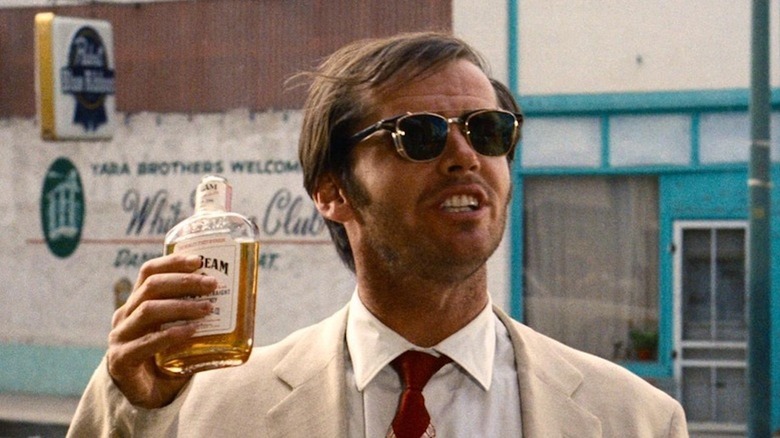
Then Dennis Hopper cast him as George Hanson, an alcoholic ACLU lawyer, in Easy Rider (1969). The role earned Nicholson his first Oscar nomination and announced to the industry that a new kind of leading man had arrived. Not polished. Not heroic. Dangerous in the way that intelligence is dangerous when it’s paired with the willingness to say what everyone else is thinking. His earliest known film salary was $12,500. Within six years, he was commanding $1 million per picture.
What separated Nicholson from every other actor breaking through during the New Hollywood movement was his relationship with control. Warren Beatty controlled through beauty. Dustin Hoffman controlled through technique. Robert De Niro controlled through transformation. Nicholson controlled through the unmistakable impression that he knew something you didn’t. That quality — the sense of hidden information, of a private joke running underneath every scene — made him irresistible to directors and audiences alike.
The Climb: From Cuckoo’s Nest to the Greatest Deal in Hollywood History
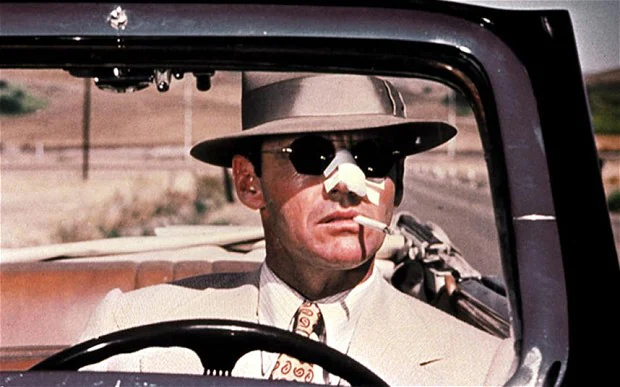
Between 1970 and 2003, Nicholson delivered a run of performances that no American actor has matched. Five Easy Pieces. Chinatown. One Flew Over the Cuckoo’s Nest, which won him his first Best Actor Oscar in 1975 and earned him a base salary of $1 million plus 15% of gross — a deal that eventually paid $15 million.
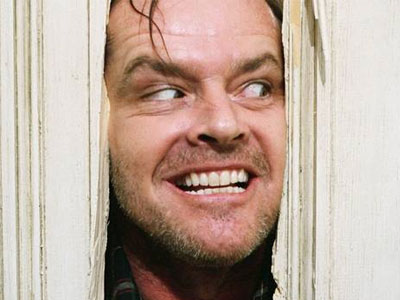
The Shining. Terms of Endearment, which brought his first Supporting Actor Oscar. A Few Good Men. As Good as It Gets, which delivered his third Oscar and a $15 million payday.
However, the deal that permanently altered the Jack Nicholson net worth trajectory happened in 1989. Tim Burton’s Batman offered Nicholson $10 million to play the Joker. He countered. Instead of the higher base salary, Nicholson negotiated a $6 million upfront fee plus a percentage of box office receipts and merchandise revenue. The Hollywood Reporter later documented that the deal paid Nicholson over $60 million — adjusted for inflation, roughly $130 million in today’s dollars. It remains one of the most lucrative single-film agreements in cinema history.
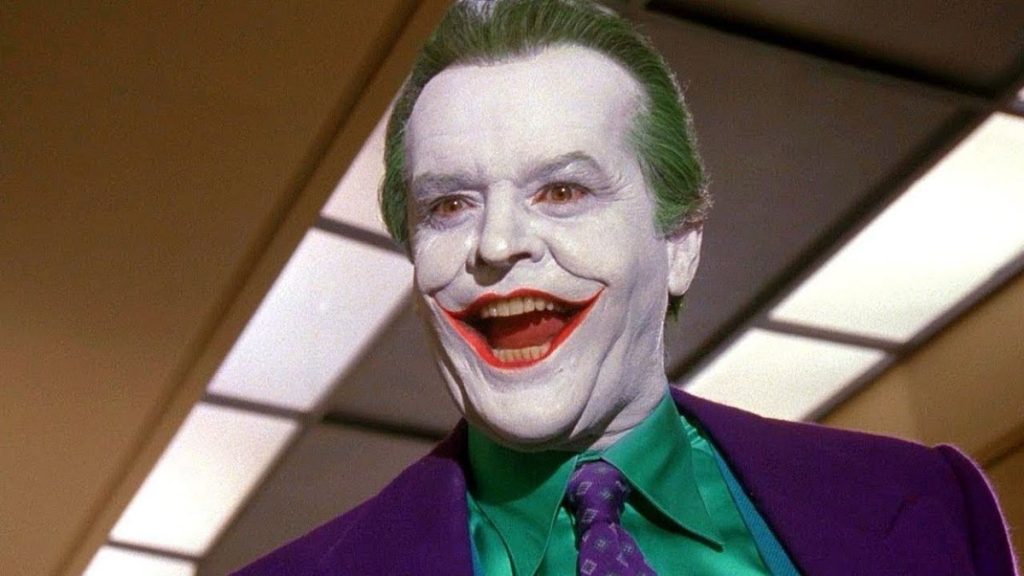
That negotiation reveals something essential about Nicholson that his Hamptons-adjacent audience instinctively understands. He didn’t just act. He structured. The man who grew up inside a fiction about his own identity learned to read contracts the way he read scripts — looking for what was hidden, what was implied, what everyone else was too polite or too lazy to demand. The Batman deal wasn’t acting. It was dealmaking at the highest level. Every private equity principal at a Polo Hamptons event recognizes that instinct. They just apply it to different paperwork.
The Hamptons Chapter: Harry Sanborn Was a Confession
In 2003, Nancy Meyers cast Nicholson as Harry Sanborn in Something’s Gotta Give. Harry is a 63-year-old music industry mogul who exclusively dates women under 30. Charming, wealthy, emotionally unavailable, completely unwilling to examine why. Then he has a heart attack in a Hamptons beach house and falls in love with a woman his own age, played by Diane Keaton — with Keanu Reeves providing the quiet counterargument as Julian Mercer. The film grossed $266 million worldwide. It became the foundational romantic text for the East End social scene.
What made the performance devastating was the transparency. Nicholson’s real-life biography mapped almost perfectly onto Harry Sanborn’s. Decades of younger girlfriends. A sixteen-year relationship with Anjelica Huston that ended when he fathered a child with another woman. Romances with Rebecca Broussard, Lara Flynn Boyle, and an extended roster of women whose primary qualification was being significantly younger. The tabloids treated it as gossip. Something’s Gotta Give treated it as tragedy.
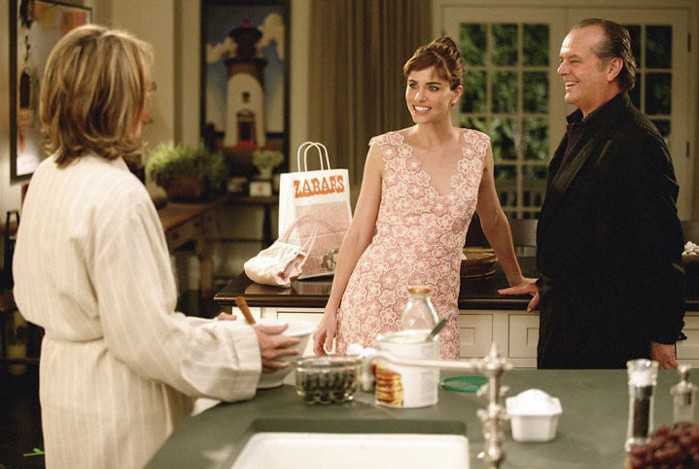
Every man over 55 at a Polo Hamptons event who dates women half his age has a little Harry Sanborn operating beneath the surface. The film didn’t judge that choice. It simply showed the cost. The cost was Erica Barry — depth, partnership, being truly known by someone who could match you intellectually and emotionally. Harry’s eventual surrender to vulnerability read differently because Nicholson sold it without irony. He wasn’t performing growth. He was admitting to its necessity. That distinction is what separates a good performance from an act of courage.
What He Built: $400 Million and a Picasso on Every Wall
The Jack Nicholson net worth figure — $400 million — underrepresents his actual wealth because it treats his collections as static assets rather than appreciating investments. The art collection alone, assembled since the 1960s, is valued at approximately $150 million and includes works by Picasso, Matisse, Monet, Degas, Modigliani, Magritte, Rodin, and Botero. Art publications have placed his holdings alongside those of David Geffen and David Bowie as among the most significant private collections in entertainment history.
His real estate portfolio exceeds $100 million, anchored by a multi-property compound on Mulholland Drive in Beverly Hills that he began assembling in 1969. Over the decades, he expanded the compound to include part of an estate formerly owned by his close friend Marlon Brando — the kind of acquisition that feels less like real estate and more like mythology. Additional properties have included a 70-acre Malibu ranch, a beachfront home in Kailua, Hawaii, and an Aspen estate co-owned with producer Lou Adler. They purchased the Aspen property for $550,000 in 1980 and sold it for $11 million in 2013. The buyer’s family later resold it for nearly $60 million.
Notably, Nicholson has six children by multiple women, has never remarried after his brief first marriage to Sandra Knight ended in 1968, and has navigated fatherhood the way he navigated everything — on his own terms, with affection that runs deeper than his public persona suggests. His son Ray, now an actor himself, told interviewers that he ate dinner with his father every night growing up. That detail — the most extravagant man in Hollywood sitting down for dinner with his kid every single evening — is the kind of fact that reframes an entire biography.
The Soft Landing: The Recluse in the Castle
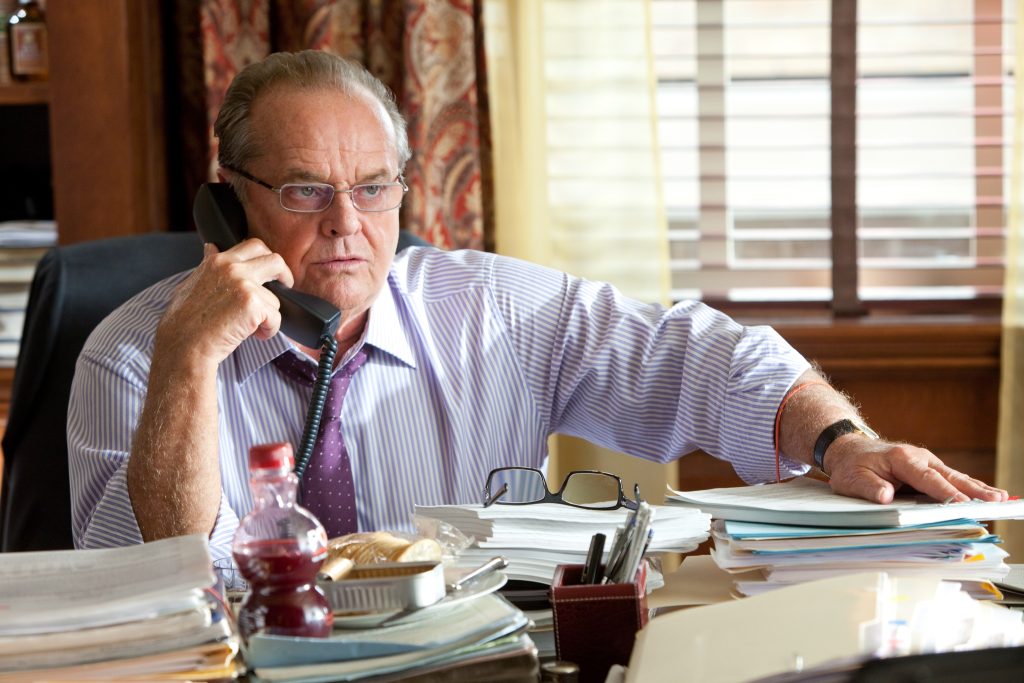
Jack Nicholson’s last film was the 2010 romantic comedy How Do You Know. He never formally announced his retirement. He simply stopped appearing. For a man who controlled rooms through presence, the absence became its own kind of performance. Tabloid reports about dementia surfaced and were never confirmed by Nicholson or his family. His friend Peter Fonda essentially confirmed the retirement in 2017 without Nicholson’s permission. The public narrative became one of decline.
The private reality appears more nuanced. Danny DeVito, who met Nicholson on the set of Cuckoo’s Nest fifty years ago, told People magazine in mid-2025 that Nicholson was doing great. He’d just celebrated his 88th birthday. A source closer to Nicholson’s inner circle offered a different frame to the New York Post, explaining that Nicholson prefers to avoid public appearances now because his circle would rather people remember him as he was. During the devastating Los Angeles wildfires, he called his ex-partner Anjelica Huston — thirty-five years after their relationship ended — to offer her his house.
That phone call contains the entire Jack Nicholson story in miniature. The man who avoided vulnerability for decades, who played commitment-phobic charmers so convincingly because the role required no acting, calling the woman he probably should have stayed with to offer her shelter. Not a grand gesture. Not a public reconciliation. Just a phone call. Hemingway would have ended the story right there. The Hamptons audience — sitting in their own beautiful houses, nursing their own complicated histories with the people they let get away — understands exactly what that call cost him. And exactly what it was worth.
Related Reading
- Why Every Woman East of Shinnecock Still Lives Inside Something’s Gotta Give
- Diane Keaton Net Worth: The $100 Million Fortune Built on Talent, Turtlenecks, and the Homes She Left Behind
There’s a moment in every great movie where a character finally sees what was always in front of them. That’s what Social Life Magazine does for the Hamptons — it holds up a mirror to a world most people only glimpse from the outside, and it lets you see yourself in the frame.
Want to be featured in Social Life Magazine? Whether you’re a brand, a tastemaker, or a story waiting to be told, our editorial team crafts narratives that position you exactly where you belong. Reach out to our editorial team today.
Ready for guaranteed placement? Our Paid Feature program puts your story in front of 25,000 affluent readers per issue — with full creative control and premium positioning. Submit a Paid Feature today.
Join 82,000+ readers who get the Hamptons delivered. Our email list is the inside track for events, features, and access you won’t find anywhere else. Subscribe to our email list.
Experience the event of the summer. Polo Hamptons brings together the East End’s most influential crowd for world-class polo, luxury brand activations, and the kind of networking that actually moves the needle. Get your tickets and sponsorship info at PoloHamptons.com.
Want Social Life in your hands? Our print issues are collector’s items — 25,000 copies distributed from Westhampton to Montauk every summer, plus fall and winter editions to Upper East Side doorman buildings. Subscribe to the print edition.
Love what we do? Keep it going. Social Life Magazine has been the Hamptons’ cultural record for 23 years. Your support helps us keep telling the stories that matter. Donate $5 to support Social Life Magazine.
Author

Written by
Recent Posts

He’s Got Millions. He Still Flinches at the Bill.

Streamlining Ground Station Data Pipelines for Deep Space Missions

The Coordination Problem That Kills Growing Marketing Teams
Why Personalized Skincare Is Replacing One-Size-Fits-All Beauty Products
The Return of the Transatlantic Crossing
Categories
- Art
- Articles
- Business of Luxury
- Celebrities
- Culture
- Entertainment
- Events
- Faces of Summer 2026
- Fashion
- Fashion & Style
- Featured
- Finance
- Food, Spirits, Wine
- Hamptons
- Hamptons Celebrities
- Health
- Health & Beauty
- Lifestyle
- Luxury Lifestyle
- Press
- Profiles
- Real Estate
- Technology
- The Chronicles
- Travel
- Uncategorized
- Weddings