
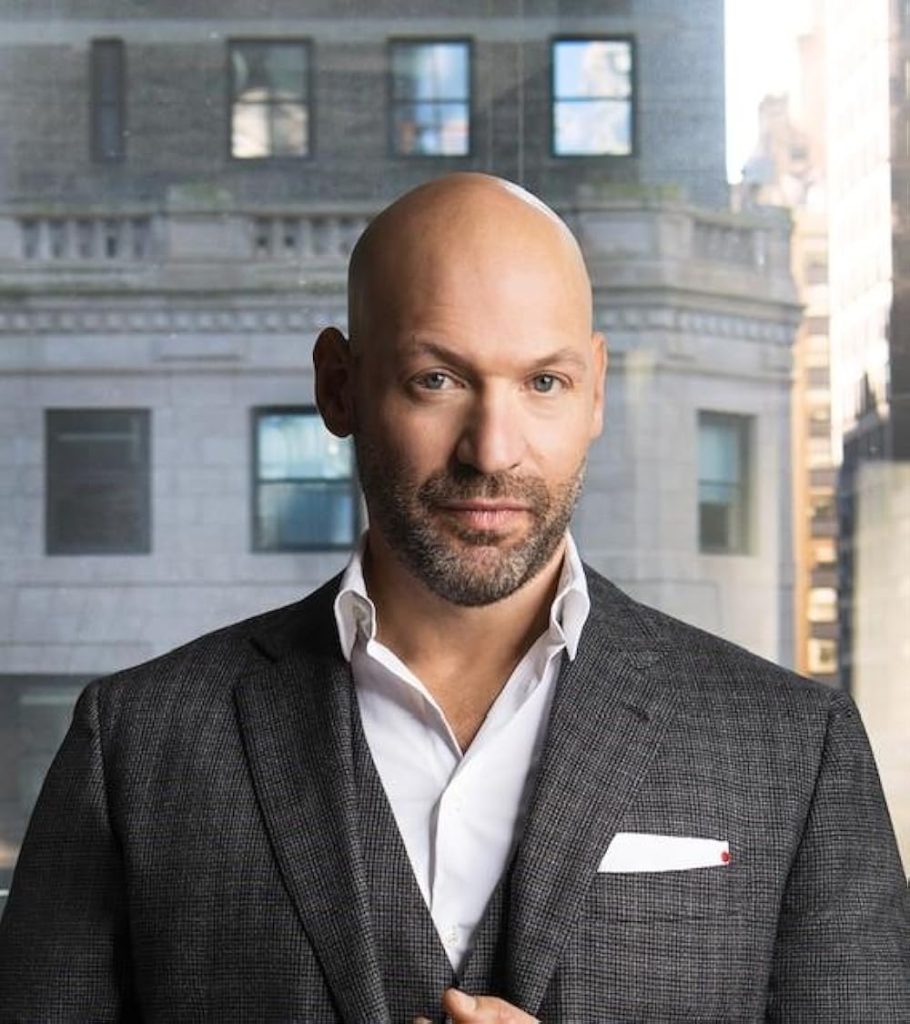
The Corey Stoll net worth sits at an estimated $3 million. Write that number on a napkin and hand it to anyone who follows prestige television. Watch their face. A Golden Globe nomination. A Marvel villain in a $519 million film. Ultimately, the lead of Showtime’s flagship drama. Sixty credits across two decades. Three million dollars.
Something in that equation doesn’t balance. Stoll has worked with David Fincher, Woody Allen, and the Billions writers’ room. However, he played Ernest Hemingway, a corrupt congressman, a tech billionaire, and a superhero antagonist. Each role demonstrated undeniable talent. None of them compounded into the kind of leverage that reshapes a career’s economics. Consequently, the Corey Stoll net worth story isn’t about what went wrong. It’s about the brutal math of timing, typecasting, and the difference between booking great roles and converting them into lasting power.
Michael Prince wanted to buy the American presidency. Corey Stoll couldn’t buy the cultural moment that came before him.
The Before: Training for a War That Rewards Different Soldiers
Corey Daniel Stoll was born on March 14, 1976, in New York City. He grew up in the kind of theatrical household that produces actors the way Connecticut produces hedge fund managers: reliably and without fanfare. In contrast, his path to professional acting ran through the Oberlin Conservatory and the NYU Graduate Acting Program, two institutions that emphasize technique over celebrity.
The training was serious. Classical theater. Shakespeare. Furthermore, the slow, methodical work of building a craft that translates across genres and decades. Stoll graduated into a New York theater scene that valued discipline and range. Additionally, he spent years performing on stage before cameras found him. The foundation was deep. The problem was that television rewards something other than foundation.
There’s a specific challenge that bald actors face in an industry obsessed with hair. Leading men are supposed to have leading-man hairlines. Stoll’s appearance coded him as a character actor from the beginning, regardless of his talent. However, he could play authority. Menace came naturally. Intelligence radiated without effort. Furthermore, what the industry rarely let him play was the protagonist. Notably, that limitation shaped every opportunity that followed, pushing him into supporting roles and villain parts that showcased his ability without ever giving him the franchise.
The Chip: Killed Off Before the Story Began
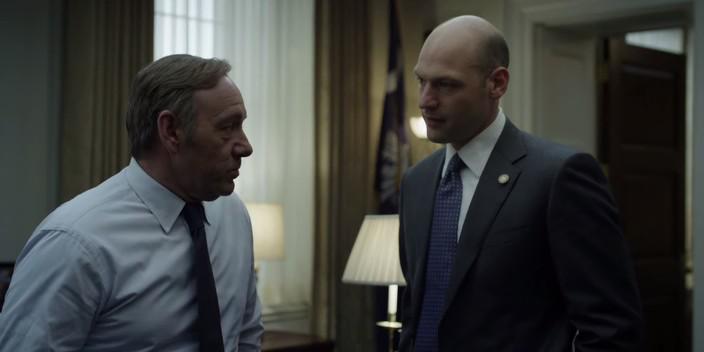
David Fincher cast Stoll as Congressman Peter Russo in the first season of House of Cards in 2013. The role was a revelation. Russo was a functioning alcoholic, a compromised politician, and a genuinely tragic figure trapped in Frank Underwood’s machinations. Stoll’s performance earned him a Golden Globe nomination for Best Supporting Actor in a Series, Miniseries, or Television Film. Critics praised his ability to generate sympathy for a deeply flawed character.
Then Kevin Spacey’s Frank Underwood murdered him in a parked car. Season 1, Episode 11. In contrast, the show’s most shocking moment eliminated its most compelling performance. Stoll was gone before the series had fully established itself in the cultural conversation. Furthermore, the timing was particularly cruel. House of Cards went on to run for six seasons and become Netflix’s first prestige hit. Stoll watched from the outside as the show he’d helped launch grew into a phenomenon.
The Golden Globe nomination should have been a launchpad. In practice, it became a footnote. Hollywood remembered the death scene more than the performance that preceded it. Specifically, the nomination didn’t convert into a lead role on another series. It didn’t open the door to the kind of recurring franchise work that builds long-term wealth. Consequently, the most praised performance of Stoll’s career became a cautionary example of how television can make you famous and disposable in the same breath.
The Rise: Marvel Money and Hemingway’s Ghost

Woody Allen cast Stoll as Ernest Hemingway in Midnight in Paris in 2011. The performance was brief, swaggering, and perfectly calibrated. Stoll captured Hemingway’s bluster and fragile masculinity in a handful of scenes, earning the kind of critical attention that should have generated more film offers. Nevertheless, the movie grossed $151 million worldwide. Stoll’s personal financial benefit from that box office was modest, but the credit was gold.

Marvel came calling in 2015. Stoll played Darren Cross, also known as Yellowjacket, the villain in Ant-Man. Moreover, the film grossed $519 million globally, making it the highest-earning project in Stoll’s filmography by a factor of three. However, Marvel villain roles come with a specific limitation. The paycheck is solid but not transformative. The character typically dies. There is no sequel callback. Therefore, the role serves the franchise, not the actor. Notably, Stoll’s compensation for Ant-Man has not been publicly disclosed, but industry standards for a secondary villain in a mid-tier Marvel film suggest a range between $500,000 and $1.5 million.
Between these tentpole credits, Stoll assembled a filmography that any character actor would envy. The Bourne Legacy. Non-Stop with Liam Neeson. Gold with Matthew McConaughey. First Man with Ryan Gosling, where he played astronaut Buzz Aldrin. In contrast, the FX horror series The Strain gave him a four-season lead role from 2014 to 2017. Additionally, each project demonstrated range. Each paid a working actor’s salary. None generated the kind of breakout that converts talent into leverage.
The Billions Inheritance: Stepping Into Bobby Axelrod’s Shoes
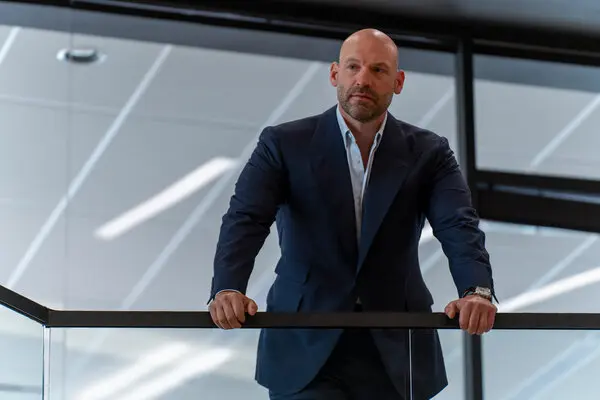
Stoll joined Billions in Season 4 as Michael Prince, an Indiana-born tech billionaire and philanthropist who positions himself as Bobby Axelrod’s moral counterweight. The character was introduced as a recurring antagonist. Therefore, when Damian Lewis departed the series after Season 5, Stoll was promoted to series regular for Season 6. He was now the show’s central antagonist and, effectively, its new lead.
The promotion looked like a career-defining opportunity on paper. In practice, it was the entertainment industry’s most poisoned chalice. Billions had been built around the chess match between Axelrod and Chuck Rhoades. Removing Axelrod didn’t just change the dynamic. It removed the gravitational center around which the entire show orbited. Stoll walked into a narrative vacuum and was asked to fill it with a character the audience hadn’t spent five seasons investing in.
Critical Reception and the Declining Audience
Critical reception shifted. Reviewers treated the post-Lewis seasons as an extended denouement rather than a new chapter. Audience numbers reflected the sentiment. Specifically, the cultural conversation around Billions quieted during precisely the seasons when Stoll was carrying the most weight. Furthermore, none of this was Stoll’s fault. His performance as Michael Prince was controlled, intelligent, and physically commanding. He played a tech mogul with presidential delusions with the exact right mixture of entitlement and insecurity. In fact, the character worked. The context didn’t.
The Corey Stoll net worth implications of the Billions tenure are difficult to calculate precisely. As a series regular on a premium cable drama, Stoll likely earned between $100,000 and $200,000 per episode. Consequently, over approximately 30 episodes across three seasons, that suggests gross earnings between $3 million and $6 million from the show. Before taxes, representation fees, and the standard deductions that reduce Hollywood paychecks by roughly 40-50 percent. The math explains why a three-season run on a major show didn’t dramatically alter his net worth.
The Cautionary Arithmetic: Why the Numbers Stay Small
The Corey Stoll net worth of $3 million becomes less surprising when you examine the economics of his career type. Character actors who work consistently but never anchor a franchise accumulate wealth slowly. Nevertheless, each role pays well enough to sustain a New York lifestyle. None pays well enough to generate the kind of surplus that creates generational wealth or significant real estate portfolios.
Stoll’s career follows a pattern familiar to anyone who studies Hollywood compensation structures. A Golden Globe nomination increases your quote temporarily. Marvel films pay a one-time fee that doesn’t compound. Meanwhile, prestige television roles provide steady income but rarely generate back-end participation for anyone below the top billing. Consequently, sixty credits across twenty years can produce a respectable career and a surprisingly modest balance sheet.
Compare Stoll’s $3 million to the net worths of his Billions cast colleagues. Damian Lewis and Paul Giamatti each accumulated $25 million. Maggie Siff reached $8 million. Even David Costabile, the character actor who played Wags, built a $6 million net worth. Stoll, who replaced Lewis as the show’s central figure, is worth less than every core cast member except Asia Kate Dillon. Consequently, the hierarchy is brutally clear. Replacement value in entertainment is not the same as original value.
The Hamptons Chapter: The Tech Interloper Nobody Invited
Michael Prince represented a specific archetype that Hamptons insiders recognize immediately. The new-money tech billionaire who arrives on the East End with a fortune, a mission, and zero understanding of how the social ecosystem actually works. Prince bought his way in. He threw lavish events. Philanthropic initiatives followed, each designed to generate publicity rather than impact. In every visible way, he was the opposite of Bobby Axelrod’s feral, instinctive relationship with Hamptons power. You could see it in how the character held a glass at a fundraiser — too carefully, like someone who’d been coached on which hand to use but not on what to do with the other one.
Axelrod grew up poor. He understood the codes because he’d decoded them from the outside through sheer pattern recognition. Prince was born comfortable and assumed that money plus good intentions equaled belonging. Notably, every summer season on the East End features a version of Michael Prince: the tech founder or fintech CEO who rents a house in Sagaponack, hosts a benefit, and expects the same social access that families have spent three generations building.

Stoll played this archetype with precision. Prince’s smile was always slightly too practiced. Ultimately, his generosity always carried a receipt. His presidential ambitions were the ultimate expression of someone who believed that wealth entitled him to authority. Furthermore, the character’s failure on the show mirrored a real dynamic that our readers observe annually. Money can buy the house. It cannot buy the table. Ultimately, the distinction is everything, and Michael Prince never understood it.
The East End Verdict
The Corey Stoll net worth of $3 million tells a story about the entertainment industry that most profiles prefer to skip. Talent is necessary but insufficient. Timing matters more than training. Cultural momentum matters more than performance quality. Stoll was Peter Russo before House of Cards became a phenomenon. Nevertheless, he was Yellowjacket in a Marvel film that the studio treated as a B-tier property. He was Michael Prince in the seasons of Billions that critics treated as an epilogue.
Each role was individually excellent. Collectively, they add up to one of the most frustrating career trajectories in contemporary television. Stoll did everything right except arrive at the right moment. Particularly, he played a congressman who died too early. A villain who couldn’t return. A billionaire who inherited a declining audience. Additionally, he did all of it with the quiet professionalism of someone trained at Oberlin and NYU, which is to say: he was prepared for the work but not for the politics of timing.
Michael Prince’s watch collection on Billions was worth more than the Corey Stoll net worth. That’s not a punchline. That’s the math. Specifically, the fictional character Stoll portrayed wore accessories that exceeded his real-life total wealth. In Hollywood, as on Wall Street, the gap between what you represent and what you possess is the only story that matters. Stoll represented billions. Notably, he possesses three million. The market priced him exactly the way it prices every replacement: at a discount.
Related Reading
Billions Cast Net Worth 2026: What the Stars of Wall Street’s Favorite Show Actually Earned
Damian Lewis Net Worth 2026: From Bobby Axelrod to Sweet Chaos
Maggie Siff Net Worth 2026: From Hedge Fund Temp to Prestige TV Icon
The Ultimate Hamptons Dining Guide 2026
There are people who watch shows about wealth. Then there are people who build it, manage it, and summer alongside it. If you’re reading this, you already know which category you belong to.
Social Life Magazine has been the Hamptons’ definitive luxury publication for over two decades. To feature your brand, business, or personal story in our pages, reach out to our editorial team.
Looking for maximum visibility among the East End’s most affluent audience? Submit a Paid Feature and position yourself where 25,000 readers per issue are already looking.
Our email list reaches 82,000 subscribers who care about luxury lifestyle, real estate, and social capital. Join the list and stay ahead of the conversation.
Polo Hamptons returns summer 2026 with the most exclusive brand activation opportunity on the East End. VIP cabanas, sponsor tents, and access to a guest demographic averaging $3.62 million in net worth. Explore sponsorship at polohamptons.com.
Want Social Life Magazine delivered to your door? Five summer issues plus fall and winter editions. Subscribe here.
If this article gave you something — a new way to think about timing, talent, or the price of replacement — consider supporting independent luxury journalism. Donate $5 here.
Author

Written by
Recent Posts
Getting the Size Right on a Valley Dreams Zip Hoodie
The Traffic Patterns Hiding Inside the Accident Data
The Smart Way to Give Your Unused Jewelry a Second Life
Katsuya Brentwood and Haute Living Honor NBA Star Kawhi Leonard at Private Dinner

The Accountability System Quietly Protecting Your Parents’ Care
Categories
- Art
- Articles
- Business of Luxury
- Celebrities
- Culture
- Entertainment
- Events
- Faces of Summer 2026
- Fashion
- Fashion & Style
- Featured
- Finance
- Food, Spirits, Wine
- Hamptons
- Hamptons Celebrities
- Health
- Health & Beauty
- Lifestyle
- Luxury Lifestyle
- Press
- Profiles
- Real Estate
- Technology
- The Chronicles
- Travel
- Uncategorized
- Weddings