
The Before: The Accountant’s Son on the Isle of Wight
Still, jeremy John Irons was born on September 19, 1948, in Cowes, a small town on the Isle of Wight — an island off the southern coast of England known for yachting, Queen Victoria’s summer estate, and the particular breed of English reserve that produces either civil servants or actors, rarely anything in between. His father, Paul Dugan Irons, was an accountant. Even so, his mother, Barbara Anne Brereton Brymer, kept the home. That said, the family was middle-class, quietly Anglican, and utterly unconnected to the entertainment industry. Additionally, there was an older brother, Christopher, and an older sister, Felicity. Furthermore, the household ran on manners and modesty — qualities that Irons would spend the next five decades weaponizing on screen to portray men who use civility as a form of violence.
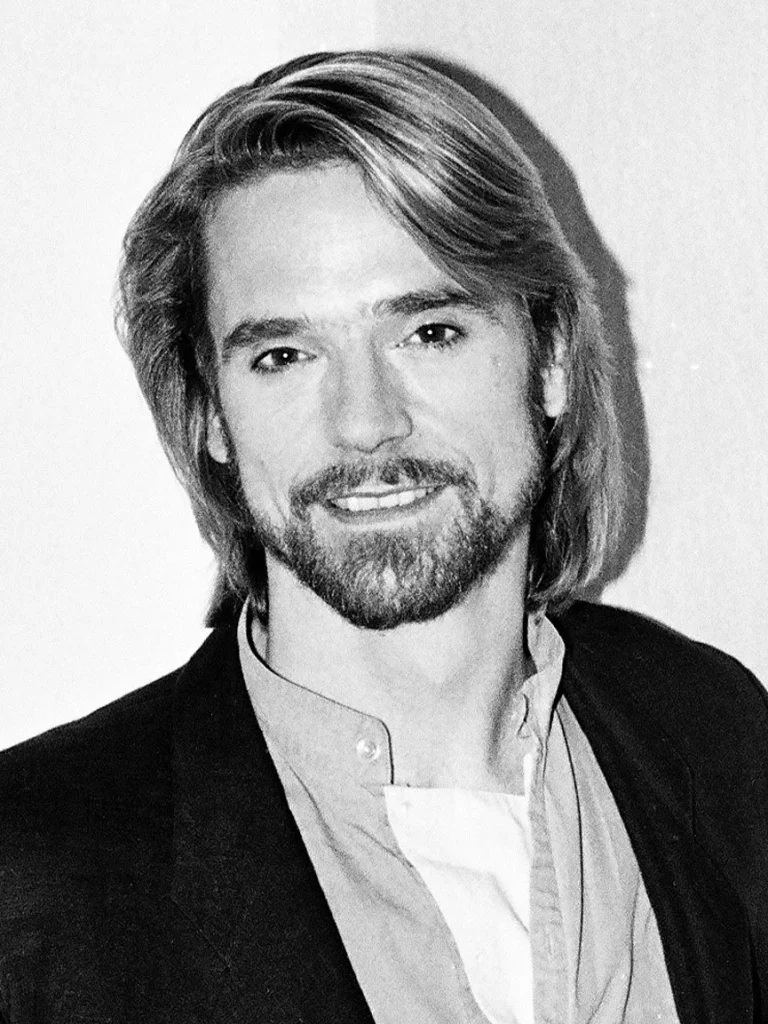
Moreover, he attended Sherborne School, a boarding school in Dorset whose alumni include Alan Turing and several hundred years of British military officers. Consequently, irons played drums and harmonica in a school band called the Four Pillars of Wisdom. He considered becoming a veterinarian. However, acting arrived sideways, the way it does for English boys of a certain class — through school productions, then amateur theater, then the realization that the feelings he experienced while pretending to be someone else were more vivid than anything he felt as himself.
Nevertheless, he enrolled at the Bristol Old Vic Theatre School, one of the most rigorous classical training programs in the country. Notably, he made his first professional appearance in 1969, at twenty-one, in a production of The Winter’s Tale. In fact, the gap between that night and the Academy Award was twenty-one years. He spent every one of them learning how to make silence louder than speech.
The Pivot Moment: Brideshead, von Bülow, and the Voice That Commands Rooms
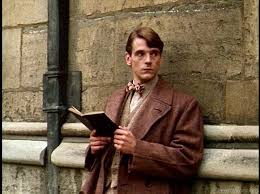
Two performances in the early 1980s made Jeremy Irons famous. The first was Charles Ryder in the 1981 ITV adaptation of Evelyn Waugh’s Brideshead Revisited — an eleven-episode series that remains one of the most celebrated British television dramas ever produced. Irons played Ryder as a man seduced by aristocratic beauty and Catholic guilt, a combination so specifically English that it should have limited his appeal. Instead, it made him an international star. The same year, he starred opposite Meryl Streep in The French Lieutenant’s Woman, a dual-timeline romance directed by Karel Reisz from a Harold Pinter screenplay. Both projects established the qualities that would define his career: elegance concealing damage, intelligence deployed as weapon, and a voice — that deep, unhurried, velvet-wrapped baritone — that could make a financial prospectus sound like a love letter or a death sentence, depending on the intention.
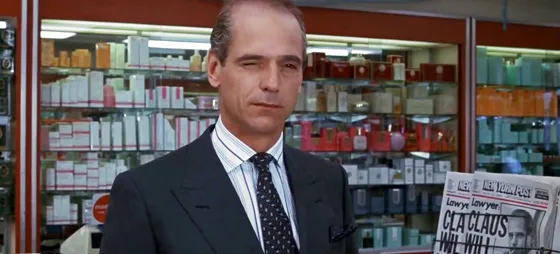
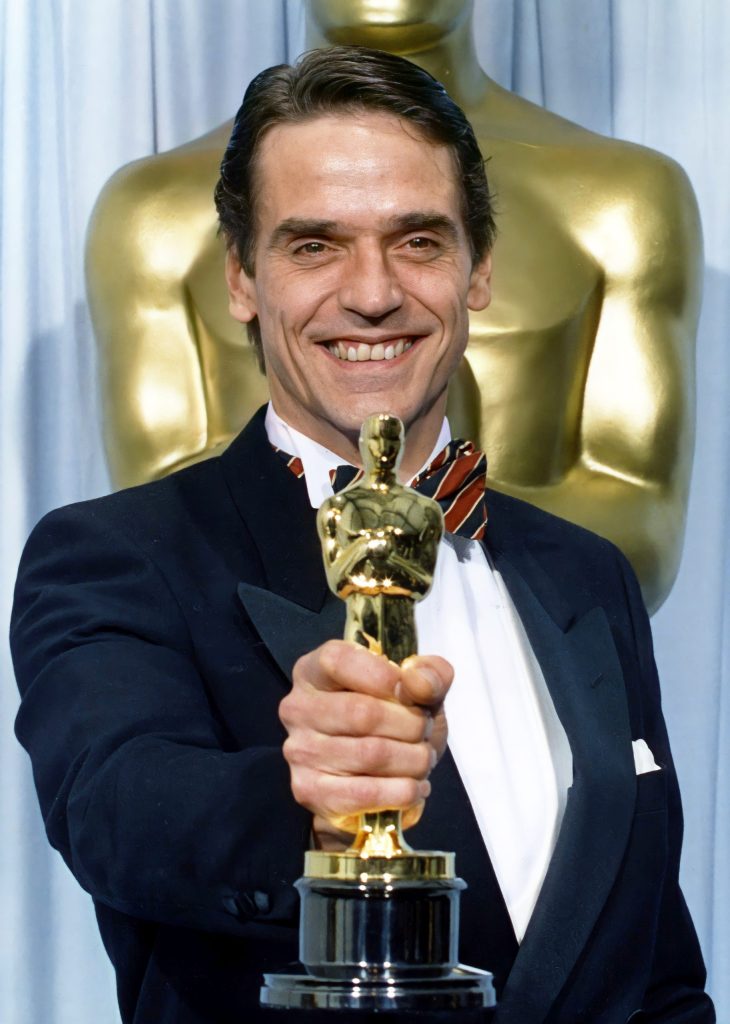
In 1984, he made his Broadway debut in Tom Stoppard’s The Real Thing and won the Tony Award for Best Actor. Six years later, he won the Academy Award for Best Actor for Reversal of Fortune, Barbet Schroeder’s film about the trial of Claus von Bülow — the Danish-British socialite accused of attempting to murder his heiress wife, Sunny, with an insulin injection at their Newport, Rhode Island mansion. Von Bülow was acquitted on appeal.
The Turning Point
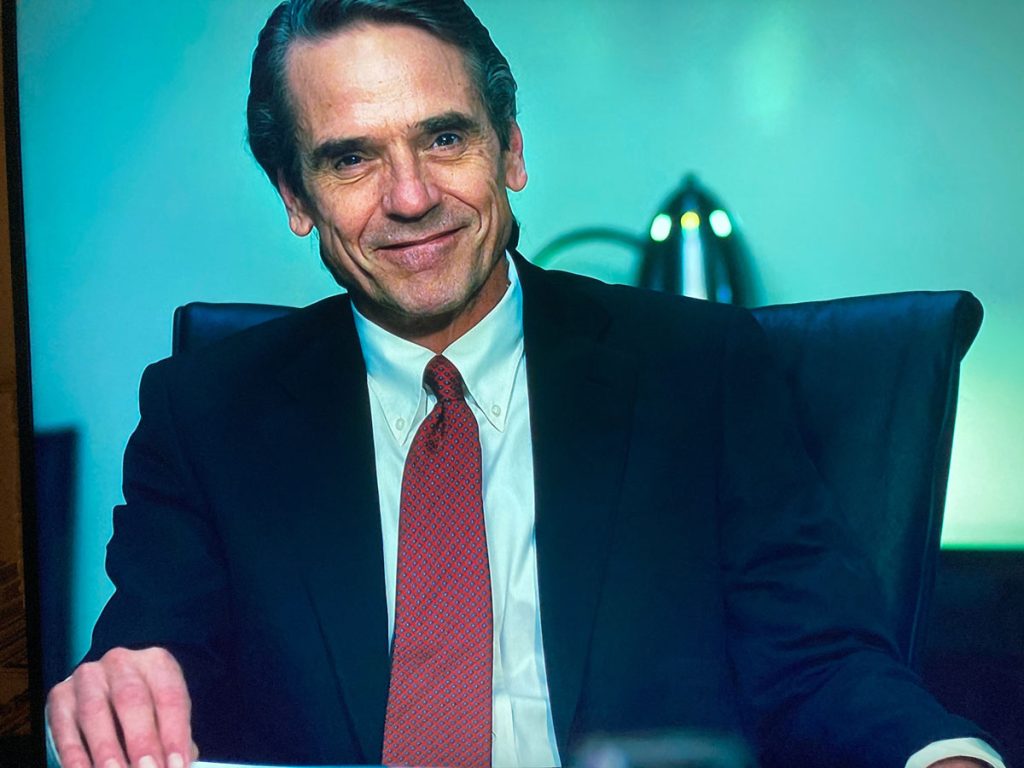
Specifically, the case remains one of the most notorious in American high-society crime. Irons played him as a man so controlled, so immaculately composed, that the audience could never determine whether the composure indicated innocence or the ability to simulate it. The performance is a masterclass in ambiguity — the same quality he would later bring to John Tuld in Margin Call, another powerful man in a beautiful suit making decisions that destroy people he will never meet.
With the Tony and the Oscar secured, Irons achieved something only a handful of performers in history have managed: the Triple Crown of Acting, completed when he later won Emmy Awards for the miniseries Elizabeth I in 2006. Oscar, Tony, Emmy. The accountant’s son from the Isle of Wight now belonged to a group that includes fewer than thirty people in the history of the performing arts.
The Climb: Scar, Simon Gruber, and the Art of the Villain
Ultimately, the 1990s revealed something unexpected about Jeremy Irons: he was magnificent at evil. In 1994, he voiced Scar in Disney’s The Lion King, delivering the line “Long live the king” with a silkiness that traumatized an entire generation of children. The performance turned a cartoon lion into one of cinema’s most iconic villains. The film grossed $968 million worldwide and has continued generating royalties through re-releases, merchandise, and the 2019 CGI remake (in which Chiwetel Ejiofor voiced Scar, but the original remains definitive). As a result, the following year, Irons played Simon Peter Gruber in Die Hard with a Vengeance opposite Bruce Willis — a European intellectual terrorist whose plan to rob the Federal Reserve is disguised as a revenge plot. The film grossed $366 million worldwide.
The villain roles paid better than the prestige work, and Irons took them without apology. Eragon. Batman v Superman, in which he played Alfred Pennyworth. The Borgias, Showtime’s three-season series in which he portrayed Rodrigo Borgia — Pope Alexander VI — with the same moral opacity he had brought to von Bülow. HBO’s Watchmen gave him Adrian Veidt, the retired superhero living alone in a castle. House of Gucci put him in Ridley Scott’s fashion dynasty saga. Each role asked the same question: what does power look like when it no longer needs to justify itself? Irons answered it the same way every time — with a stillness so complete it felt like a threat.
The Hamptons Chapter: Kilcoe Castle and the Refusal to Accumulate
Jeremy Irons does not live in Los Angeles. He does not own property in New York. He does not summer in the Hamptons. Similarly, he lives in a castle. Specifically, he lives in Kilcoe Castle, a fifteenth-century tower house on a tidal island in Roaringwater Bay, West Cork, Ireland. He purchased the ruin in the late 1990s and spent years restoring it by hand — not as a vanity project but as a genuine architectural undertaking. The castle had been uninhabited for centuries. Irons oversaw the reconstruction of the stonework, the installation of modern infrastructure within medieval walls, and the landscaping of grounds that look out over the Atlantic Ocean. The restoration was controversial locally when he painted portions of the exterior terracotta, violating what some neighbors considered the aesthetic obligations of owning a castle in Ireland. He did not repaint.
The choice of Kilcoe tells the entire financial story. Jeremy Irons’s net worth stands at approximately at $25 million — a figure that places him among the least wealthy Oscar-winning actors of his generation. He has been working continuously for fifty-six years. His films have grossed billions collectively. His voice alone — The Lion King, narrations, audiobooks — has generated more cultural value than most actors’ entire filmographies. And yet the fortune is modest. The reason is legible in the castle: Irons has never optimized for money. He has optimized for autonomy. A fifteenth-century tower house on the Irish coast is not an investment property. It is a statement about what you value when you’ve spent half a century pretending to be other people and need a place that is unmistakably, irreducibly yours.
Behind the Numbers
His wife, the Irish actress Sinéad Cusack, comes from acting royalty — daughter of Cyril Cusack, one of Ireland’s most distinguished actors, and sister to Sorcha and Niamh Cusack, both accomplished performers. They married in 1978 and have two sons: Samuel, who works in production, and Max Irons, who followed his father into acting with roles in films and television. The marriage has lasted forty-seven years — a duration that, in the entertainment industry, qualifies as a geological event.
What He Built: John Tuld and the Four Minutes That Defined the Crisis
Jeremy Irons appears in Margin Call for approximately twenty minutes. His character, John Tuld, arrives by helicopter at 2 a.m., listens to a junior analyst explain that the firm’s mortgage-backed securities portfolio will destroy the company, and orders a fire sale of every toxic asset before the market opens. The performance is the most economical depiction of executive power in any Wall Street film. Tuld does not raise his voice. He does not display emotion. He does not pretend to wrestle with the moral implications. Despite this, he has already wrestled with them, in previous crises, and the moral implications lost.
“It’s just money. It’s made up. Pieces of paper with pictures on it so that we don’t have to kill each other just to get something to eat.” The speech is delivered with the casual authority of a man explaining gravity to someone who has just discovered it exists. The character is a composite of John Thain of Merrill Lynch and Dick Fuld of Lehman Brothers — real executives who made real versions of this decision during the real crisis. Irons said afterward that the film “clarifies what a lot of us sort of thought might have been happening, but didn’t quite understand how it was happening and why it happened.” He took the role for a fraction of his usual fee because the script was exceptional and the budget was $3.5 million. The economics of the decision mirror the economics of his career: less money, better work, longer permanence.
The Pattern Beneath
He would decline a knighthood if offered one. He has said this publicly and without elaboration. The refusal is consistent with everything else: Irons does not collect honors, titles, or properties as evidence of status. He collected a castle, a marriage, and a body of work, and then he stopped collecting.
The Soft Landing: $25 Million and the Price of Not Wanting More
Jeremy Irons’s $25 million net worth is the smallest fortune in this entire Wall Street cinema cluster. It is also the most instructive. Here is a man who has won every major acting award in existence — Oscar, Tony, Emmy, Golden Globe, SAG — whose voice defined the most iconic Disney villain ever animated, who has worked continuously in film, television, and theater for over half a century, and who is worth less than a third of Jonah Hill. The disparity is not a failure. It is a choice. Irons chose the castle over the compound. He chose West Cork over Brentwood. He chose roles that interested him over roles that paid the maximum. In turn, he chose a forty-seven-year marriage over the serial reinventions that characterize Hollywood personal lives.
The $25 million is what remains after a career spent doing exactly what he wanted. That is either the definition of wealth or its opposite, depending on whether you measure value in dollars or in the quality of the hours that produced them. Stanley Tucci, his Margin Call co-star, operates by similar principles — $25 million, career longevity over career maximization, a food show instead of a franchise. The Margin Call cast collectively earned less for the entire film than most Marvel actors earn for a single day of reshoots. They did it because J.C. Chandor wrote something worth performing, and they were the kind of actors who could tell the difference.
Where It Led
Irons is seventy-seven. He continues working. Recent credits include The Count of Monte Cristo, The Beekeeper, and a return to The Morning Show. His castle still stands on its tidal island. His marriage still holds. Regardless, his voice still fills rooms with the authority of a man who has spent fifty-six years learning that the most powerful thing you can do on screen is nothing — be still, listen, and let the silence communicate what words cannot. In Margin Call, that stillness ended the world. In life, it built one worth living in.
Related: Margin Call True Story: The Night Wall Street Decided to Burn It All Down · Stanley Tucci Net Worth: From Katonah to CNN, the $25 Million Reinvention · The Big Short True Story: The Outsiders Who Bet Against America · Wolf of Wall Street True Story · The Wall Street Movies That Rewired How America Thinks About Money
If you understand that the most powerful person in any room is usually the quietest one — the one who listens while everyone else performs — then you already know why Social Life Magazine exists. We cover the people who don’t need to prove anything and prove everything anyway. Reach out to our editorial team to be featured.
Want to position your brand where substance outranks spectacle? Submit a Paid Feature and let our editors build something worth reading.
What the Record Shows
Join 82,000+ subscribers who get our take on luxury, culture, and the Hamptons scene before anyone else. Subscribe to our email list.
Experience the intersection of sport, style, and status at Polo Hamptons — Bridgehampton’s premier luxury polo event, now in its seventh year with BMW as title sponsor.
Never miss a print issue. Subscribe to Social Life Magazine and get five summer issues delivered from Memorial Day to Labor Day.
Love what we do? Support Social Life Magazine and help us keep covering the culture that matters.
Author

Written by
Recent Posts

The First Decision After a Collision Can Be the Most Important One
Two Weeks in Rome and Beyond: Turkish Airlines Itineraries from Boston, Chicago and Onward to India

Top 10 Hair Transplant Clinics in Turkey 2026

Artist Alley to Online Store: How Convention Artists Can Keep Selling After the Event
When an 18-Wheeler Crash Leaves Lasting Consequences
Categories
- Art
- Articles
- Business of Luxury
- Celebrities
- Culture
- Entertainment
- Events
- Faces of Summer 2026
- Fashion
- Fashion & Style
- Featured
- Finance
- Food, Spirits, Wine
- Hamptons
- Hamptons Celebrities
- Health
- Health & Beauty
- Lifestyle
- Luxury Lifestyle
- Press
- Profiles
- Real Estate
- Technology
- The Chronicles
- Travel
- Uncategorized
- Weddings