
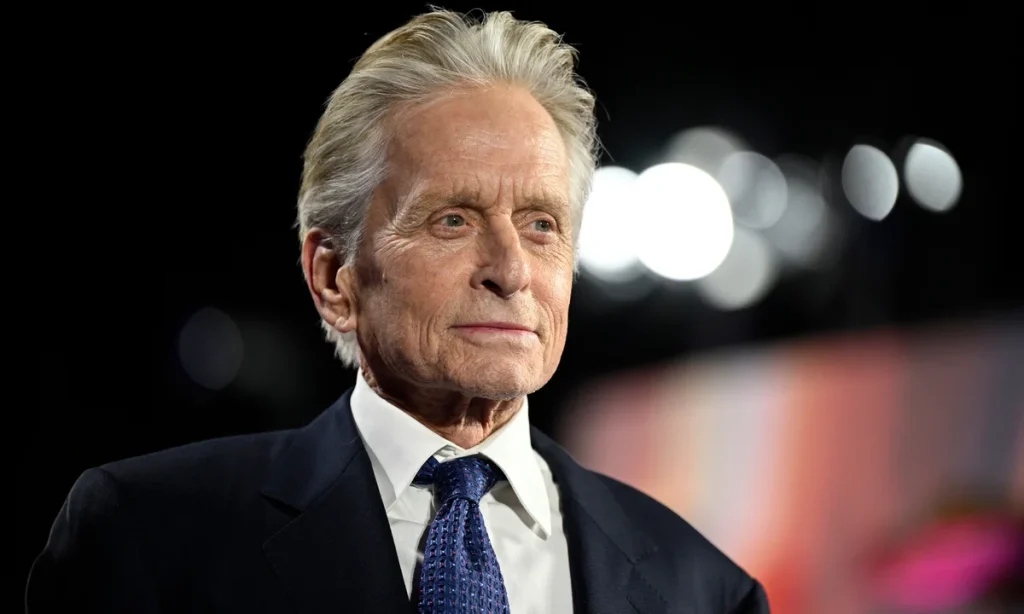
The Before: Kirk Douglas’s Son and the Weight of Inheritance
Consequently, Michael Kirk Douglas was born on September 25, 1944, in New Brunswick, New Jersey, to two professional actors who met at the American Academy of Dramatic Arts and divorced before he was old enough to understand that the world’s most famous leading man was also an absent father. However, Kirk Douglas — Spartacus, Champion, Ace in the Hole, one of the last surviving stars of Hollywood’s Golden Age — was a monument. Michael was the monument’s son. Nevertheless, the distinction shaped everything that followed: every audition was weighed against the question of whether the kid deserved the room or had merely inherited the key.
Notably, he attended Allen-Stevenson School in Manhattan, Eaglebrook School in Massachusetts, and Choate Prep in Connecticut before earning a BA in drama from the University of California, Santa Barbara, in 1968. The education was excellent and irrelevant. What mattered was the phone call. In fact, Kirk Douglas had spent years trying to produce a film adaptation of Ken Kesey’s novel One Flew Over the Cuckoo’s Nest. The project stalled. Subsequently, Kirk handed the rights to his son — a gift that looks generous until you realize it was also a test. Meanwhile, Michael partnered with Saul Zaentz and produced the film in 1975.
Despite this, Jack Nicholson starred. Indeed, the film won Best Picture, Best Director, Best Actor, Best Actress, and Best Adapted Screenplay — only the second film in history to sweep all five major categories. Michael Douglas was thirty years old. He had not acted in the film. He had produced it. Ultimately, the lesson was immediate and permanent: ownership is more valuable than performance. By contrast, he would spend the next fifty years proving it.
The Pivot Moment: 1987 — The Year He Won Everything and Created a Monster
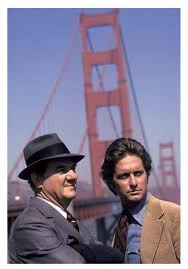
The decade between Cuckoo’s Nest and Wall Street was an apprenticeship. Nevertheless, the Streets of San Francisco (1972-1976) gave Douglas four seasons as a television cop and three consecutive Emmy nominations. Romancing the Stone (1984) made him a movie star and proved he could produce and act simultaneously — the film earned $86 million on a $10 million budget. The China Syndrome (1979) showed he could carry a thriller. But none of it prepared the industry for what happened in 1987, when Michael Douglas released two films that together grossed over $360 million, redefined his career, and created the most enduring villain in American cinema.
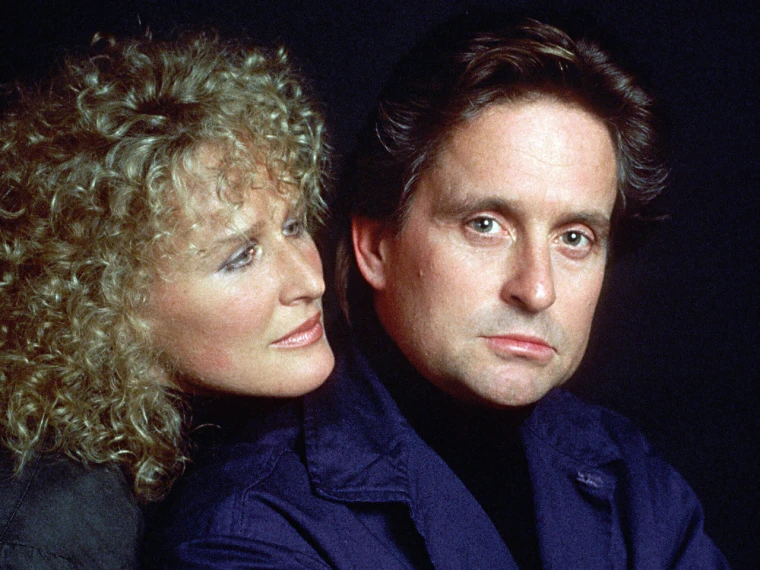
Fatal Attraction opened in September and earned $320 million worldwide. Douglas played Dan Gallagher, a married man whose one-night stand with Glenn Close’s Alex Forrest turns into a psychological nightmare. The film was a cultural phenomenon that generated a national conversation about infidelity, obsession, and the consequences of male entitlement. Three months later, Wall Street opened. Oliver Stone had assembled Gordon Gekko from the spare parts of Ivan Boesky, Carl Icahn, Michael Milken, and Stone himself. The studio wanted Warren Beatty. Stone wanted Richard Gere.
In turn, both declined. Douglas got the role and did something neither Beatty nor Gere could have done: he made the villain the most compelling person on screen. Stone provoked him during the shoot, walking into his trailer and questioning whether he could act at all. Douglas responded by channeling what Stone called “repressed anger” into the performance. The “Greed is good” speech was the result. He won the Academy Award for Best Actor. He was forty-three years old.
The Climb: $20 Million Paychecks, a $45 Million Divorce, and the Price of Playing Powerful Men
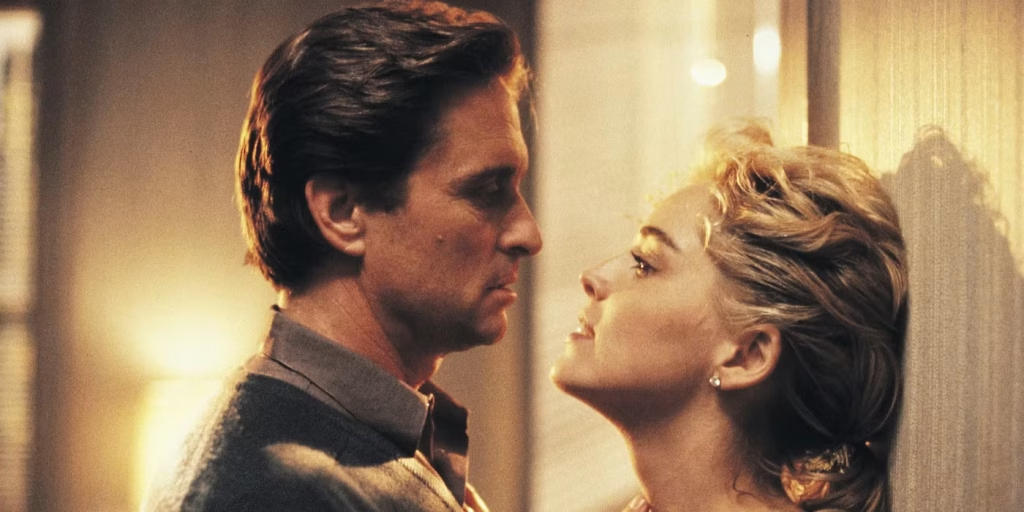
The 1990s were the decade of maximum earnings. Basic Instinct (1992) paid Douglas $15 million to play a detective seduced by Sharon Stone’s bisexual murder suspect in a film whose interrogation scene became the most paused frame in VHS history. The American President (1995) paid $15 million. The Game (1997) and A Perfect Murder (1998) each paid $20 million. By the mid-nineties, Douglas was among the five highest-paid actors in the world, commanding fees that his father — who had been a bigger star in a less lucrative era — never approached. The films grossed billions collectively. The roles followed a pattern so consistent it became a brand: powerful men who believe their intelligence and status exempt them from consequences, and then discover they do not.
Nevertheless, the consequences in Douglas’s personal life were equally on-brand. His marriage to Diandra Luker ended in 1995 with a divorce settlement reportedly worth $45 million — at the time, one of the most expensive in Hollywood history. Their son Cameron, born in 1978, would later struggle with severe drug addiction, ultimately serving seven years in federal prison on drug charges, including a period in solitary confinement. Douglas has spoken publicly about the guilt of being an absent father during Cameron’s formative years, drawing an explicit connection between his own workaholism and his son’s self-destruction. The parallel to Kirk Douglas’s absence during Michael’s childhood is precise and painful: three generations of Douglas men repeating the same pattern of professional ambition and parental failure, each one aware of the repetition and unable to stop it.
The Hamptons Chapter: Catherine, Cancer, and the Estate Portfolio
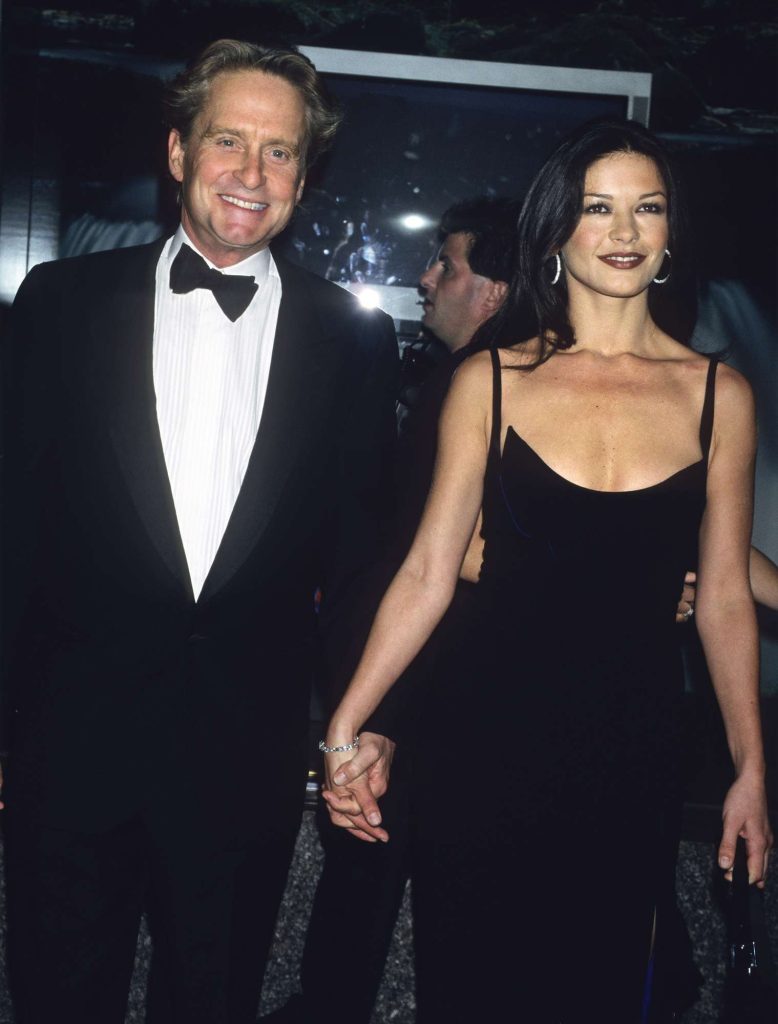
In 2000, Michael Douglas married Catherine Zeta-Jones, a Welsh actress twenty-five years his junior who was born on his exact birthday, September 25. The symmetry is the kind of detail that would be rejected from a screenplay for being too on the nose. They have two children together, Dylan and Carys. The marriage has endured twenty-five years, surviving Douglas’s cancer diagnosis, Zeta-Jones’s public disclosure of bipolar II disorder, and the tabloid pressure that accompanies any union between two people whose combined net worth exceeds half a billion dollars.
Douglas received a diagnosis of stage IV throat cancer in 2010. He initially attributed the cancer to HPV rather than his decades of smoking, a claim that generated controversy and public health discussion in equal measure. He underwent aggressive radiation and chemotherapy, lost 32 pounds, and announced in January 2011 that the tumor had been eliminated. The illness temporarily halted his career but did not diminish his earning power — HBO’s Behind the Candelabra (2013), in which he played Liberace with flamboyant precision opposite Matt Damon, won him the Emmy, Golden Globe, and SAG Award. The performance proved that a sixty-eight-year-old cancer survivor could still outperform every other actor on television in a given year.
Still, the Turning Point
His real estate portfolio reflects the scale of the fortune. Properties have included a Bedford, New York estate, a Bermuda residence connected to his mother’s family heritage (Diana Dill was from Devonshire Parish), and a Mallorcan property once listed at $32 million. A Manhattan apartment and an art collection reported to include Picasso and Miró complete the picture. Kirk Douglas, who lived to 103 and died on February 5, 2020, was worth approximately $61 million at his death. He left $50 million to charity. Michael’s $350 million fortune exceeds his father’s peak wealth by roughly six times. The son outearned the monument. That, more than any Oscar, is the achievement Kirk would have understood.
What He Built: Gekko’s Shadow and the Career That Outlasted It
The problem with creating the most iconic villain in American cinema is that the villain eventually becomes your identity. Douglas has played dozens of roles since Wall Street — the President of the United States, Liberace, a Marvel scientist, a dying acting coach — and still, thirty-eight years later, reporters call him Gordon. At a United Nations press conference where Douglas was serving as a Messenger of Peace promoting nuclear disarmament, journalists asked whether he bore responsibility for “the greed merchants who had brought the world to its knees.” One addressed him as Gordon. Douglas replied: “My name is not Gordon. It’s a character I played 20 years ago.” The correction had no effect.
Regardless, psychiatrists have cited Gekko as one of the most realistic depictions of a “corporate psychopath” in cinema. The American Film Institute ranked him among the greatest villains ever filmed. Screenwriter Stanley Weiser wrote an op-ed begging America to stop treating Gekko’s philosophy as gospel. None of it worked. The character outlived the performance.
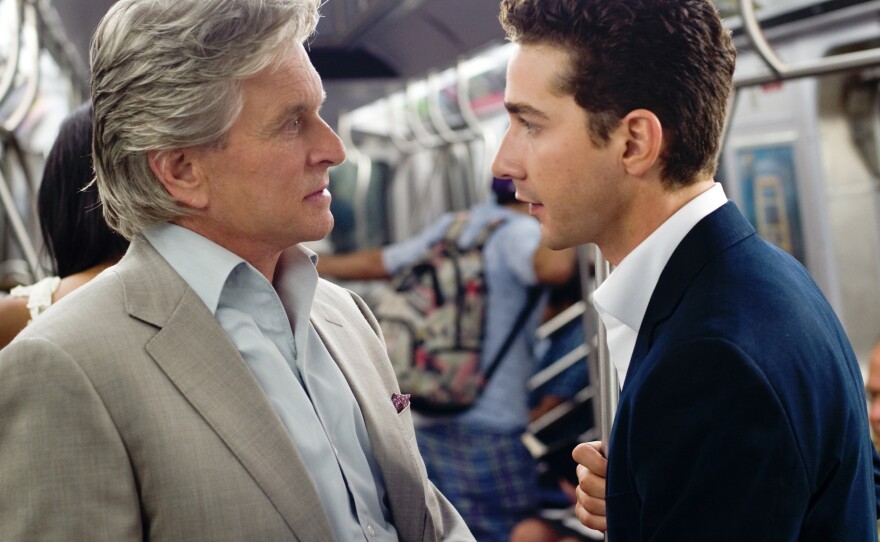
Douglas reprised Gekko in the 2010 sequel Wall Street: Money Never Sleeps, which attempted to update the character for the post-2008 world and largely failed. The sequel grossed $134 million — commercially adequate but culturally negligible. The original Gekko had been a revelation. Even so, the sequel’s Gekko was a nostalgia act. Douglas seemed to understand this; his performance in the sequel was more measured, more reflective, and significantly less dangerous than the original. The repressed anger that Stone had provoked in 1987 had been replaced by something closer to resignation. The character who had defined a decade had survived into a decade that no longer needed him to explain itself. That said, the 2008 crisis had produced its own villains, and they were real.
The Soft Landing: $350 Million and the Question of Legacy
Michael Douglas’s net worth stands at approximately at $350 million. The fortune rests on on five decades of film salaries — including at least $110 million from nine films whose paychecks are publicly documented — production revenues from Cuckoo’s Nest, Romancing the Stone, Starman, Flatliners, Face/Off, and The Rainmaker, real estate appreciation across three countries, art assets, and the residual income from a filmography that continues generating approximately $2 million annually in royalties. He produced the Best Picture winner at thirty. He won the Best Actor Oscar at forty-three. Additionally, he survived cancer at sixty-six. He played Liberace at sixty-eight. He joined the Marvel Cinematic Universe at seventy. Furthermore, he is eighty-one years old and filming Blood Knot.
The legacy question that follows Douglas is not whether he was a great actor — he was, though the comedy and pathos of Wonder Boys and The Kominsky Method deserve more attention than the thrillers — but whether the character he created did more damage than the career that contained it. Gordon Gekko was intended as a cautionary figure. He became an aspirational one. The film that was supposed to expose Wall Street’s rot instead provided its recruiting material. Wall Street firms reported application surges after the film’s release. Business schools screened it as motivation rather than a warning. An Australian Prime Minister gave a speech about “The Children of Gordon Gekko” to explain the 2008 crisis. The character that won Douglas the Oscar may have cost the global economy more than any fictional creation in history.
The Pattern Beneath
Kirk Douglas handed his son the rights to a novel and the weight of a name. Michael turned both into a $350 million fortune and a body of work that includes the most beloved villain in American financial cinema. The father lived to 103 and left his money to charity. The son is eighty-one and still working. Moreover, the character they are both remembered for — the one Kirk never played and Michael cannot escape — is forty-eight years old on screen and has not aged at all. Gekko endures because the system he described endures. The greed never stopped being good. It just stopped pretending otherwise.
Related: Wall Street (1987) True Story: How Gordon Gekko Became America’s Most Dangerous Role Model · Charlie Sheen Net Worth · Martin Sheen Net Worth · Wolf of Wall Street True Story · The Wall Street Movies That Rewired How America Thinks About Money
If you understand the difference between inheriting a name and earning a fortune — and know that the hardest part is making sure one doesn’t consume the other — then you already know why Social Life Magazine exists. We cover the people who build legacies and the legacies that build themselves. Reach out to our editorial team to be featured.
Want to position your brand alongside the culture that defines ambition? Submit a Paid Feature and let our editors build something worth reading.
Behind the Numbers
Join 82,000+ subscribers who get our take on luxury, culture, and the Hamptons scene before anyone else. Subscribe to our email list.
Experience the intersection of sport, style, and status at Polo Hamptons — Bridgehampton’s premier luxury polo event, now in its seventh year with BMW as title sponsor.
Never miss a print issue. Subscribe to Social Life Magazine and get five summer issues delivered from Memorial Day to Labor Day.
Love what we do? Support Social Life Magazine and help us keep covering the culture that matters.
Author

Written by
Recent Posts

He’s Got Millions. He Still Flinches at the Bill.

Streamlining Ground Station Data Pipelines for Deep Space Missions

The Coordination Problem That Kills Growing Marketing Teams
Why Personalized Skincare Is Replacing One-Size-Fits-All Beauty Products
The Return of the Transatlantic Crossing
Categories
- Art
- Articles
- Business of Luxury
- Celebrities
- Culture
- Entertainment
- Events
- Faces of Summer 2026
- Fashion
- Fashion & Style
- Featured
- Finance
- Food, Spirits, Wine
- Hamptons
- Hamptons Celebrities
- Health
- Health & Beauty
- Lifestyle
- Luxury Lifestyle
- Press
- Profiles
- Real Estate
- Technology
- The Chronicles
- Travel
- Uncategorized
- Weddings