
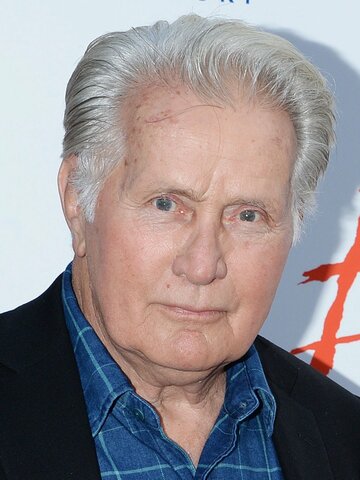
The Before: Ramón Estévez, a Crushed Arm, and the Name He Gave Away
However, ramón Gerard Antonio Estévez was born on August 3, 1940, in Dayton, Ohio, the seventh of ten children in a household held together by faith and barely enough money. Nevertheless, his father, Francisco Estévez Martínez, was a Spanish immigrant from Galicia who worked as a factory inspector at the National Cash Register Company. Notably, his mother, Mary-Ann Phelan, was an Irish immigrant from County Tipperary. In fact, during delivery, forceps crushed the baby’s left arm, causing Erb’s palsy — a condition that left the arm with limited lateral movement and three inches shorter than his right. Subsequently, he would carry the injury for the rest of his life, visible in every performance to anyone who knew to look.
Still, as a child, he contracted polio and spent a year bedridden. His mother died when he was eleven. Meanwhile, holy Trinity Catholic Church stepped in to help the family and keep the children from splitting up into foster homes. The parish saved the family. Indeed, the boy would spend the next eighty years trying to repay the debt.
He wanted to act. His father disapproved. Ultimately, ramón deliberately failed his entrance exam for the University of Dayton — not because he couldn’t pass, but because passing would have meant surrendering the dream. By contrast, he borrowed money from a Catholic priest and moved to New York City in his early twenties with nothing but the loan and the conviction that he was supposed to be on a stage. In particular, the city taught him immediately that his name was a problem. “Whenever I would call for an appointment, whether it was a job or an apartment, and I would give my name, there was always that hesitation,” he later said.
The Turning Point
“And when I’d get there, it was always gone.” He chose a stage name: Martin, after director Robert Dale Martin, and Sheen, after Catholic Archbishop Fulton J. Sheen, whose television sermons he’d grown up watching. The name worked. Doors opened. He started getting roles. Specifically, and then it was too late to go back.
“One of my great regrets is that I didn’t keep my name as it received to me,” he has said. “I knew it bothered my dad.” He never changed the name legally. As a result, his passport, his driver’s license, every official document still reads Ramón Estévez. Similarly, the stage name is a costume he has worn for sixty years. His son Emilio kept Estevez. Despite this, his son Carlos took “Sheen” and made it famous in ways that would keep the patriarch awake at night. In turn, the family name is a map of American assimilation: what you keep, what you trade, and what you lose in the transaction.
The Pivot Moment: Badlands, Apocalypse Now, and the Heart Attack in the Jungle
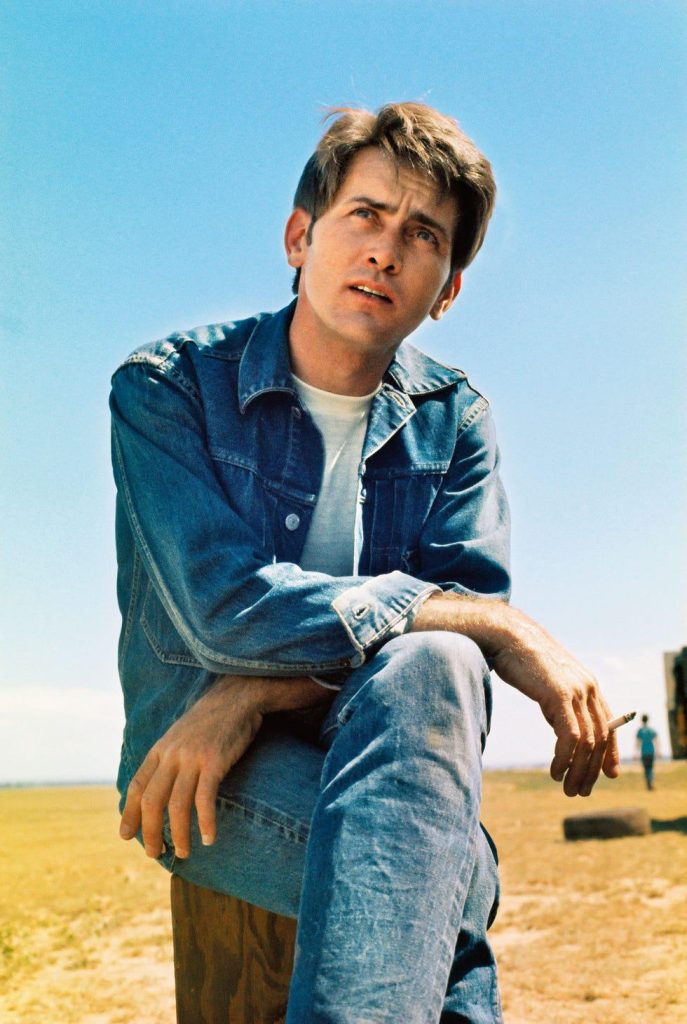
Terrence Malick cast him in Badlands (1973) as Kit Carruthers, a James Dean-obsessed drifter who kills with a casual cheerfulness that makes the violence feel like weather — impersonal, unstoppable, beautiful in its indifference. The film established Sheen as an actor whose stillness could carry a frame. Six years later, Francis Ford Coppola took that stillness into the Philippine jungle and nearly killed it.
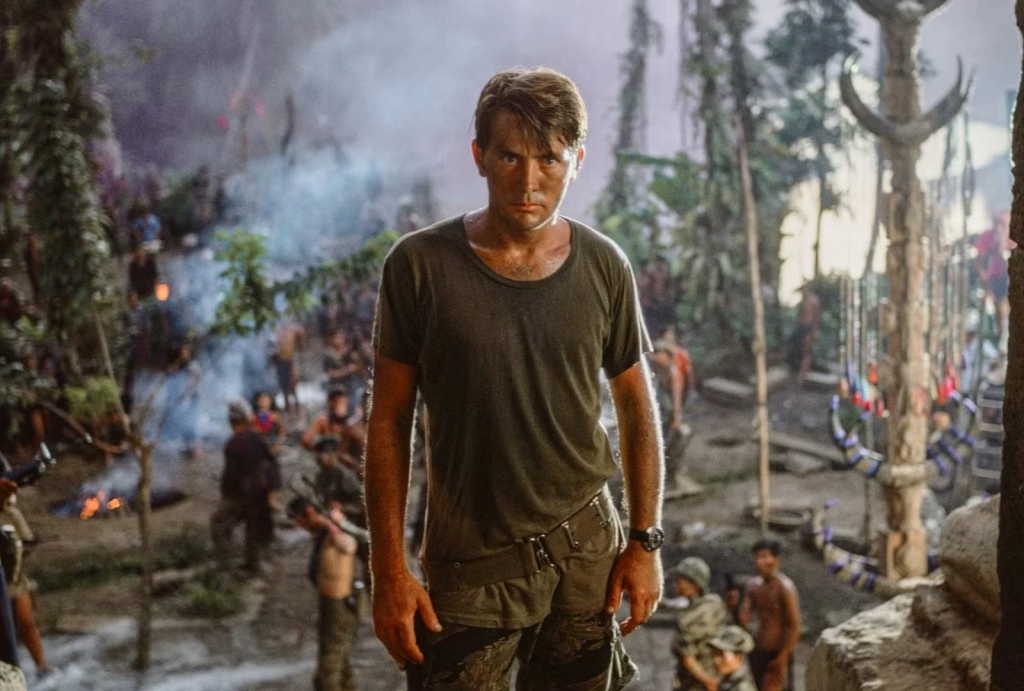
Apocalypse Now (1979) went before cameras during typhoon season under conditions so extreme they became their own legend. Sheen played Captain Benjamin Willard, the army assassin sent upriver to terminate Marlon Brando’s Colonel Kurtz. The shoot lasted over a year. Sheen was drinking heavily. Twelve months into production, at age thirty-six, he suffered a heart attack.
Even so, he crawled a quarter mile to a road before help arrived. His younger brother Joe Estevez stood in for long shots during his recovery. Coppola later admitted he feared Sheen would die. Sheen later admitted he feared the same thing. The film won the Palme d’Or at Cannes and is now considered one of the greatest ever made. Sheen’s performance — a man traveling deeper into moral darkness while remaining the audience’s only point of ethical orientation — is the template for every role he played afterward, including the one that would place him at the moral center of Wall Street.
The Climb: Carl Fox, President Bartlet, and the Career That Chose Decency
Oliver Stone’s Wall Street gave Sheen the role that crystallized his public identity. Carl Fox — the blue-collar airline mechanic and union leader who fights for his son’s soul against Michael Douglas’s Gordon Gekko — is the film’s moral architecture. He doesn’t deliver speeches about capitalism. He wears a jacket to dinner.
That said, he has a heart attack while his son is executing one of Gekko’s schemes. He forgives. On the courthouse steps, after Bud has been arrested and faces prison, Carl says: “A man looks in the abyss, there’s nothing staring back at him. At that moment, man finds his character. And that is what keeps him out of the abyss.” The line is the film’s thesis, and Martin Sheen delivers it the way a father delivers difficult truth — without performance, without emphasis, with the quiet certainty that the words will do the work if you let them.
He was playing his real son’s father in a film about a father losing his son to greed. Charlie Sheen would later lose $150 million to addiction, extortion, and self-destruction — a trajectory that mirrors Bud Fox’s arc with a precision that feels less like coincidence than prophecy. Martin has never publicly drawn the comparison. He doesn’t need to. The film already drew it.
Behind the Numbers
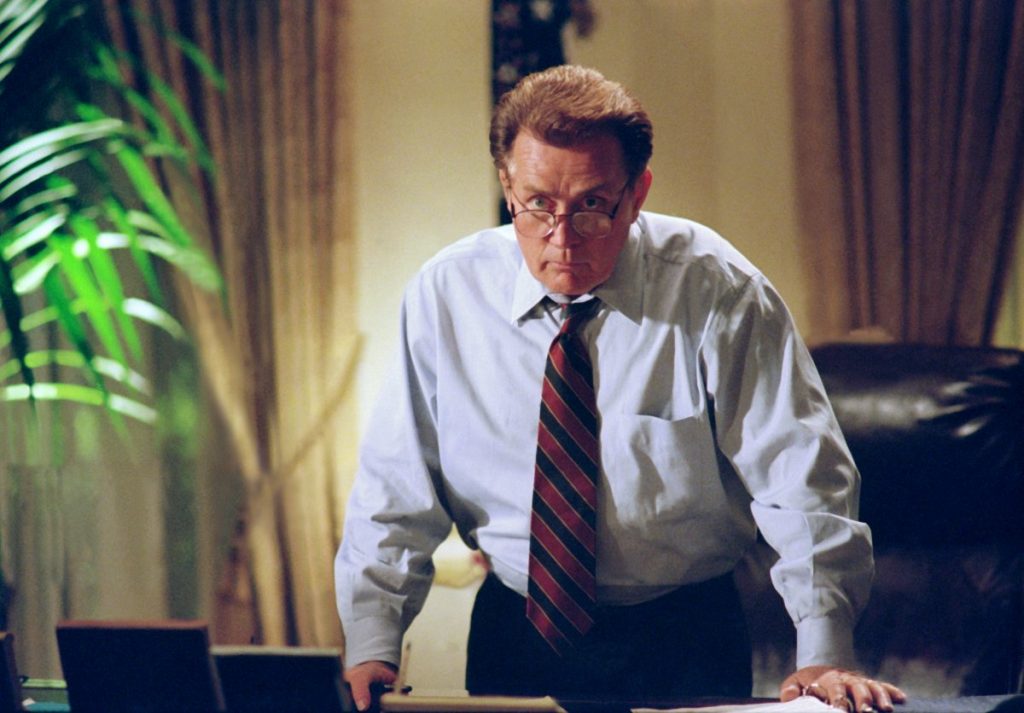
The West Wing (1999-2006) completed the transformation. Aaron Sorkin originally conceived President Josiah Bartlet as a minor recurring character. Sheen’s performance in the pilot was so commanding that Sorkin rebuilt the entire show around him. For seven seasons, Sheen played the president America wished it had — erudite, principled, capable of fury and compassion in equal measure, Catholic and liberal simultaneously. The role earned him a Golden Globe, multiple Emmy nominations, and a cultural presence so persuasive that polls consistently showed Americans would vote for Bartlet over actual candidates. He was reportedly offered the chance to run for U.S. Senate in Ohio. He declined. The real Ramón Estévez had no interest in power. He had interest in decency, which is different.
The Hamptons Chapter: Sixty-Six Arrests, Malibu, and a Marriage That Outlasted Everything
Martin Sheen has been arrested sixty-six times. The charges are always the same: civil disobedience. Police have handcuffed him at anti-war protests, nuclear test site demonstrations, immigration rallies, farmworker marches, and environmental blockades. In 1986, he faced arrest protesting nuclear testing at the Nevada Test Site. In 2003, he signed the “Not in My Name” declaration opposing the Iraq invasion alongside Noam Chomsky and Susan Sarandon. Additionally, in 2005, he prayed with Cindy Sheehan at Camp Casey. In 2007, he marched for immigrant rights in Los Angeles. The arrests are not publicity stunts. They are the logical extension of a worldview formed in a Dayton parish that kept his family together after his mother died — the belief that institutions exist to protect the vulnerable, and that when they fail, individuals are obligated to act.
He donated his entire salary from Gandhi (1982) to charity. He has been a self-described pacifist for decades. Furthermore, he is an honorary trustee of the Dayton International Peace Museum. He is also a devout Catholic — a combination of political liberalism and religious orthodoxy that confuses people who believe those identities are incompatible. Sheen does not find them incompatible. He finds them inseparable.
He married Janet Templeton since December 23, 1961. Sixty-four years. Four children, all actors. Ten grandchildren. The marriage has survived Sheen’s heart attack, his alcoholism (he has been sober for decades), Charlie’s public disintegration, and the relentless scrutiny that accompanies being the patriarch of one of Hollywood’s most visible families. The couple maintains properties in Malibu and Santa Monica. Moreover, the Malibu house nearly burned in the 2018 Woolsey Fire. They stayed. The house survived. The metaphor writes itself.
What He Built: The Estévez Dynasty and the Weight of Being the Richest Sheen
Martin Sheen’s net worth stands at approximately at $60 million — the largest fortune in the Estévez-Sheen family. His son Emilio Estevez is worth approximately $18 million. His son Charlie, who at his peak was worth $150 million, reportedly sits at between $1 million and $3 million. Reports have surfaced that Charlie has asked Martin for financial help. The patriarch who played Carl Fox — the father who saves his son from Wall Street’s corruption — is now, in reality, the father whose son was consumed by a different kind of corruption and may need saving in a different way.
The $60 million rests on on six decades of continuous work: over sixty-five feature films, hundreds of television appearances, The West Wing residuals that continue generating income, producing credits, narration work, and real estate. It is a working actor’s fortune — accumulated slowly, maintained carefully, never leveraged into the kind of explosive wealth that characterizes actors who optimize for blockbusters over principles. Sheen has never commanded $20 million per film. He has never appeared in a franchise. He has never endorsed a product in a way that contradicts his values. The $60 million represents what remains when a man works for sixty years, lives within his means, gives generously to causes he believes in, and refuses to trade his integrity for a larger paycheck.
The Soft Landing: Ramón Estévez at Eighty-Five
Martin Sheen is eighty-five years old. He is still acting. He is still getting arrested. Consequently, he is still married to the same woman he married in 1961, when he was a broke twenty-one-year-old theater actor in New York City who had borrowed money from a priest to get there. His left arm is still three inches shorter than his right. His passport still says Ramón Estévez. He still regrets changing the name.
The Wall Street cinema canon is populated with men who accumulate — Douglas’s $350 million, DiCaprio’s $300 million, Moore’s $200 million. Martin Sheen’s $60 million is the fortune of a man who was never interested in accumulation. He cared about showing up. Showing up on sets, at protests, at his son’s courthouse hearing, at the parish that kept his family together, at the hospital in the Philippines where he nearly died making a film about the moral cost of empire. The money is incidental. The showing up is the career.
The Real Impact
Carl Fox told his son that a man finds his character when he looks into the abyss and nothing stares back. Martin Sheen has looked into several abysses — his mother’s death at eleven, his own heart attack at thirty-six, his son’s destruction in real time — and what stared back each time was the same thing: Ramón Estévez, the boy from Dayton with the crushed arm and the borrowed money and the absolute certainty that the right thing to do is the right thing to do, regardless of what it costs. That certainty is worth $60 million. It is also worth considerably more than $60 million. It just doesn’t show up on a balance sheet.
Related: Wall Street (1987) True Story: How Gordon Gekko Became America’s Most Dangerous Role Model · Michael Douglas Net Worth: The $350 Million Gekko Fortune · Charlie Sheen Net Worth: How $150 Million Burned to $1 Million · Wolf of Wall Street True Story · The Wall Street Movies That Rewired How America Thinks About Money
If you’ve ever understood that showing up — consistently, honestly, without compromise — is the most valuable thing a person can do, then you already know why Social Life Magazine exists. We’ve been showing up for 23 years. Reach out to our editorial team to be featured.
Want to position your brand alongside the culture that values integrity as much as ambition? Submit a Paid Feature and let our editors build something worth reading.
What the Record Shows
Join 82,000+ subscribers who get our take on luxury, culture, and the Hamptons scene before anyone else. Subscribe to our email list.
Experience the intersection of sport, style, and status at Polo Hamptons — Bridgehampton’s premier luxury polo event, now in its seventh year with BMW as title sponsor.
Never miss a print issue. Subscribe to Social Life Magazine and get five summer issues delivered from Memorial Day to Labor Day.
Love what we do? Support Social Life Magazine and help us keep covering the culture that matters.
Author

Written by
Recent Posts
hiTechMODA Season 16
How to Keep Your Personal Number Private When Booking Events, Rentals and Services
Understanding Compensatory Damages in a Personal Injury Case

When Online Family Therapy Makes Sense for Modern Families

Carrier Oils, Essential Oils, and Oil Blends: What Beauty Brands Need to Know
Categories
- Art
- Articles
- Business of Luxury
- Celebrities
- Culture
- Entertainment
- Events
- Faces of Summer 2026
- Fashion
- Fashion & Style
- Featured
- Finance
- Food, Spirits, Wine
- Hamptons
- Hamptons Celebrities
- Health
- Health & Beauty
- Lifestyle
- Luxury Lifestyle
- Press
- Profiles
- Real Estate
- Technology
- The Chronicles
- Travel
- Uncategorized
- Weddings